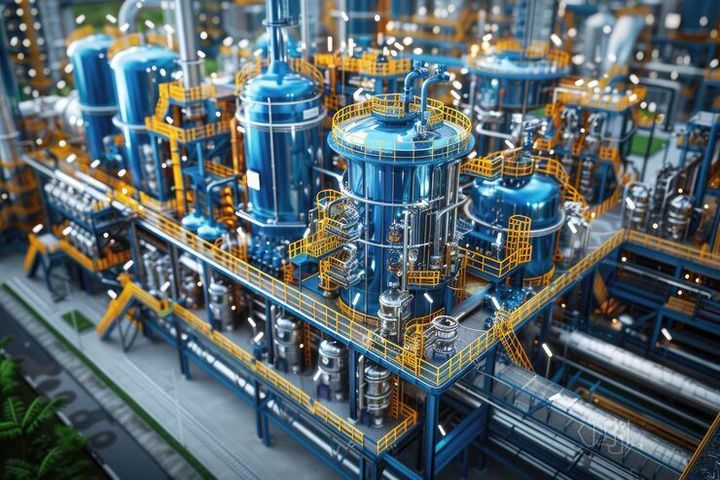
Hydraulic Process Plants: Advanced Systems, Equipment and Solutions
Hydraulic process plants are industrial facilities or integrated production systems that use pressurized hydraulic fluid to transmit power, control movement, and operate machinery. Instead of relying only on mechanical drives, these systems use pumps, valves, cylinders, motors, reservoirs, filters, hoses, and electronic controls to manage industrial processes.
Hydraulic technology is used where controlled force, smooth movement, compact equipment, and accurate pressure management are important. Typical applications can be found in metal forming, material handling, construction equipment, manufacturing lines, energy facilities, process industries, and heavy industrial machinery.
A hydraulic process plant may contain several connected subsystems. The hydraulic power unit generates and conditions fluid power, while control valves regulate pressure and flow. Actuators convert hydraulic energy into mechanical movement. Sensors and control systems can monitor pressure, temperature, flow, position, and other operating conditions.
The basic operating cycle is straightforward. A pump moves hydraulic fluid from a reservoir into the pressure circuit. Control valves direct the fluid toward an actuator or hydraulic motor. The actuator performs the required movement, and the fluid then returns through the circuit for filtration, cooling, and reuse.
Modern hydraulic process plants are becoming more integrated with automation and digital monitoring. This development allows operators to observe equipment conditions and identify unusual operating patterns before they become larger operational problems.
Importance
Hydraulic process plants matter because many industrial operations require controlled force and movement under demanding conditions. Hydraulic systems can provide high power density while allowing engineers to control speed, direction, and pressure.
They are particularly useful for equipment that handles heavy loads or requires controlled motion. Examples include presses, lifting equipment, forming machinery, injection systems, industrial manipulators, and large production machines.
The main areas where hydraulic systems provide value include:
- Controlled movement of heavy machinery
- High-force industrial operations
- Pressure and flow regulation
- Automated production processes
- Load handling and positioning
- Process equipment control
- Compact power transmission
- Repetitive industrial operations
Reliability is another important consideration. Hydraulic failures can affect an entire production process. Contaminated fluid, damaged seals, incorrect pressure settings, excessive temperature, and worn components can reduce system performance.
For this reason, modern hydraulic equipment increasingly incorporates filtration, condition monitoring, pressure sensors, temperature monitoring, and preventive inspection procedures.
Energy efficiency is also receiving greater attention. A 2026 research review identified smart sensors, predictive analytics, advanced control methods, electro-hydraulic actuators, energy recovery, and environmentally considerate hydraulic fluids as important areas in the development of more efficient hydraulic systems.
Key Equipment Used in Hydraulic Process Plants
A hydraulic process plant can contain many components, depending on its application and operating requirements.
| Equipment | Main Function |
|---|---|
| Hydraulic pump | Generates fluid flow and pressure |
| Reservoir | Stores and conditions hydraulic fluid |
| Control valves | Regulate direction, pressure, and flow |
| Hydraulic cylinders | Produce linear mechanical movement |
| Hydraulic motors | Produce rotary movement |
| Filters | Remove contaminants from fluid |
| Heat exchangers | Help control fluid temperature |
| Accumulators | Store hydraulic energy and absorb pressure fluctuations |
| Sensors | Monitor operating conditions |
| PLC or controller | Coordinates automated functions |
| Hoses and piping | Transport hydraulic fluid |
| Seals and fittings | Prevent leakage and maintain circuit integrity |
The selection of these components depends on pressure requirements, flow rate, temperature, load characteristics, operating environment, duty cycle, and required control accuracy.
Recent Updates
Hydraulic process technology has increasingly moved toward digital control, energy efficiency, and integration with industrial automation during 2025 and 2026.
One notable development is the growing use of sensors and digital monitoring. Instead of checking equipment only during scheduled inspections, connected systems can continuously collect information about pressure, temperature, vibration, flow, and actuator behavior.
Research published in 2026 highlights predictive analytics and advanced control algorithms as emerging approaches for optimizing hydraulic performance and reducing unnecessary energy losses.
Electro-hydraulic systems are another important direction. These systems combine hydraulic power with electronic control, allowing machines to respond more precisely to changing operating conditions.
Hydraulic fluid technology is also developing. In October 2025, India's Bureau of Indian Standards published information relating to IS 19366:2025, covering specifications for several categories of hydraulic fluids under ISO 15380:2023.
India has also continued to update its machinery safety framework. The Ministry of Heavy Industries lists amendments and subsequent changes concerning the Machinery and Electrical Equipment Safety framework, including a second amendment dated November 13, 2025 and a withdrawal notification dated January 16, 2026.
These developments show that hydraulic process equipment is increasingly connected with broader themes such as industrial automation, machinery safety, energy management, digital monitoring, and standardized fluid specifications.
Laws or Policies
Hydraulic process plants must follow the safety and industrial regulations applicable to their location, equipment category, and operating conditions. Requirements can differ considerably between countries and even between industrial sectors.
In India, machinery manufacturers and plant operators need to consider applicable Bureau of Indian Standards requirements, occupational safety rules, factory regulations, environmental requirements, and equipment-specific standards.
The Machinery and Electrical Equipment Safety framework is particularly relevant to machinery covered by its applicable schedules. A government update published in August 2025 stated that the 2025 amendment moved the application date for listed machinery and electrical equipment to September 1, 2026, while the treatment of assemblies, sub-assemblies, and components was subject to subsequent notification.
The regulatory position should therefore be checked against the latest government notifications rather than relying on older compliance information.
Hydraulic safety also requires attention to stored energy and unexpected fluid release. Indian standards and safety guidance address hazards associated with pressurized hydraulic systems, including flexible hoses, connection points, and residual energy during maintenance.
At the workplace level, operators should consider:
- Pressure protection and appropriate relief arrangements
- Safe isolation before maintenance
- Hose and fitting inspection
- Proper guarding of moving components
- Fluid contamination control
- Emergency shutdown procedures
- Pressure and temperature monitoring
- Equipment documentation and inspection records
Plants handling pressure vessels or other regulated equipment may have additional requirements under applicable national and state rules.
Tools and Resources
Several general tools can help engineers, operators, and learners understand and manage hydraulic process plants.
Hydraulic circuit design tools: These help users create circuit diagrams and examine relationships between pumps, valves, actuators, and control elements.
Pressure and flow calculators: Basic engineering calculators can help estimate pressure loss, flow requirements, cylinder force, actuator speed, and hydraulic power.
Maintenance checklists: Structured inspection templates can cover filters, hoses, fittings, fluid levels, seals, pumps, valves, sensors, and safety equipment.
Condition-monitoring tools: Pressure sensors, temperature sensors, flow meters, vibration monitoring equipment, and data-logging systems can provide useful operating information.
Standards databases: National and international standards databases help users identify applicable safety, fluid-power, machinery, and testing requirements.
Training resources: Hydraulic fundamentals courses, technical manuals, engineering reference books, circuit diagrams, and equipment documentation can help beginners understand system operation.
A useful maintenance record should normally include inspection dates, measured operating values, identified abnormalities, component condition, corrective actions, and follow-up observations.
FAQs
What is a hydraulic process plant?
A hydraulic process plant is an industrial system that uses pressurized hydraulic fluid to transmit power and control machinery. It can include pumps, reservoirs, valves, actuators, filters, sensors, piping, and automated controls.
Where are hydraulic process plants used?
They can be used in manufacturing, metal forming, material handling, construction equipment, energy-related applications, heavy machinery, and other industrial processes requiring controlled force or movement.
Why is hydraulic fluid filtration important?
Filtration helps remove particles and contaminants that can damage pumps, valves, seals, and other components. Maintaining appropriate fluid cleanliness can support reliable system operation.
How is automation changing hydraulic systems?
Automation connects hydraulic equipment with sensors, controllers, electronic valves, and monitoring systems. This can improve control, data collection, diagnostics, and coordination with other production equipment.
What should be checked during hydraulic system maintenance?
Important checks can include fluid condition, filters, hoses, fittings, seals, pressure levels, temperature, unusual noise, leakage, actuator movement, and safety controls. Maintenance procedures should follow the equipment manufacturer's instructions and applicable safety requirements.
Conclusion
Hydraulic process plants remain an important part of industrial power transmission and machine control. Their ability to generate and manage substantial force makes them useful across many demanding applications.The technology is also changing. Digital sensors, electronic controls, condition monitoring, predictive analysis, improved hydraulic fluids, and energy-efficiency research are influencing the design of modern hydraulic systems.