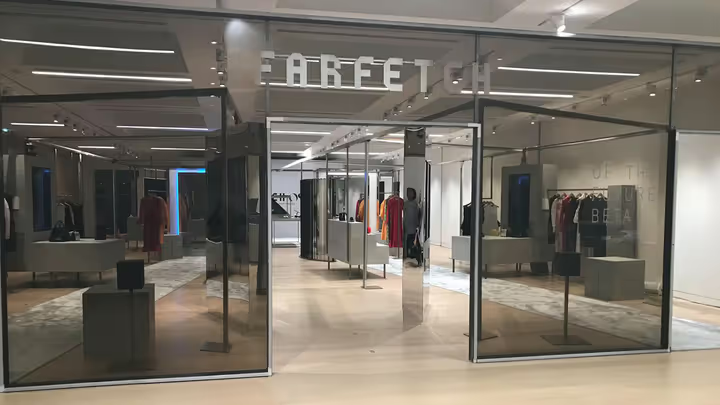
Farfetch Overview: How the Luxury Fashion Platform Connects the World
Farfetch is a global luxury fashion marketplace that connects shoppers with boutiques, designer brands, and luxury retailers through a single digital platform. Instead of functioning like a traditional retailer with its own inventory, Farfetch operates primarily as a marketplace that enables participating stores and brands to showcase their collections to customers across many regions.
The platform brings together fashion labels, independent boutiques, and established luxury houses, making it easier for consumers to discover products that may not be available in their local markets. Through digital technology, logistics partnerships, and marketplace infrastructure, Farfetch has become an important part of the modern luxury fashion ecosystem.
Understanding Farfetch
Farfetch is designed to simplify access to luxury fashion while supporting boutiques and brands with a global digital presence. Customers can browse products from multiple retailers within one marketplace instead of visiting numerous individual websites.
The platform combines ecommerce technology, inventory management, payment processing, international shipping coordination, and customer support into one integrated system.
Its primary purpose is to connect fashion creators, retailers, and customers through a scalable digital marketplace.
How Farfetch Works
The marketplace follows a technology-driven model.
A typical process includes:
- Customers browse luxury fashion collections.
- Products are listed by participating boutiques or brands.
- Orders are placed through the platform.
- Inventory information is synchronized digitally.
- Products are prepared by the retailer or brand.
- Logistics partners coordinate international delivery where applicable.
- Customers receive tracking information and order updates.
This marketplace approach allows numerous independent retailers to reach customers beyond their local markets without operating large international ecommerce systems themselves.
Why Farfetch Is Important
Luxury fashion has traditionally depended on physical boutiques and regional availability. Digital marketplaces have expanded access while preserving brand identity.
Farfetch contributes by:
- Connecting global luxury boutiques
- Increasing product discoverability
- Supporting digital transformation in fashion
- Expanding international customer reach
- Encouraging technology adoption in retail
- Providing centralized shopping experiences
- Improving inventory visibility
These capabilities have influenced how premium fashion products are presented and discovered worldwide.
Key Features
Product Discovery
- Extensive designer collections
- Seasonal fashion releases
- Boutique-exclusive selections
- Curated recommendations
Marketplace Technology
- Digital inventory synchronization
- Secure payment processing
- Multi-region marketplace infrastructure
- Order management systems
Customer Experience
- Personalized recommendations
- Wish lists
- Size guidance
- Multiple payment methods
- Order tracking
Retailer Support
- Global marketplace access
- Digital storefront integration
- Inventory management
- Analytics capabilities
Major Components
Farfetch consists of several interconnected elements.
Marketplace Platform
The central platform connects customers, retailers, and luxury brands.
Brand Partnerships
Designer brands can present official collections through digital storefronts.
Boutique Network
Independent luxury boutiques gain access to an international audience.
Technology Infrastructure
Cloud computing, APIs, cybersecurity, search technology, and recommendation systems support marketplace operations.
Logistics Network
Shipping partners coordinate deliveries across numerous countries while maintaining visibility throughout the fulfillment process.
Types of Products Available
Luxury marketplaces typically include:
- Designer clothing
- Footwear
- Handbags
- Jewelry
- Watches
- Accessories
- Beauty products
- Lifestyle collections
- Limited editions
- Seasonal collections
Real-World Applications
Farfetch demonstrates how marketplace technology supports modern retail across different business scenarios.
Fashion Brands
Luxury brands can reach broader audiences while maintaining digital brand presentation.
Independent Boutiques
Smaller boutiques gain visibility in international markets without building their own large ecommerce platforms.
Consumers
Shoppers can compare collections from multiple retailers in one location.
Fashion Industry
Digital marketplaces improve inventory distribution, customer engagement, and global accessibility.
Benefits and Challenges
| Aspect | Description |
|---|---|
| Accessibility | Connects shoppers with global luxury collections |
| Product Variety | Combines products from numerous boutiques and brands |
| Technology | Digital marketplace infrastructure improves efficiency |
| Retail Growth | Supports international visibility for participating retailers |
| Customer Experience | Simplifies product discovery and order management |
| Challenges | Inventory synchronization, international logistics, returns, and regulatory compliance require continuous improvement |
Recent Trends and Developments (2025–2026)
During 2025 and 2026, luxury ecommerce continued evolving through several important developments.
Key trends include:
- Greater use of Artificial Intelligence for personalized product recommendations.
- Improved search technology using machine learning.
- Expansion of omnichannel shopping experiences.
- Increased adoption of sustainability reporting across luxury fashion.
- Continued investment in digital customer experiences.
- Growth of data-driven merchandising strategies.
- Enhanced cybersecurity practices protecting customer information.
- More efficient inventory synchronization between brands and marketplaces.
Many luxury retailers also focused on improving digital experiences while balancing physical retail and ecommerce channels.
Regulations and Policies
Digital luxury marketplaces operate within various legal and regulatory frameworks depending on the region.
Common areas include:
- Consumer protection regulations
- Product authenticity requirements
- Privacy and personal data protection
- Electronic commerce regulations
- Digital payment security standards
- Intellectual property protection
- Cross-border trade requirements
- Environmental reporting initiatives where applicable
Organizations operating internationally must continuously adapt to changing compliance requirements.
Useful Tools and Learning Resources
Professionals interested in luxury ecommerce and digital retail often use resources such as:
Learning Platforms
- Digital marketing courses
- Ecommerce strategy programs
- Fashion business education
- Retail technology training
Business Tools
- Customer Relationship Management (CRM)
- Analytics platforms
- Inventory management software
- Business intelligence dashboards
- Product information management systems
Technology Resources
- Artificial Intelligence learning resources
- Cloud computing documentation
- Cybersecurity guidance
- Search optimization tools
- Digital commerce publications
These resources help individuals understand how technology supports modern retail operations.
Future Outlook
Luxury ecommerce continues to evolve with advancements in technology and customer expectations.
Future developments may include:
- More intelligent personalization
- Enhanced virtual shopping experiences
- Better product visualization
- Improved sustainability reporting
- Advanced supply chain transparency
- Smarter recommendation engines
- Expanded omnichannel integration
- Greater use of automation throughout retail operations
These innovations are expected to improve both operational efficiency and customer experience.
Frequently Asked Questions
What is Farfetch?
Farfetch is a global digital marketplace that connects luxury fashion brands, boutiques, and customers through an online platform.
Does Farfetch manufacture fashion products?
No. The platform primarily operates as a marketplace connecting participating retailers and brands with customers.
Why is Farfetch significant in luxury retail?
It helps expand access to luxury fashion by enabling international product discovery through a centralized digital marketplace.
What technologies support Farfetch?
The platform uses ecommerce technology, cloud infrastructure, data analytics, search algorithms, cybersecurity, digital payments, and inventory management systems.
How is the luxury marketplace evolving?
Recent developments include Artificial Intelligence, improved personalization, omnichannel retail strategies, sustainability initiatives, enhanced cybersecurity, and better digital customer experiences.
Conclusion
Farfetch represents an important example of how digital technology has transformed the luxury fashion industry. By connecting designer brands, independent boutiques, and customers through a unified marketplace, it has expanded access to premium fashion while supporting digital retail innovation.
The platform illustrates the growing importance of ecommerce infrastructure, cloud technology, analytics, secure payment systems, and international logistics in modern retail. As technology continues to evolve, luxury marketplaces are expected to deliver increasingly personalized, efficient, and transparent shopping experiences while adapting to changing consumer expectations and regulatory requirements.