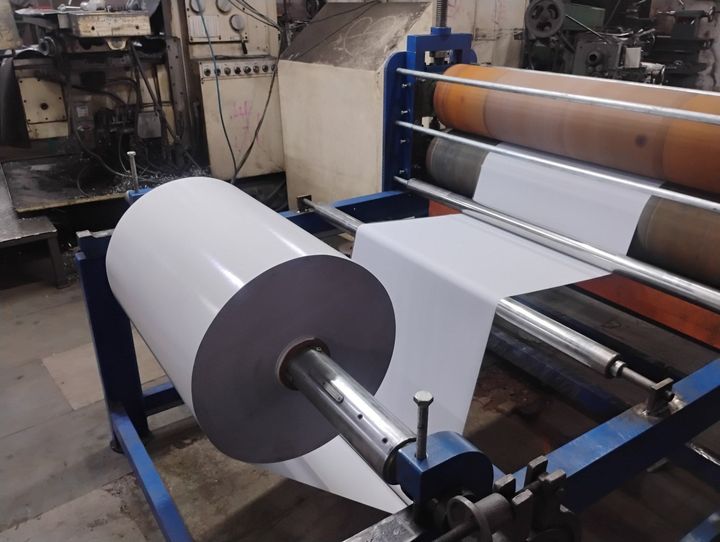
The process is widely used in manufacturing and converting industries where large master rolls must be divided into smaller, standardized widths for downstream production. Slitting ensures dimensional accuracy, improved handling, and compatibility with automated production lines.
Modern slitting equipment integrates mechanical engineering, precision tooling systems, web tension control technology, and digital monitoring systems. It exists to solve challenges related to material uniformity, production efficiency, and industrial safety compliance.
Industries commonly using slitting technology include:
-
Steel processing and metal fabrication
-
Flexible packaging and film converting
-
Paper and pulp manufacturing
-
Electrical insulation materials
-
Label and adhesive tape production
-
Automotive and construction materials
The machine typically consists of unwind stands, slitting knives (rotary or razor type), tension control systems, edge guides, and rewind units. Precision alignment and blade configuration determine the final product quality.
Why Slitting Machines Matter in Modern Manufacturing
Slitting machinery plays a central role in industrial productivity and supply chain efficiency. As global manufacturing shifts toward automation and lean production systems, accurate material conversion has become essential.
Key industrial advantages include:
-
High-speed coil processing
-
Reduced material waste
-
Uniform strip width tolerance
-
Improved downstream assembly efficiency
-
Enhanced production scalability
Precision slitting directly impacts industries requiring tight tolerance specifications, such as automotive components, renewable energy materials, electronic insulation layers, and high-performance packaging films.
Manufacturers depend on consistent slit width accuracy because even minor variations can affect structural integrity, mechanical strength, and product certification compliance.
Below is a simplified comparison of slitting methods commonly used in industrial environments:
| Slitting Type | Typical Materials | Key Advantage | Industrial Use Case |
|---|
| Razor Slitting | Thin films, paper | Clean edge finish | Flexible packaging |
| Rotary Shear Slitting | Metal coils, laminates | High precision for thick material | Steel and aluminum processing |
| Crush Cutting | Nonwoven fabrics | Simple setup | Textile and medical materials |
Automation has further increased the relevance of slitting systems. Advanced programmable logic controllers (PLC) and digital monitoring systems help reduce operational errors and improve quality assurance.
Recent Trends and Updates in Slitting Technology
Over the past year, industrial automation and digital transformation have influenced slitting machinery design and operation.
In 2025, manufacturers increasingly adopted:
-
Smart sensor-based tension monitoring systems
-
Real-time width measurement technology
-
AI-assisted predictive maintenance tools
-
Energy-efficient motor drives
-
Integrated Industry 4.0 connectivity solutions
Sustainability has also become a central theme. Many industrial equipment manufacturers introduced lower-energy consumption drives and improved blade durability systems to reduce material scrap.
Another significant development involves safety compliance improvements. Modern slitting systems now integrate:
-
Automated blade positioning
-
Emergency stop monitoring systems
-
Enclosed guarding systems
-
Digital fault diagnostics
Industrial data integration has improved production transparency. Operators can now analyze machine performance metrics such as:
-
Coil processing speed
-
Blade wear rate
-
Tension stability
-
Output efficiency ratios
These updates reflect broader trends in manufacturing digitization and industrial process optimization.
Regulatory and Compliance Considerations
Slitting machines operate within regulated industrial environments. Compliance requirements vary depending on jurisdiction, but common regulatory frameworks typically address workplace safety, machinery standards, and environmental controls.
Key compliance areas include:
-
Occupational health and safety standards
-
Machinery directive compliance
-
Electrical safety certification
-
Noise exposure limits
-
Waste management and scrap handling regulations
Industrial operators must ensure that slitting machinery meets safety certification requirements such as CE marking or equivalent regional industrial standards.
Machine guarding regulations typically require:
-
Protective barriers around rotating blades
-
Emergency stop accessibility
-
Operator training documentation
-
Lockout and tagout procedures
Environmental policies may regulate metal scrap recycling, lubricant disposal, and emissions control. Sustainable manufacturing guidelines increasingly encourage efficient energy consumption and reduced waste output.
Organizations implementing automated slitting lines often follow international quality standards such as ISO 9001 for quality management and ISO 45001 for occupational health and safety.
Below is a simplified compliance focus table:
| Compliance Area | Industrial Requirement Example |
|---|
| Workplace Safety | Guarding systems and emergency stops |
| Electrical Standards | Certified wiring and control panels |
| Environmental Regulations | Proper scrap recycling documentation |
| Quality Management Systems | Process documentation and inspection logs |
Staying aligned with regulatory standards supports safe industrial operations and long-term operational reliability.
Industrial Tools and Technical Resources
Professionals working with slitting machinery rely on various engineering tools, technical references, and digital systems.
Commonly used industrial tools include:
Engineering software platforms assist with:
-
Production planning
-
Machine performance analytics
-
Predictive maintenance scheduling
-
Material yield optimization
Educational and technical resources include:
-
Industrial automation training platforms
-
Engineering standards documentation databases
-
Machinery safety compliance manuals
-
Manufacturing process optimization guides
Digital dashboards and industrial IoT monitoring tools allow operators to track:
A basic visualization of slitting workflow stages:
Unwind → Tension Control → Blade Slitting → Edge Trim Removal → Rewind
Each stage requires precise calibration to maintain uniform strip quality.
Frequently Asked Questions About Slitting Machines
What materials can a slitting machine process?
Slitting machines can process metals, aluminum, copper, steel coils, plastic films, laminates, paper rolls, adhesive tapes, nonwoven fabrics, and composite materials depending on blade configuration and machine design.
How does tension control affect slitting quality?
Proper tension control prevents wrinkles, uneven cuts, and material stretching. Advanced tension monitoring systems ensure stable material handling throughout the process.
What is the difference between rotary shear and razor slitting?
Rotary shear slitting uses circular blades and is suitable for thicker materials like metal coils. Razor slitting uses thin blades and is typically applied to lightweight films and paper substrates.
How often should industrial slitting blades be inspected?
Blade inspection frequency depends on material type and production volume. Regular inspection schedules help prevent edge defects and maintain consistent slit width tolerance.
Is automation necessary for modern slitting operations?
Automation improves precision, reduces manual errors, enhances safety compliance, and supports high-volume industrial production environments.
Key Technical Considerations for Industrial Operators
When evaluating slitting systems, operators often consider:
-
Maximum coil width capacity
-
Minimum slit width capability
-
Material thickness range
-
Blade type compatibility
-
Tension control precision
-
Automation integration level
Precision engineering ensures consistent dimensional accuracy. In sectors such as renewable energy components and automotive materials, slit width variation must remain within strict tolerance levels.
Industrial efficiency can be represented conceptually as:
Production Output = Machine Speed × Width Accuracy × Tension Stability
If any factor declines, overall productivity and quality may decrease.
Conclusion
Slitting machines are foundational components of modern industrial manufacturing. They transform wide master rolls into precisely measured strips that support downstream production in sectors such as metal processing, packaging, and advanced materials engineering.
Advancements in automation, digital monitoring, and safety compliance have strengthened operational reliability and quality control. Regulatory frameworks continue to shape machine design, encouraging enhanced guarding systems, energy efficiency, and structured maintenance programs.
Understanding slitting technology involves more than basic cutting mechanisms. It requires awareness of precision engineering principles, industrial compliance standards, automation integration, and process optimization techniques.
With increasing emphasis on sustainability, digital transformation, and industrial safety, slitting machinery remains a critical element of global manufacturing infrastructure.