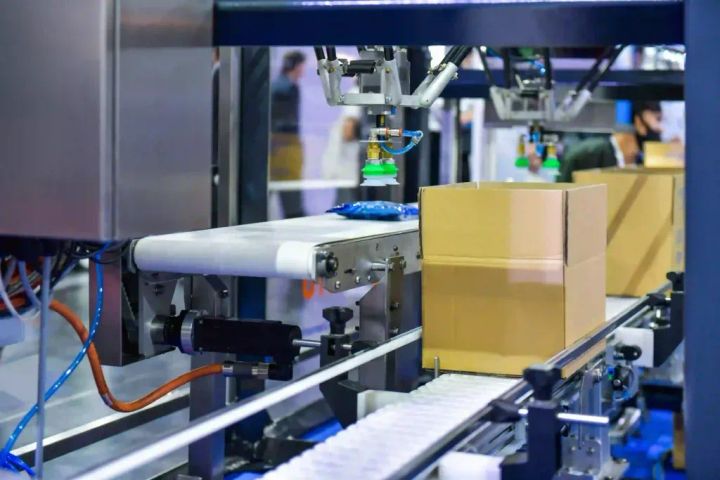
For beginners, packaging machines can appear complex because they combine mechanical components, electronics, and software. At their core, however, they are tools that automate repetitive packaging activities to achieve predictable and hygienic outcomes.
Why Packaging Machines Matter Today
Packaging machines play a critical role in modern supply chains. As production volumes increase and quality expectations rise, manual packaging alone is no longer sufficient. These machines affect manufacturers, regulators, logistics providers, and end users by improving efficiency and traceability.
Key reasons they matter include:
-
Product protection: Proper sealing and wrapping reduce damage and contamination.
-
Standardization: Uniform packaging supports easier handling and storage.
-
Compliance support: Automated systems help meet labeling and safety requirements.
-
Scalability: Machines allow production to grow without proportional increases in labor.
In sectors such as food and pharmaceuticals, packaging machines also help address hygiene concerns and shelf-life stability, which are essential for public health.
Common Types of Packaging Machines
Packaging machines are categorized by function and application. Understanding these categories helps beginners recognize where each machine fits in a production line.
Primary packaging machines
These interact directly with the product:
-
Fillers for liquids, powders, or granules
-
Form-fill-seal systems
-
Blister and strip packaging units
Secondary packaging machines
These group primary packages:
-
Cartoning machines
-
Case packers
-
Shrink wrapping systems
End-of-line machines
These prepare goods for transport:
Basic Components and How They Work
Most packaging machines share common components:
-
Mechanical assemblies: Conveyors, gears, and sealing jaws
-
Control systems: Programmable logic controllers (PLCs)
-
Sensors: Detect product presence and alignment
-
Human-machine interfaces (HMIs): Touchscreens for settings and monitoring
The general workflow involves feeding the product, performing a packaging action, checking quality parameters, and discharging the packaged unit. Automation ensures repeatability across thousands of cycles.
Recent Industry Updates and Trends
Over the past year, the packaging machinery sector has seen several notable developments:
2025 trends in automation and digitalization
Sustainability-focused design (2024–2025)
Modular and flexible systems (late 2024 onward)
These updates reflect a shift toward efficiency, transparency, and environmental responsibility rather than sheer speed alone.
Laws, Standards, and Policies in India
In India, packaging machines are influenced by a combination of industrial, safety, and sector-specific regulations. While machines themselves are not regulated in isolation, their operation must align with applicable standards.
Key regulatory frameworks include:
-
Bureau of Indian Standards (BIS): Sets technical and safety standards for machinery and materials.
-
Legal Metrology Act, 2009: Affects packaging accuracy, weight declarations, and labeling systems.
-
Food Safety and Standards Authority of India (FSSAI): Applies to machines used in food packaging, emphasizing hygiene and contamination prevention.
-
Drugs and Cosmetics Rules: Relevant for pharmaceutical packaging equipment.
Compliance requires proper documentation, calibrated controls, and adherence to workplace safety guidelines under the Factories Act.
Tools, Software, and Learning Resources
Several tools and resources help beginners understand and manage packaging machines:
Design and simulation tools
Monitoring and control tools
Reference resources
-
BIS standards documentation
-
FSSAI technical manuals for food packaging
-
Industry publications and technical handbooks
These resources support safe operation, optimization, and compliance understanding.
Example Comparison Table: Machine Functions
| Function | Typical Application | Key Benefit |
|---|
| Filling | Liquids, powders | Accurate volume control |
| Sealing | Pouches, bottles | Leak prevention |
| Labeling | Consumer goods | Traceability |
| Palletizing | Bulk transport | Handling efficiency |
Simplified Process Flow Diagram (Textual)
This linear flow helps visualize how individual machines integrate into a complete system.
Frequently Asked Questions
What industries use packaging machines most often?
Food processing, pharmaceuticals, personal care, chemicals, and agriculture commonly rely on packaging machines due to high volume and regulatory requirements.
Are packaging machines fully automated?
Some are fully automated, while others are semi-automated. The level of automation depends on production scale and complexity.
How do packaging machines support compliance?
They provide consistent sealing, accurate filling, and reliable labeling, which help meet regulatory standards.
What skills are needed to operate packaging machines?
Basic mechanical understanding, familiarity with control panels, and awareness of safety procedures are essential.
Can one machine handle different package sizes?
Many modern machines are designed with adjustable settings to accommodate multiple formats.
Key Metrics Often Monitored
| Metric | Purpose |
|---|
| Throughput rate | Measures output consistency |
| Downtime frequency | Indicates reliability |
| Material usage | Tracks efficiency |
| Error rate | Supports quality assurance |
Conclusion
Packaging machines are foundational to modern manufacturing and distribution. They exist to bring order, safety, and consistency to the packaging process, supporting industries that depend on reliable product presentation and protection. Recent developments highlight smarter controls, flexible designs, and sustainability considerations.
For beginners, understanding the basic types, components, compliance environment, and available tools provides a solid starting point. With clear knowledge and adherence to standards, packaging machines can be understood not as complex black boxes, but as structured systems designed to solve practical production challenges.