Explore Mechanical Power Press Technology and Industrial Applications
Mechanical power presses are widely used in manufacturing environments to shape, cut, bend, and form metal components. These machines use mechanical force to perform repeatable operations with controlled movement and high production efficiency. They are commonly found in industries such as automotive manufacturing, aerospace, electrical equipment, construction, and general metal fabrication.
This article explains how mechanical power press technology works, its major components, industrial applications, advantages, safety considerations, and factors businesses should evaluate when selecting this type of industrial equipment.
What Is a Mechanical Power Press?
A mechanical power press is an industrial machine designed to apply force to a workpiece through a mechanically driven ram. The machine typically uses a motor, flywheel, clutch, crankshaft, and connecting mechanism to convert rotational motion into the linear movement required for metal forming.
Depending on the machine configuration and tooling, a mechanical power press can perform operations such as:
- Punching
- Blanking
- Bending
- Piercing
- Stamping
- Drawing
- Forming
- Coining
Mechanical presses are particularly useful where manufacturers need consistent production, repeatable dimensions, and relatively high manufacturing throughput.
How Does Mechanical Power Press Technology Work?
The operating principle is based on converting the rotational energy of an electric motor into controlled linear motion.
Power Generation and Flywheel
An electric motor supplies mechanical energy to the press. This energy is transferred to a flywheel, which stores rotational energy and helps provide the force required during the pressing cycle.
The stored energy allows the machine to deliver substantial force during forming and cutting operations.
Crankshaft and Ram Movement
A crankshaft or eccentric mechanism converts rotational movement into reciprocating motion. This mechanism moves the ram downward toward the workpiece and then returns it to its starting position.
The tooling attached to the ram determines the specific manufacturing operation.
Die and Tooling System
The die is positioned on the press bed, while the corresponding punch or upper tooling is generally attached to the ram. When the ram moves downward, the punch interacts with the workpiece and produces the required shape or cut.
Different tooling configurations allow manufacturers to perform different operations using the same basic press platform.
Major Components of a Mechanical Power Press
Understanding the primary components can help manufacturers evaluate machine performance and maintenance requirements.
Electric Motor
The electric motor provides the primary driving power for the press system. Motor specifications can vary depending on press capacity, operating speed, and production requirements.
Flywheel
The flywheel stores kinetic energy and releases it during the pressing operation. Proper flywheel performance contributes to consistent machine operation.
Clutch and Brake
The clutch transfers power to the press mechanism, while the brake helps stop the moving components. These systems are important for controlling the operating cycle.
Crankshaft
The crankshaft converts rotational motion into the reciprocating movement required to operate the ram.
Ram
The ram is the moving component that carries the upper tooling. Its stroke, speed, and available force influence the types of manufacturing operations the press can perform.
Press Bed
The press bed supports the workpiece and lower die. Its dimensions help determine the size of components that can be processed.
Die and Tooling
Tooling determines the shape and nature of the manufacturing operation. Correct die selection is essential for achieving consistent production results.
Types of Mechanical Power Presses
Mechanical presses are available in several configurations designed for different industrial requirements.
Gap Frame Press
A gap frame press provides open access around the working area. It is commonly used for smaller components and general-purpose stamping operations.
Straight-Side Press
Straight-side presses use a more rigid frame and are often selected for heavier-duty production applications. Their structural design can provide greater stability during demanding forming operations.
Eccentric Press
Eccentric mechanisms are used to generate the ram movement required for pressing operations. These machines can be configured for different stroke lengths and production requirements.
Single-Point and Double-Point Presses
Single-point presses generally use one connection point to drive the ram, while double-point configurations use two connection points. The choice depends on factors such as workpiece size, tooling requirements, and production conditions.
Industrial Applications of Mechanical Power Presses
Mechanical power presses are used across numerous manufacturing sectors.
Automotive Manufacturing
Automotive manufacturers use press technology to produce components such as brackets, panels, structural parts, and other formed metal components.
High-volume production environments can benefit from repeatable pressing cycles and automated material handling systems.
Aerospace Manufacturing
Aerospace production requires carefully controlled manufacturing processes. Mechanical presses may be used for selected sheet-metal forming, cutting, and component production applications where the machine and tooling meet the required specifications.
Electrical Equipment Manufacturing
Electrical enclosures, brackets, panels, connectors, and other metal components can be manufactured using stamping and forming processes.
Appliance Manufacturing
Household appliances often contain numerous stamped metal components. Mechanical presses can help manufacture panels, brackets, supports, and structural parts used in appliances.
Construction Equipment
Metal brackets, structural components, fittings, and other fabricated parts may be produced using industrial press equipment.
General Metal Fabrication
Metal fabrication companies use mechanical presses for punching, bending, blanking, and forming operations. The appropriate press depends on material type, thickness, component geometry, and production volume.
Benefits of Mechanical Power Press Technology
Mechanical presses can offer several advantages when properly matched to a manufacturing process.
High Production Efficiency
Mechanical presses can operate through rapid and repeatable cycles, making them suitable for high-volume production.
Consistent Manufacturing
Automated or semi-automated press operations can provide consistent results when tooling, material specifications, and machine settings are properly controlled.
Reduced Manual Processing
Integration with feeders, conveyors, sensors, and automation systems can reduce repetitive manual handling.
Suitable for High-Volume Production
Manufacturers producing large quantities of similar components may benefit from the repeatability and production speed of mechanical press systems.
Integration With Industrial Automation
Modern manufacturing facilities can integrate presses with robotic loading, automated material feeding, sensors, programmable controls, and production monitoring systems.
Mechanical Presses and Industrial Automation
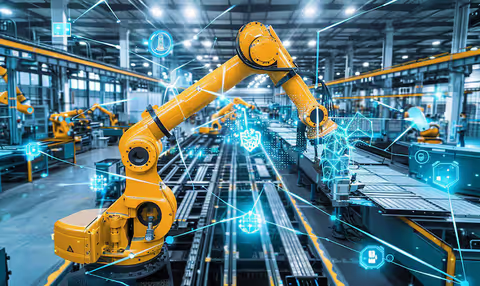
Industrial automation is increasingly connected with metal forming equipment. Automated material handling can move sheets or blanks into position, while sensors and control systems can monitor operating conditions.
Automated Material Feeding
Automatic feeders can supply material to the press at controlled intervals. This can improve production consistency and reduce manual handling.
Robotic Handling
Industrial robots can load and unload components in selected manufacturing environments. Robotic systems may also transfer parts between multiple forming operations.
Process Monitoring
Sensors and digital monitoring systems can provide information about machine operation, production cycles, and selected equipment conditions.
These technologies can contribute to better production planning, equipment utilization, and manufacturing process control.
Mechanical Power Press Safety
Power presses contain moving mechanical components capable of generating significant force. Safety should therefore be a fundamental part of machine operation and workplace planning.
Machine Guarding
Appropriate guards and protective systems can help prevent unintended access to hazardous moving components.
Operator Training
Operators should receive appropriate training covering machine controls, tooling procedures, material handling, emergency procedures, and workplace safety requirements.
Lockout and Maintenance Procedures
Before maintenance, inspection, or tooling work, organizations should follow appropriate energy-isolation and lockout procedures based on applicable workplace safety requirements.
Emergency Stop Systems
Emergency stop mechanisms should be properly maintained and accessible to authorized operators.
Tooling Inspection
Damaged, incorrectly installed, or improperly maintained tooling can create safety and quality risks. Regular inspection can help identify potential problems before production continues.
Factors to Consider When Selecting a Mechanical Power Press
Choosing industrial machinery requires more than comparing purchase prices. Businesses should evaluate the complete operational and financial requirements.
Press Capacity
The required tonnage depends on the material, thickness, operation, tooling, and production process.
Selecting insufficient capacity may reduce performance, while excessive capacity can increase equipment and operating costs.
Stroke Length
Stroke length affects the distance the ram travels during each operating cycle. The required stroke depends on the specific forming or stamping operation.
Production Speed
Manufacturers should consider the required strokes per minute and the desired production volume.
Workpiece Dimensions
The size of the press bed, die area, and working envelope should accommodate the intended components and tooling.
Automation Requirements
Companies planning to integrate robotic systems, feeders, sensors, or production monitoring should consider machine compatibility with automation equipment.
Maintenance Requirements
Maintenance requirements, replacement components, service availability, and equipment support can influence the long-term cost of ownership.
Energy Efficiency
Energy consumption is an important consideration for manufacturers seeking to manage industrial operating costs. Businesses can evaluate motor efficiency, operating cycles, idle energy consumption, and overall production requirements.
Mechanical Power Press vs. Hydraulic Press
Mechanical and hydraulic presses use different methods to generate and control pressing force.
Mechanical presses typically use flywheels, crank mechanisms, and mechanical linkages. They are often well suited to high-speed repetitive operations.
Hydraulic presses use hydraulic fluid and cylinders to generate force. They can provide greater control over force and ram movement and may be suitable for certain deep-forming and heavy-duty applications.
The appropriate technology depends on factors such as material, forming requirements, production volume, speed, precision, and budget.
Maintenance of Mechanical Power Press Equipment
Preventive maintenance can help support reliable operation and reduce unexpected equipment downtime.
Routine Inspection
Maintenance teams can inspect mechanical components, fasteners, lubrication points, tooling, guards, and control systems according to the manufacturer's recommendations.
Lubrication
Proper lubrication reduces friction and wear in applicable mechanical components. Lubrication schedules should follow the equipment manufacturer's specifications.
Brake and Clutch Inspection
The clutch and brake system plays an important role in machine operation. Regular inspection can help identify wear or performance issues.
Tooling Maintenance
Clean, properly aligned, and well-maintained tooling can help maintain product quality and reduce unnecessary machine stress.
Record Keeping
Maintenance records can help organizations track inspections, repairs, component replacement, and recurring equipment issues.
Economic Considerations for Industrial Press Equipment
Industrial machinery represents a significant capital investment. Companies should consider both the initial equipment cost and the total cost of ownership.
Important factors can include:
- Equipment purchase cost
- Tooling expenses
- Installation
- Operator training
- Preventive maintenance
- Energy consumption
- Spare parts
- Downtime
- Automation integration
- Production output
- Equipment lifespan
A broader cost analysis can help businesses evaluate the potential return on investment rather than focusing only on the initial purchase price.
Future Trends in Mechanical Press Technology
Mechanical press systems are evolving alongside broader manufacturing trends.
Smart Manufacturing
Connected sensors and industrial data systems can provide more information about equipment performance and production conditions.
Predictive Maintenance
Machine monitoring can help identify unusual operating conditions and potentially support maintenance planning before certain failures occur.
Advanced Automation
Robotic material handling, automated feeders, machine vision, and integrated control systems are expanding the possibilities for automated press production.
Digital Production Monitoring
Manufacturers increasingly use production data to evaluate machine utilization, downtime, output, and process performance.
Frequently Asked Questions
What is a mechanical power press used for?
A mechanical power press is used to cut, punch, bend, stamp, and form materials, particularly sheet metal and other suitable workpieces.
Is a mechanical power press suitable for high-volume manufacturing?
Yes. Mechanical presses are commonly used for repetitive, high-volume manufacturing operations where speed and consistent production are important.
What determines the required press capacity?
Required capacity depends on factors such as material type, material thickness, component geometry, tooling design, and the specific operation being performed.
Are mechanical power presses safe?
Mechanical power presses can be operated safely when suitable machine guarding, controls, training, maintenance, tooling procedures, and applicable workplace safety practices are followed.
What is the difference between a mechanical and hydraulic press?
A mechanical press generates force through mechanical components such as a flywheel and crank mechanism, while a hydraulic press uses hydraulic pressure and cylinders. Each technology has different performance characteristics and applications.
Conclusion
Mechanical power press technology remains an important part of modern metal manufacturing. Its ability to perform repeatable punching, stamping, bending, blanking, and forming operations makes it valuable across automotive, aerospace, electrical, appliance, construction, and general fabrication industries.
For businesses evaluating industrial equipment, the most important considerations include press capacity, production speed, tooling requirements, automation compatibility, maintenance needs, energy consumption, workplace safety, and total cost of ownership.
As manufacturing becomes increasingly automated and data-driven, mechanical presses are also being integrated with robotics, sensors, digital monitoring, and smart manufacturing systems. Understanding these technologies can help manufacturers make more informed decisions about equipment investment, production planning, and long-term operational efficiency.