Hydraulic Press Manufacturers: A Complete Guide to Equipment, Types, Applications, and Selection
Hydraulic presses are widely used in manufacturing industries for forming, bending, stamping, molding, compacting, and assembling materials. A hydraulic press manufacturer designs and produces equipment that uses hydraulic pressure to generate controlled force for industrial applications.
For businesses planning to purchase industrial machinery, understanding hydraulic press technology, specifications, operating requirements, and manufacturer capabilities is important. The right equipment can influence production efficiency, product quality, maintenance requirements, and long-term operating costs.
This guide explains hydraulic presses in simple terms and provides useful information for businesses researching hydraulic press manufacturers and industrial equipment.
What Is a Hydraulic Press?
A hydraulic press is an industrial machine that uses hydraulic fluid and pressure to generate mechanical force. The basic operating principle is based on Pascal's law, which states that pressure applied to a confined fluid is transmitted throughout the fluid.
A typical hydraulic press includes:
- Hydraulic cylinder
- Hydraulic pump
- Hydraulic reservoir
- Control valves
- Pressure gauge
- Hydraulic hoses or piping
- Machine frame
- Control system
- Work table
- Safety components
When hydraulic fluid is pressurized, it moves the cylinder and generates force. The force can then be applied to a workpiece for a specific manufacturing operation.
How Does a Hydraulic Press Work?
The operating process generally involves several stages.
1. Hydraulic Fluid Storage
Hydraulic fluid is stored in a reservoir. The fluid must be suitable for the machine and operating environment.
2. Pressure Generation
A hydraulic pump moves fluid through the system. The pump works with other hydraulic components to create the required operating pressure.
3. Cylinder Movement
Pressurized fluid enters the hydraulic cylinder. Depending on the machine configuration, the cylinder moves the ram downward, upward, or in both directions.
4. Force Application
The ram applies controlled force to the material. The amount of force depends on factors such as hydraulic pressure, cylinder dimensions, and machine design.
5. Return Stroke
After the operation is completed, the hydraulic system returns the ram to its original position.
Types of Hydraulic Presses
Hydraulic press manufacturers produce different machine configurations for different applications. Selecting the correct type depends on material, production volume, required force, available workspace, and manufacturing process.
Four-Column Hydraulic Press
Four-column presses use a four-post frame structure that provides stability during pressing operations. They are commonly considered for forming, molding, compression, and other industrial processes.
C-Frame Hydraulic Press
C-frame presses have an open-sided design that provides easier access to the working area. They can be useful where operators need convenient loading and unloading of components.
H-Frame Hydraulic Press
H-frame presses use a rigid frame and are commonly associated with general-purpose industrial pressing operations. They can be configured for applications such as straightening, bending, assembly, and forming.
Hydraulic Stamping Press
Hydraulic stamping presses are designed for controlled forming and shaping of sheet metal and other materials. Their operating characteristics can be adapted to specific production requirements.
Hydraulic Deep Drawing Press
Deep drawing presses are used to form sheet metal into deeper shapes. These machines require carefully controlled force and movement to reduce the possibility of material defects.
Hydraulic Compression Press
Compression presses apply pressure to materials placed inside a mold or forming tool. They can be used in various manufacturing processes involving composites, plastics, rubber, and other materials.
Common Applications of Hydraulic Presses
Hydraulic presses are used across numerous industries because they can provide high force with controlled movement.
Metal Forming
Hydraulic presses can be used for bending, forming, punching, stamping, and shaping metal components.
Automotive Manufacturing
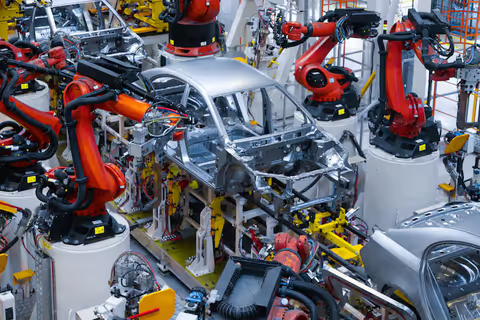
Automotive manufacturers and component suppliers may use hydraulic presses for producing body parts, structural components, bushings, bearings, and other components.
Plastic and Composite Manufacturing
Compression molding processes can use hydraulic presses to manufacture components from thermosetting plastics, composites, and related materials.
Rubber Manufacturing
Hydraulic presses can be incorporated into rubber molding processes where controlled pressure and temperature are required.
Electrical Equipment Manufacturing
Presses may be used during the production or assembly of electrical components, enclosures, and other industrial products.
General Industrial Assembly
Hydraulic presses can also assist with bearing installation, shaft assembly, straightening, and other controlled force applications.
Important Specifications to Compare
Before selecting equipment from hydraulic press manufacturers, businesses should evaluate technical specifications rather than focusing only on the advertised machine capacity.
Press Capacity
Press capacity describes the maximum force the machine is designed to generate. It is commonly expressed in tons or kilonewtons.
The required capacity depends on the material, thickness, tooling, process, and safety requirements.
Working Area
The working area determines the size of components and tooling that can be accommodated.
Businesses should consider:
- Table dimensions
- Maximum workpiece size
- Daylight opening
- Stroke length
- Die dimensions
- Available installation space
Hydraulic Pressure
Operating pressure is an important parameter because it influences the hydraulic system and force-generation capability.
Higher pressure does not automatically mean that a machine is better. The hydraulic system should be appropriately designed for the intended application.
Stroke Length
Stroke length determines how far the hydraulic ram can travel. The appropriate stroke depends on the manufacturing process and tooling requirements.
Operating Speed
Some applications require fast approach and return speeds, while others require slower and precisely controlled pressing speeds.
Control System
Modern hydraulic presses may use programmable controls, digital displays, sensors, and automated process monitoring.
Businesses should select a control system based on production complexity and operator requirements.
How to Choose Hydraulic Press Manufacturers
Choosing a manufacturer requires more than comparing machine prices. Industrial equipment represents a significant capital investment, so businesses should evaluate the manufacturer and the equipment together.
Evaluate Manufacturing Experience
Consider how long the manufacturer has been producing hydraulic machinery and whether it has experience with applications similar to yours.
Review Technical Capabilities
Check whether the manufacturer can provide appropriate:
- Press capacity
- Hydraulic systems
- Control systems
- Machine frames
- Tooling compatibility
- Safety systems
- Automation options
Check Customization Options
Some applications require customized table dimensions, stroke lengths, operating speeds, controls, or tooling arrangements.
A manufacturer capable of engineering modifications may be more suitable for specialized production environments.
Examine Quality Control
Quality control can influence equipment reliability and operating life. Ask about component selection, manufacturing procedures, testing, inspection, and documentation.
Consider After-Sales Support
After-sales service can be important for industrial machinery. Businesses should understand the manufacturer's approach to:
- Installation
- Commissioning
- Operator training
- Preventive maintenance
- Spare parts
- Technical support
- Warranty service
Hydraulic Press Cost Factors
The cost of a hydraulic press can vary substantially depending on its design and specifications.
Important cost factors include:
- Press capacity
- Machine size
- Hydraulic system
- Automation level
- Control technology
- Tooling requirements
- Safety equipment
- Custom engineering
- Installation
- Transportation
- Maintenance requirements
A lower purchase price does not necessarily represent the lowest overall cost. Businesses should consider the total cost of ownership, which may include energy consumption, maintenance, spare parts, downtime, and operator requirements.
Hydraulic Press Maintenance
Regular maintenance helps maintain machine performance and can reduce unexpected downtime.
Check Hydraulic Fluid
Hydraulic fluid should be inspected according to the manufacturer's maintenance schedule. Contamination or unsuitable fluid can affect hydraulic components.
Inspect Hoses and Connections
Hydraulic hoses, fittings, and connections should be inspected for leakage, damage, and deterioration.
Monitor Pressure
Unusual pressure changes may indicate problems with the hydraulic system, valves, pump, or other components.
Inspect the Machine Frame
The frame and work table should be checked for visible damage, excessive wear, or other abnormalities.
Maintain Safety Systems
Emergency stops, guards, sensors, interlocks, and other safety components should be tested according to the equipment manufacturer's procedures.
Hydraulic Press Safety Considerations
Hydraulic presses generate substantial force and therefore require appropriate safety controls.
Operators should receive proper training before using the equipment. Machine guards and safety devices should not be bypassed.
Important safety practices include:
- Follow the manufacturer's operating instructions.
- Use appropriate machine guarding.
- Keep hands away from the pressing area.
- Inspect tooling before operation.
- Do not exceed rated machine capacity.
- Follow lockout/tagout procedures during servicing where applicable.
- Keep the work area clean.
- Investigate abnormal noise, vibration, pressure, or leakage.
- Perform maintenance according to the manufacturer's instructions.
Safety requirements can vary by machine, workplace, and jurisdiction, so businesses should follow applicable occupational safety regulations and manufacturer documentation.
Hydraulic Press Automation
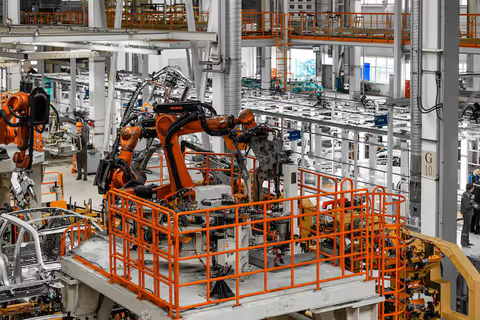
Automation is becoming increasingly important in industrial manufacturing. Hydraulic presses can be integrated with automated loading, unloading, material handling, sensors, and production monitoring systems.
Benefits of Automation
Depending on the application, automation can help businesses:
- Improve production consistency
- Reduce repetitive manual operations
- Monitor process parameters
- Improve material handling
- Reduce production interruptions
- Collect manufacturing data
However, automation should be selected according to actual production requirements rather than simply because it is available.
Energy Efficiency in Hydraulic Presses
Energy consumption is an important consideration when purchasing industrial machinery.
Modern hydraulic systems may incorporate technologies designed to improve energy efficiency, including variable-displacement pumps, optimized hydraulic circuits, and improved control systems.
Businesses evaluating equipment should compare expected energy consumption under their actual production conditions instead of relying solely on theoretical specifications.
Hydraulic Presses vs. Mechanical Presses
Hydraulic and mechanical presses use different methods to generate force.
Hydraulic presses generate force through hydraulic fluid and cylinders, while mechanical presses typically use mechanical mechanisms such as flywheels, crankshafts, and linkages.
Hydraulic presses can provide advantages such as:
- Adjustable pressing force
- Controlled ram movement
- Flexible stroke control
- Suitable force throughout the stroke
- Adaptability for different forming processes
Mechanical presses can be advantageous for certain high-speed production applications.
The best choice depends on the material, production cycle, tooling, required force, and manufacturing process.
Questions to Ask Hydraulic Press Manufacturers
Before purchasing industrial equipment, buyers can ask manufacturers:
- What press capacity is recommended for my application?
- What is the maximum stroke length?
- What are the table dimensions?
- What hydraulic components are used?
- What control system is included?
- What safety systems are provided?
- Can the machine be customized?
- What maintenance schedule is recommended?
- Are spare parts readily available?
- What installation and training services are available?
- What warranty terms apply?
- What documentation is supplied with the machine?
Getting detailed answers to these questions can make equipment comparisons easier.
Understanding Hydraulic Press Manufacturer Certifications
Depending on the market and machine application, manufacturers may work with various quality-management, safety, or product standards.
Buyers should verify certificates and compliance documentation directly with the manufacturer and confirm that the equipment meets the regulations applicable to their location.
Certification should not be treated as a substitute for evaluating machine design, safety features, quality, service, and suitability for the intended application.
Frequently Asked Questions
What does a hydraulic press manufacturer do?
A hydraulic press manufacturer designs, engineers, produces, tests, and supports hydraulic pressing equipment for industrial applications. Some manufacturers also provide customization, installation, training, spare parts, and maintenance support.
How much does a hydraulic press cost?
There is no single standard price. Cost depends on capacity, dimensions, hydraulic components, controls, automation, tooling, customization, and other project requirements. Businesses should request a specification-based quotation.
What industries use hydraulic presses?
Hydraulic presses are used in metalworking, automotive manufacturing, plastics, composites, rubber processing, electrical equipment, appliance manufacturing, general engineering, and other industrial sectors.
How do I select the right hydraulic press?
Start by defining the material, required force, workpiece dimensions, production volume, stroke, operating speed, tooling, automation requirements, and available installation space. These requirements can then be matched with suitable machine specifications.
Are hydraulic presses suitable for automated production?
Yes. Hydraulic presses can be integrated with automated material handling, sensors, programmable controls, robotic systems, and production monitoring, depending on the application and machine configuration.
Conclusion
Hydraulic presses are important industrial machines used for forming, molding, bending, stamping, assembly, and other high-force manufacturing processes. Selecting the right equipment requires careful evaluation of press capacity, stroke, working area, hydraulic system, controls, safety features, energy requirements, and maintenance needs.
When comparing hydraulic press manufacturers, businesses should evaluate technical expertise, manufacturing quality, customization capabilities, after-sales service, spare-parts availability, documentation, and total cost of ownership.
A well-defined equipment specification can help buyers compare manufacturers objectively and select machinery that matches their production requirements while supporting safe and efficient operation.