Enterprise AI Adoption: Explore Business Applications, Data Readiness and ROI Planning
Enterprise AI adoption refers to the process of integrating artificial intelligence into an organisation's business operations, decision-making systems, customer interactions and internal workflows. It involves more than introducing a chatbot or purchasing an AI application. Successful adoption requires suitable data, technology infrastructure, employee capabilities, governance policies and a clear understanding of business objectives.
Companies are exploring AI to automate repetitive tasks, analyse large datasets, improve forecasting, support customer communication, detect unusual transactions and assist employees with research and operational decisions.
For example, a manufacturing company may use AI to predict equipment maintenance requirements, identify production defects and forecast inventory demand. A financial institution may apply machine learning to detect unusual transaction patterns, while a retail business may use predictive analytics to understand customer demand.
Enterprise AI can include traditional machine learning, natural language processing, computer vision, predictive analytics, generative AI and AI agents. Each technology addresses different business requirements and involves different implementation considerations.
The central question for business leaders is not simply which AI technology to adopt. It is how to identify valuable use cases, prepare reliable data, manage risks and measure measurable business outcomes.
Why Enterprise AI Adoption Matters
Businesses operate with growing volumes of information, complex workflows and increasing expectations for speed and accuracy. AI can help organisations process information more efficiently and support decisions that would otherwise require substantial manual analysis.
Important business benefits include:
Operational efficiency: Automates repetitive administrative and analytical activities.
Improved decision-making: Identifies patterns and trends across large datasets.
Better customer experience: Supports personalised communication and faster responses.
Predictive planning: Helps forecast demand, inventory requirements and operational disruptions.
Risk identification: Detects unusual activity, potential fraud and operational anomalies.
Employee productivity: Assists with research, document analysis, summarisation and knowledge retrieval.
Business scalability: Helps organisations handle growing workloads without increasing every manual process at the same rate.
These benefits are not automatic. Results depend on the quality of implementation, data accuracy, employee adoption, technology selection and ongoing monitoring.
Major Enterprise AI Applications Across Business Functions
AI can support several departments within an organisation. The most effective starting points are generally processes with clearly defined problems, repeatable activities and measurable outcomes.
1. Finance and Accounting
Finance teams can use AI to process invoices, classify transactions, identify unusual expenses and assist with financial reporting.
Common applications include:
Automated invoice data extraction.
Expense classification and reconciliation.
Cash flow forecasting.
Fraud and anomaly detection.
Financial document analysis.
Budget variance identification.
For example, an organisation receiving thousands of supplier invoices each month may use document intelligence to extract invoice details and route them for approval. Employees can then focus on exceptions and verification rather than entering every field manually.
2. Customer Relationship Management
AI can analyse customer interactions, identify common questions and help sales teams prioritise follow-ups.
Applications include customer segmentation, lead scoring, conversation summaries, recommendation systems and automated support responses.
AI-generated recommendations should be checked against customer preferences, data permissions and organisational policies.
3. Human Resources and Workforce Planning
HR departments can use AI to organise internal knowledge, summarise employee feedback, analyse workforce trends and support learning programmes.
Possible applications include:
Employee training recommendations.
Workforce demand forecasting.
Internal policy search.
HR document classification.
Employee feedback analysis.
Skills gap identification.
Automated screening and employee evaluation require particular care because biased data or poorly designed models can produce unfair outcomes.
4. Manufacturing and Industrial Operations
Manufacturing companies can use AI to monitor production systems, predict equipment failures and identify defects through computer vision.
Common applications include predictive maintenance, production scheduling, quality inspection, energy optimisation and supply chain forecasting.
For example, a factory may analyse equipment sensor readings to identify unusual vibration or temperature patterns. Maintenance teams can investigate potential failures before they cause extended production interruptions.
5. Sales and Marketing
AI can help analyse campaign performance, customer behaviour and market trends.
Applications include content classification, customer segmentation, demand forecasting, sales pipeline analysis and campaign performance summaries.
Human review remains important for brand accuracy, factual claims, customer communication and advertising compliance.
6. Legal, Compliance and Risk Management
Legal and compliance departments can use AI to search large document collections, identify relevant contract clauses, summarise regulatory documents and organise compliance records.
AI can assist with document review, but it should not replace qualified legal judgement or final approval of high-impact decisions.
7. Supply Chain and Procurement
AI can support demand forecasting, supplier risk analysis, inventory planning, procurement analytics and logistics optimisation.
These applications can help organisations identify potential stock shortages, evaluate purchasing patterns and improve visibility across supplier networks.
Types of AI Technologies Used in Enterprises
Different AI technologies are suited to different business problems. Selecting the correct approach can prevent unnecessary implementation complexity.
| AI technology | Main function | Enterprise application |
|---|---|---|
| Machine Learning | Learns patterns from historical data | Demand and sales forecasting |
| Generative AI | Produces text, summaries, images or other content | Document drafting and knowledge assistance |
| Natural Language Processing | Analyses human language | Customer communication and document search |
| Computer Vision | Interprets images and video | Manufacturing quality inspection |
| Predictive Analytics | Estimates future outcomes | Financial and inventory planning |
| Intelligent Document Processing | Extracts and classifies document information | Invoice and contract processing |
| AI Agents | Perform multi-step tasks using connected tools under defined permissions | Workflow coordination and internal operations |
An organisation does not necessarily need every category. A forecasting problem may be better addressed through traditional machine learning, while a document search problem may benefit from retrieval-based generative AI.
Data Readiness: The Foundation of Enterprise AI
AI systems depend on the data used to train, configure, evaluate or operate them. Poor-quality information can lead to incorrect predictions, unreliable responses and weak business decisions.
Data readiness refers to how effectively an organisation can access, organise, protect and use its information for a particular AI application.
1. Data Quality
Data should be accurate, complete, consistent and relevant to the intended use case.
For example, a sales forecasting model may produce unreliable results if historical transactions contain duplicate entries, incorrect dates or missing product information.
2. Data Availability
Businesses should identify where relevant information is stored. Data may be spread across ERP systems, CRM platforms, accounting applications, spreadsheets, databases and document repositories.
A data inventory helps establish which sources are available and who controls them.
3. Data Integration
AI applications may need information from multiple business systems. Integration helps connect relevant datasets while maintaining appropriate access controls.
Organisations should avoid collecting additional personal or confidential information without a valid business and legal basis.
4. Data Governance
Data governance establishes ownership, access permissions, retention policies, quality standards and accountability.
Each important dataset should have a responsible owner and defined rules for use.
5. Data Security and Privacy
Sensitive business information, customer records, employee details and financial data require appropriate safeguards.
Controls may include encryption, role-based access, audit logs, secure data transfer and restrictions on external AI tools.
6. Data Labelling and Documentation
Supervised machine learning applications may require labelled examples. Businesses should also document data sources, definitions, known limitations and update frequency.
Enterprise AI Data Readiness Checklist
Before beginning implementation, organisations can assess their preparedness using the following checklist.
Business data sources have been identified.
Data ownership and access responsibilities are established.
Important datasets have been checked for accuracy and completeness.
Duplicate, outdated and inconsistent records are addressed.
Personal and confidential information is classified.
Data access permissions are documented.
Relevant data protection and retention requirements are reviewed.
Integration requirements are understood.
Data quality monitoring processes are established.
Suitable test datasets are available.
A business does not need a perfect data environment before starting every AI project. However, it should understand the limitations of the available information and address critical gaps before deploying systems that influence important decisions.
Choosing Between Cloud AI, Private AI and Hybrid Deployment
Enterprise AI can be deployed through different infrastructure models. The appropriate choice depends on data sensitivity, technical requirements, budget, performance expectations and internal IT capabilities.
| Deployment model | Description | Common considerations |
|---|---|---|
| Public cloud AI | AI capabilities are accessed through a cloud provider | Scalability, data handling and usage-based pricing |
| Private AI environment | AI systems operate within a dedicated or controlled environment | Greater infrastructure control and internal administration |
| On-premises AI | Models and computing infrastructure run within company facilities | Hardware investment, maintenance and technical expertise |
| Hybrid AI | Combines cloud and privately controlled systems | Workload separation, integration and governance |
Public cloud AI
Cloud-based AI can help organisations begin experimentation without building all computing infrastructure themselves. Businesses should review provider data policies, processing locations, retention arrangements and contractual safeguards.
Private AI
A private environment may be appropriate when an organisation needs tighter control over sensitive information, model access or infrastructure configuration.
On-premises AI
Some organisations prefer to operate models within their own data centres. This can provide greater infrastructure control but requires suitable hardware, security expertise and ongoing maintenance.
Hybrid AI
A hybrid approach can allow less sensitive workloads to use cloud infrastructure while confidential applications remain within controlled environments.
Building an Enterprise AI Implementation Strategy
AI implementation should begin with a defined business problem rather than a technology purchase.
Step 1: Identify business priorities
Review operational challenges across finance, procurement, customer support, manufacturing, HR and compliance.
Look for repetitive work, high processing volumes, delays, frequent errors and decisions that require analysis of large datasets.
Step 2: Select suitable use cases
Prioritise applications that have measurable objectives and accessible data.
For example, invoice processing may be a more suitable first project than fully automating complex financial approvals.
Step 3: Assess technical feasibility
Evaluate data availability, system integration, infrastructure requirements, model performance and employee workflows.
Step 4: Establish governance
Define who can use the system, what information it can access, which decisions require human approval and how errors should be reported.
Step 5: Run a pilot project
Test the AI application within a limited business process. Compare its results against the existing process using agreed performance measures.
Step 6: Review results
Measure accuracy, processing time, employee usage, operational savings and implementation expenses.
Step 7: Expand gradually
Extend successful applications to additional departments or business units after addressing technical and governance limitations.
Step 8: Monitor continuously
Track performance, data changes, model updates, security events and user feedback. AI systems can become less reliable when business conditions or underlying data change.
Understanding Enterprise AI ROI
Return on investment is an important factor in enterprise AI planning. Businesses should measure whether the financial and operational benefits justify implementation and ongoing expenses.
A technology demonstration may appear impressive but still fail to generate meaningful business value if it does not improve a real process.
A basic ROI calculation is:
AI ROI = [(Total Benefits − Total Costs) ÷ Total Costs] × 100
For an enterprise AI project, benefits may include:
Reduced manual processing hours.
Lower error correction requirements.
Reduced operational delays.
Improved production output.
Better inventory planning.
Lower fraud-related losses.
Improved customer retention, where demonstrably attributable.
Increased employee capacity for higher-value activities.
Costs may include:
Software subscriptions and usage charges.
Cloud computing and infrastructure.
Data preparation and integration.
Model development or configuration.
Cybersecurity and compliance controls.
Employee training.
Human review and quality assurance.
Ongoing monitoring and maintenance.
Illustrative AI ROI example
Consider a company implementing an AI-based invoice processing system.
| Financial component | Annual amount |
|---|---|
| Reduced processing and administrative expenses | ₹18 lakh |
| Reduced correction and exception-handling expenses | ₹6 lakh |
| Total estimated annual benefits | ₹24 lakh |
| Initial implementation and integration | ₹8 lakh |
| Annual software and infrastructure expenses | ₹4 lakh |
| Training and monitoring expenses | ₹2 lakh |
| Total first-year expenses | ₹14 lakh |
Using these assumptions:
Net first-year benefit = ₹24 lakh − ₹14 lakh = ₹10 lakh.
First-year ROI = (₹10 lakh ÷ ₹14 lakh) × 100 = 71.4% approximately.
This is an illustrative calculation, not a forecast of actual enterprise AI performance. The result depends on verified savings, adoption levels, implementation expenses and the period used for measurement.
Important Metrics for Measuring AI Performance
Businesses should monitor both technical performance and commercial outcomes.
| Metric | What it measures | Business relevance |
|---|---|---|
| Model Accuracy | Correct predictions or classifications | Evaluates output quality |
| Processing Time | Time taken to complete a task | Measures operational speed |
| Error Rate | Frequency of incorrect results | Identifies reliability issues |
| Adoption Rate | Percentage of intended users actively using the system | Measures workforce acceptance |
| Cost per Transaction | Average expense for processing an activity | Tracks operating efficiency |
| Human Review Rate | Share of AI outputs requiring manual intervention | Measures automation limitations |
| System Availability | Time the AI application remains operational | Evaluates reliability |
| AI ROI | Financial return relative to total investment | Measures commercial value |
For generative AI, organisations should also evaluate factual accuracy, relevance, source traceability, harmful output rates and the frequency of unsupported responses.
A high model accuracy score does not automatically demonstrate business value. Technical performance should be connected to a clearly defined operational objective.
Risks and Challenges in Enterprise AI Adoption
AI implementation introduces risks that need to be considered throughout the project lifecycle.
Data privacy exposure: Sensitive customer, employee or business information may be disclosed through inappropriate AI usage or weak access controls.
Incorrect AI outputs: Generative AI can produce inaccurate or fabricated information. Important outputs require verification.
Algorithmic bias: Models trained on incomplete or unrepresentative data may produce unfair results.
Cybersecurity threats: AI systems can be exposed to prompt injection, data leakage, malicious inputs, compromised integrations and unauthorised access.
Intellectual property concerns: Organisations should examine ownership, licensing and permitted use of training data, generated material and third-party models.
Vendor dependency: Reliance on one provider may create switching difficulties, pricing exposure or limitations on data portability.
Employee resistance: Employees may be reluctant to adopt AI because of unfamiliar workflows, concerns about role changes or uncertainty about accountability.
Unclear financial returns: Some projects may generate limited measurable value despite substantial implementation effort.
Model drift: Predictive performance can decline when market conditions, customer behaviour or operating processes change.
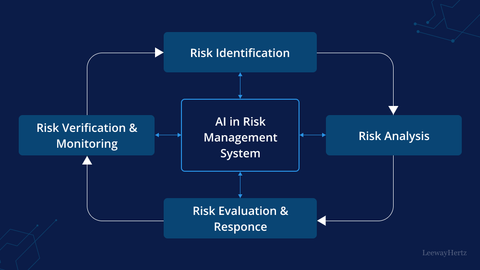
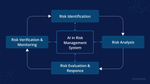
Businesses should establish risk assessments, human oversight, testing procedures and incident-response arrangements before expanding AI across critical operations.
AI Governance and Responsible Business Adoption
AI governance refers to the policies, responsibilities and controls that guide how an organisation selects, develops, deploys and monitors AI systems.
A structured governance framework can help companies manage operational, legal, security and reputational risks.
Important governance practices include:
Maintain an inventory of AI applications and their business purposes.
Classify systems according to potential impact and risk.
Assign accountability to business and technical owners.
Establish rules for confidential and personal data.
Require human approval for important or high-impact decisions.
Test models for accuracy, bias, security and reliability.
Maintain records of important AI-generated decisions and changes.
Establish a process for reporting and correcting errors.
Review third-party AI providers and contractual terms.
Train employees on approved usage and limitations.
India's AI Governance Guidelines emphasise trust, people-first design, fairness, accountability, understandability, safety and responsible innovation. These principles provide a useful foundation for corporate AI governance.
Recent Developments in India: 2026
India's AI ecosystem has continued to develop through government infrastructure initiatives, AI governance work and industry-focused applications.
1. India AI Governance Guidelines
MeitY introduced the India AI Governance Guidelines on 5 November 2025. The framework sets out seven guiding principles and recommendations across governance, infrastructure, capacity building and responsible AI adoption.
In February 2026, the government highlighted the framework's role in supporting safe, trusted and inclusive AI development across sectors. For enterprises, the principles provide a reference for designing human-centred, accountable and transparent AI processes. <Link ref="turn483669search5" title="MeitY announcement on India AI Governance Guidelines"/>.
2. Expansion of IndiaAI Mission infrastructure
The IndiaAI Mission has been expanding access to AI computing, datasets, foundational models and development capabilities.
A government update published in 2026 reported that shared computing capacity had exceeded 45,000 GPUs as of June 2026. It also reported that AIKosh hosted more than 14,000 datasets and 331 AI models by July 2026. These initiatives can support research, model development and wider access to AI infrastructure. <Link ref="turn131090search10" title="IndiaAI Mission progress update"/>.
3. AI use cases across government departments
A Ministry of Electronics and Information Technology update dated 29 July 2026 reported that the IndiaAI Mission had identified 762 AI use cases across 62 ministries. It also reported approval of 58 AI Centres of Excellence and 543 Data and AI Labs.
These developments indicate increasing attention to practical AI applications, institutional capabilities and workforce development. <Link ref="turn131090search4" title="MeitY update on AI use cases and infrastructure"/>.
4. Growth of AI-ready datasets
On 20 August 2026, the government organised an AIKosh workshop involving industry, government, academia and startups. Discussions focused on data governance, data harmonisation and responsible use of AI-ready datasets.
For enterprises, this reinforces the importance of structured information, reliable data access and responsible data-sharing practices. <Link ref="turn131090search12" title="AIKosh data ecosystem workshop"/>.
Laws and Regulatory Considerations in India
Enterprise AI adoption must be evaluated under existing Indian laws and sector-specific requirements. AI governance guidelines provide policy direction, but they do not replace statutory obligations.
1. Digital Personal Data Protection Act, 2023
The DPDP Act establishes requirements for processing digital personal data in India. Organisations using personal information in AI applications should consider lawful processing, consent where applicable, purpose limitation, data security and individual rights.
The DPDP Rules, 2025 were notified on 14 November 2025. The Act's commencement notification provides a phased implementation schedule. Several provisions are scheduled to commence 18 months after publication of the notification, meaning businesses should review the relevant dates rather than assume every provision became effective immediately. <Link ref="turn483669search7" title="DPDP Rules, 2025"/> and <Link ref="turn483669search27" title="Official DPDP Act commencement notification"/>.
2. Information Technology Act, 2000
The Information Technology Act and applicable rules remain relevant to electronic records, cybersecurity, unauthorised access and certain forms of online misconduct. AI-generated content and AI-enabled systems may raise issues under existing IT laws depending on their use.
3. Copyright Act, 1957
Businesses should assess copyright ownership, licensing and permitted use when working with training material, third-party datasets, images, documents and AI-generated content. The legal position can depend on the nature of the material and the circumstances of its creation or use.
4. Sector-specific regulations
Companies in banking, insurance, securities, healthcare and telecommunications may face additional requirements from their respective regulators. For example, financial institutions should evaluate AI systems in the context of RBI requirements, customer protection, cybersecurity and operational risk management.
5. Consumer protection and competition considerations
AI-driven pricing, recommendations, advertising and automated customer interactions should be reviewed for misleading claims, unfair practices and competition concerns where applicable.
Organisations should seek legal and regulatory advice for high-impact or sensitive AI applications rather than relying solely on general AI policies.
Tools and Resources for Enterprise AI Planning
Businesses can use different tools and frameworks to assess readiness, develop applications and monitor performance.
Cloud AI platforms: Provide access to model development, computing infrastructure and managed AI capabilities.
Enterprise data platforms: Help organise, integrate and govern business information.
Business intelligence tools: Support reporting, analytics and performance monitoring.
Machine learning platforms: Assist with model training, testing, deployment and monitoring.
Document intelligence tools: Extract information from invoices, contracts and business records.
AI governance frameworks: Help organisations assess risks, responsibilities and control requirements.
IndiaAI and AIKosh: Government initiatives that support access to AI infrastructure, datasets and development resources.
NIST AI Risk Management Framework: An international reference that organisations can use to structure AI risk identification, assessment and management.
Tool selection should be based on business requirements, security, integration capabilities, data handling policies and total ownership expenses.
Frequently Asked Questions
1. What is enterprise AI adoption?
Enterprise AI adoption is the integration of artificial intelligence into business processes, technology systems and decision-making activities. It can include automation, predictive analytics, generative AI, computer vision and intelligent document processing.
2. Which departments can benefit from enterprise AI?
Finance, accounting, customer support, HR, manufacturing, procurement, marketing, legal and risk management departments can use AI for suitable tasks. The value depends on the business problem, available data and implementation quality.
3. Why is data readiness important for AI adoption?
AI systems depend on reliable and relevant information. Data readiness helps ensure that information is accurate, accessible, appropriately governed and suitable for the intended application.
4. How can a company calculate AI ROI?
A company can compare measurable financial and operational benefits against implementation and ongoing expenses. The calculation should include infrastructure, software, integration, training, monitoring and human review.
5. What are the main risks of enterprise AI?
Major risks include inaccurate outputs, data privacy exposure, algorithmic bias, cybersecurity threats, intellectual property concerns, vendor dependency and unclear accountability. Appropriate governance and human oversight can help manage these risks.
Conclusion
Enterprise AI adoption can support business efficiency, operational planning, customer engagement and data-driven decision-making. However, long-term value depends on selecting relevant applications, preparing reliable data, choosing suitable infrastructure and establishing responsible governance.
Companies should begin with clearly defined business problems, test AI applications through controlled pilots and evaluate their performance using measurable financial and operational indicators.
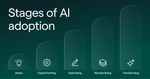
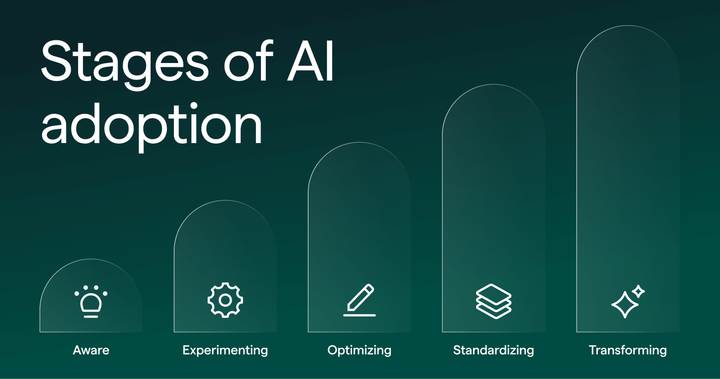
For Indian enterprises, the developing IndiaAI ecosystem and national AI governance framework provide useful reference points for infrastructure planning, data readiness and responsible adoption. A gradual, well-governed strategy can help organisations move from experimentation towards sustainable business value.