AI Risk Management: Explore Governance, Compliance and Enterprise Controls
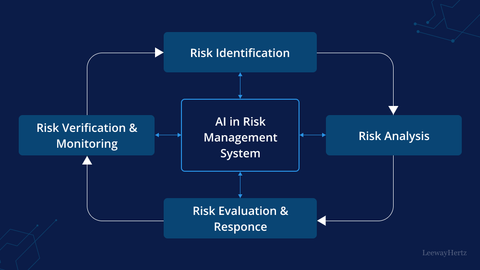
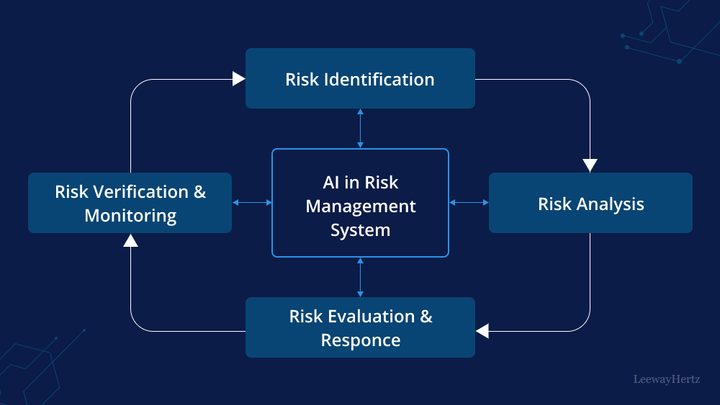
AI risk management is the structured process of identifying, assessing, monitoring and reducing risks associated with artificial intelligence systems. It applies throughout the AI lifecycle, from initial planning and data collection to model development, procurement, deployment, monitoring and retirement.
Businesses increasingly use AI for financial analysis, customer interactions, document processing, recruitment, fraud detection, forecasting, cybersecurity and operational automation. These applications can improve productivity, but they can also introduce risks that traditional software controls may not fully address.
For example, an AI system used to evaluate loan applications may produce inaccurate recommendations because of incomplete data or biased historical patterns. A generative AI assistant may disclose confidential information, produce fabricated answers or follow malicious instructions hidden in an uploaded document. An autonomous AI agent may perform an action that exceeds its authorised responsibilities.
AI risk management helps organisations establish appropriate safeguards before these problems affect customers, employees, financial operations or business reputation.
A comprehensive framework combines governance, compliance, cybersecurity, data protection, model validation, human oversight and continuous monitoring.
Why AI Risk Management Matters for Enterprises
AI risks can affect financial performance, regulatory obligations, customer trust and operational continuity. Organisations need controls that reflect the purpose of each system and the potential consequences of its decisions.
Important reasons to establish AI risk management include:
Protecting business information: Prevent confidential records, personal data and intellectual property from being exposed through AI applications.
Improving decision reliability: Identify inaccurate outputs, weak predictions and unsuitable model recommendations.
Reducing bias: Evaluate whether AI systems produce unfair outcomes for particular individuals or groups.
Strengthening accountability: Establish who is responsible for developing, approving and monitoring AI applications.
Supporting regulatory readiness: Identify legal obligations associated with data processing, cybersecurity, consumer protection and sector-specific activities.
Managing third-party exposure: Assess risks associated with external AI platforms, model providers, data suppliers and technology partners.
Maintaining operational continuity: Prepare for system failures, unexpected behaviour, security incidents and model performance changes.
Building customer confidence: Improve transparency and establish processes for reviewing AI-assisted decisions.
AI risk management should not be treated as a one-time compliance exercise. Models, datasets, business processes and external threats can change, so controls need regular evaluation.
Major Types of AI Risks
Understanding the different categories of risk helps organisations select appropriate controls and allocate responsibilities.
| AI risk category | Description | Business example |
|---|---|---|
| Data privacy risk | Improper collection, processing or disclosure of personal information | Customer records exposed through an AI application |
| Cybersecurity risk | Attacks targeting models, datasets, applications or connected systems | Prompt injection or model theft |
| Bias and fairness risk | Unfair outcomes caused by data or model behaviour | Recruitment screening disadvantaging a group |
| Accuracy risk | Incorrect, incomplete or fabricated AI outputs | Incorrect financial analysis |
| Operational risk | System failures or unexpected behaviour affecting workflows | AI automation processing an incorrect transaction |
| Compliance risk | Failure to meet applicable legal or regulatory obligations | Improper handling of personal data |
| Intellectual property risk | Unauthorised use or disclosure of protected material | Confidential documents appearing in generated outputs |
| Third-party risk | Exposure through external AI platforms and suppliers | Provider outage or unexpected data handling |
| Reputational risk | Loss of confidence due to harmful or misleading AI outcomes | Incorrect AI-generated public communication |
| Model governance risk | Weak approval, documentation or monitoring | An outdated model continuing to influence decisions |
A single AI application may involve several of these risks at the same time. For instance, an AI-powered customer support system can create privacy, accuracy, cybersecurity and reputational exposure.
AI Governance Framework for Enterprises
AI governance defines the policies, responsibilities, approval procedures and monitoring arrangements that guide how an organisation develops, purchases and uses artificial intelligence.
A governance framework should connect senior management oversight with everyday technical and operational controls.
1. Establish an AI governance committee
A cross-functional committee can review major AI initiatives, approve risk policies, assess high-impact applications and monitor significant incidents.
Its members may include representatives from:
Executive leadership
Information technology
Information security
Legal and compliance
Data management
Finance and risk management
Human resources
Business operations
2. Define AI ownership
Every significant AI application should have an accountable business owner. Technical teams may maintain the platform, but the business owner should understand its intended purpose, limitations and potential impact.
3. Create an organisation-wide AI policy
The policy should explain which AI applications are approved, what information employees may enter, which activities require human approval and how incidents should be reported.
4. Establish an AI inventory
Maintain a register of AI applications, including internally developed models, third-party platforms, embedded AI features and employee-used tools.
5. Introduce approval procedures
New AI systems should undergo an assessment before they are connected to business data or used in important decisions.
6. Review governance regularly
The committee should evaluate incidents, changes in model behaviour, emerging threats, regulatory developments and the effectiveness of existing controls.
AI Risk Assessment and Classification
Not every AI application creates the same level of risk. A tool that summarises internal meeting notes may require different safeguards from an AI system used in lending, medical support or employee selection.
Risk classification helps organisations determine how much testing, oversight and documentation an application requires.
Common risk levels
| Risk level | Typical characteristics | Possible controls |
|---|---|---|
| Low | Limited impact and low sensitivity | Basic approval, usage policy and monitoring |
| Moderate | Business impact or access to internal information | Security review, validation and access restrictions |
| High | Sensitive information or decisions affecting individuals | Detailed risk assessment, human oversight and regular audits |
| Critical | Potential for serious harm or significant operational consequences | Strict approval, independent assessment, continuous monitoring and contingency controls |
This is an illustrative enterprise classification model, not a universal legal classification. Organisations should define their own criteria using applicable regulations, industry requirements and the potential severity of harm.
Important assessment factors
What business purpose does the AI system serve?
Does it process personal, financial or confidential information?
Can its outputs influence important decisions?
Can users understand or challenge its recommendations?
What happens if the system produces an incorrect result?
Can the system take actions without human approval?
Does it connect to external applications or databases?
Can the organisation suspend or reverse its actions?
Who is accountable for an incident?
A documented assessment helps explain why particular safeguards were selected.
AI Model Risk Management
Model risk management focuses on the possibility that an AI model may produce unreliable, inaccurate or unsuitable results.
This is particularly important when AI is used for credit analysis, financial forecasting, fraud detection, insurance assessments, medical decision support or other high-impact activities.
Model development and selection
Organisations should document the model's intended purpose, training data, assumptions, limitations and expected performance. External models should also be assessed before procurement or integration.
Model validation
Validation checks whether the model performs appropriately for its intended use. It can include:
Testing on representative datasets.
Comparing predictions with verified outcomes.
Reviewing false-positive and false-negative results.
Evaluating performance across relevant user groups.
Checking whether outputs remain within acceptable limits.
Testing unusual and unexpected inputs.
Model explainability
For important decisions, organisations should consider whether users and reviewers can understand the main factors influencing an AI recommendation.
The level of explanation required depends on the model, use case and potential impact.
Model drift monitoring
Model performance may change when customer behaviour, market conditions, input data or operating environments change.
Businesses should monitor data drift, prediction quality and unusual output patterns. Significant changes may require retraining, recalibration or suspension.
Independent review
High-impact models may require review by specialists who were not directly responsible for developing or deploying them. This can help identify weaknesses that internal project teams overlook.
Enterprise Controls for Responsible AI
AI governance becomes effective when policies are translated into practical controls.
1. Access management
Use role-based permissions to determine who can access AI applications, datasets, model settings and administrative functions.
2. Data protection
Classify information before it is used with AI systems. Restrict sensitive data, establish approved processing arrangements and apply appropriate safeguards.
3. Human oversight
Require authorised employees to review important AI-generated recommendations and approve consequential actions where appropriate.
4. Output validation
Introduce verification procedures for financial calculations, legal summaries, customer communications and other outputs where errors could cause harm.
5. Audit trails
Record relevant user activity, model versions, important prompts, approvals and system actions. Logging should be proportionate and designed to avoid unnecessary collection of personal information.
6. Usage restrictions
Prevent unauthorised AI applications from accessing confidential documents, production databases or sensitive business workflows.
7. Incident response
Create procedures for reporting, investigating, containing and documenting AI-related incidents.
8. Change management
Review significant changes to models, datasets, prompts, integrations and application permissions before they affect production operations.
9. Backup and recovery
Maintain appropriate backup arrangements and contingency plans for critical AI-supported business processes.
10. Periodic assurance
Conduct security reviews, model validation, governance assessments and independent audits according to the application's risk level.
Generative AI Risks and Security Controls
Generative AI introduces specific risks because it can create text, images, summaries, code and other outputs based on user instructions and contextual information.
Enterprises should consider the following threats.
Hallucinations
A generative model may produce convincing but incorrect information. Important outputs should be verified against approved sources before they are used in financial, legal, medical or regulatory decisions.
Prompt injection
Malicious instructions can be embedded in documents, websites or other content that an AI system processes. These instructions may attempt to override intended behaviour or expose sensitive information.
Sensitive information disclosure
Employees may unintentionally submit confidential business records, customer information or internal documents to an unapproved AI platform.
Data poisoning
Manipulated or unreliable training or reference data may affect model behaviour and output quality.
Insecure tool access
An AI assistant connected to email, databases, payment systems or business applications may perform actions beyond its intended permissions if safeguards are inadequate.
Overreliance on generated content
Employees may accept AI outputs without checking their accuracy, completeness or relevance.
Recommended controls
Use approved AI environments for business information.
Restrict access to sensitive datasets.
Validate external documents before they enter AI workflows.
Separate read permissions from write and execution permissions.
Require human approval for high-impact actions.
Test prompt injection and information disclosure scenarios.
Monitor unusual requests and tool activity.
Maintain an incident reporting and escalation process.
AI Agent Governance and Autonomous Controls
AI agents can perform multiple connected tasks, use external tools and interact with business applications. This creates additional governance requirements compared with a system that only generates text.
For example, an AI procurement agent may review purchase requests, compare supplier records, prepare purchase orders and send approval notifications.
If the agent receives excessive permissions, it could approve an unauthorised transaction or modify important records.
Important controls for AI agents
Permission boundaries: Give agents access only to the applications and information required for their approved tasks.
Action approval: Require human confirmation before high-value payments, contract commitments, account changes or other consequential activities.
Transaction limits: Define maximum values, permitted actions and operating conditions.
Tool verification: Validate the identity, reliability and permissions of connected applications.
Session monitoring: Record important actions and maintain visibility into agent activity.
Emergency shutdown: Establish a way to suspend an agent when unusual behaviour or a security incident is detected.
Separation of duties: Avoid allowing one agent to initiate, approve and complete sensitive transactions without appropriate independent controls.
The greater the agent's autonomy and potential impact, the stronger its approval, monitoring and recovery arrangements should be.
AI Vendor and Third-Party Risk Management
Many organisations rely on external AI models, cloud platforms, data providers and specialist technology partners. These relationships can introduce risks that remain even when the enterprise does not develop its own models.
Before adopting an external AI platform, businesses should examine:
Data storage and processing locations.
Whether submitted information may be used for model training.
Confidentiality and data protection provisions.
Security certifications and audit arrangements.
Model documentation and known limitations.
Incident reporting and notification commitments.
Subcontractor and infrastructure dependencies.
Data deletion and retention procedures.
Availability and business continuity arrangements.
Rights concerning generated outputs and intellectual property.
Contracts should define responsibilities for security, data handling, incident management, system changes and termination.
Organisations should also maintain an inventory of external AI tools so that business owners can identify dependencies and review them periodically.
AI Compliance and Enterprise Accountability
AI compliance involves understanding and meeting the laws, regulatory requirements and organisational policies that apply to AI development and use.
There is no single global rule that covers every AI application. Obligations vary according to jurisdiction, sector, data type and intended purpose.
For Indian businesses, compliance assessments may need to consider:
Digital personal data protection.
Information technology and cybersecurity requirements.
Intellectual property and copyright.
Consumer protection.
Financial and sector-specific regulations.
Employment and workplace requirements.
Rules concerning online platforms and synthetic content.
Organisations should maintain records of their assessments, approvals, security controls and incident responses. These records can support internal reviews and demonstrate how responsibilities were assigned.
Practical Steps to Build an AI Risk Management Programme
A phased approach can help organisations establish effective controls without making the process unnecessarily complicated.
Step 1: Create an AI inventory
Identify all AI systems used by employees, departments, external partners and business applications. Include embedded AI features and independently procured tools.
Step 2: Identify business purposes
Document why each application is used, which processes it supports and what decisions or actions it can influence.
Step 3: Classify risk
Evaluate data sensitivity, autonomy, potential harm, scale, reversibility and operational importance.
Step 4: Assign accountability
Name the business owner, technical owner and relevant risk or compliance contacts for each significant application.
Step 5: Conduct privacy and security assessments
Review datasets, access permissions, external integrations, processing arrangements and potential attack paths.
Step 6: Establish controls
Define approval requirements, human oversight, output verification, audit trails and incident response procedures.
Step 7: Test before deployment
Evaluate accuracy, fairness, robustness, security, explainability and performance under realistic conditions.
Step 8: Train employees
Explain approved use cases, prohibited practices, information handling requirements and incident reporting procedures.
Step 9: Monitor performance
Review model outputs, user activity, security alerts, incidents and changes in operating conditions.
Step 10: Improve the framework
Update policies and controls when new AI applications, technologies, threats or regulatory requirements emerge.
Measuring AI Risk Management Performance
Organisations should use measurable indicators to evaluate whether their AI controls are effective.
| KPI | What it measures |
|---|---|
| AI inventory coverage | Share of identified AI applications recorded in the central register |
| Risk assessment coverage | Share of applications with completed risk assessments |
| Model validation completion | Share of applicable models tested before deployment |
| AI incident frequency | Number of recorded AI-related incidents |
| Incident resolution time | Time taken to investigate and contain reported issues |
| Access review completion | Share of scheduled AI access reviews completed |
| Human approval compliance | Share of actions requiring approval that received it |
| Model drift alerts | Frequency of significant changes in model behaviour |
| Vendor assessment coverage | Share of external AI providers reviewed |
| Employee training completion | Share of relevant employees completing AI governance training |
These indicators should be interpreted according to the organisation's risk profile. A higher number of reported incidents may initially reflect better reporting rather than worsening system security.
Recent Developments in India: 2026
India has advanced several AI governance and security initiatives during 2026. These developments are relevant to enterprises building internal AI policies and risk controls.
India AI Governance Guidelines released in February 2026
On 15 February 2026, the Government of India released its India AI Governance Guidelines. The framework is based on seven principles, or Sutras:
Trust is the Foundation.
People First.
Innovation over Restraint.
Fairness and Equity.
Accountability.
Understandable by Design.
Safety, Resilience and Sustainability.
The guidelines address risk mitigation, transparency, human oversight, accountability, AI security and responsible deployment. They provide a principle-based governance framework and practical recommendations for industry participants. They should not be confused with a single comprehensive AI statute imposing identical obligations on every AI application. <Link ref="turn975393view1" title="India AI Governance Guidelines, February 2026"/>.
AI Governance and Economic Group constituted
On 16 April 2026, the Ministry of Electronics and Information Technology announced the constitution of the AI Governance and Economic Group (AIGEG), a high-level inter-ministerial body intended to coordinate India's AI governance strategy and policy development.
The development gives institutional effect to recommendations for coordinated government oversight and cross-sector alignment. <Link ref="turn879561search4" title="Government announcement on AIGEG"/>.
CERT-In Artificial Intelligence Security Auditing Guidelines, 2026
CERT-In published Artificial Intelligence Security Auditing Guidelines in 2026 to support structured security and governance audits of AI systems developed, procured, deployed or operated by organisations in India, as well as systems processing Indian data or serving Indian users.
The guidance describes four risk tiers: Low, Moderate, High and Critical. It covers nine audit domains, including AI governance and accountability, data lifecycle and privacy, model risk, fairness, transparency, security, continuous monitoring, human oversight and third-party assurance.
It also addresses newer architectures such as generative AI, Retrieval-Augmented Generation (RAG), agentic AI and multimodal systems. The guidance is a useful reference for enterprise security assessments; organisations should verify its applicability and any separate binding regulatory requirements. <Link ref="turn879561search51" title="CERT-In AI Security Auditing Guidelines, 2026"/>.
Digital Personal Data Protection Rules, 2025
India notified the DPDP Rules on 14 November 2025, with provisions commencing in phases. The Rules establish operational requirements under the Digital Personal Data Protection Act, 2023.
For AI applications processing digital personal data, organisations should assess their data handling, security safeguards, processing purposes and accountability arrangements in line with provisions as they become effective. <Link ref="turn879561search5" title="Government announcement on DPDP Rules, 2025"/>.
Laws, Standards and Regulatory Frameworks Relevant to AI Risk Management
Businesses should distinguish between binding legal requirements, sectoral regulatory directions, government guidelines and voluntary international standards.
1. Digital Personal Data Protection Act, 2023
The DPDP Act governs the processing of digital personal data in India within its scope. It establishes obligations for Data Fiduciaries and rights for Data Principals.
AI systems that process personal data should be assessed for lawful processing, applicable consent or other permitted grounds, data security, purpose limitations and relevant individual rights.
2. Digital Personal Data Protection Rules, 2025
The Rules provide further detail on implementation of the DPDP framework.
The Gazette specifies phased commencement: Rules 1, 2 and 17–21 commenced upon publication; Rule 4 is scheduled to commence one year after publication; and Rules 3, 5–16, 22 and 23 are scheduled to commence eighteen months after publication.
As the Rules were published in November 2025, organisations should check the commencement status of each provision rather than assume all obligations became effective simultaneously. <Link ref="turn879561search49" title="Official DPDP Rules, 2025 Gazette"/>.
3. Information Technology Act, 2000
The IT Act provides an important legal framework for electronic records, specified cyber offences and intermediary-related matters. AI applications should be reviewed against relevant provisions and applicable rules.
4. CERT-In Directions, 2022
CERT-In's directions address specified cybersecurity practices and incident reporting requirements for entities within their scope. Businesses should assess applicable requirements concerning incident reporting, log retention and designated points of contact.
5. Information Technology Rules and applicable amendments
The Information Technology (Intermediary Guidelines and Digital Media Ethics Code) Rules, 2021, along with applicable amendments, are relevant to certain intermediaries and online platforms. Organisations should determine whether their role and activities fall within the applicable provisions, including requirements relating to synthetic or AI-generated content.
6. ISO/IEC 42001:2023
ISO/IEC 42001 is an international standard for Artificial Intelligence Management Systems. It provides requirements and guidance for establishing, implementing, maintaining and continually improving an organisational AI management system.
It covers governance, risk management, lifecycle controls, transparency and continual improvement. Certification is voluntary unless separately required by a contract or applicable framework. <Link ref="turn975393view2" title="ISO: ISO/IEC 42001:2023"/>.
7. NIST AI Risk Management Framework
The NIST AI Risk Management Framework provides a voluntary approach for managing AI risks through four functions: Govern, Map, Measure and Manage.
It can help organisations structure risk identification, assessment, measurement and treatment across AI applications. Businesses can use it alongside applicable Indian laws and internal governance policies.
Tools and Resources for AI Risk Management
Technology tools can help organisations identify risks, monitor models and maintain evidence of governance activities.
AI governance platforms: Support AI inventories, approval workflows, policy management and risk registers.
Model monitoring tools: Track model performance, drift, accuracy and output behaviour.
Data governance platforms: Help manage data classification, access permissions, lineage and quality.
AI security testing tools: Support testing for prompt injection, insecure integrations, information disclosure and adversarial inputs.
Identity and access management systems: Control access to AI applications, datasets and connected tools.
Audit and logging platforms: Maintain records of important system events, approvals and user activity.
Privacy assessment tools: Support reviews of personal data processing and information handling.
Compliance management platforms: Help track policies, control evidence, assessments and remediation activities.
The right technology depends on the organisation's AI environment, risk exposure, industry requirements and existing security architecture.
Frequently Asked Questions
1. What is AI risk management?
AI risk management is the process of identifying, evaluating, monitoring and reducing risks associated with artificial intelligence. It includes model accuracy, data privacy, cybersecurity, bias, governance, third-party exposure and operational reliability.
2. Why is AI governance important for enterprises?
AI governance establishes policies, responsibilities, approval processes and oversight arrangements. It helps businesses use AI in a controlled way while maintaining accountability and addressing potential harm.
3. What are the major risks of using generative AI?
Common risks include hallucinations, prompt injection, sensitive information disclosure, biased outputs, intellectual property concerns and unauthorised tool access. Appropriate validation, access controls and human oversight can reduce these risks.
4. What is ISO/IEC 42001?
ISO/IEC 42001:2023 is an international standard that specifies requirements for an Artificial Intelligence Management System. It helps organisations establish structured policies, risk assessments, lifecycle controls and continual improvement processes for responsible AI use.
5. How can an organisation begin implementing AI risk management?
An organisation can begin by creating an AI inventory, documenting intended uses, classifying risks, assigning accountable owners and assessing data and security requirements. It can then introduce testing, human approval, monitoring and incident response controls.
Conclusion
AI risk management is an essential part of responsible enterprise AI adoption. It helps organisations understand where AI can create harm, establish accountability and introduce controls that protect business information, customers, employees and operations.
A strong programme combines AI governance, model validation, privacy protection, cybersecurity, third-party assessment, human oversight and continuous monitoring. International standards such as ISO/IEC 42001 and NIST's AI Risk Management Framework can provide useful structures, while Indian laws, regulatory directions and government guidance help determine local requirements.
For enterprises in India, the 2026 AI Governance Guidelines and CERT-In's AI Security Auditing Guidelines provide additional references for developing practical controls. Businesses should adopt a risk-based approach that matches safeguards to the potential impact of each AI application.
The long-term objective is not to prevent innovation, but to ensure that AI systems remain accountable, secure, reliable and aligned with business responsibilities.