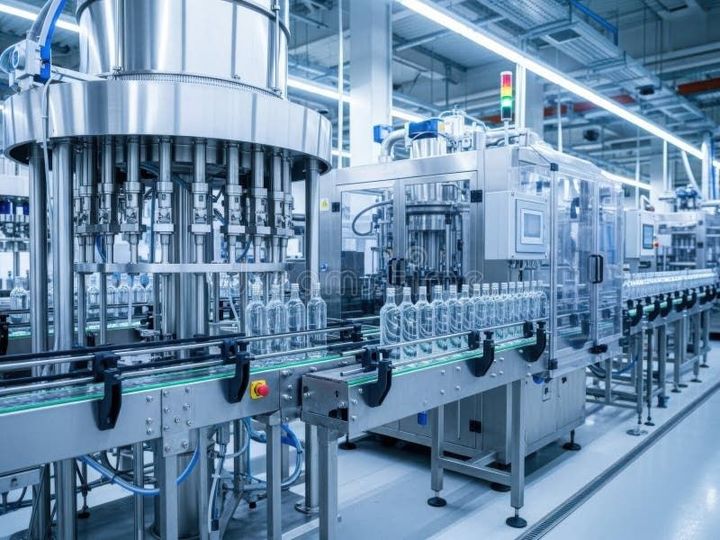
Discover How Modern Bottling Machines Work
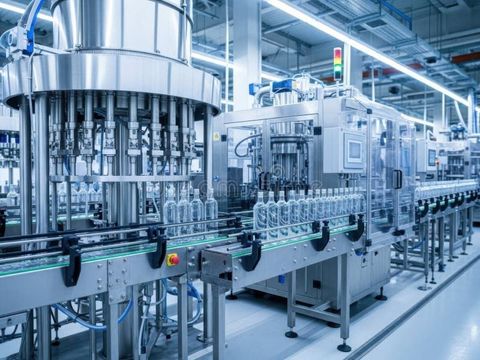
Modern bottling machines are industrial systems designed to fill liquids into bottles and prepare containers for distribution. They are used in manufacturing facilities where products need consistent filling, controlled packaging, and organised production processes.
Depending on the production requirement, a bottling system may perform one operation or combine several stages into a connected production line.
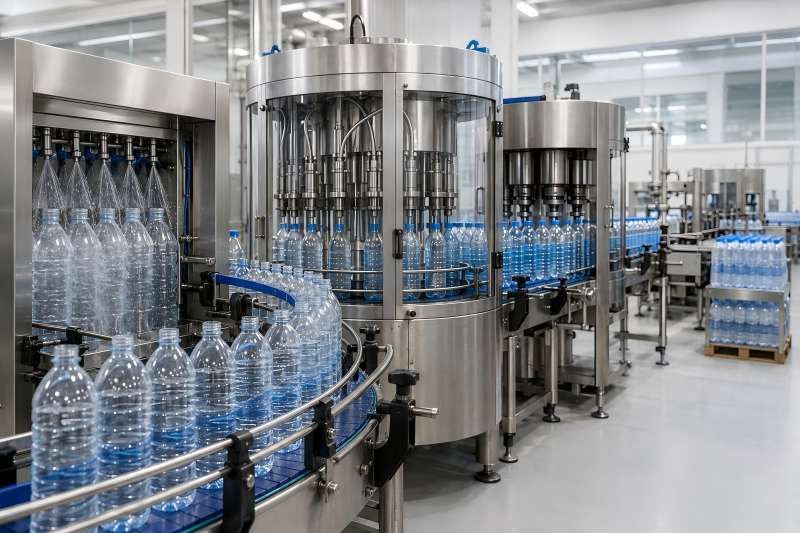
Small facilities may use semi-automatic equipment, while large manufacturing plants often use automated systems with conveyors and electronic controls.
These machines can handle different bottle materials, including plastic, glass, and selected metal containers. Their design depends on the liquid's characteristics, container shape, filling volume, and production requirements.
How Does a Bottling Machine Work?
A typical automated bottling line follows a sequence of operations:
Bottle feeding: Empty containers enter the production line through a conveyor or feeding system.
Bottle cleaning: Containers may pass through rinsing or cleaning equipment, depending on the product and packaging requirements.
Filling: The machine measures and dispenses the required quantity of liquid into each container.
Capping: Caps or closures are placed and secured to prevent leakage and contamination.
Labelling: Product information and identification labels are applied to the containers.
Inspection: Sensors or inspection systems check filling levels, cap placement, labels, and visible defects.
Packaging: Finished bottles are grouped into cartons, trays, or other transport packaging.
The exact sequence varies according to the product, container design, and production line configuration.
What Are the Main Components of a Bottling Machine?
A bottling system contains several mechanical, electrical, and control components.
Conveyor system: Moves containers between different production stages.
Filling unit: Dispenses liquid into bottles according to the selected filling method.
Pumps and valves: Control liquid movement and dispensing.
Capping unit: Places and secures bottle closures.
Labelling unit: Applies labels to containers.
Sensors: Detect bottle presence, filling conditions, and selected packaging defects.
Control panel: Allows operators to configure and monitor machine operations.
Cleaning system: Supports cleaning procedures where required by the product and equipment design.
Each component contributes to the overall operation of the bottling line.
Why Are Bottling Machines Important in Manufacturing?
Bottling machines help manufacturers manage repeated filling and packaging activities. They support organised production by controlling the movement of containers and coordinating different packaging operations.
Which Industries Use Bottling Machines?
Several industries use bottling equipment for liquid packaging.
Beverage manufacturing: Packages drinking water, carbonated drinks, juices, and other beverages.
Dairy processing: Handles milk, flavoured milk, and selected liquid dairy products.
Food processing: Packages edible oils, sauces, syrups, and liquid food products.
Pharmaceutical manufacturing: Uses specialised systems for selected liquid medicines and pharmaceutical preparations.
Cosmetics: Fills shampoos, lotions, liquid soaps, and personal care products.
Chemical manufacturing: Packages selected industrial liquids, cleaning products, and household chemicals.
Different products may require specialised contact materials, cleaning procedures, filling methods, and packaging controls.
What Problems Can Automated Bottling Machines Address?
Manual filling and packaging can involve repeated handling and variations between containers. Automated bottling systems help coordinate these operations through controlled mechanical movements and programmed settings.
For example, a water packaging facility may need to fill thousands of bottles through a continuous production process. An automated line can coordinate bottle movement, filling, capping, and labelling.
These systems can also reduce repeated manual handling and help manufacturers monitor production conditions. However, actual output and consistency depend on machine configuration, maintenance, product characteristics, and operating procedures.
Recent Developments in Bottling Machine Technology
Bottling technology continues to develop through automation, digital monitoring, improved filling controls, and packaging innovations. These developments influence how manufacturing facilities manage production and quality checks.
How Is Automation Changing Bottling Operations?
Modern bottling systems increasingly use electronic controls and connected equipment to coordinate production activities.
Important developments include:
Programmable logic controllers: PLC systems coordinate filling, conveyor movement, capping, and other machine operations.
Automatic inspection: Cameras and sensors help identify missing caps, incorrect labels, and selected packaging defects.
Digital monitoring: Operators can view production information and machine conditions through control panels.
Automatic changeovers: Some systems support adjustments for different bottle sizes and product configurations.
Production tracking: Connected equipment can record operating information, production counts, and machine interruptions.
Robotic handling: Robotic systems can support bottle packing, carton handling, and palletising activities.
What Are the Current Trends in Bottling Technology?
Manufacturers are paying greater attention to packaging materials, energy consumption, water usage, and production monitoring.
Some facilities are adopting equipment designed for lightweight containers and recyclable packaging materials. Others are integrating cleaning-in-place systems to manage internal equipment cleaning with less manual disassembly.
Flexible bottling lines are also gaining attention because manufacturers may need to handle different bottle shapes, sizes, and product categories. The suitability of these developments depends on production requirements and the characteristics of the products being packaged.
Bottling Machine Safety Standards and Regulations in India
Bottling operations involve electrical systems, moving machinery, liquid products, pressure equipment, and packaging materials. Manufacturing facilities must consider applicable workplace safety, product quality, and industry-specific requirements.
Which Indian Regulations Are Relevant?
Several Indian regulatory frameworks may apply to bottling operations:
Food Safety and Standards Act, 2006: Establishes the legal framework for food safety and regulation in India.
Food Safety and Standards Authority of India (FSSAI): Sets and administers food safety requirements relevant to food manufacturing and packaging.
Legal Metrology Act, 2009: Covers measurement and declarations on packaged commodities, including applicable quantity and labelling requirements.
Bureau of Indian Standards (BIS): Publishes technical standards for relevant machinery, packaging materials, and products.
Occupational Safety, Health and Working Conditions Code, 2020: Provides a framework for workplace health and safety.
Environment Protection Act, 1986: Establishes a framework for environmental protection relevant to industrial activities.
The exact requirements depend on the product category, facility, packaging process, and applicable regulations.
What Safety Checks Are Important?
Before operating bottling equipment, manufacturing teams should consider:
Electrical connections and machine grounding.
Emergency stop systems and protective guards.
Conveyor belts and moving mechanical components.
Filling valves, pumps, and pressure-related equipment.
Cleaning and sanitation procedures.
Contact materials suitable for the packaged product.
Operator training and maintenance records.
Correct product labelling and packaging declarations.
Food and pharmaceutical bottling operations may require additional hygiene, sanitation, and quality control procedures.
Types of Bottling Machines and Their Applications
Bottling machines are classified according to their automation level, filling method, and intended product. Selecting the appropriate system depends on production volume, liquid properties, bottle design, and packaging requirements.
What Are the Main Types of Bottling Machines?
Machine type | Main characteristics | Common applications |
|---|---|---|
Manual bottling machine | Requires substantial operator involvement | Small-scale packaging |
Semi-automatic bottling machine | Combines manual handling with powered filling | Small and medium production facilities |
Automatic bottling machine | Coordinates several operations automatically | Beverage and food manufacturing |
Water bottling machine | Designed for drinking water packaging | Water processing plants |
Liquid filling machine | Dispenses measured liquid quantities | Oils, sauces, and liquid products |
Carbonated beverage bottling machine | Handles beverages containing dissolved carbon dioxide | Soft drink production |
Pharmaceutical bottling machine | Designed for controlled liquid medicine packaging | Pharmaceutical facilities |
Volumetric Filling vs Flow Meter Filling
Different filling methods are used according to liquid characteristics and production requirements.
Comparison | Volumetric filling | Flow meter filling |
|---|---|---|
Working principle | Dispenses a measured volume | Measures liquid flowing through a meter |
Control method | Uses calibrated filling mechanisms | Uses electronic flow measurement |
Applications | Food liquids and selected beverages | Industrial liquids and beverage lines |
Main consideration | Filling accuracy and calibration | Meter compatibility and liquid properties |
Other filling methods include gravity filling, piston filling, and pressure filling. The appropriate method depends on liquid viscosity, foaming behaviour, temperature, and packaging requirements.
Automatic vs Semi-Automatic Bottling Machines
Automatic systems coordinate several packaging stages with limited manual intervention. Semi-automatic systems require operators to perform some tasks, such as placing containers or initiating filling cycles.
Small production facilities may use semi-automatic machines when their packaging requirements are relatively limited. Larger facilities may use automatic lines when continuous production and coordinated packaging operations are required.
Tools and Resources for Understanding Bottling Machines
Technical resources help manufacturers understand machine specifications, filling methods, packaging standards, and production requirements.
Which Resources Help With Bottling Machine Selection?
Common resources include:
Food Safety and Standards Authority of India: Information about food manufacturing and packaging requirements.
Bureau of Indian Standards: Technical standards relevant to machinery and packaging.
Legal Metrology Department: Information about packaged commodity declarations and measurement requirements.
Manufacturer technical manuals: Equipment specifications, operating instructions, and maintenance procedures.
Filling capacity calculators: Tools for estimating production output according to container volume and filling speed.
Packaging material specifications: Information about bottle dimensions, material compatibility, closures, and labels.
What Information Is Needed Before Selecting a Bottling Machine?
Manufacturers generally evaluate several factors:
Type and characteristics of the liquid.
Bottle material, shape, and capacity.
Required filling volume.
Expected production output.
Filling method and packaging sequence.
Cleaning and sanitation requirements.
Available floor space and utilities.
Maintenance and operator requirements.
Considering these details helps determine whether a manual, semi-automatic, or fully automated system is suitable for a particular production facility.
Frequently Asked Questions About Modern Bottling Machines
1. What Are Modern Bottling Machines Used For?
Modern bottling machines fill liquids into containers and may also perform rinsing, capping, labelling, inspection, and packaging operations.
2. How Do Automatic Bottling Machines Work?
Automatic bottling machines move containers through programmed production stages, including filling, capping, and labelling, using conveyors, sensors, and electronic controls.
3. What Are the Main Types of Bottling Machines?
Common types include manual, semi-automatic, automatic, water bottling, liquid filling, carbonated beverage, and pharmaceutical bottling machines.
4. Which Bottling Machine Is Used for Drinking Water?
Water bottling machines are designed for drinking water packaging and may combine bottle rinsing, filling, capping, and labelling operations.
5. What Factors Affect Bottling Machine Selection?
Liquid properties, bottle dimensions, filling volume, production requirements, hygiene procedures, and available factory space influence equipment selection.
Conclusion
Modern Bottling Machines support liquid packaging operations across beverage, food, pharmaceutical, cosmetic, and chemical industries. They combine different processes, including container feeding, filling, capping, labelling, and inspection. Machine types and filling technologies vary according to product characteristics and production requirements. Understanding these systems, along with relevant safety and packaging regulations, provides a useful foundation for learning about industrial bottling operations.