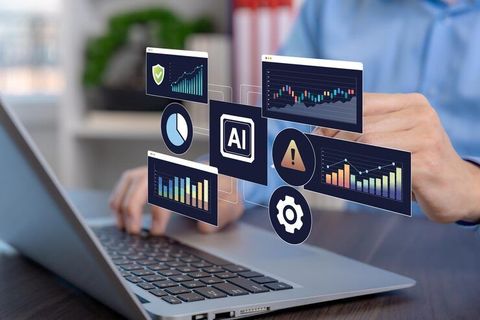
Datadog Monitoring Platform Guide: Cloud Infrastructure Observability, Performance Analytics, and Security Insights
The Datadog monitoring platform is a cloud-based observability solution designed to help organizations monitor infrastructure, applications, networks, databases, and security environments from a centralized interface. As digital systems continue to grow in complexity, monitoring tools play an increasingly important role in maintaining visibility across distributed environments.
Today, many organizations rely on cloud infrastructure, containerized applications, and hybrid environments that generate large volumes of operational data. Monitoring and observability platforms help transform that data into meaningful insights that support performance, reliability, and security objectives.
Over the past several years, observability has become a key focus area in information technology. Teams are seeking better ways to understand system behavior, identify anomalies, troubleshoot issues, and improve user experiences. Platforms such as Datadog contribute to these efforts by combining monitoring, analytics, automation, and security capabilities within a unified environment.
Globally, organizations across various industries use observability solutions to manage increasingly dynamic technology ecosystems. Understanding how these platforms work provides valuable knowledge for both beginners and experienced professionals. To better understand its role, it is important to examine who benefits from the platform and the challenges it helps address.
Who it affects and what problems it solves
The Datadog monitoring platform affects a wide range of stakeholders, including IT teams, software developers, cybersecurity professionals, cloud architects, system administrators, and business decision-makers. Organizations that depend on digital services often require continuous visibility into system health and performance.
One common challenge involves monitoring multiple environments simultaneously. Modern systems frequently consist of cloud services, virtual machines, containers, databases, APIs, and third-party applications. Without centralized monitoring, identifying the source of performance issues can become difficult and time-consuming.
Another challenge is managing operational complexity. As applications scale, teams must process large amounts of metrics, logs, traces, and security events. Observability platforms help organize this information and provide actionable insights that support faster troubleshooting and operational awareness.
Security monitoring is another area where organizations face ongoing challenges. Detecting unusual behavior, configuration issues, or potential threats requires continuous analysis across infrastructure and application layers. Integrated monitoring and security capabilities can help improve visibility into these events.
A common mistake made by organizations is focusing solely on infrastructure metrics while overlooking application performance and user experience data. Another frequent issue involves monitoring tools operating in isolated environments, creating information silos that limit visibility. Unified observability approaches help address these challenges by bringing multiple data sources together within a single analytical framework.
Recent updates and industry trends
Over the past year, observability technologies have continued to evolve alongside advancements in cloud computing, artificial intelligence, and automation. Many organizations globally are investing in unified platforms that combine monitoring, security, analytics, and incident management capabilities.
Recent industry research suggests that organizations increasingly prioritize end-to-end visibility across distributed systems. As microservices architectures become more common, monitoring solutions have expanded their capabilities for tracing transactions across multiple services and environments.
Automation has also become a significant trend. Modern observability platforms are incorporating machine learning techniques that assist with anomaly detection, event correlation, and predictive analysis. These capabilities can help teams identify potential issues before they affect service availability.
Security observability has gained additional attention as organizations seek to reduce operational silos between infrastructure monitoring and cybersecurity operations. Integrated security monitoring provides broader visibility into operational and security events within a single environment.
Many organizations globally are also adopting cloud-native technologies, including containers and orchestration platforms. As a result, monitoring tools continue to evolve to support dynamic infrastructure, automated scaling, and rapidly changing workloads. These developments reflect the growing importance of observability as a foundational component of modern digital operations.
Comparison of key monitoring and observability capabilities
The following comparison highlights common operational areas evaluated when assessing observability and monitoring platforms.
| Comparison Area | Monitoring Platform Capability |
|---|---|
| Efficiency | Centralized visibility across systems |
| Automation | Automated alerting and anomaly detection |
| Scalability | Supports growing workloads and environments |
| Maintenance | Simplifies monitoring management tasks |
| Flexibility | Integrates with diverse technologies |
| Speed | Accelerates issue identification |
| Reliability | Supports service availability monitoring |
| Resource Visibility | Tracks infrastructure utilization |
| Implementation Complexity | Varies depending on environment size |
| Integration Capability | Connects with cloud and software ecosystems |
| Security Monitoring | Provides event visibility and analysis |
| Analytics | Supports operational intelligence |
| Log Management | Centralizes log collection and analysis |
| Application Performance Monitoring | Tracks application behavior |
| Incident Response | Improves troubleshooting workflows |
The comparison demonstrates that modern observability platforms extend far beyond traditional infrastructure monitoring. Organizations increasingly seek comprehensive visibility across applications, networks, databases, and security environments.
Another key insight is the growing importance of integration capabilities. As technology ecosystems become more interconnected, platforms that support diverse environments can help reduce operational complexity and improve collaboration between teams.
Regulations and practical guidance
Organizations implementing monitoring and observability solutions should consider international standards, operational governance requirements, and security best practices. While specific requirements vary depending on industry and location, maintaining visibility into operational systems is often an important component of risk management and compliance programs.
Data collection practices should align with organizational policies regarding privacy, security, and information governance. Monitoring configurations should focus on collecting relevant operational data while maintaining appropriate safeguards for sensitive information.
Security expectations continue to evolve as organizations face increasingly sophisticated digital threats. Monitoring solutions should support secure access controls, audit capabilities, event logging, and visibility into system activities. Regular reviews of monitoring configurations can help ensure that systems continue to meet operational objectives.
Environmental considerations are also becoming more important. Efficient monitoring strategies can help organizations optimize resource utilization and improve infrastructure efficiency. Monitoring data can support informed decision-making related to system performance and operational sustainability.
Industry best practices often recommend establishing clear monitoring objectives, defining meaningful performance indicators, creating incident response procedures, and regularly evaluating monitoring effectiveness. Consistent governance practices help ensure that monitoring efforts remain aligned with organizational goals.
Which option suits different situations?
Small operations
Smaller teams often benefit from centralized dashboards and simplified monitoring workflows that provide visibility without excessive administrative complexity.
Large-scale systems
Large environments typically require advanced analytics, automation capabilities, distributed tracing, and extensive integration support to manage operational complexity.
Beginners
Individuals new to observability may focus initially on infrastructure metrics, application performance monitoring, and alert management fundamentals.
Experienced professionals and growing organizations
More mature teams often prioritize advanced analytics, security observability, automation workflows, and cross-environment visibility to support expanding operational requirements.
Tools and resources
Several tools and resources support monitoring, observability, and performance management initiatives:
- Datadog — Unified observability platform for infrastructure, applications, logs, and security monitoring.
- Prometheus — Open-source metrics collection and monitoring system.
- Grafana — Visualization platform for operational dashboards and analytics.
- OpenTelemetry — Framework for collecting telemetry data across systems.
- Elastic Stack — Platform for log management, search, and analytics.
- Kubernetes Dashboard — Resource visibility for container orchestration environments.
- Incident Management Templates — Structured workflows for operational response planning.
Frequently asked questions
What is the Datadog monitoring platform?
The Datadog monitoring platform is a cloud-based observability solution that helps organizations monitor infrastructure, applications, networks, databases, logs, and security events. It provides centralized visibility into operational environments and supports troubleshooting, analytics, and performance management activities.
How is observability different from traditional monitoring?
Traditional monitoring often focuses on predefined metrics and alerts. Observability expands visibility by combining metrics, logs, traces, and analytics to help teams understand system behavior and investigate unexpected issues. Observability provides broader context for diagnosing complex operational challenges.
Why is application performance monitoring important?
Application performance monitoring helps organizations understand how applications behave under different conditions. It provides visibility into response times, service dependencies, bottlenecks, and user experiences. These insights support troubleshooting efforts and help improve overall system reliability.
Are monitoring platforms only useful for large organizations?
No. Monitoring platforms can provide value for organizations of various sizes. Smaller teams may benefit from centralized visibility and simplified operations, while larger organizations often use advanced analytics, automation, and observability capabilities to manage complex environments and large-scale infrastructure.
What future trends are shaping observability platforms?
Future developments are expected to include greater automation, expanded artificial intelligence capabilities, enhanced security observability, deeper cloud-native integration, and improved predictive analytics. These trends aim to help organizations manage increasingly dynamic and distributed technology ecosystems more effectively.
Conclusion
The Datadog monitoring platform represents an important example of how modern observability solutions help organizations manage complex digital environments. By combining infrastructure monitoring, application performance monitoring, log management, analytics, and security visibility, these platforms provide a more comprehensive understanding of operational systems.
As technology ecosystems continue to expand, organizations increasingly require unified approaches to monitoring and analysis. Effective observability practices can improve troubleshooting efficiency, operational awareness, service reliability, and security visibility. Understanding the principles behind observability platforms allows organizations to make informed decisions regarding monitoring strategies and operational governance.
Looking ahead, global trends suggest continued growth in automation, artificial intelligence, cloud-native technologies, and integrated security observability. Organizations that stay informed about these developments will be better positioned to adapt to evolving operational requirements and technological advancements.