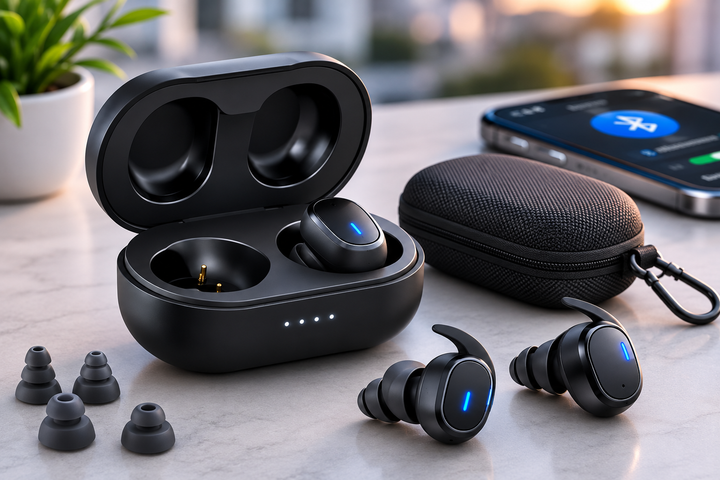
Wireless Bluetooth Earplugs: Key Features & Selection Guide
Wireless Bluetooth earplugs have become a common audio accessory for people who want a compact and cable-free listening experience.
They combine wireless connectivity, portable design, and modern audio technologies into a small device that can be used for music, calls, learning, fitness activities, and daily communication.
As wireless audio technology continues to improve, consumers are presented with a wide range of options featuring different designs, battery capacities, sound profiles, and smart functions. Understanding the key features of wireless Bluetooth earplugs can help users make informed decisions based on their personal needs and usage habits.
This guide explains how wireless Bluetooth earplugs work, their main features, common types, practical applications, and important factors to consider when selecting a suitable model.
Quick Overview Table
| Topic | Purpose | Key Features | Main Benefits | Common Applications |
|---|---|---|---|---|
| Wireless Bluetooth Earplugs | Wireless audio listening and communication | Bluetooth connectivity, rechargeable battery, microphones, touch controls, noise reduction | Mobility, convenience, hands-free communication, portability | Music listening, online learning, fitness activities, travel, phone calls |
What Are Wireless Bluetooth Earplugs?
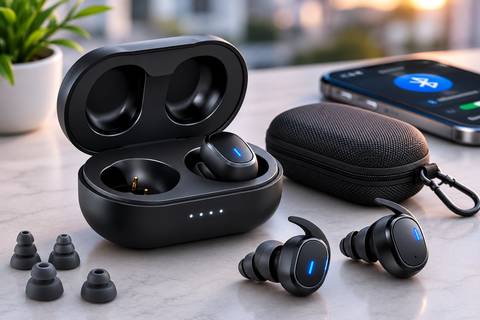
Wireless Bluetooth earplugs are small audio devices that connect to smartphones, tablets, laptops, and other compatible devices through Bluetooth technology. Unlike traditional wired earphones, they do not require a physical cable connection.
Most modern models include rechargeable batteries, built-in microphones, touch controls, and charging cases. These features allow users to listen to audio content and manage calls while maintaining mobility and convenience.
Why Wireless Bluetooth Earplugs Matter
Portable technology has become a major part of daily life. Wireless Bluetooth earplugs support communication, entertainment, education, and productivity across many environments.
Their compact design makes them easy to carry, while wireless connectivity reduces cable clutter. Improvements in battery performance, sound quality, and connectivity have also increased their popularity among users of different age groups.
Wireless Bluetooth Earplugs Facts
- Bluetooth connectivity continues to improve with newer wireless standards.
- Many modern models include active noise reduction technologies.
- Rechargeable charging cases extend overall usage time.
- Touch controls allow quick access to common functions.
- Built-in microphones support hands-free communication.
- Water-resistant designs are increasingly common.
- Wireless audio technology continues to evolve with lower latency and improved sound quality.
Understanding the Technology
Bluetooth is a wireless communication standard that enables devices to exchange data over short distances. Wireless earplugs use Bluetooth technology to receive audio signals from connected devices.
When paired with a smartphone or computer, the earplugs decode wireless audio data and convert it into sound through miniature speaker drivers. Integrated microphones can also transmit voice signals during calls or online meetings.
Key Features of Wireless Bluetooth Earplugs
Common features include:
- Bluetooth connectivity
- Rechargeable batteries
- Portable charging cases
- Built-in microphones
- Touch-sensitive controls
- Noise reduction technologies
- Water-resistant construction
- Voice assistant compatibility
- Automatic device pairing
- Multi-device connectivity
- Low-latency audio modes
- Battery status indicators
Main Types of Wireless Bluetooth Earplugs
True Wireless Earplugs
True wireless models operate without any connecting cable between the two earbuds. They are among the most popular options because of their compact and portable design.
Neckband Wireless Earplugs
These models include a lightweight band that rests around the neck while connecting both earbuds. They are often preferred by users who want added security during movement.
Sports Wireless Earplugs
Sports-focused designs include secure ear hooks, sweat resistance, and durable construction suitable for exercise and outdoor activities.
Noise-Reducing Wireless Earplugs
These earplugs incorporate technologies designed to minimize background sounds and improve listening experiences in busy environments.
Types Comparison Table
| Type | Portability | Comfort Level | Common Use |
|---|---|---|---|
| True Wireless | High | High | Daily Listening |
| Neckband | Medium | High | Long Usage Sessions |
| Sports Models | Medium | High | Fitness Activities |
| Noise-Reducing Models | High | High | Travel and Work Environments |
How Wireless Bluetooth Earplugs Work
- Bluetooth technology establishes a wireless connection with a compatible device.
- Audio data is transmitted from the source device.
- Internal processors decode the audio signal.
- Speaker drivers convert digital signals into sound.
- Built-in microphones capture voice input when required.
- Touch controls allow users to manage playback and calls.
- Rechargeable batteries power the device during operation.
Benefits and Advantages
Wireless Bluetooth earplugs provide several practical benefits:
- Cable-free listening experience
- Improved portability
- Hands-free communication
- Compact storage solutions
- Convenient touch controls
- Compatibility with multiple devices
- Support for online meetings
- Enhanced mobility during travel
- Better organization without tangled cables
- Flexible usage across different environments
Major Applications
Music and Entertainment
Users frequently use wireless earplugs for streaming music, podcasts, and videos.
Online Learning
Students can participate in virtual classes and educational sessions using integrated microphones and wireless audio capabilities.
Professional Communication
Wireless audio devices support video conferences, remote collaboration, and business communication.
Fitness Activities
Many people use sports-oriented wireless earplugs during walking, running, cycling, and gym workouts.
Travel
Travelers often use wireless earplugs to enjoy audio content while commuting or waiting at transportation hubs.
Real-World Examples
Example: Remote Worker
A remote professional uses wireless Bluetooth earplugs during virtual meetings and daily communication while working from different locations.
Example: Student
A student uses wireless earplugs for online lectures, educational videos, and digital learning activities.
Example: Fitness Enthusiast
A runner uses water-resistant sports earplugs during outdoor exercise while listening to training content and audio guidance.
Important Factors to Consider
Several factors should be evaluated before selecting wireless Bluetooth earplugs.
Sound Quality
Audio performance can vary depending on drivers, tuning, and supported audio technologies.
Battery Performance
Longer battery life can improve convenience during extended listening sessions.
Comfort and Fit
Earplugs should fit securely and comfortably for prolonged use.
Connectivity Stability
Reliable Bluetooth performance helps reduce interruptions and connection issues.
Water Resistance
Users involved in outdoor activities may benefit from water-resistant designs.
Microphone Quality
Clear voice transmission is important for calls and virtual meetings.
Charging Case Capacity
Charging cases provide additional battery power and improve portability.
Common Challenges and Easy Solutions
| Challenge | Possible Cause | Practical Solution |
|---|---|---|
| Connection Drops | Signal Interference | Move closer to connected device |
| Short Battery Runtime | Frequent Usage | Recharge regularly |
| Poor Fit | Incorrect Ear Tip Size | Try different ear tip options |
| Audio Delay | Device Compatibility | Enable low-latency mode if available |
| Uneven Sound | Improper Placement | Adjust positioning carefully |
Wireless Bluetooth Earplugs Best Practices
- Keep batteries adequately charged.
- Store earplugs inside their charging case when not in use.
- Clean ear tips regularly.
- Update companion apps when applicable.
- Avoid exposing devices to excessive moisture.
- Use appropriate volume levels.
- Check compatibility before pairing with devices.
- Follow manufacturer maintenance recommendations.
Future Trends and Industry Insights
Wireless audio technology continues to evolve rapidly.
Improved Bluetooth Standards
New wireless standards aim to improve efficiency, connectivity, and audio quality.
Artificial Intelligence Features
AI-powered audio processing is helping improve call clarity and adaptive sound management.
Enhanced Noise Reduction
Future devices are expected to provide more advanced environmental sound control.
Better Battery Technology
Improvements in battery efficiency may support longer listening times and faster charging.
Health and Activity Integration
Future wireless earplugs may include additional wellness monitoring and activity-related functions.
Spatial Audio Experiences
Emerging audio technologies are creating more immersive listening environments for users.
Expert Insights
Wireless Bluetooth earplugs have evolved from simple wireless accessories into multifunctional audio devices. Advances in connectivity, battery technology, audio processing, and intelligent controls continue to improve the user experience.
As portable technology becomes increasingly integrated into everyday life, wireless audio devices are likely to remain an important part of communication, learning, entertainment, and productivity.
Key Takeaways
- Wireless Bluetooth earplugs provide cable-free audio connectivity.
- Modern models include microphones, touch controls, and rechargeable batteries.
- Different types are available for daily use, fitness, travel, and communication.
- Comfort, sound quality, battery life, and connectivity are important selection factors.
- Noise reduction technologies are becoming increasingly common.
- Future devices will likely include more intelligent audio features.
Frequently Asked Questions (FAQ)
What are wireless Bluetooth earplugs?
Wireless Bluetooth earplugs are compact audio devices that connect to compatible devices using Bluetooth technology.
How do Bluetooth earplugs work?
They receive audio wirelessly from connected devices and convert digital signals into sound.
Are wireless Bluetooth earplugs suitable for calls?
Yes. Most models include built-in microphones that support voice communication.
What is the difference between wireless earplugs and wired earphones?
Wireless earplugs use Bluetooth connectivity, while wired earphones require physical cable connections.
What is active noise reduction?
It is a technology that helps reduce unwanted background sounds during listening sessions.
How long do wireless Bluetooth earplugs typically last?
Battery performance varies depending on usage patterns, features, and device specifications.
Are wireless earplugs suitable for exercise?
Many sports-oriented models are designed for fitness activities and outdoor use.
What should users consider when selecting wireless Bluetooth earplugs?
Sound quality, comfort, battery life, connectivity, microphone quality, and water resistance are important considerations.
Conclusion
Wireless Bluetooth earplugs have become a practical audio solution for communication, entertainment, learning, and everyday convenience. Their compact design, wireless connectivity, rechargeable batteries, and smart features make them suitable for a wide range of activities and environments.
Understanding key features such as sound quality, battery performance, comfort, connectivity, and noise reduction technologies can help users evaluate different options more effectively. As wireless audio technology continues to advance, future devices are expected to deliver even greater convenience, performance, and functionality.