Windsor EV 2026 Overview: Explore Features, Battery Basics, Range Details and Key Information
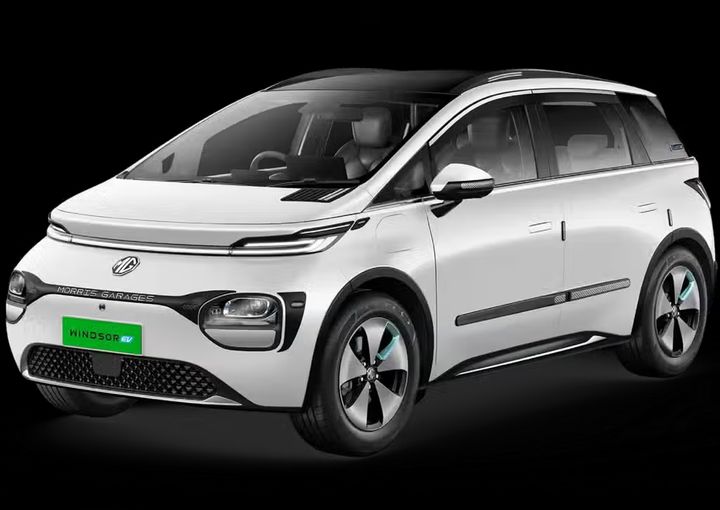
The Windsor EV 2026 is an electric crossover utility vehicle positioned for Indian urban and family mobility. It exists at a time when electric vehicles are becoming more visible in daily transport, especially in cities where fuel use, air quality, parking convenience, and charging access are major concerns.
The Windsor EV is part of MG Motor India’s electric vehicle portfolio. The official MG India pages list the Windsor EV and Windsor EV Pro as electric CUV models focused on cabin space, connected technology, and battery-powered driving. The Windsor EV specifications page also highlights battery performance, driving range, dimensions, technology features, and safety-related details.
For 2026 readers, the main point is simple: the Windsor EV is not only about electric propulsion. It is also about how battery range, charging habits, cabin utility, and vehicle safety combine in everyday use. A driver comparing electric cars in India may look at battery size, real-world range, EV charging network access, electric car insurance, vehicle safety rating, battery warranty, and long-term maintenance planning.
The Windsor EV is listed with two battery capacities in public automotive databases: a 38 kWh battery and a larger 52.9 kWh battery in Pro versions. The claimed range varies by battery version, with public listings showing around 331–332 km for the 38 kWh version and up to 449 km for the 52.9 kWh version.
Why the Windsor EV Matters Today
Electric vehicles matter because transport is changing from fuel-based mobility to battery-based mobility. This shift affects individual drivers, fleet operators, housing societies, urban planners, charging network operators, and insurance providers.
For daily users, the biggest practical questions are not complicated. They usually include:
- How far can the vehicle travel on one full charge?
- How long does charging take at home or a public charger?
- Is the cabin practical for family use?
- What safety and driver assistance features are included?
- How does battery health affect long-term use?
- Which tools help estimate charging time and trip planning?
The Windsor EV fits into this discussion because it is designed around practical space and electric driving. Public specification pages mention five-seat capacity, 134 bhp power output, 200 Nm torque, and boot capacity figures that vary by listing and version. Cardekho lists 604 litres for the Windsor EV, while some Pro-specific listings mention 579 litres for Pro variants.
The model is also relevant because India’s EV ecosystem is expanding. Public charging stations, battery testing systems, EV safety norms, and digital charging platforms are becoming more important. Government programs such as PM E-DRIVE have been created to support electric mobility and charging infrastructure in India. The official PM E-DRIVE portal states that the scheme was notified on September 29, 2024, and implemented from October 1, 2024.
Key Feature Areas
The Windsor EV’s feature set depends on variant, but the general areas to understand are cabin comfort, digital technology, safety equipment, charging compatibility, and battery range.
| Feature Area | What It Means for Users |
|---|---|
| Battery capacity | Determines stored energy and affects driving range |
| Claimed range | Laboratory-certified estimate, not always equal to daily range |
| Charging time | Depends on charger type, battery level, and power rating |
| Cabin layout | Important for family use, commuting, and luggage space |
| Safety systems | Includes airbags, braking support, sensors, and assistance features |
| Connected technology | Helps with vehicle status, charging data, and convenience functions |
A major highlight of the Windsor EV Pro is the larger 52.9 kWh battery. Cardekho lists the Windsor EV Pro with a 52.9 kWh battery, 449 km range, 134 bhp power, and 200 Nm torque. Pro listings also mention DC charging from 0–80% in about 50 minutes using a 60 kW charger, and AC charging using a 7.4 kW charger in about 9.5 hours.
Battery Basics Explained
An EV battery stores electrical energy and sends it to the motor. Battery capacity is measured in kilowatt-hours, written as kWh. A higher kWh figure usually means more stored energy, though vehicle weight, aerodynamics, tyre condition, traffic, air-conditioning use, and driving speed also affect range.
For the Windsor EV, the two main battery references are:
| Version Type | Battery Capacity | Claimed Range |
|---|---|---|
| Standard Windsor EV | 38 kWh | Around 331–332 km |
| Windsor EV Pro | 52.9 kWh | Up to 449 km |
These figures are useful for comparison, but real-world range can vary. City driving with moderate speeds may give different results from highway use. Heavy air-conditioning, high speed, steep climbs, and frequent acceleration can reduce range. Smooth driving, regenerative braking, correct tyre pressure, and planned charging can improve efficiency.
A simple way to understand EV range is this:
Available battery energy + driving efficiency = usable travel distance
For example, a larger battery gives more stored energy, but efficient driving determines how much distance that energy can produce.
Range Comparison Graph
Approximate claimed range by battery version:
| Battery Version | Claimed Range |
|---|---|
| 38 kWh | ███████████████████████ 331–332 km |
| 52.9 kWh | ███████████████████████████████ 449 km |
This graph is not a performance guarantee. It only visualizes publicly listed claimed range numbers for easier reading.
Charging Basics
Charging an EV depends on three factors: charger output, battery size, and current battery level. A home AC charger usually works best for overnight charging. A DC fast charger is more useful during longer road trips or when shorter charging sessions are needed.
Public listings show different charging times by variant and charger type. For the Windsor EV Pro, some listings mention 0–80% DC charging in about 50 minutes with a 60 kW charger and AC charging in about 9.5 hours using a 7.4 kW charger.
| Charging Type | Typical Use Case | Practical Note |
|---|---|---|
| AC home charging | Overnight charging | Better for routine daily use |
| AC wall charger | Housing society or workplace charging | Stable for planned charging |
| DC fast charging | Highway or urgent top-up | Useful, but availability varies |
| Public charging app | Location and session tracking | Helps reduce range anxiety |
In India, EV charging systems are also shaped by standards. NITI Aayog’s e-AMRIT page states that IS 17017 is the key Indian standard for EV charging systems, covering basic charging system features and requirements for AC and DC charging equipment.
Recent Updates
The past year has been active for the Windsor EV and India’s EV ecosystem.
In 2025, Windsor EV Pro information became more visible, with public listings highlighting a larger 52.9 kWh battery, up to 449 km claimed range, and added features such as ADAS on some Pro variants.
In April 2026, reports noted the introduction of a Windsor Commute variant aimed at fleet use, with a reduced feature set compared with higher trims. This matters because it shows how EV platforms are being adapted for different usage patterns, including shared mobility and urban transport.
In May 2026, the Government of India highlighted charging infrastructure progress under PM E-DRIVE. A PIB release dated May 12, 2026, stated that the PM E-DRIVE scheme has a total outlay of ₹10,900 crore for promoting electric mobility and supporting EV ecosystem development across multiple segments.
These updates show that the Windsor EV is part of a larger shift. Battery capacity, charging access, fleet electrification, and public charging policy are now connected topics.
Laws, Policies, and Standards in India
Electric vehicles in India are affected by central schemes, charging standards, safety rules, and state-level mobility policies.
The PM E-DRIVE scheme is one of the key central programs. The official portal states that it was launched through a Gazette notification dated September 29, 2024, and began implementation on October 1, 2024. The scheme covers green mobility support, testing agency upgrades, and ecosystem development.
Charging infrastructure is also regulated through technical standards. NITI Aayog’s e-AMRIT portal identifies IS 17017 as the key EV charging standard in India. This is important because charging safety, connector compatibility, and equipment quality directly affect user confidence.
BIS has also published standards related to EV charging infrastructure, including safety and quality parameters for connectors, communication protocols, EV supply equipment, and battery swapping systems, according to a PIB release dated August 1, 2025.
Safety assessment is another important area. Bharat NCAP has become part of India’s vehicle safety discussion, especially as more models enter crash assessment programs. Users comparing EVs should check available safety ratings, variant-level equipment, airbags, electronic stability control, braking systems, and driver assistance features.
Tools and Resources
EV users can make better decisions by using neutral planning tools and official information sources.
Useful resources include:
- Official vehicle specification pages: Best for variant-level dimensions, battery data, and feature availability.
- EV range calculator: Helps estimate range based on battery size, driving efficiency, and route type.
- Charging station locator apps: Useful for route planning and public charger availability.
- Electric car insurance comparison tools: Helpful for understanding coverage options, add-ons, depreciation terms, and battery-related clauses.
- Car loan eligibility calculator: Useful for planning monthly payment capacity without relying on promotional language.
- Government EV portals: PM E-DRIVE and e-AMRIT help explain charging standards, public infrastructure, and policy background.
- Home charging checklist: Helps evaluate parking access, electrical load, meter capacity, and charger installation readiness.
A simple EV planning table can help:
| Planning Area | What to Check |
|---|---|
| Daily travel | Average kilometres per day |
| Charging access | Home, office, or public charging |
| Insurance | Battery cover, roadside support, claim terms |
| Safety | Airbags, stability control, braking support, ADAS |
| Battery warranty | Coverage period and conditions |
| Route planning | Public chargers along common routes |
FAQs
What is the Windsor EV 2026?
The Windsor EV is an electric crossover utility vehicle from MG Motor India. It is designed around battery-powered driving, practical cabin space, and connected vehicle features. Public listings show standard and Pro battery versions with different range figures.
What battery options are associated with the Windsor EV?
Public automotive listings mention a 38 kWh battery for standard versions and a 52.9 kWh battery for Pro versions. Claimed range is listed around 331–332 km for the 38 kWh version and up to 449 km for the 52.9 kWh version.
Is the claimed range the same as real-world range?
No. Claimed range is measured under controlled test conditions. Daily range can change based on traffic, speed, air-conditioning, tyre pressure, road gradient, payload, and driving style.
How long does the Windsor EV Pro take to charge?
Some public Pro listings mention AC charging in about 9.5 hours using a 7.4 kW charger and DC charging from 0–80% in about 50 minutes using a 60 kW charger. Actual timing can vary by charger condition, battery temperature, and starting charge level.
Which tools are useful before choosing an EV?
Useful tools include an EV range calculator, charging station locator, electric car insurance comparison tool, car loan eligibility calculator, official specification pages, and government EV information portals such as e-AMRIT and PM E-DRIVE.
Conclusion
The Windsor EV 2026 is best understood as a practical electric mobility option for India’s changing transport landscape. Its key discussion points are battery capacity, claimed range, charging time, cabin utility, safety features, and the wider EV policy environment.
The standard 38 kWh version is linked with a claimed range of around 331–332 km, while the Pro version is linked with a 52.9 kWh battery and up to 449 km claimed range. These figures are useful for comparison, but real-world performance depends on driving conditions and charging habits.
For readers evaluating an electric vehicle, the safest approach is to review official specifications, check charging access, understand insurance terms, compare safety features, and use planning tools before making any decision. The Windsor EV sits within a fast-developing EV ecosystem where charging standards, public infrastructure, and battery technology will continue to shape the ownership experience in 2026 and beyond.