Welding Equipment Knowledge for Manufacturing Professionals
Welding equipment includes the machines, tools, protective gear, and accessories used to permanently join metal materials through heat, pressure, or both. These systems play an essential role across manufacturing, construction, automotive production, aerospace engineering, shipbuilding, energy infrastructure, heavy machinery, and repair operations.
Modern welding equipment has evolved significantly over the past decade. Digital controls, inverter technology, automation, and robotic integration have improved welding precision, productivity, energy efficiency, and operator safety. Whether used in a small workshop or a large industrial production line, selecting suitable welding equipment helps produce strong, consistent, and reliable welds.
How Welding Equipment Works
The welding process creates a strong bond by melting the edges of two or more metal pieces and allowing them to solidify together. Depending on the welding method, filler material, shielding gas, electrical current, or pressure may be used to improve weld quality.
Most welding systems include a power source that supplies electrical energy to generate heat. Accessories such as electrodes, welding torches, cables, gas regulators, and protective equipment support safe and efficient operation.
The choice of equipment depends on several factors, including:
- Material type
- Material thickness
- Required weld quality
- Production volume
- Working environment
- Operator skill level
Welding Equipment Comparison
| Equipment Type | Common Materials | Typical Applications | Main Advantages |
|---|---|---|---|
| Stick Welding (SMAW) | Steel, Cast Iron | Construction, Repair | Portable and durable |
| MIG Welding (GMAW) | Steel, Stainless Steel, Aluminum | Manufacturing, Automotive | Fast and easy operation |
| TIG Welding (GTAW) | Stainless Steel, Aluminum, Titanium | Aerospace, Precision Fabrication | High-quality clean welds |
| Flux-Cored Welding (FCAW) | Structural Steel | Heavy Fabrication | Suitable for outdoor work |
| Plasma Cutting Equipment | Conductive Metals | Metal Cutting | Accurate and efficient cutting |
| Spot Welding Equipment | Sheet Metal | Automotive Assembly | Fast production process |
Why Welding Equipment Is Important
Reliable welding equipment supports high-quality manufacturing while improving productivity and workplace safety.
Proper equipment helps:
- Produce strong welded joints
- Improve manufacturing consistency
- Reduce material waste
- Increase production efficiency
- Support automation
- Improve operator safety
- Maintain product quality
- Reduce maintenance requirements
Industries that depend on structural strength and precision require dependable welding systems to maintain quality standards.
Real-World Applications
Welding equipment is widely used in nearly every industrial sector.
Industrial Applications
- Automotive manufacturing
- Aerospace component production
- Heavy equipment manufacturing
- Oil and gas infrastructure
- Renewable energy projects
- Railway construction
- Shipbuilding
- Steel fabrication
- Pipeline installation
- Industrial maintenance
- Agricultural machinery
- Pressure vessel manufacturing
- Bridge construction
- Defense manufacturing
- Metal furniture production
Each application may require different welding technologies depending on production requirements and material specifications.
Major Types of Welding Equipment
Power Sources
- Transformer welding machines
- Inverter welding machines
- Engine-driven welders
- Multi-process welding machines
Modern inverter systems are widely preferred because they are lightweight, energy efficient, and provide stable arc performance.
Welding Machines
- MIG welders
- TIG welders
- Stick welders
- Flux-cored welders
- Resistance welders
- Laser welding systems
- Electron beam welding systems
Cutting Equipment
- Plasma cutters
- Oxy-fuel cutting systems
- Laser cutting machines
Cutting equipment is often integrated into fabrication facilities alongside welding operations.
Welding Accessories
- Welding torches
- Ground clamps
- Electrode holders
- Gas regulators
- Welding cables
- Wire feeders
- Cooling systems
- Positioners
- Welding tables
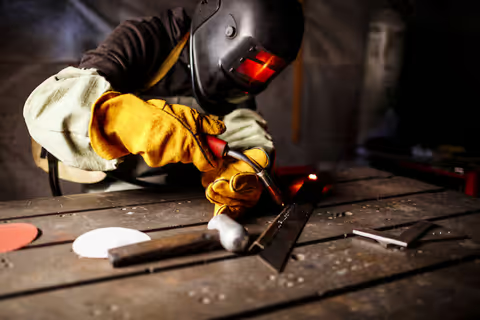
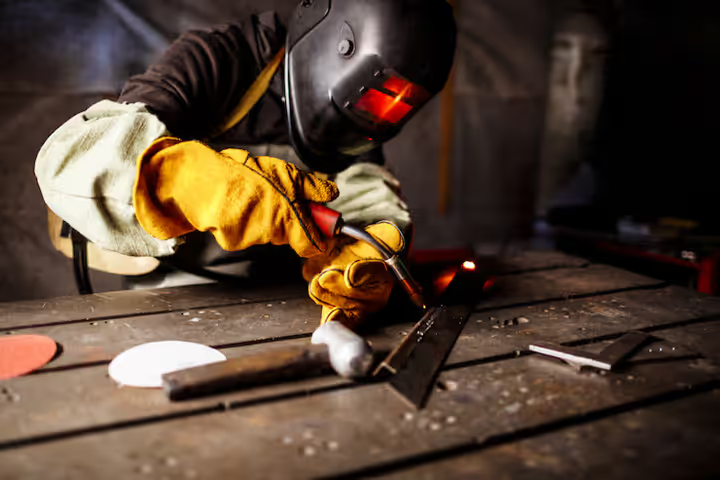
Personal Protective Equipment
- Welding helmets
- Auto-darkening helmets
- Flame-resistant clothing
- Welding gloves
- Safety boots
- Respirators
- Safety glasses
- Ear protection
Protective equipment minimizes exposure to heat, sparks, radiation, fumes, and flying particles.
Key Components of Welding Equipment
Every welding system includes several essential components working together.
Primary Components
- Power supply
- Welding torch
- Electrode or filler wire
- Ground cable
- Shielding gas system
- Wire feed mechanism
- Cooling unit
- Control panel
- Gas cylinder
- Safety controls
Advanced industrial systems also include digital monitoring, programmable settings, and quality inspection features.
Common Features in Modern Welding Equipment
Recent equipment includes advanced technologies that improve both productivity and weld quality.
Modern Features
- Digital display interfaces
- Inverter power technology
- Pulse welding capability
- Multi-process operation
- Automatic parameter adjustment
- Arc stability control
- Thermal overload protection
- Energy-efficient operation
- Memory settings
- Remote monitoring
- Wireless connectivity
- Robotic integration
- Data logging
- Predictive maintenance support
These features simplify operation while supporting consistent manufacturing quality.
Problems Welding Equipment Helps Solve
Manufacturers rely on welding equipment to overcome several production challenges.
Common Challenges
- Weak metal joints
- Inconsistent weld quality
- Production delays
- Material distortion
- Excessive heat input
- Operator fatigue
- Limited production capacity
- High defect rates
- Difficult repair operations
Modern welding technologies help reduce these issues through improved process control and automation.
Safety Practices
Safe welding requires both proper equipment and trained operators.
Essential Safety Practices
- Inspect equipment before use.
- Wear complete protective equipment.
- Ensure adequate workplace ventilation.
- Secure gas cylinders properly.
- Remove combustible materials from the work area.
- Follow electrical safety procedures.
- Maintain clean cables and connectors.
- Use appropriate grounding techniques.
- Keep fire extinguishers accessible.
- Follow manufacturer operating instructions.
Routine inspection helps identify worn components before they affect safety or weld quality.
Recent Industry Trends (2025–2026)
The welding industry continues to adopt smarter manufacturing technologies.
Recent Developments
- Greater adoption of robotic welding in automotive and heavy manufacturing facilities during 2025.
- Expanded use of collaborative robots for repetitive welding operations.
- Improved inverter technology providing higher energy efficiency.
- AI-assisted weld monitoring systems capable of detecting welding defects in real time.
- Growth of digital welding management platforms for production tracking.
- Increased use of cloud-connected industrial monitoring solutions.
- Better integration between welding equipment and Industrial Internet of Things (IIoT) platforms.
- Continued development of low-emission welding technologies supporting environmental sustainability.
- Wider implementation of automated quality inspection using machine vision during 2026.
These developments are helping manufacturers improve productivity while maintaining consistent product quality.
Standards and Regulations
Several international standards help improve welding quality and workplace safety.
Important Standards
- ISO 3834 for quality requirements in fusion welding.
- ISO 9606 for qualification of welders.
- ISO 4063 for welding process classification.
- IEC electrical safety standards for industrial equipment.
- Occupational workplace safety regulations applicable within each country.
- Environmental regulations governing welding fumes and workplace ventilation.
Organizations should regularly review applicable local regulations and industry standards to maintain compliance.
Useful Tools, Platforms, and Learning Resources
Professionals can continue developing welding knowledge through reliable educational resources.
Learning Resources
- American Welding Society (AWS)
- The Welding Institute (TWI)
- International Institute of Welding (IIW)
- Manufacturing Skills Standards Council resources
- Equipment manufacturer technical manuals
- Industrial safety training programs
- Engineering textbooks
- Technical webinars
- Metal fabrication publications
- Industrial automation learning platforms
These resources provide guidance on welding techniques, inspection methods, safety practices, and emerging technologies.
Frequently Asked Questions
What is the main purpose of welding equipment?
Welding equipment permanently joins metal materials by generating controlled heat, pressure, or both. It supports reliable manufacturing, repair, and fabrication across numerous industries.
Which welding method is commonly used in manufacturing?
MIG welding is widely used because it combines relatively simple operation with high productivity and consistent weld quality. However, the appropriate method depends on material type and application.
Why is protective equipment important during welding?
Protective equipment helps reduce exposure to sparks, ultraviolet radiation, heat, molten metal, and welding fumes, contributing to a safer working environment.
What industries use welding equipment the most?
Automotive, aerospace, construction, shipbuilding, energy, railway manufacturing, heavy equipment production, and industrial fabrication all rely extensively on welding equipment.
How is welding equipment changing today?
Recent advancements include robotic welding, digital monitoring, inverter technology, artificial intelligence, Industrial Internet of Things integration, predictive maintenance, and automated quality inspection systems.
Conclusion
Welding equipment forms the foundation of modern metal fabrication and industrial manufacturing. From portable welding machines to highly automated robotic systems, these technologies enable strong, reliable, and precise metal joining across a wide range of industries.
Understanding the different equipment types, major components, safety practices, industry standards, and emerging technologies helps organizations and professionals make informed decisions while maintaining quality, efficiency, and workplace safety. As digital manufacturing continues to advance throughout 2025 and 2026, welding equipment is becoming smarter, more connected, and better suited for the demands of modern industrial production.