Water Treatment and Management Systems Explained for Industrial Applications
Industrial operations depend heavily on water for manufacturing, cooling, cleaning, processing, and energy generation. From power plants and food processing facilities to chemical manufacturing and pharmaceutical production, reliable water treatment and management systems play a critical role in maintaining operational efficiency and environmental performance.
As industries continue to expand globally, the demand for advanced industrial water treatment technologies has increased significantly. Concerns about water scarcity, wastewater discharge regulations, and sustainable resource management are encouraging organizations to adopt smarter water management strategies.
Industrial water treatment systems are designed to remove contaminants, improve water quality, reduce equipment damage, and support safe industrial processes. These systems help industries manage raw water intake, wastewater recycling, filtration, and chemical treatment while improving overall process optimization.
Understanding Industrial Water Treatment Systems
Industrial water treatment refers to the process of treating water used in industrial environments to meet specific operational requirements. Different industries require different water quality standards depending on the application.
For example, boiler feedwater in thermal power plants must be highly purified to prevent scaling and corrosion, while cooling tower water treatment focuses on minimizing microbial growth and mineral buildup.
Modern industrial water treatment systems commonly include:
Filtration Systems
Industrial filtration systems remove suspended solids, sediments, and particulate matter from water. Common technologies include sand filtration, activated carbon filtration, and membrane filtration systems.
These systems improve water clarity and help protect industrial equipment from clogging and wear.
Reverse Osmosis Technology
Reverse osmosis systems are widely used in industrial water purification. They remove dissolved salts, heavy metals, and chemical contaminants through semi-permeable membranes.
Reverse osmosis technology is commonly used in:
- Pharmaceutical manufacturing
- Semiconductor production
- Food and beverage processing
- Industrial boiler systems
Because of its effectiveness, reverse osmosis remains one of the most searched high-value industrial water purification solutions globally.
Water Softening Systems
Hard water contains high levels of calcium and magnesium minerals that can damage industrial machinery. Water softening systems reduce mineral content and help prevent scale formation in pipes, boilers, and heat exchangers.
Industries using high-pressure steam systems often rely on industrial water softeners to improve energy efficiency and equipment lifespan.
Ultraviolet and Chemical Disinfection
Industrial facilities frequently use ultraviolet disinfection systems and chemical treatment solutions to control bacteria, viruses, and microbial contamination.
Chemical dosing systems may include chlorine treatment, ozone treatment, or anti-corrosion chemicals depending on the industry and water conditions.
Importance of Industrial Water Management
Water management is not limited to water purification alone. It also includes monitoring, recycling, wastewater treatment, and efficient water usage across industrial operations.
Global industries are under increasing pressure to improve water sustainability and reduce environmental impact. Efficient industrial water management systems help organizations:
- Reduce water waste
- Improve production efficiency
- Lower operational risks
- Maintain regulatory compliance
- Support environmental sustainability goals
According to global environmental studies, industrial sectors account for a significant share of freshwater consumption worldwide. As climate change and water shortages become major concerns, industries are investing in digital water management technologies and smart monitoring systems.
Industrial Wastewater Treatment Explained
Industrial wastewater contains contaminants such as oils, chemicals, metals, organic compounds, and suspended solids. Untreated wastewater can damage ecosystems and create serious environmental hazards.
Industrial wastewater treatment systems are designed to remove pollutants before water is discharged or reused.
Primary Treatment
Primary treatment removes large solids and suspended particles through sedimentation and physical separation methods.
Secondary Treatment
Secondary treatment uses biological treatment processes where microorganisms break down organic pollutants.
This stage is commonly used in food processing plants, paper manufacturing facilities, and textile industries.
Tertiary Treatment
Tertiary treatment involves advanced purification technologies such as membrane filtration, ion exchange systems, and advanced oxidation processes.
This stage helps industries achieve higher water quality standards for reuse and recycling.
Smart Water Monitoring and Automation
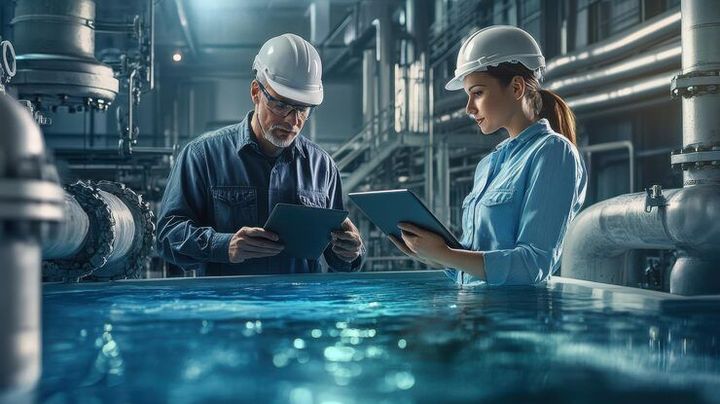
Modern industrial facilities increasingly use smart water management systems powered by automation and data analytics.
Industrial IoT sensors and monitoring platforms help track:
- Water quality parameters
- Chemical dosing levels
- Flow rates
- Energy consumption
- Leakage detection
- Equipment performance
Real-time monitoring improves predictive maintenance and helps reduce operational downtime. Automated water treatment systems also improve consistency and minimize human error.
Artificial intelligence and machine learning technologies are now being integrated into industrial water treatment infrastructure to optimize chemical usage and improve treatment efficiency.
Industries That Depend on Advanced Water Treatment
Many industries rely heavily on industrial water purification and wastewater management systems.
Power Generation:Thermal and nuclear power plants require ultrapure water for steam production and cooling systems. Poor water quality can reduce efficiency and damage expensive equipment.
Oil and Gas:The oil and gas sector uses industrial wastewater treatment technologies to manage produced water, drilling fluids, and refinery wastewater.
Food and Beverage:Water quality directly affects product safety and manufacturing hygiene in food processing facilities.
Pharmaceutical Manufacturing:Pharmaceutical companies require highly purified water systems for production, laboratory applications, and quality control.
Chemical Processing:Chemical industries use advanced water treatment systems to manage process water, cooling systems, and hazardous wastewater streams.
Emerging Trends in Industrial Water Technology
The industrial water treatment industry is evolving rapidly with new technologies and sustainability initiatives.
Water Recycling and Reuse
Many industries are adopting closed-loop water recycling systems to reduce freshwater consumption.
Water reuse technologies help industries recover treated wastewater for cooling, cleaning, and industrial processing.
Desalination Technologies
Industrial desalination systems are becoming increasingly important in regions facing freshwater shortages.
Advanced membrane technologies are improving desalination efficiency while reducing energy consumption.
Energy-Efficient Treatment Systems
Energy-efficient pumps, automated filtration systems, and smart process controls are helping industries lower operational energy usage.
Sustainable Water Infrastructure
Sustainability reporting and environmental regulations are encouraging industries to invest in greener water treatment infrastructure and carbon reduction strategies.
Challenges in Industrial Water Management
Despite technological progress, industrial water management still faces several challenges.
Common issues include:
- Aging infrastructure
- High energy requirements
- Chemical handling complexities
- Water scarcity
- Regulatory compliance demands
- Rising treatment costs
- Disposal of treatment sludge
Industries must continuously adapt to changing environmental standards while maintaining operational efficiency.
The Future of Industrial Water Treatment
The future of industrial water treatment will likely focus on sustainability, automation, and resource recovery. Advanced filtration technologies, AI-powered monitoring systems, and water recycling innovations are expected to shape the next generation of industrial infrastructure.
Governments and environmental agencies worldwide are strengthening water conservation initiatives, encouraging industries to adopt more responsible water management practices.