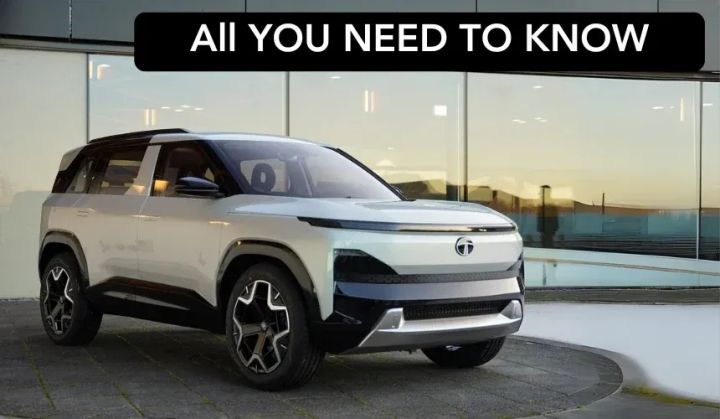
Upcoming Tata Sierra EV 2026 Guide: Expected Launch, Range, Features and Battery Information
The Tata Sierra EV 2026 is one of the most discussed upcoming electric SUVs in India. The Sierra name has strong recall because the original Tata Sierra was known as one of India’s early lifestyle SUVs. The newer version is expected to bring that familiar identity into the electric vehicle era.
As of now, Tata Motors has not released the final public specification sheet for the Sierra EV. That means details such as final range, battery pack, charging speed, trim line-up, cabin equipment, and official launch date should be treated as expected information until confirmed by the company.
The purpose of this guide is to explain what the Tata Sierra EV 2026 may represent, why it matters in the Indian EV market, how it fits into current electric SUV trends, and what buyers and researchers should track before official confirmation.
The Sierra EV is expected to sit in an important space between compact electric SUVs and larger premium EVs. It may appeal to people looking for:
- An electric SUV with modern design
- A familiar Indian brand name
- Better cabin space than smaller EVs
- Practical range for city and highway use
- Connected car technology
- Safer and cleaner mobility choices
Tata has already built a strong electric passenger vehicle presence in India through models such as Tiago EV, Punch EV, Nexon EV, Curvv EV, and Harrier EV. The Sierra EV may become another major product in that journey, especially as more Indian families explore electric SUVs for regular mobility.
Context: What the Tata Sierra EV 2026 Is
The Tata Sierra EV 2026 is expected to be an electric SUV inspired by the Sierra nameplate. The modern Sierra design has been shown in concept and pre-production form at major Indian automotive events. Tata Motors also showcased the all-new Sierra at Bharat Mobility Global Expo 2025, reviving the legacy badge for a new generation of vehicles.
The upcoming Sierra EV is expected to follow Tata’s broader electric mobility strategy. It may combine SUV styling, digital features, connected technology, and battery-powered driving. However, the final version may differ from concept previews.
A useful way to understand the Sierra EV is to view it as a bridge between Tata’s mass-market EVs and its more premium electric future. The model is expected to compete in a growing electric SUV category where buyers compare range, charging convenience, safety, cabin space, software features, and long-term ownership experience.
Because the Sierra EV is not yet fully launched with confirmed public data, any article or guide about it should use careful language. Terms such as “expected,” “likely,” “anticipated,” and “pre-launch information” are safer and more accurate than confirmed claims.
Expected Tata Sierra EV 2026 Information at a Glance
| Topic | Current Status |
|---|---|
| Vehicle type | Upcoming electric SUV |
| Brand | Tata Motors |
| Launch status | Not fully launched with final public specifications |
| Expected launch window | Reports indicate 2026 timing, with some reports pointing to July–September 2026 |
| Battery details | Not officially confirmed |
| Range details | Not officially confirmed |
| Charging details | Not officially confirmed |
| Main audience | EV researchers, SUV buyers, Tata EV followers, clean mobility users |
| Key point | All technical data should be treated as expected until official confirmation |
Reports in May 2026 said Tata Motors is preparing the Sierra EV for launch in the July–September 2026 period, while also noting that final feature and pricing details were not yet fully disclosed.
Importance: Why the Tata Sierra EV Matters Today
The Tata Sierra EV matters because the Indian EV market is moving from early adoption to wider family usage. Earlier, many EV conversations were focused on small cars, city range, and basic charging access. Now, the conversation has expanded toward electric SUVs, highway travel, battery warranty, charging networks, and real-world range.
For many Indian users, SUVs are attractive because they provide higher seating, stronger road presence, and better practicality for mixed road conditions. An electric SUV with a recognizable nameplate can influence how people think about EVs.
The Sierra EV may affect several groups:
- Family vehicle researchers: People comparing petrol, hybrid, and electric SUVs
- Urban commuters: Users looking for lower running emissions and home charging convenience
- Highway users: Drivers who need better range and reliable charging planning
- EV content readers: People searching for expected launch, range, battery, and feature information
- Policy watchers: Users tracking India’s transition toward electric mobility
The problems this topic helps explain include:
- How electric SUVs are evolving in India
- Why range and charging infrastructure matter
- What users should check before considering an upcoming EV
- Why official confirmation is important before relying on expected specifications
- How government EV programs support the broader ecosystem
The Sierra EV also matters because Tata Motors faces stronger competition in the EV space. Mahindra, JSW MG Motor, Hyundai, BYD, and other brands are increasing their electric mobility focus. Reuters reported that Tata’s EV leadership is facing rising pressure from competitors, while Tata continues working on new electric platforms and models.
Recent Updates: What Has Changed in the Past Year
The last year has been important for Tata’s EV roadmap and the Sierra nameplate.
In January 2025, the all-new Tata Sierra appeared at Bharat Mobility Global Expo 2025. The public showcase helped bring the Sierra name back into discussion, especially among Indian SUV followers.
In November 2025, Reuters reported that Tata launched the new Sierra SUV in India and planned to follow it with an electric version in fiscal year 2026. The report also noted that Tata had grown its market share significantly since 2019 and was using safety-focused models and EVs as part of its growth strategy.
In May 2026, reports indicated that the Sierra EV may arrive between July and September 2026. These reports also stated that final specifications were still not fully disclosed, which is why expected language remains necessary.
In June 2026, Reuters reported that Tata is working with Chery technology for premium EV development under the Avinya brand. While this report is not specifically about Sierra EV, it shows that Tata is still actively developing its electric vehicle roadmap and preparing for stronger competition in the premium EV category.
Recent EV Market Trend Snapshot
| Trend | What It Means for Sierra EV |
|---|---|
| More electric SUVs | Sierra EV may enter a more competitive but more mature segment |
| Higher range awareness | Users will compare real-world range carefully |
| Charging network expansion | Public charging availability may improve over time |
| Stronger safety expectations | Users may expect advanced safety equipment |
| More digital cabins | Infotainment, connected tech, and ADAS may become key comparison points |
| Policy-backed infrastructure | Charging deployment can improve long-term confidence |
Simple EV Interest Graph
Search and user interest in electric SUVs can be understood like this:
| Period | EV SUV Interest Level |
|---|---|
| 2022 | Low to moderate |
| 2023 | Moderate |
| 2024 | Rising |
| 2025 | Strong |
| 2026 | Very strong |
This is not a search-volume graph. It is a simplified market-interest view based on product launches, EV policy activity, charging expansion, and rising competition in electric SUVs.
Laws and Policies: India EV Rules and Programs
The Tata Sierra EV will operate within India’s broader electric mobility framework. While passenger electric cars may not always receive the same direct demand incentives as electric two-wheelers, three-wheelers, and buses, the entire EV ecosystem benefits from policy support around charging infrastructure, testing, manufacturing, and adoption.
India’s PM E-DRIVE scheme came into effect from October 1, 2024, with an approved financial outlay of ₹10,900 crore. Its aim is to accelerate electric mobility adoption, support charging infrastructure, and strengthen the EV manufacturing ecosystem.
The scheme includes support for public EV charging stations. Government updates in 2026 stated that ₹2,000 crore had been allocated for public EV charging station deployment on a pan-India basis.
In May 2026, the government again highlighted PM E-DRIVE as a major program for nationwide charging expansion and EV ecosystem development.
For an electric SUV such as the expected Sierra EV, the most relevant policy impact is likely to be charging network expansion rather than a direct passenger-car incentive. Better charging infrastructure can reduce range anxiety and make electric SUVs more practical for intercity travel.
Important policy-related points for readers:
- EVs must comply with Indian vehicle safety and homologation norms.
- Battery and charging systems need to meet applicable technical standards.
- Public charging infrastructure is being expanded under government-backed programs.
- State EV policies may vary across India.
- Registration benefits and road tax rules can differ by state.
- Final policy impact should be checked near the official launch period.
Expected Feature Areas to Track
Because final details are not confirmed, the best approach is to track feature categories rather than assume exact specifications.
| Feature Area | What to Watch |
|---|---|
| Battery | Chemistry, battery capacity, warranty terms, thermal management |
| Range | Certified range and real-world range estimates |
| Charging | AC charging time, DC fast charging capability, charging port location |
| Safety | Airbags, ESC, ADAS, crash safety data, driver assistance |
| Cabin | Seating layout, boot space, display setup, connected features |
| Software | Navigation, EV route planning, app controls, OTA updates |
| Practicality | Ground clearance, tyre size, highway comfort, rear seat space |
For EV researchers, battery and charging information will be especially important. Battery capacity alone does not tell the complete story. Efficiency, weight, motor tuning, aerodynamics, software calibration, and driving conditions all affect real-world range.
Tools and Resources
The following tools and resources can help readers understand an upcoming electric SUV like the Tata Sierra EV 2026.
- EV range calculator: Helps estimate practical range based on driving style, temperature, load, and highway usage.
- Charging time calculator: Helps compare AC and DC charging time using battery size and charger output.
- Route planning apps: Useful for checking charging stops on intercity routes.
- Public charging maps: Help locate charging points near offices, highways, malls, hotels, and residential areas.
- State transport portals: Useful for checking registration rules and state-level EV benefits.
- Battery warranty checklist: Helps compare warranty years, kilometre limits, and coverage conditions.
- Insurance premium comparison tools: Useful for understanding how EV insurance may differ based on battery, motor, and vehicle category.
- EMI calculator: Helps estimate monthly finance planning using down payment, interest rate, and tenure.
- Owner community forums: Useful for real-world range and charging feedback after a vehicle reaches roads.
- Official brand website: The most reliable source for final confirmed specifications after launch.
Useful Research Checklist
Before relying on any Tata Sierra EV 2026 article, check whether it clearly states:
- The vehicle is upcoming
- Specifications are expected, not final
- Battery capacity is not confirmed unless officially announced
- Range is not confirmed unless officially announced
- Charging time is not final unless officially announced
- Launch timing may change
- Final variant information may differ from early reports
This helps keep the article educational, accurate, and aligned with ad policy expectations.
Frequently Asked Questions
Is the Tata Sierra EV 2026 officially launched?
As of the current pre-launch information, the Tata Sierra EV has not been fully launched with a final public specification sheet. Reports indicate a 2026 launch timeline, but final details should be checked through official Tata Motors communication.
What is the expected range of the Tata Sierra EV 2026?
The final certified range has not been officially confirmed. Any range figure published before the official specification sheet should be treated as expected or estimated. Real-world range will also depend on speed, road conditions, climate control usage, tyre pressure, driving mode, and passenger load.
What battery will the Tata Sierra EV use?
The exact battery capacity and chemistry have not been officially confirmed. Readers should wait for Tata Motors to release final technical data. Important battery points to check later include capacity, warranty, thermal management, charging support, and safety systems.
Will the Tata Sierra EV support fast charging?
Fast charging support is expected in modern electric SUVs, but the final DC charging speed and charging time are not confirmed yet. Official figures should be checked after launch because charging time depends on charger rating, battery temperature, state of charge, and battery management software.
Why is the Tata Sierra EV important for India?
The Sierra EV is important because it may bring a familiar Indian SUV name into the electric era. It may also increase awareness around electric SUVs, range planning, charging infrastructure, and battery technology. Its timing is relevant because India is expanding EV charging infrastructure and more brands are entering the electric SUV segment.
Conclusion
The Tata Sierra EV 2026 is an important upcoming electric SUV for India, but it should be discussed carefully because final specifications are not yet confirmed. A safe and accurate approach is to use phrases such as expected launch, expected range, expected features, and battery information.
The Sierra EV may become relevant for users who want a practical electric SUV with a familiar Indian brand identity. Its final impact will depend on confirmed range, battery capacity, charging speed, safety features, cabin practicality, software experience, and public charging access.
India’s EV ecosystem is also changing quickly. Government-backed charging infrastructure, rising competition, and stronger consumer awareness are making electric SUVs more important than before. Programs such as PM E-DRIVE are especially relevant because they support charging infrastructure and wider EV adoption.
For now, the most reliable position is simple: the Tata Sierra EV 2026 is an upcoming electric SUV, and final information should be verified only after official announcement. Until then, readers should treat all battery, range, charging, and feature details as expected information rather than confirmed facts.