Understanding Paper Recycling Machines: Industrial Recycling Equipment, Production Workflows, and Sustainability Insights
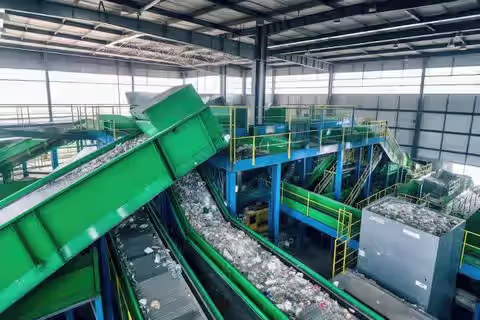
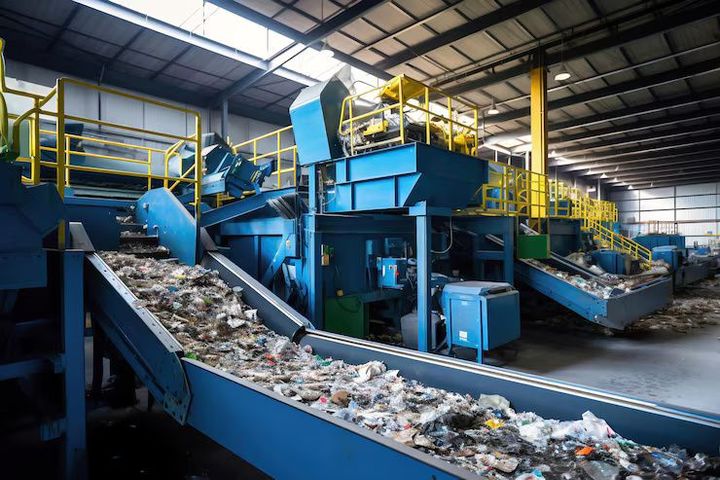
Paper recycling machines are industrial systems designed to transform recovered paper materials into usable fiber and, in many facilities, new paper products. These systems combine mechanical processing, water-based treatment, screening, cleaning, separation, and fiber preparation. The exact configuration depends on the material being processed and the required output quality.
Paper recycling has become an important part of modern resource management because recovered paper can re-enter manufacturing workflows rather than remaining in general waste streams. Efficient processing can also support more organized material handling and help facilities manage changing feedstock characteristics.
Recent industry developments have placed greater attention on automation, process monitoring, energy management, water reuse, and equipment integration. Digital controls can help operators observe production conditions and identify process variations more quickly.
For beginners, understanding the complete workflow is more useful than focusing on one machine alone. The following sections explain the equipment, applications, operational considerations, and sustainability factors that shape modern paper recycling systems.
Who it affects and what problems it solves
Paper recycling systems are relevant to recycling facilities, paper manufacturers, packaging operations, waste management organizations, industrial engineers, plant managers, maintenance teams, and environmental professionals. They can also influence businesses that generate substantial quantities of paper-based material and need structured material recovery processes.
One common challenge is inconsistent incoming material. Recovered paper can contain cardboard, labels, coatings, adhesives, plastics, metals, moisture, and other unwanted materials. Processing equipment therefore needs to separate useful fiber from contaminants while maintaining suitable throughput and product quality.
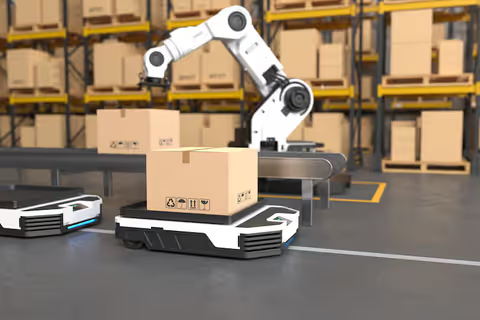
Another challenge involves process efficiency. Manual handling alone can create inconsistent separation and greater operational complexity. Automated conveyors, sorting equipment, pumps, screens, and control systems can coordinate different stages of the workflow.
Water management is another practical consideration. Pulping and cleaning processes can require substantial water circulation, making filtration, clarification, reuse, and wastewater management important parts of facility planning.
A frequent mistake is selecting equipment based only on capacity. Material composition, fiber quality, contamination levels, available space, energy requirements, maintenance capability, and downstream processing requirements should also be considered.
Facilities should therefore evaluate the entire production workflow instead of treating each machine as an isolated component. A balanced system can provide better coordination between preparation, pulping, screening, cleaning, dewatering, and final processing stages.
Recent updates and industry trends
Over the past year, the paper recycling sector has continued to focus on automation, process visibility, resource efficiency, and equipment integration. Modern systems increasingly combine mechanical equipment with sensors, programmable controls, monitoring interfaces, and data collection.
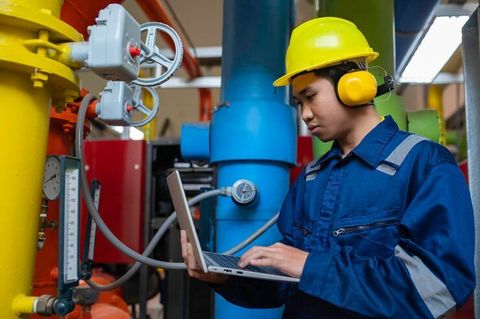
Recent industry research suggests that digital monitoring is becoming increasingly useful for identifying changes in flow rates, pressure, vibration, temperature, and equipment performance. Such information can support preventive maintenance and more consistent operation.
Automation developments are also affecting sorting and material preparation. Advanced separation technologies can help identify different material characteristics before or during processing, reducing unnecessary contamination in later stages.
Many organizations globally are also paying closer attention to water circulation and energy management. Closed-loop or partially recirculating water systems can reduce the need for continuous fresh-water input when appropriately designed and maintained.
Another trend is modular system design. Modular equipment can make it easier to adapt processing stages as feedstock composition or production requirements change. Integration with industrial machinery monitoring platforms and environmental management software can also improve visibility across larger facilities.
These developments show that modern recycling technology is moving beyond basic mechanical processing toward connected, monitored, and resource-conscious production systems.
Comparison of paper recycling equipment options
Different equipment categories perform different functions within the recycling workflow. The following comparison highlights common characteristics that help explain how individual systems contribute to overall plant performance.
| Equipment or approach | Efficiency | Automation | Scalability | Maintenance | Flexibility | Speed | Reliability | Energy use | Complexity | Integration |
|---|---|---|---|---|---|---|---|---|---|---|
| Manual sorting | Low to moderate | Low | Limited | Moderate | High | Low | Variable | Low | Low | Low |
| Conveyor sorting | Moderate | Moderate | High | Moderate | Moderate | Moderate | High | Moderate | Moderate | High |
| Bale breaking system | High | High | High | Moderate | Moderate | High | High | Moderate | Moderate | High |
| Pulping system | High | High | High | Moderate | High | High | High | Moderate to high | High | High |
| Screening system | High | High | High | Moderate | Moderate | High | High | Moderate | High | High |
| Cleaning system | High | High | High | Moderate | Moderate | Moderate | High | Moderate | High | High |
| Deinking system | High | High | High | High | Moderate | Moderate | High | High | High | High |
| Dewatering equipment | High | High | Moderate to high | Moderate | Moderate | High | High | Moderate | Moderate | High |
| Manual inspection | Moderate | Low | Limited | Low | High | Low | Variable | Low | Low | Low |
| Integrated recycling line | Very high | Very high | Very high | High | High | High | High | Variable | Very high | Very high |
The main insight is that no single machine performs every recycling function. Facilities usually require a coordinated sequence of equipment, with each stage preparing material for the next.
Integrated recycling plant equipment can improve workflow coordination, while smaller operations may prefer simpler configurations that match their available material volume and technical capabilities. The appropriate arrangement depends on feedstock, output requirements, available infrastructure, and operational expertise.
Regulations and practical guidance
Paper recycling facilities generally need to consider applicable environmental requirements, workplace safety expectations, equipment standards, wastewater management, noise control, material handling, and machinery safeguards. Specific requirements vary according to the facility's location and operating conditions.
International standards and recognized engineering practices can provide useful frameworks for machinery safety, electrical systems, process controls, quality management, and environmental management. Facilities should also maintain documented procedures for inspections, maintenance, emergency response, and equipment operation.
Environmental considerations extend beyond the final recycled material. Energy consumption, water circulation, sludge management, airborne particles, chemical handling, and equipment efficiency can all influence the environmental profile of a recycling process.
Industrial recycling equipment should be selected with appropriate guarding, emergency controls, access provisions, and maintenance procedures. Operators should receive training relevant to the equipment they use.
Regular inspection is particularly important for conveyors, rotating machinery, pumps, screens, pressure systems, and electrical components. Preventive maintenance can help identify wear before it develops into a larger operational problem.
Which option suits different situations?
Small operations: A compact workflow with basic sorting, preparation, pulping, and dewatering equipment may be easier to manage.
Large-scale systems: Integrated automation, advanced screening, monitoring, and material recovery systems may provide stronger coordination across multiple processing stages.
Beginners: Simpler equipment configurations can make training, maintenance, and process understanding more manageable.
Experienced professionals: Advanced process controls, sensor systems, and automated monitoring can support more detailed operational management.
Growing organizations: Modular paper recycling equipment can provide a pathway for gradual expansion as material volumes and processing requirements change.
Tools and resources
Several tools and resources can support planning, monitoring, and management of paper recycling operations.
- Process flow diagrams — Help map each material-processing stage and identify connections between equipment.
- Capacity calculators — Assist with estimating material throughput and equipment requirements.
- Maintenance management systems — Organize inspection schedules, service records, and equipment histories.
- Industrial monitoring platforms — Track operational information from connected machinery and sensors.
- Energy management systems — Help facilities monitor energy consumption across major equipment groups.
- Environmental management software — Supports documentation and monitoring of environmental performance.
- Material quality testing tools — Help evaluate recovered fiber characteristics and contamination levels.
Using these resources together can improve planning and make operational decisions more systematic.
FAQ section
What is a paper recycling machine?
A paper recycling machine is industrial equipment used to process recovered paper into reusable fiber or prepared material for further manufacturing. Depending on the system, equipment can perform sorting, bale breaking, pulping, screening, cleaning, deinking, thickening, or dewatering. A complete recycling line normally combines several machine types rather than relying on one universal unit.
How does a paper recycling workflow work?
A typical workflow begins with collection and sorting, followed by material preparation and pulping. The resulting fiber suspension can pass through screening and cleaning stages to remove unwanted materials. Additional treatment may be used for certain paper grades. The fiber is then processed through thickening, dewatering, or other preparation stages before moving into subsequent paper manufacturing processes.
What is the difference between recycling equipment and a complete recycling plant?
Individual recycling equipment performs a specific function, such as sorting, pulping, screening, or dewatering. A complete recycling plant connects several equipment categories into one coordinated production workflow. The plant may also include conveyors, pumps, storage systems, control panels, monitoring technology, water treatment, and supporting infrastructure. The distinction is therefore mainly based on system scope and integration.
Are paper recycling machines environmentally sustainable?
The environmental performance of a recycling system depends on its design, operating conditions, material inputs, energy consumption, water management, and waste handling practices. Recycling can support resource recovery, but the process itself requires energy, water, equipment, and maintenance. Efficient systems therefore focus on balanced resource management, responsible wastewater treatment, appropriate contamination control, and effective equipment operation.
What future trends may influence paper recycling machines?
Future developments are likely to emphasize automation, sensor-based monitoring, improved material separation, predictive maintenance, water reuse, energy management, and greater digital integration. Artificial intelligence may also support selected sorting and process-monitoring applications where suitable data and infrastructure are available. However, technology adoption will depend on technical requirements, facility scale, material characteristics, regulatory expectations, and the capabilities of operating teams.
Conclusion
Paper recycling machines form an interconnected industrial system that supports the recovery and preparation of useful paper fiber. Sorting, pulping, screening, cleaning, deinking, thickening, and dewatering each address different stages of the overall workflow. Effective facility planning therefore requires attention to material quality, throughput, automation, maintenance, water management, energy use, safety, and downstream requirements rather than focusing on a single machine.
For organizations evaluating industrial recycling equipment, the most practical approach is to begin with the material characteristics and desired processing workflow. Equipment should then be matched to operational capacity, available infrastructure, technical expertise, environmental responsibilities, and future expansion needs. A balanced system can provide greater consistency and easier process management.
Globally, the sector is likely to continue moving toward connected machinery, improved monitoring, resource efficiency, and more automated process control. Readers evaluating future systems should pay particular attention to equipment integration, data visibility, maintenance planning, water management, energy performance, and adaptable system architecture as recycling technology continues to evolve.