Ultraviolette Tesseract Guide: Explore Key Details, Features, and Information
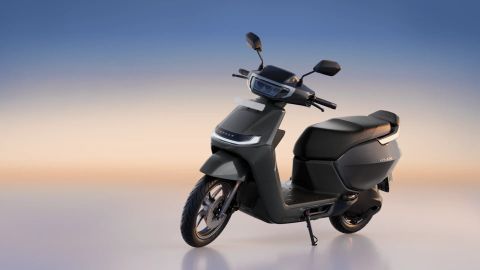
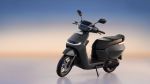
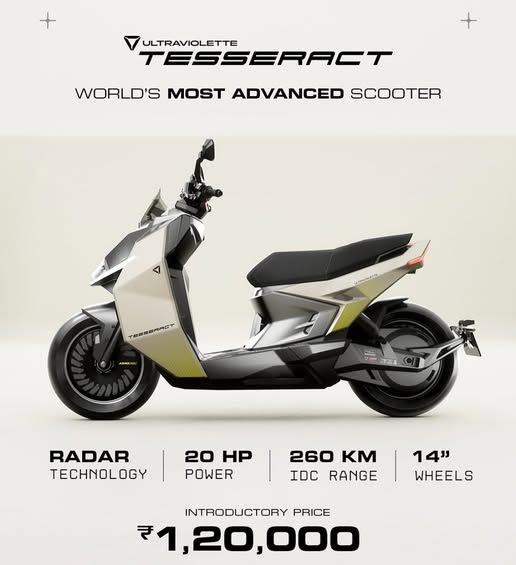
The Ultraviolette Tesseract is an electric scooter from Bengaluru-based Ultraviolette Automotive, a company known for its performance-focused electric two-wheelers. The Tesseract has been positioned as a technology-led electric scooter designed for urban mobility, daily commuting, and riders who want a more advanced electric two-wheeler experience.
Unlike basic electric scooters that focus mainly on short-distance commuting, the Tesseract is being discussed because of its performance architecture, connected features, safety technology, and futuristic design language. Ultraviolette describes the Tesseract as India’s first scooter with a 100V architecture, with up to 15 kW peak power and faster charging capability compared with many conventional scooters in the segment.
The model was unveiled in India in March 2025, and several auto publications have reported that it is expected to enter the Indian market in production form around 2026. Reports also mention claimed range options linked to different battery sizes, with figures such as 162 km, 220 km, and 261 km appearing in specification summaries.
The main reason this scooter exists is to address the gap between everyday electric scooters and high-performance electric two-wheelers. It aims to combine practical city usability with advanced rider-assistance features, large storage, connected technology, and fast charging support.
Importance
The Ultraviolette Tesseract matters because India’s electric two-wheeler market is moving beyond basic commuting needs. Early electric scooters mainly focused on reducing fuel dependency and making city travel simpler. Now, buyers also look at battery range, charging convenience, safety features, app connectivity, braking performance, ride quality, and long-term reliability.
For daily riders, the Tesseract is relevant because it represents a more mature phase of the electric scooter market. Instead of being only a short-distance mobility product, it introduces features that are more commonly associated with higher-end motorcycles or cars.
The model also affects multiple groups:
| Group | Why Tesseract Matters |
|---|---|
| Urban riders | Gives a reference point for advanced electric scooter technology |
| EV learners | Helps understand battery, range, charging, and safety features |
| Policy observers | Shows how electric mobility is evolving in India |
| Content creators | Provides a strong example of premium EV innovation |
| General audience | Explains how future scooters may become smarter and safer |
A major problem in electric scooter adoption is range anxiety. Many users worry whether an electric two-wheeler can handle daily travel, sudden detours, or longer city commutes. Claimed range figures from 162 km to 261 km, depending on variant references, indicate that newer electric scooters are trying to answer this concern through larger battery packs and improved power management.
Another important area is safety. Reports and specification comparisons mention radar-based features, dashcam integration, blind-spot alerts, collision warning systems, and haptic feedback. These technologies are important because Indian roads are complex, with mixed traffic, sudden lane changes, pedestrians, two-wheelers, cars, buses, and commercial vehicles sharing the same road space.
Recent Updates
The Ultraviolette Tesseract was unveiled in India on March 5, 2025, according to multiple automotive listings and reports. It was introduced as a performance-oriented electric scooter with advanced technology, multiple battery options, and a claimed top speed of around 125 km/h in several specification listings.
In 2025 and 2026, the model continued to receive attention because of its production timeline and expected launch window. A May 2026 report stated that the Tesseract was expected around mid-2026, while a June 2026 report indicated that its production form could be shown after June 2026.
The recent updates also show a broader trend: Indian electric two-wheelers are no longer limited to basic commuting. Brands are increasingly focusing on:
- Higher battery capacity
- Faster charging support
- Connected displays
- Camera-based assistance
- Radar-based rider alerts
- Larger under-seat storage
- Premium design
- Digital ownership planning tools
The Tesseract has also been compared with established electric scooters such as the Ather 450X. One comparison noted battery options of 3.5 kWh, 5 kWh, and 6 kWh for the Tesseract, along with 34-litre under-seat storage and a 20–80% charging claim in under 30 minutes.
Key Feature Overview
| Area | Reported / Claimed Details |
|---|---|
| Vehicle type | Electric scooter |
| Battery options | 3.5 kWh, 5 kWh, 6 kWh referenced in reports |
| Claimed range | 162 km, 220 km, 261 km depending on variant references |
| Top speed | Around 125 km/h in multiple listings |
| Charging | 20–80% in about 30 minutes in some reports |
| Storage | 34-litre under-seat storage mentioned in comparisons |
| Safety tech | Radar, dashcam, blind-spot alerts, collision alerts |
| Display | Large TFT display mentioned in listings |
| Architecture | 100V architecture claimed by Ultraviolette |
These figures should be read as reported or claimed values until final production specifications are officially confirmed for every variant.
Simple Range Visualization
Below is a basic text-based visualization of the commonly reported claimed range figures.
| Variant Reference | Claimed Range Visual |
|---|---|
| 3.5 kWh | 162 km ████████████ |
| 5 kWh | 220 km █████████████████ |
| 6 kWh | 261 km █████████████████████ |
This chart is only for simplified understanding. Real-world range depends on speed, payload, tyre pressure, riding mode, weather, road gradient, traffic, and battery condition.
Laws or Policies
The Ultraviolette Tesseract is linked to India’s larger electric mobility ecosystem. Electric two-wheelers are affected by policies related to vehicle registration, road safety norms, battery standards, charging infrastructure, and state-level EV programs.
India has supported electric mobility through central and state-level initiatives. In recent years, the focus has shifted from early adoption incentives toward stronger manufacturing, safety, localization, and charging infrastructure development. Electric two-wheelers must comply with automotive regulations, battery safety requirements, homologation norms, and registration rules before widespread public availability.
For an electric scooter like the Tesseract, key policy-related areas include:
- Battery safety standards: Important for thermal stability, charging behavior, and long-term reliability.
- Vehicle registration: Electric scooters require registration based on category, power output, and speed classification.
- Road tax rules: These vary by Indian state and may differ for electric vehicles.
- Insurance compliance: Electric two-wheelers need valid motor insurance before road use.
- Charging infrastructure: Public charging expansion affects practical EV adoption.
- Data and connected features: Scooters with cameras, apps, and connectivity may raise privacy and data-handling considerations.
Because the Tesseract includes advanced features such as dashcam integration and radar-based alerts, future discussions may also include how rider-assistance technology should be explained, standardized, and responsibly used on Indian roads.
Tools and Resources
People researching the Ultraviolette Tesseract can use several tools and resources to understand the model better. These tools help in learning about range, charging, documentation, insurance, and general EV planning.
| Tool / Resource | Purpose |
|---|---|
| Official Ultraviolette website | Product information and official announcements |
| EV range calculator | Helps estimate practical riding range |
| Charging time calculator | Explains approximate charging duration |
| State EV policy pages | Gives information on state-level EV rules |
| Insurance comparison platforms | Helps understand electric two-wheeler insurance categories |
| RTO registration portals | Useful for registration-related knowledge |
| Public charging apps | Helps locate nearby EV charging points |
| Owner forums | Useful for real-world feedback after deliveries begin |
| Battery warranty documents | Helps understand coverage terms |
| User manual | Explains display, charging, safety alerts, and maintenance basics |
When using third-party resources, it is better to compare details with official information because specifications may change before final production release.
Practical Learning Points
The Tesseract can be used as a case study to understand how premium electric scooters are evolving in India.
Important learning points include:
- Bigger battery packs can improve range confidence.
- Fast charging can make electric scooters more practical for active daily users.
- Radar and dashcam systems may become more common in future two-wheelers.
- Connected dashboards can improve navigation, alerts, diagnostics, and riding data.
- Claimed range and real-world range are not the same.
- Battery health depends on charging habits, temperature, and usage pattern.
- Insurance documentation should be checked carefully for battery and electrical components.
- Road safety still depends mainly on rider awareness, even with assistance features.
The Tesseract also shows how electric scooters are moving closer to the broader smart mobility ecosystem. Future scooters may not only be vehicles but also connected digital platforms with navigation, diagnostics, safety alerts, and cloud-linked features.
FAQs
What is the Ultraviolette Tesseract?
The Ultraviolette Tesseract is an electric scooter from Ultraviolette Automotive. It is designed as a technology-focused scooter with advanced performance, connected features, and reported safety systems such as radar-based alerts and dashcam integration.
What is the claimed range of the Ultraviolette Tesseract?
Several reports mention claimed range figures of around 162 km, 220 km, and 261 km depending on battery variant references. These are claimed figures and may differ from real-world riding results.
Does the Ultraviolette Tesseract have radar-based safety features?
Reports mention radar-assisted safety features, blind-spot alerts, collision warnings, dashcam integration, and haptic feedback. These features are part of the technology-led positioning of the scooter.
When is the Ultraviolette Tesseract expected in India?
The scooter was unveiled in March 2025. Reports from 2026 suggest that its production form and market availability are expected around mid-2026 or after June 2026, though final timelines should be checked from official updates.
Why is the Tesseract important for the electric scooter market?
The Tesseract is important because it combines electric scooter practicality with advanced technology such as fast charging, connected display features, radar-based alerts, dashcam integration, and higher claimed range. It reflects how India’s electric two-wheeler market is becoming more advanced.
Conclusion
The Ultraviolette Tesseract is one of the most discussed electric scooters in India because it represents a shift toward smarter, faster, and more feature-rich electric mobility. Its reported 100V architecture, multiple battery options, claimed long-range figures, fast charging support, radar-based safety alerts, dashcam features, and connected technology make it an important model to study.
For a general audience, the key takeaway is simple: the Tesseract is not just another electric scooter. It shows where the Indian electric two-wheeler market may be heading. Future scooters are likely to focus not only on range and charging but also on safety, software, data, diagnostics, and rider awareness.
At the same time, final decisions and analysis should be based on verified production specifications, official documentation, real-world range results, charging behavior, insurance terms, and long-term rider feedback. The Tesseract is best understood as a technology-forward electric scooter that highlights the next stage of India’s electric mobility journey.