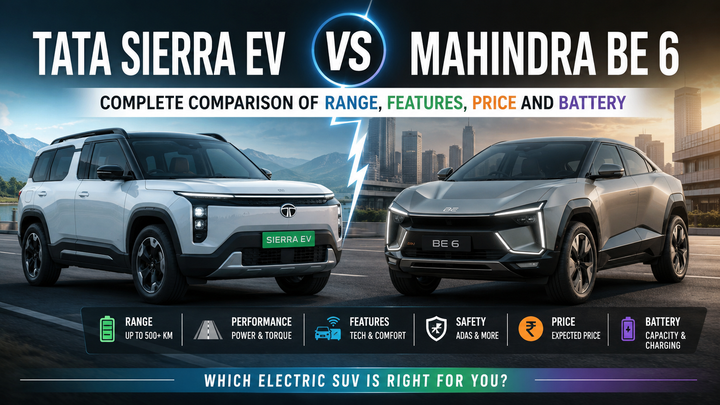
Tata Sierra EV vs Mahindra BE 6: Complete Comparison of Range, Features, Price and Battery
Electric vehicles are becoming an increasingly important part of India's automobile industry. Improvements in battery technology, charging infrastructure, connected vehicle features, and government support have encouraged manufacturers to introduce a wider range of electric SUVs. Among the most discussed models are the Tata Sierra EV and the Mahindra BE 6.
Both vehicles represent a new generation of electric SUVs designed for modern mobility. While they belong to a similar segment, each follows a different design philosophy, technology approach, and feature strategy. This comparison explains their expected specifications, battery technologies, driving range, charging capabilities, interior features, safety technologies, and the broader EV ecosystem.
The information in this article is intended for educational purposes and is based on officially announced specifications and publicly available information available at the time of writing. Specifications may change depending on future product updates.
Understanding India's Premium Electric SUV Segment
India's EV market has expanded rapidly over the past few years. Manufacturers are introducing dedicated electric platforms instead of adapting conventional internal combustion vehicles. This transition enables better battery placement, improved cabin space, enhanced driving dynamics, and more efficient energy management.
The Tata Sierra EV revives one of Tata Motors' iconic SUV nameplates in an electric form, combining modern design with contemporary EV technology. The Mahindra BE 6, built on Mahindra's dedicated INGLO electric platform, emphasizes futuristic styling, digital technology, and long-range capability.
Why This Comparison Matters
Electric SUV buyers today evaluate several technical aspects beyond appearance. Important considerations include:
- Battery capacity
- Certified driving range
- Charging compatibility
- Interior technology
- Advanced driver assistance systems
- Connectivity features
- Practical cabin space
- Safety equipment
- Software capabilities
Comparing these factors helps readers understand how different manufacturers approach electric mobility using distinct engineering solutions.
Quick Vehicle Overview
| Feature | Tata Sierra EV | Mahindra BE 6 |
|---|---|---|
| Vehicle Type | Electric SUV | Electric Coupe SUV |
| Platform | acti.ev Architecture | INGLO Platform |
| Seating | 5-Seater | 5-Seater |
| Fast Charging | Supported | Supported |
| Connected Features | Yes | Yes |
| ADAS Availability | Available on selected variants | Available on selected variants |
| Digital Displays | Yes | Yes |
Specifications may vary depending on variant and market availability.
Electric Mobility Is Evolving Quickly
India's automotive industry has witnessed significant investment in electric vehicle technology. Manufacturers are focusing on several key areas:
- Higher energy-density batteries
- Faster DC charging
- Vehicle-to-cloud connectivity
- Advanced thermal management
- Intelligent battery monitoring
- Software-enabled driving features
- Over-the-air software updates
- Improved regenerative braking
These developments are intended to improve efficiency, convenience, and long-term vehicle performance while supporting wider EV adoption.
Design Philosophy
Although both vehicles compete within a similar category, they present different styling approaches.
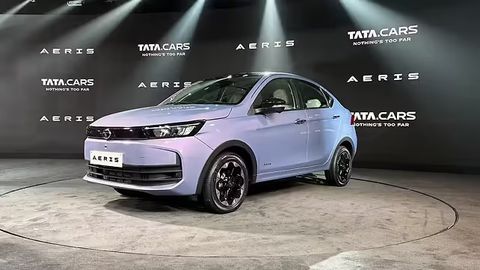
The Tata Sierra EV retains design inspiration from the original Sierra while incorporating contemporary lighting, aerodynamic improvements, and a modern electric vehicle identity. The design focuses on practicality with a spacious cabin and upright SUV proportions.
The Mahindra BE 6 adopts a more futuristic coupe-inspired appearance. It emphasizes sharp body lines, a lower roofline, aggressive lighting elements, and a sport-oriented profile that reflects Mahindra's latest electric vehicle design language.
Why Electric SUV Comparisons Are Becoming More Important
As the number of electric SUVs increases, consumers often compare vehicles based on measurable characteristics rather than brand recognition alone.
Common comparison parameters include:
- Certified driving range
- Battery chemistry
- Fast-charging capability
- Power output
- Interior comfort
- Infotainment technology
- Connected vehicle ecosystem
- Driver assistance systems
- Safety ratings
- Practical storage capacity
These technical factors help readers understand how different models address varying mobility requirements.
Importance of Battery Technology
The battery pack is one of the most significant components of an electric vehicle. It influences several aspects of overall vehicle performance, including:
- Driving range
- Charging duration
- Vehicle weight
- Thermal management
- Energy efficiency
- Regenerative braking performance
- Long-term battery health
Manufacturers continue to improve battery management systems through advanced cooling technologies, software optimization, and intelligent charging algorithms.
Battery and Range Comparison
| Specification | Tata Sierra EV | Mahindra BE 6 |
|---|---|---|
| Battery Options | Multiple battery configurations | 59 kWh and 79 kWh options |
| Charging Type | AC and DC Fast Charging | AC and DC Fast Charging |
| Claimed Range | Variant dependent | Up to approximately 683 km (ARAI) |
| Battery Management | Advanced BMS | Advanced BMS |
Figures can vary depending on battery configuration, driving conditions, weather, vehicle load, and official certification standards.
Recent Developments in India's Electric SUV Market
India's electric vehicle market has continued to evolve with improvements in battery technology, charging infrastructure, software integration, and safety systems. Manufacturers are increasingly developing dedicated EV platforms rather than adapting conventional vehicles, resulting in improved efficiency, better cabin packaging, and enhanced driving dynamics.
The Tata Sierra EV and Mahindra BE 6 represent this next generation of electric SUVs. While both target similar customer segments, they showcase different engineering approaches, platform technologies, and feature priorities.
Tata Sierra EV Updates
The Tata Sierra nameplate has returned as an electric SUV built on Tata Motors' acti.ev architecture. During 2025 and 2026, Tata Motors revealed production-ready versions featuring a modern exterior, digital cockpit, advanced connected technologies, and dual-motor all-wheel-drive capability on selected variants. The vehicle also supports DC fast charging and incorporates multiple safety technologies.
Mahindra BE 6 Developments
The Mahindra BE 6 is based on the INGLO electric platform, specifically designed for battery-electric vehicles. It offers multiple battery configurations, rear-wheel-drive architecture, regenerative braking modes, connected vehicle software, and over-the-air update capability. Mahindra has continued expanding its electric vehicle portfolio through dedicated EV technologies and software-focused features.
EV Industry Trends During the Past Year
Several important trends have influenced India's electric SUV segment:
- Growth in dedicated EV platforms
- Larger battery capacities
- Faster DC charging capability
- Expansion of public charging stations
- Increased adoption of connected vehicle technology
- Wider availability of Level 2 Advanced Driver Assistance Systems (ADAS)
- Improved battery thermal management
- Enhanced software-based vehicle functions
These developments are intended to improve driving efficiency, convenience, and long-term vehicle performance.
Feature Comparison
| Category | Tata Sierra EV | Mahindra BE 6 |
|---|---|---|
| Platform | acti.ev Architecture | INGLO Platform |
| Drive Configuration | Single & Dual Motor (selected variants) | Rear-Wheel Drive |
| Digital Instrument Cluster | Yes | Yes |
| Connected Car Technology | Yes | Yes |
| OTA Software Updates | Supported | Supported |
| Fast Charging | DC Fast Charging | DC Fast Charging |
| Regenerative Braking | Multiple Levels | Multiple Levels |
| ADAS | Available | Available |
Battery and Charging Technology
Modern electric SUVs rely on advanced Battery Management Systems (BMS) to optimize charging, monitor battery health, and regulate operating temperatures.
Both vehicles are expected to include:
- Intelligent battery monitoring
- Thermal management systems
- Regenerative braking
- AC home charging compatibility
- DC fast charging support
- Charging status monitoring through mobile applications
These technologies help improve battery efficiency and overall driving experience.
Interior and Technology Comparison
| Feature | Tata Sierra EV | Mahindra BE 6 |
|---|---|---|
| Large Touchscreen | Yes | Yes |
| Digital Driver Display | Yes | Yes |
| Wireless Smartphone Connectivity | Yes | Yes |
| Voice Assistant | Yes | Yes |
| Connected Mobile App | Yes | Yes |
| Wireless Charging | Available | Available |
| Panoramic Glass Roof | Selected Variants | Selected Variants |
| Premium Audio System | Available | Available |
Safety Technologies
Safety has become a major focus for premium electric SUVs. Both models are expected to include a comprehensive range of active and passive safety technologies.
Common safety equipment includes:
- Multiple airbags
- Electronic Stability Control (ESC)
- Anti-lock Braking System (ABS)
- Electronic Brakeforce Distribution (EBD)
- Hill Hold Assist
- ISOFIX child-seat anchors
- 360-degree camera
- Parking sensors
- Tire Pressure Monitoring System (TPMS)
Higher variants may also include Level 2 ADAS features such as adaptive cruise control, lane keeping assistance, automatic emergency braking, and traffic sign recognition. Availability depends on the selected variant.
Vehicle Dimensions Overview
| Specification | Tata Sierra EV | Mahindra BE 6 |
|---|---|---|
| Seating Capacity | 5 | 5 |
| Body Style | SUV | Coupe SUV |
| Wheelbase | Official figures vary by variant | 2,775 mm |
| Battery Options | Multiple configurations | 59 kWh / 79 kWh |
| Fast Charging | Supported | Supported |
| Connected Features | Yes | Yes |
Government Policies Supporting Electric Vehicles
India's electric vehicle ecosystem continues to benefit from policy initiatives designed to encourage cleaner transportation and infrastructure development.
Important policy initiatives include:
- PM Electric Drive Revolution in Innovative Vehicle Enhancement (PM E-DRIVE)
- Expansion of public charging infrastructure
- Battery manufacturing incentives under the Production Linked Incentive (PLI) scheme
- FAME-related initiatives that have supported EV ecosystem development
- State-level EV policies offering incentives for charging infrastructure and manufacturing
These initiatives contribute to improvements in charging availability, domestic manufacturing, and long-term EV adoption across the country. Government policies and incentives may vary over time and by state.
Environmental Impact
Electric SUVs contribute to reduced tailpipe emissions because they do not use conventional combustion engines during operation. Their overall environmental impact depends on factors such as electricity generation sources, battery manufacturing, recycling practices, and vehicle usage patterns.
Manufacturers are also investing in:
- Battery recycling programs
- Sustainable manufacturing
- Renewable energy integration
- Improved battery efficiency
- Resource optimization
These efforts support the broader transition toward cleaner mobility solutions.