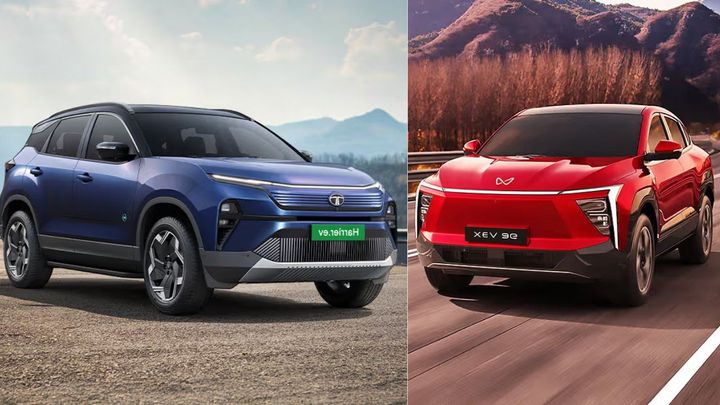
Tata Harrier EV vs Mahindra XEV 9e: Explore Range, Features, Price, Performance and Key Insights
The transition toward electric mobility has encouraged vehicle manufacturers to develop advanced electric sport utility vehicles (SUVs) with improved driving range, battery technology, connectivity, and safety systems. Two notable models attracting attention are the Tata Harrier EV and the Mahindra XEV 9e.
Both vehicles represent the growing evolution of electric transportation and showcase how automotive technology is changing. They are designed to provide an alternative to conventional fuel-powered SUVs while addressing concerns related to energy efficiency, emissions reduction, and modern mobility requirements.
The Tata Harrier EV builds upon the established Harrier platform and introduces electric powertrain technology with a focus on capability, practicality, and advanced features. The Mahindra XEV 9e, developed under Mahindra’s dedicated electric vehicle strategy, emphasizes futuristic design, connected technology, and next-generation battery systems.
For individuals researching electric vehicles, understanding the differences in range, battery specifications, charging capabilities, technology features, and performance metrics can support informed decision-making and broader knowledge of the EV ecosystem.
Comparison Overview
| Feature | Tata Harrier EV | Mahindra XEV 9e |
|---|---|---|
| Vehicle Type | Electric SUV | Electric Coupe SUV |
| Platform | acti.ev Architecture | INGLO Platform |
| Battery Technology | Lithium-ion Battery Pack | Lithium-ion Battery Pack |
| Fast Charging Support | Yes | Yes |
| Connected Features | Advanced Connectivity Suite | Advanced Connected Vehicle System |
| ADAS Features | Available | Available |
| Regenerative Braking | Yes | Yes |
| OTA Updates | Supported | Supported |
Why Electric SUV Comparisons Matter
Electric vehicle adoption continues to expand globally as governments, manufacturers, and consumers focus on sustainability and energy efficiency. Comparisons between leading EV models help consumers, researchers, industry analysts, and transportation planners understand how technology is progressing.
Several factors make comparisons between vehicles such as the Tata Harrier EV and Mahindra XEV 9e particularly important:
- Understanding battery technology advancements
- Evaluating electric driving range capabilities
- Comparing charging infrastructure compatibility
- Reviewing vehicle safety technologies
- Exploring connected car ecosystems
- Assessing long-distance travel suitability
- Learning about energy efficiency improvements
Range anxiety remains one of the most discussed topics among prospective EV users. Comparing estimated driving ranges and charging technologies helps illustrate how manufacturers are addressing this concern through larger battery packs, improved software management, and enhanced energy recovery systems.
Modern electric SUVs also include Advanced Driver Assistance Systems (ADAS), digital dashboards, vehicle-to-cloud connectivity, predictive navigation, and over-the-air software updates. These technologies are becoming increasingly important as vehicles evolve into software-driven mobility platforms.
Range and Performance Insights
Driving range remains one of the most significant performance indicators for electric vehicles. Manufacturers continue investing heavily in battery management systems, energy optimization algorithms, and thermal management technologies to maximize efficiency.
The Tata Harrier EV focuses on delivering practical real-world usability through optimized energy consumption and advanced battery management. The platform supports efficient power delivery while maintaining SUV-oriented capability.
The Mahindra XEV 9e emphasizes a modern electric architecture designed to improve aerodynamics, energy efficiency, and high-performance electric mobility. Its platform integrates sophisticated software systems that monitor battery health and energy utilization.
Estimated EV Performance Factors
| Performance Area | Importance |
|---|---|
| Battery Capacity | Influences potential driving range |
| Charging Speed | Reduces charging downtime |
| Motor Efficiency | Improves energy utilization |
| Regenerative Braking | Enhances battery recovery |
| Thermal Management | Supports battery longevity |
| Vehicle Aerodynamics | Helps improve efficiency |
The actual driving range of any electric vehicle can vary based on factors such as:
- Driving behavior
- Road conditions
- Climate and temperature
- Vehicle load
- Tire condition
- Traffic patterns
- Air-conditioning usage
Understanding these variables helps provide realistic expectations regarding electric vehicle performance.
Recent Developments in the EV Segment
The electric vehicle industry has experienced significant developments throughout 2025 and 2026. Manufacturers have increasingly focused on improving battery density, charging speed, and software-defined vehicle capabilities.
Recent trends include:
- Expansion of public charging networks
- Growth of fast-charging infrastructure
- Increased use of lithium-ion battery innovations
- Improved battery management software
- Enhanced ADAS functionality
- Greater integration of artificial intelligence within vehicle systems
- More widespread over-the-air software updates
During 2025 and early 2026, automotive manufacturers continued introducing new electric SUV platforms designed specifically for EV applications rather than adapting conventional vehicle architectures. This trend allows better battery packaging, improved cabin space utilization, and enhanced energy efficiency.
Another major development has been the increasing adoption of connected vehicle ecosystems. Features such as remote diagnostics, predictive maintenance alerts, route optimization, and charging station navigation have become more common across premium EV models.
Industry analysts have also observed growing investments in battery research aimed at improving charging efficiency and long-term durability, contributing to the broader advancement of electric transportation technologies.
Technology and Feature Comparison
Technology has become a major differentiator among electric SUVs. Both the Tata Harrier EV and Mahindra XEV 9e incorporate modern digital systems designed to enhance convenience, safety, and vehicle management.
Key technology areas include:
- Digital instrument clusters
- Large infotainment displays
- Wireless smartphone integration
- Voice assistant functionality
- Cloud-based vehicle monitoring
- Navigation with charging station mapping
- OTA software updates
- Smart energy management systems
Safety technology is equally important. Advanced Driver Assistance Systems may include:
- Adaptive cruise control
- Lane keeping assistance
- Automatic emergency braking
- Driver attention monitoring
- Traffic sign recognition
- Blind spot monitoring
These systems contribute to improved road safety and support the broader trend toward intelligent mobility solutions.
EV Adoption and Regulatory Environment
Electric vehicles operate within a regulatory framework designed to encourage cleaner transportation and support environmental objectives.
Many countries have introduced policies focused on:
- EV infrastructure development
- Charging network expansion
- Battery recycling initiatives
- Energy efficiency standards
- Vehicle safety regulations
- Emissions reduction targets
Governments and transportation agencies often establish regulations governing:
- High-voltage battery safety
- Charging connector standards
- Vehicle certification requirements
- Cybersecurity standards for connected vehicles
- Battery disposal and recycling practices
Environmental regulations have also accelerated investments in renewable energy integration and sustainable transportation technologies. As electric vehicle adoption increases, policymakers continue updating frameworks to support safe and efficient EV deployment.
Battery recycling regulations are receiving particular attention as governments seek to develop circular economy approaches for critical battery materials such as lithium, nickel, cobalt, and manganese.
Helpful Tools and Resources for EV Research
Individuals interested in electric vehicles can access numerous digital resources to better understand range, charging, and ownership considerations.
Useful tools include:
- EV Range Calculators
- Charging Time Estimators
- Battery Health Monitoring Apps
- Route Planning Applications
- Energy Consumption Calculators
- Charging Station Locator Platforms
- Vehicle Comparison Tools
- Carbon Emissions Reduction Calculators
Popular categories of EV resources include:
| Resource Type | Purpose |
|---|---|
| Range Calculator | Estimate driving distance |
| Charging Planner | Plan charging stops |
| EV Route Planner | Optimize travel routes |
| Battery Monitor | Track battery performance |
| Charging Locator | Identify nearby charging points |
| Energy Usage Tool | Analyze consumption patterns |
These resources help users understand how electric vehicles perform in real-world conditions and support better transportation planning.
EV Technology Evolution Snapshot
Battery Technology Progress

2020  ██████
2022  █████████
2024  ████████████
2025  ██████████████
2026  ███████████████

Increasing Energy Density
Increasing Charging Speed
Improving Battery Management
The continued advancement of battery technology remains one of the primary drivers behind improvements in electric SUV performance and usability.
Frequently Asked Questions
What is the main difference between the Tata Harrier EV and Mahindra XEV 9e?
The primary difference lies in their platform architecture, design philosophy, battery integration strategy, and technology ecosystems. Both are electric SUVs but are developed with distinct engineering approaches.
Why is driving range important in electric vehicles?
Driving range determines how far a vehicle can travel on a charged battery. It helps users plan journeys and influences overall convenience, particularly for long-distance travel.
What is regenerative braking?
Regenerative braking is a technology that recovers energy during deceleration and converts it into electricity that can be stored in the battery, improving efficiency.
How do fast-charging systems benefit EV users?
Fast charging reduces the time required to replenish battery energy, making electric vehicles more practical for daily commuting and extended travel.
Are software updates important for electric vehicles?
Yes. Over-the-air software updates can improve vehicle performance, security, battery management, navigation systems, and connected features without requiring physical modifications.
Conclusion
The Tata Harrier EV and Mahindra XEV 9e represent the growing maturity of the electric SUV segment. Both vehicles demonstrate how battery technology, software integration, connectivity, and safety systems are shaping the future of transportation.
As electric mobility continues to evolve, comparisons between advanced EV models provide valuable insights into industry trends, charging developments, battery innovation, and intelligent vehicle technologies. Understanding range, performance characteristics, charging capabilities, digital features, and regulatory considerations helps create a clearer picture of the modern electric vehicle landscape.
The broader shift toward electrification is expected to continue through ongoing advancements in battery engineering, charging infrastructure, vehicle software, and sustainability initiatives. As a result, electric SUVs such as the Tata Harrier EV and Mahindra XEV 9e remain important examples of how transportation technology is progressing toward a more connected and energy-efficient future.