Jump to a Chapter

Stainless Steel Machining Explained: Learn CNC Processes, Grades & UK Manufacturing Insights

Stainless Steel Machining Explained: Learn CNC Processes, Grades & UK Manufacturing Insights

Stainless steel machining is one of the most important manufacturing processes used across industries that require durable, corrosion-resistant, and precision-engineered metal components. From aerospace and automotive engineering to medical equipment, food processing machinery, renewable energy systems, marine applications, and industrial automation, machined stainless steel components play a vital role in modern engineering.


Unlike many engineering metals, stainless steel offers exceptional corrosion resistance, high mechanical strength, excellent durability, and long service life. However, these same characteristics can make machining more challenging. Its work-hardening properties, lower thermal conductivity, and toughness require carefully selected cutting tools, optimized machining parameters, and advanced CNC equipment to achieve accurate results.

Modern manufacturing facilities increasingly rely on Computer Numerical Control (CNC) machining, CAD/CAM software, multi-axis machining centers, precision measuring equipment, and automated quality control systems to produce complex stainless steel parts with consistent dimensional accuracy.

The United Kingdom has a long-established precision engineering and advanced manufacturing sector that supports industries including aerospace, defense, medical technology, food processing, automotive engineering, oil and gas, and industrial machinery. UK manufacturers continue investing in automation, digital manufacturing, Industry 4.0 technologies, and sustainable production methods to improve machining efficiency and product quality.

This educational guide explores stainless steel machining, common stainless steel grades, CNC machining processes, cutting technologies, tooling, quality assurance, UK manufacturing practices, and emerging innovations in precision engineering.

What Is Stainless Steel Machining?

Stainless steel machining is the process of removing material from stainless steel workpieces using precision machine tools to create finished components with specified dimensions, shapes, and surface finishes.

Machining operations may include:

  • Turning
  • Milling
  • Drilling
  • Boring
  • Reaming
  • Tapping
  • Thread milling
  • Surface finishing

These processes are performed using manual machines or computer-controlled CNC equipment.

Why Stainless Steel Is Widely Used

Stainless steel combines several desirable engineering properties.

Key characteristics include:

  • Corrosion resistance
  • High strength
  • Excellent durability
  • Heat resistance
  • Hygienic surface
  • Attractive appearance
  • Recyclability
  • Long service life

These properties make stainless steel suitable for demanding industrial environments.

Understanding Stainless Steel

Stainless steel is an iron-based alloy containing chromium and, depending on the grade, elements such as nickel, molybdenum, manganese, titanium, and nitrogen.

Chromium forms a thin protective oxide layer that helps resist corrosion.

Different alloy compositions provide varying levels of:

  • Strength
  • Toughness
  • Corrosion resistance
  • Weldability
  • Machinability

Common Stainless Steel Grades

Several stainless steel grades are frequently used in machining applications.

Grade 304

Grade 304 is one of the most widely used stainless steels.

Typical characteristics include:

  • Good corrosion resistance
  • Excellent formability
  • Good weldability
  • General-purpose applications

It is commonly used for food equipment, architectural components, and industrial machinery.

Grade 316

Grade 316 contains molybdenum, providing improved corrosion resistance.

Applications include:

  • Marine environments
  • Medical equipment
  • Chemical processing
  • Pharmaceutical industries

It performs well in chloride-rich environments.

Grade 303

Grade 303 is designed to improve machinability.

Benefits include:

  • Easier chip formation
  • Faster machining
  • Improved surface finish

It is commonly selected for precision-machined components.

Grade 410

Grade 410 is a martensitic stainless steel.

Characteristics include:

  • Higher hardness
  • Good wear resistance
  • Heat-treatable properties

It is often used in mechanical components and tooling.

Challenges of Machining Stainless Steel

Stainless steel presents several machining challenges.

These include:

  • Work hardening
  • High cutting forces
  • Heat generation
  • Tool wear
  • Chip control
  • Lower thermal conductivity

Proper tooling and machining strategies help overcome these challenges.

CNC Machining

Computer Numerical Control (CNC) machining has become the preferred manufacturing method for stainless steel components.

Advantages include:

  • High precision
  • Repeatability
  • Complex geometries
  • Automated production
  • Consistent quality
  • Reduced manual intervention

Modern CNC systems operate using programmed machining instructions generated through CAD/CAM software.

CNC Turning

Turning is used to manufacture cylindrical components.

Operations include:

  • Facing
  • External turning
  • Internal turning
  • Grooving
  • Thread cutting
  • Parting-off

Turning is commonly performed on CNC lathes.

CNC Milling

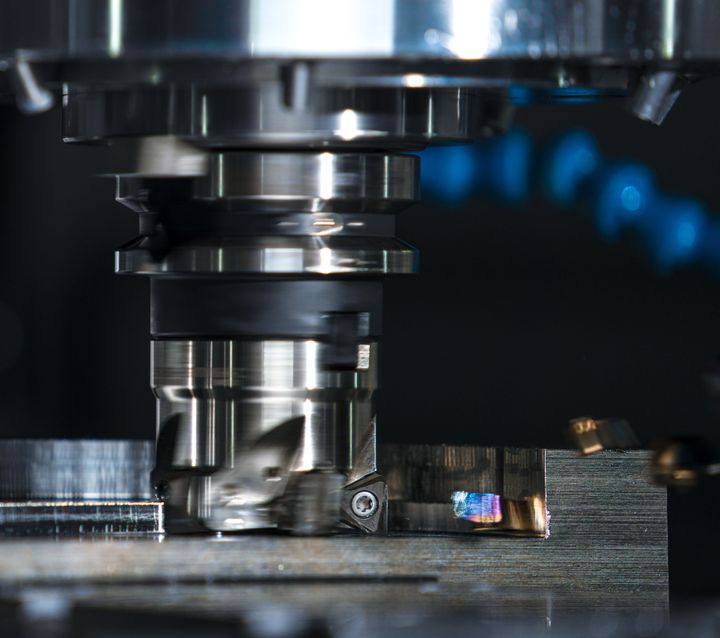
Milling removes material using rotating cutting tools.

Common milling operations include:

  • Face milling
  • End milling
  • Pocket milling
  • Slot milling
  • Contour milling
  • Surface profiling

Multi-axis CNC machining centers allow the production of highly complex parts.

Drilling and Hole Making

Precision holes may be produced using:

  • Twist drilling
  • Deep-hole drilling
  • Reaming
  • Boring
  • Counterboring
  • Countersinking

Accurate hole geometry is important in many engineering applications.

Thread Manufacturing

Threaded features may be created using:

  • Tapping
  • Thread milling
  • Single-point threading

The selected method depends on material grade, thread size, and production requirements.

Cutting Tools

Tool selection significantly influences machining performance.

Common tool materials include:

  • Solid carbide
  • Coated carbide
  • Ceramic tools
  • High-speed steel (HSS)
  • Cubic boron nitride (CBN)

Advanced coatings help reduce wear and improve cutting efficiency.

Cutting Fluids

Cutting fluids assist machining by:

  • Reducing heat
  • Improving lubrication
  • Flushing chips
  • Extending tool life
  • Enhancing surface finish

Fluid selection depends on the machining operation and stainless steel grade.

Surface Finishing

Machined components may undergo additional finishing processes.

Examples include:

  • Grinding
  • Polishing
  • Brushing
  • Electropolishing
  • Passivation
  • Deburring

Surface finishing improves appearance, cleanliness, and corrosion resistance.

Precision Measurement

Quality assurance relies on accurate dimensional inspection.

Common measuring equipment includes:

  • Coordinate Measuring Machines (CMM)
  • Digital calipers
  • Micrometers
  • Height gauges
  • Surface roughness testers
  • Optical inspection systems

Precision measurement ensures compliance with engineering specifications.

CAD and CAM Software

Modern machining workflows integrate digital design tools.

CAD software is used to:

  • Create 3D models
  • Develop engineering drawings
  • Define dimensions
  • Specify tolerances

CAM software generates machining programs that guide CNC equipment.

Automation in Machining

Advanced manufacturing facilities increasingly use automation technologies.

Examples include:

  • Robotic loading systems
  • Automatic tool changers
  • Pallet systems
  • Production monitoring
  • Smart sensors
  • Machine connectivity

Automation improves productivity and consistency.

UK Manufacturing Insights

The United Kingdom has a strong reputation in precision engineering and advanced manufacturing.

Key sectors include:

  • Aerospace
  • Automotive
  • Medical technology
  • Defense
  • Food processing equipment
  • Oil and gas
  • Renewable energy
  • Industrial machinery

UK manufacturers continue investing in digital manufacturing, robotics, and Industry 4.0 technologies to enhance production efficiency and product quality.

Sustainability in Stainless Steel Manufacturing

Sustainable manufacturing practices continue expanding across the engineering sector.

Examples include:

  • Recycling stainless steel
  • Energy-efficient machinery
  • Coolant recycling
  • Waste reduction
  • Optimized cutting strategies
  • Digital production monitoring

Stainless steel itself is highly recyclable, supporting circular manufacturing practices.

Industry Applications

Machined stainless steel components are widely used in:

Aerospace

Applications include:

  • Structural components
  • Fasteners
  • Engine parts
  • Hydraulic systems

Medical Technology

Examples include:

  • Surgical instruments
  • Orthopedic implants
  • Diagnostic equipment
  • Sterilization systems

Food Processing

Components include:

  • Mixing equipment
  • Conveyors
  • Processing machinery
  • Hygienic fittings

Marine Engineering

Stainless steel is commonly used for:

  • Marine hardware
  • Pump components
  • Propulsion systems
  • Corrosion-resistant fittings

Industrial Automation

Applications include:

  • Machine frames
  • Shafts
  • Rollers
  • Robotics components

Emerging Technologies

Precision machining continues evolving through innovations such as:

  • Artificial intelligence-assisted machining
  • Digital twins
  • Industry 4.0 integration
  • Predictive maintenance
  • Smart tooling
  • Adaptive machining
  • Automated inspection
  • Real-time process monitoring
  • High-speed machining
  • Hybrid manufacturing

These technologies improve efficiency, quality, and production flexibility.

Helpful Learning Resources

Readers interested in stainless steel machining may explore:

  • Manufacturing engineering textbooks
  • CNC machining references
  • Metallurgy publications
  • Precision engineering journals
  • CAD/CAM learning resources
  • Quality management guides
  • Industrial automation references

These educational materials provide deeper understanding of precision manufacturing technologies.

Frequently Asked Questions

What is stainless steel machining?

Stainless steel machining is the process of shaping stainless steel into finished components using machine tools such as CNC lathes, milling machines, drills, and precision cutting equipment.

Which stainless steel grade is easiest to machine?

Grade 303 is specifically formulated to improve machinability while maintaining many of the beneficial properties of stainless steel.

Why is stainless steel more difficult to machine?

Its toughness, work-hardening behavior, and relatively low thermal conductivity can increase cutting forces, generate heat, and accelerate tool wear.

What industries use machined stainless steel components?

Industries include aerospace, automotive, medical technology, food processing, marine engineering, industrial automation, renewable energy, and precision engineering.

Why is CNC machining widely used?

CNC machining provides high precision, repeatability, complex geometry production, automation, and consistent manufacturing quality.

What technologies are shaping future machining?

Emerging innovations include AI-assisted machining, smart factories, predictive maintenance, adaptive machining, digital twins, automated inspection, and Industry 4.0 manufacturing systems.

Conclusion

Stainless steel machining is a cornerstone of modern precision engineering, enabling the production of durable, corrosion-resistant components for industries ranging from aerospace and healthcare to food processing and industrial automation. Through advanced CNC machining, precision tooling, CAD/CAM integration, and rigorous quality control, manufacturers can achieve exceptional dimensional accuracy and reliable performance.

The UK's advanced manufacturing sector continues to support innovation through automation, digital technologies, sustainable production methods, and skilled engineering expertise. As intelligent manufacturing systems, AI-assisted machining, and Industry 4.0 technologies continue to evolve, stainless steel machining will remain a critical process in the production of high-quality engineering components.

Disclaimer

This article is intended solely for educational and informational purposes. It provides a general overview of stainless steel machining, CNC manufacturing processes, engineering materials, and UK manufacturing practices. It does not constitute engineering, manufacturing, procurement, technical, regulatory, or professional advice, nor does it recommend or endorse any specific machine tool, manufacturer, machining service, or material supplier. Machining methods, material grades, tooling, tolerances, and production processes vary depending on application, equipment, and engineering requirements. Readers should consult qualified engineering professionals and relevant technical standards when making manufacturing or design decisions.

author-image

Ravi Shankar Maurya

We create purposeful content that speaks, resonates, and drives action.

July 31, 2026 . 10 min read