Shrink Wrapping Machine for Water Bottles: Complete Guide for Packaging Efficiency
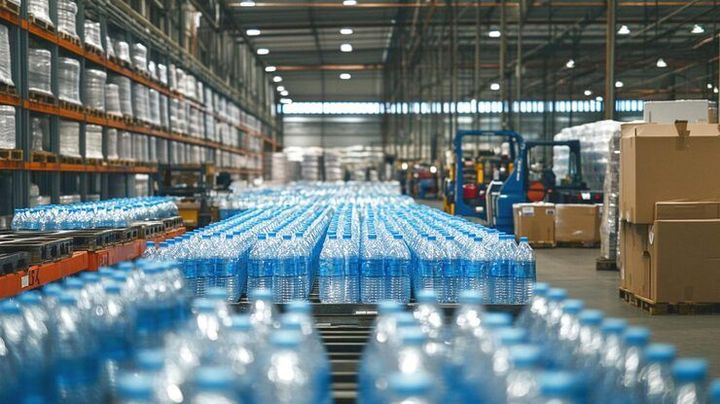
A shrink wrapping machine for water bottles is packaging equipment that uses heat-sensitive film to group or protect bottles for storage, handling, transportation, or distribution. The machine applies suitable film around individual bottles or bottle multipacks, after which controlled heat causes the material to contract around the selected arrangement. Depending on the system, the process may involve manual loading, semi-automatic operation, or fully automated packaging.
Shrink wrapping is widely used in beverage production because bottles often need to move through filling, labeling, grouping, storage, and shipping processes in a coordinated sequence. Packaging equipment helps maintain consistent bundle arrangements and can support efficient movement between production stages. However, performance depends on bottle dimensions, film characteristics, production speed, and the configuration of the packaging line.
Recent packaging developments have placed greater emphasis on automation, material efficiency, energy management, and integration with upstream and downstream machinery. Manufacturers are also evaluating alternative packaging materials and thinner films where technical performance and product protection can be maintained.
Understanding the main machine types, operating principles, safety requirements, and maintenance practices helps packaging teams make informed equipment decisions. The following sections explain how shrink wrapping machines for water bottles work and which features matter in different production environments.
Who it affects and what problems it solves
Shrink wrapping machines are relevant to bottled-water producers, beverage manufacturers, contract packaging facilities, distribution centers, packaging engineers, maintenance teams, and production managers. Their requirements vary according to bottle formats, output targets, packaging materials, available floor space, and the level of automation already present.
One common challenge is organizing individual bottles into stable multipacks. Manual grouping can become difficult when production volumes increase or when workers must repeatedly handle heavy bundles. Automated bottle grouping and film application can standardize package formation and reduce repetitive handling.
Another challenge is maintaining consistent packaging quality. Poor film tension, incorrect temperature settings, unsuitable film dimensions, or uneven bottle spacing can result in loose bundles, excessive wrinkles, damaged film, or incomplete sealing. A correctly configured shrink wrapping system helps control these variables, although regular inspection and adjustment remain necessary.
Production coordination is also important. A packaging line may include conveyors, bottle grouping equipment, film dispensers, sealing units, shrink tunnels, cooling sections, and accumulation systems. If one component operates more slowly than the others, it can create bottlenecks or interruptions throughout the line.
Common mistakes include selecting machinery based only on its advertised speed, overlooking bottle-size changes, underestimating maintenance needs, and failing to verify compatibility with existing equipment. Film consumption and energy use also deserve attention because both influence operating performance.
A suitable system should therefore address the entire packaging workflow rather than a single machine function. Evaluating actual production requirements helps organizations choose equipment that balances consistency, flexibility, safety, and operational efficiency.
Recent updates and industry trends
Over the past year, packaging technology has continued to emphasize automation, equipment monitoring, resource efficiency, and improved production visibility. Many manufacturers globally are assessing how connected machinery and digital production systems can improve packaging consistency and make equipment performance easier to monitor.
One important development is the wider use of programmable logic controllers, touch-screen interfaces, and sensors. These components help operators manage conveyor movement, film feeding, sealing temperatures, tunnel conditions, and machine interlocks. Depending on the configuration, diagnostic functions can also help maintenance teams identify operating abnormalities.
Another trend involves material optimization. Packaging operations are examining thinner shrink films, recyclable material options, and packaging designs that use fewer resources while maintaining required bundle integrity. The suitability of any material depends on its mechanical properties, processing behavior, product arrangement, and the recycling infrastructure available.
Energy management is also receiving attention. Improved insulation, controlled heating zones, and operating settings matched to production requirements can help reduce unnecessary energy use. These improvements do not guarantee savings in every installation; actual results depend on machine design, throughput, maintenance, and operating practices.
Integration is another area of development. Shrink wrapping equipment can be connected with upstream bottle handling and downstream case packing or palletizing systems. This can support coordinated production, although compatibility and control-system requirements should be assessed before implementation.
Comparison of shrink wrapping machine types
Different shrink wrapping machines serve different production requirements. The following table compares common configurations and their operational characteristics.
| Comparison point | Manual system | Semi-automatic system | Automatic shrink wrapper | Integrated packaging line |
|---|---|---|---|---|
| Primary use | Small production runs | Moderate production needs | Continuous bottle packaging | High-volume operations |
| Efficiency | Limited by manual handling | Moderate | High when properly configured | High with balanced equipment |
| Automation | Low | Partial | High | Very high |
| Scalability | Limited | Moderate | High | High, with planning |
| Maintenance | Basic mechanical care | Moderate | Regular technical servicing | Coordinated system maintenance |
| Flexibility | High for simple changes | Moderate to high | Depends on changeover design | Depends on line configuration |
| Operating speed | Relatively low | Moderate | High | Matched across the line |
| Reliability | Operator-dependent | Depends on setup | Depends on maintenance | Depends on every connected component |
| Energy use | Generally limited | Moderate | Higher during heating operations | Varies by line size and throughput |
| Implementation complexity | Low | Moderate | Moderate to high | High |
| Integration capability | Limited | Selective | Often supports conveyors | Designed for coordinated workflows |
| Labor requirements | Higher manual involvement | Shared manual and machine work | Lower routine handling needs | Lower handling needs, more technical oversight |
| Bottle-format changes | Often straightforward | Usually manageable | Requires suitable adjustment features | May require coordinated changeovers |
Manual systems can suit small production runs where flexibility matters more than output volume. Semi-automatic machines provide a middle ground by combining operator involvement with mechanical assistance. Automatic machines are more appropriate when consistent output and reduced manual handling are priorities.
Integrated lines can coordinate bottle grouping, film application, shrinking, and subsequent packaging activities. However, greater automation also increases the importance of preventive maintenance, operator training, control-system compatibility, and production planning.
Regulations and practical guidance
Shrink wrapping equipment should be selected and operated with attention to machinery safety, electrical protection, heat exposure, guarding, and material suitability. Applicable requirements vary by market and installation, but internationally recognized machinery-safety principles provide a useful foundation for equipment assessment.
ISO 12100 addresses machinery risk assessment and risk-reduction principles. Electrical equipment and control systems should also be designed, installed, and maintained according to applicable technical requirements. Operators should understand emergency stops, access restrictions, lockout procedures, and safe methods for clearing jams or replacing film.
Heat-shrink tunnels create elevated-temperature zones, while conveyors and sealing mechanisms may introduce pinch points. Protective guards, interlocks, clear operating instructions, and appropriate training help reduce exposure to these hazards. Maintenance should only be performed under the machine manufacturer's prescribed safety procedures.
Packaging material selection is equally important. Film thickness, shrink characteristics, seal strength, and compatibility with bottle shapes can affect package integrity. For drinking-water packaging, materials used in contact with the product itself must meet relevant requirements for their intended application. Secondary shrink film surrounding sealed bottles has a different function from primary product-contact packaging.
Environmental considerations include film consumption, energy demand, packaging waste, and the practical recyclability of selected materials. A material described as recyclable may not be accepted by every collection or processing system. Organizations should assess local waste-management capabilities alongside packaging performance.
Before installing equipment, conduct a production trial using representative bottle sizes, bundle arrangements, and film specifications. Document operating settings, inspection criteria, cleaning procedures, and maintenance intervals. Monitor rejected packages, film usage, unplanned downtime, and energy consumption to evaluate performance over time.
Which option suits different situations?
Small operations: A manual or semi-automatic shrink wrapping machine may suit limited production volumes and frequent changes in bottle arrangements.
Large-scale systems: Automatic shrink wrappers or integrated packaging lines may be appropriate when high throughput, repeatable bundle formation, and conveyor integration are priorities.
Beginners: Equipment with clear controls, accessible documentation, straightforward adjustment procedures, and suitable operator training can simplify the learning process.
Experienced professionals: Advanced systems with programmable settings, format-change features, diagnostics, and integration capabilities may support more complex production requirements.
Growing organizations: A modular system may allow additional conveyors or downstream packaging equipment to be introduced as operational requirements expand.
Tools and resources
Several practical resources help teams evaluate equipment, improve packaging consistency, and plan maintenance.
Packaging line assessment checklist — Documents throughput targets, bottle formats, available floor space, and integration requirements.
Shrink film specification sheet — Records film thickness, width, shrink characteristics, seal requirements, and material composition.
Production capacity calculator — Estimates required machine throughput from target output, operating time, and expected downtime.
Preventive maintenance schedule — Organizes inspections of conveyors, sealing components, heating elements, sensors, and guards.
Energy monitoring system — Tracks electricity consumption and helps compare performance across production periods.
Quality inspection checklist — Defines acceptable bundle alignment, seal integrity, film appearance, and package stability.
Equipment operating manual — Provides manufacturer-specific instructions for setup, operation, troubleshooting, and safe maintenance.
FAQs
What is a shrink wrapping machine for water bottles?
A shrink wrapping machine groups or covers water bottles with heat-sensitive film and applies controlled heat so the film contracts around the package. Depending on the machine, it may handle individual bottles, multipacks, or larger bottle bundles. These systems are commonly used for secondary packaging, helping organize bottles for handling and transportation without replacing the primary containers or their closures.
Which shrink wrapping machine is suitable for bottled-water production?
The appropriate machine depends on production volume, bottle dimensions, bundle configuration, available space, and automation requirements. Small operations may use manual or semi-automatic equipment, while continuous high-volume production may require an automatic shrink wrapper. Equipment trials and compatibility checks are useful before selection. Advertised maximum speed should be evaluated alongside actual output, changeover time, downtime, and package quality.
Which film is commonly used for water bottle shrink packaging?
Polyethylene shrink film is commonly used for bundling bottles because suitable grades can provide flexibility, strength, and controlled shrink behavior. Other film materials may be appropriate for different packaging requirements. Selection should consider thickness, sealing performance, shrink characteristics, bundle weight, and material-handling conditions. The film must work with the machine's heating and sealing systems to produce consistent packages.
How can packaging efficiency be improved?
Efficiency can be improved through suitable machine sizing, correct film selection, consistent bottle spacing, preventive maintenance, operator training, and balanced conveyor speeds. Monitoring downtime, rejected bundles, film consumption, and energy use can reveal opportunities for improvement. Excessive tunnel temperature or unsuitable conveyor settings may damage film or waste energy, so adjustments should follow manufacturer guidance and controlled production testing.
What safety measures are important for shrink wrapping machines?
Important measures include heat protection, guarded moving components, functioning emergency stops, electrical safety, operator training, and documented maintenance procedures. Workers should follow established isolation procedures before clearing jams or servicing machinery. Packaging materials should be handled according to their specifications, and heating systems should be inspected regularly. Applicable machinery, workplace, and packaging requirements depend on the installation and intended use.
Conclusion
A shrink wrapping machine for water bottles plays an important role in organizing beverage packaging operations. Manual, semi-automatic, automatic, and integrated systems differ in throughput, flexibility, labor requirements, maintenance needs, and implementation complexity. Choosing the appropriate configuration requires an understanding of bottle formats, film specifications, production targets, available space, and the surrounding packaging line.
The most practical approach is to evaluate equipment using representative production conditions rather than relying exclusively on advertised capacity. Teams should assess package quality, material consumption, energy use, safety provisions, changeover requirements, and maintenance support. Consistent records and preventive maintenance can help identify operational problems before they cause extended interruptions.
Looking ahead, packaging machinery is likely to continue evolving through improved automation, connected monitoring, energy management, and material optimization. Manufacturers will need to balance these developments with packaging integrity, worker safety, practical recyclability, and reliable production. A well-matched system is one that meets defined operational requirements while supporting consistent, responsible packaging practices.