Portable Travel Steamers: Selection & Usage Guide
Portable travel steamers have become a useful garment care tool for travelers, professionals, students, and anyone who wants to keep clothing looking neat while away from home.
Their compact size and easy portability make them suitable for hotel stays, business trips, vacations, and everyday use.
Unlike traditional ironing equipment, travel steamers use heated steam to help relax fabric fibers and reduce wrinkles. Many modern models are designed to be lightweight, quick to heat, and easy to carry in luggage or backpacks.
Understanding the different types, specifications, and usage methods can help users choose a portable travel steamer that fits their needs and travel habits.
Quick Facts About Portable Travel Steamers
| Feature | Description |
|---|---|
| Primary Function | Wrinkle reduction using steam |
| Power Source | Electrical power |
| Common Water Tank Type | Built-in reservoir |
| Heating Method | Steam generation |
| Portability | Lightweight and compact |
| Typical Users | Travelers, professionals, students |
| Suitable Fabrics | Cotton, polyester, linen, blends |
| Main Advantage | Convenient garment care |
What Is a Portable Travel Steamer?
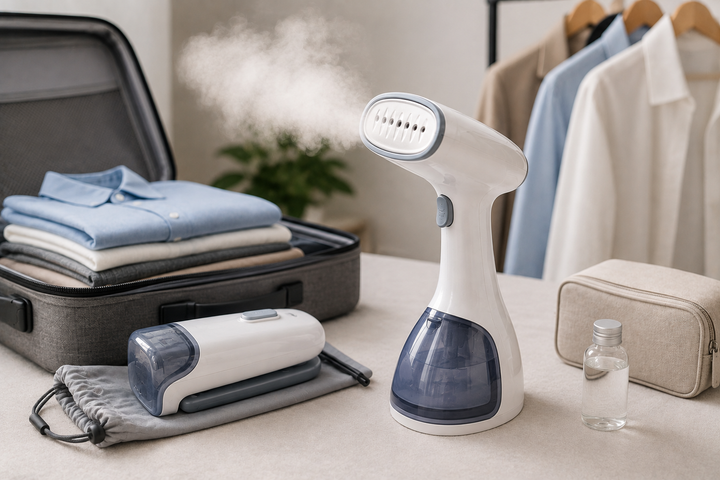
A portable travel steamer is a compact appliance designed to release steam onto fabrics. The steam helps loosen wrinkles and refresh garments without requiring a traditional ironing board.
Most travel steamers include a water reservoir, heating element, steam nozzle, and control system. Once heated, water converts into steam and exits through the nozzle to treat clothing and other fabric items.
Portable travel steamers are commonly used for shirts, dresses, jackets, uniforms, curtains, and lightweight household textiles.
Understanding the Concept
Steam works by relaxing fabric fibers that have become compressed during storage, packing, or daily wear.
When warm steam penetrates fabric, wrinkles often become easier to smooth out. Because the process uses moisture rather than direct pressing, many users find steamers useful for delicate materials and garments with complex shapes.
For example, a business traveler arriving at a hotel can quickly refresh a shirt or suit after removing it from luggage.
Key Types of Portable Travel Steamers
Handheld Travel Steamers
These are the most common travel models.
Features
- Lightweight construction
- Compact design
- Easy transportation
- Suitable for most travel situations
Foldable Travel Steamers
Designed for space-saving storage.
Features
- Folding handles
- Compact packing dimensions
- Convenient portability
Corded Travel Steamers
Operate through direct electrical connection.
Features
- Consistent power delivery
- Suitable for extended steaming sessions
- Reliable operation
Dual-Voltage Travel Steamers
Designed for international travel.
Features
- Compatible with different voltage systems
- Suitable for global travel
- Flexible usage across regions
Portable Travel Steamer Components
| Component | Function |
|---|---|
| Water Tank | Stores water |
| Heating Element | Produces steam |
| Steam Nozzle | Directs steam flow |
| Power System | Supplies electrical energy |
| Housing | Protects internal components |
| Control Switch | Activates operation |
| Water Indicator | Shows water level |
Portable Travel Steamer Architecture
Water Reservoir
The water reservoir stores water before heating begins.
Heating Chamber
The heating element raises water temperature until steam is produced.
Steam Delivery System
Steam travels through internal channels toward the nozzle.
Steam Nozzle
The nozzle distributes steam onto fabric surfaces.
Control System
Controls regulate operation and power settings.
How Portable Travel Steamers Work
Step 1: Fill the Water Tank
Clean water is added to the reservoir.
Step 2: Power the Device
The steamer begins heating the water.
Step 3: Generate Steam
Water converts into steam within the heating chamber.
Step 4: Apply Steam to Fabric
Steam is directed toward the garment surface.
Step 5: Smooth the Fabric
The combination of moisture and heat helps reduce wrinkles.
Steaming Process Overview
| Stage | Purpose |
|---|---|
| Filling | Add water |
| Heating | Generate steam |
| Steaming | Treat fabric |
| Smoothing | Reduce wrinkles |
| Cooling | Prepare for storage |
Important Specifications to Consider
Water Tank Capacity
Tank capacity affects steaming duration.
| Capacity Range | Typical Usage |
|---|---|
| Small Tank | Quick touch-ups |
| Medium Tank | Multiple garments |
| Large Tank | Extended steaming sessions |
Heat-Up Time
Heat-up time indicates how quickly the appliance produces steam.
Steam Output
Steam output influences wrinkle-removal efficiency.
Weight
Lighter models are generally easier to carry during travel.
Power Rating
Power rating can influence heating performance and steam generation.
Fabric Compatibility Guide
| Fabric Type | Compatibility | Notes |
|---|---|---|
| Cotton | High | Suitable for routine steaming |
| Polyester | High | Common travel fabric |
| Linen | High | Helps reduce visible wrinkles |
| Blended Fabrics | High | Suitable for regular use |
| Silk | Moderate | Use carefully |
| Wool | Moderate | Follow garment instructions |
| Delicate Fabrics | Moderate | Test small areas first |
Portable Travel Steamer Capacity Comparison
| Capacity Type | Suitable For |
|---|---|
| Compact Tank | Individual travelers |
| Medium Tank | Frequent travelers |
| Larger Tank | Multiple garments |
| Extended Capacity | Longer steaming sessions |
Benefits and Advantages
Compact Design
Portable steamers fit easily into luggage and travel bags.
Quick Garment Refreshing
Useful for reducing wrinkles after travel.
Convenience
Can be used without a traditional ironing board.
Versatility
Suitable for various garment types.
Travel-Friendly Operation
Many models are designed specifically for mobility.
Travel Steamer vs Traditional Iron
| Feature | Travel Steamer | Traditional Iron |
|---|---|---|
| Portability | High | Lower |
| Storage Convenience | High | Moderate |
| Wrinkle Reduction | Good | Excellent |
| Setup Requirements | Minimal | More Space Required |
| Travel Suitability | High | Lower |
Real-World Applications
Business Travel
Professionals often use travel steamers to refresh formal clothing.
Vacation Travel
Garments packed in luggage may develop wrinkles during transit.
Student Housing
Compact appliances fit well in smaller living spaces.
Events and Conferences
Useful for preparing clothing before meetings or presentations.
Hospitality Settings
Portable steamers can help maintain garment appearance during extended stays.
Environmental Considerations
Reduced Disposable Product Usage
Maintaining garments properly may support longer clothing usability.
Resource Awareness
Compact appliances are often designed with efficient operation in mind.
Durable Equipment Design
Many travel steamers are built for repeated use over extended periods.
Noise and Operating Environment
Most travel steamers operate quietly, although some sound is produced during steam generation.
Suitable Environments
- Hotel rooms
- Apartments
- Dormitories
- Vacation rentals
- Temporary accommodation
Factors Affecting Performance
| Factor | Impact |
|---|---|
| Water Quality | Influences steam generation |
| Room Ventilation | Affects moisture dispersion |
| Fabric Thickness | Influences steaming time |
| Tank Capacity | Affects operating duration |
Industry Standards and Safety
Electrical Safety
Portable steamers are generally designed according to applicable household appliance safety requirements.
Temperature Management
Modern models often include overheating protection mechanisms.
Water Protection Features
Many designs incorporate systems intended to reduce leakage risks.
Travel Safety Considerations
Users should allow appliances to cool completely before packing.
Safety and Usage Considerations
- Keep the appliance upright during operation.
- Use clean water whenever possible.
- Avoid overfilling the reservoir.
- Allow cooling before storage.
- Keep electrical components dry.
- Follow operating instructions.
Common Challenges and Solutions
| Challenge | Practical Solution |
|---|---|
| Limited Water Capacity | Refill when necessary |
| Heavy Wrinkles | Steam slowly and evenly |
| Water Spots | Use clean water |
| Slow Heating | Verify power supply |
| Travel Storage | Empty tank before packing |
| Steam Reduction | Clean water pathways periodically |
Maintenance Schedule
| Maintenance Task | Frequency | Purpose |
|---|---|---|
| Empty Water Tank | After Use | Prevent residue buildup |
| Wipe Exterior | Weekly | Maintain cleanliness |
| Inspect Power Cord | Monthly | Support safe operation |
| Clean Steam Nozzle | Monthly | Maintain steam flow |
| Check Water Reservoir | Monthly | Ensure proper function |
| General Inspection | Periodically | Identify wear |
Best Practices
- Empty the tank before travel.
- Use clean water.
- Store in a dry location.
- Steam garments vertically when appropriate.
- Allow adequate cooling time.
- Follow maintenance recommendations.
Expert Insights
Garment care specialists often recommend selecting a travel steamer based on tank capacity, weight, heat-up time, and voltage compatibility rather than focusing on a single specification.
Frequent travelers may benefit from compact lightweight designs, while users who steam multiple garments regularly may prefer larger water reservoirs and longer operating durations.
Frequently Asked Questions
What is a portable travel steamer?
A compact appliance that uses steam to reduce wrinkles in fabrics.
How does a travel steamer work?
Water is heated and converted into steam, which is applied to garments.
Are portable travel steamers suitable for travel?
Yes, they are specifically designed for portability.
Can they be used on cotton fabrics?
Yes, cotton is commonly steamed.
Why is dual-voltage capability useful?
It supports operation in different electrical systems during international travel.
What affects steaming performance?
Water quality, steam output, fabric type, and tank capacity.
How often should a travel steamer be cleaned?
Routine maintenance helps maintain performance.
Can delicate fabrics be steamed?
Many delicate fabrics can be steamed carefully according to garment instructions.
What is heat-up time?
The time required for the appliance to begin producing steam.
Why is tank capacity important?
It influences how long the steamer can operate before refilling.
Future Trends and Industry Insights
Faster Heating Systems
Manufacturers continue to improve heat-up performance.
Improved Portability
Future designs may become even more compact and lightweight.
Enhanced Water Management
New technologies may improve steam consistency.
Smart Appliance Features
Some future models may include advanced operating controls.
Better Energy Efficiency
Efficiency improvements remain a key focus within appliance development.
Conclusion
Portable travel steamers provide a convenient and practical solution for garment care while traveling or living in compact spaces. Their lightweight construction, simple operation, and ability to refresh clothing without a traditional ironing setup make them useful across many situations.
By understanding specifications such as water tank capacity, steam output, heat-up time, fabric compatibility, and safety features, users can better evaluate which portable travel steamer aligns with their travel habits and garment care requirements.