Pharmaceutical Packaging and Moisture Protection: Materials, Facts ,Desiccants and Best Practices
Pharmaceutical packaging plays an important role in maintaining the quality, stability, and safety of medicines throughout storage, transportation, and distribution. Many pharmaceutical products are sensitive to environmental conditions, including moisture, temperature, oxygen, and light. When moisture enters a package, it can affect the physical and chemical properties of certain drug formulations, potentially reducing their effectiveness or changing their appearance.
Moisture protection is particularly important for tablets, capsules, powders, granules, and some diagnostic products. Pharmaceutical manufacturers use different packaging materials, moisture barrier technologies, and desiccants to help control humidity inside packaging systems. Selecting the appropriate combination depends on the medicine's formulation, its moisture sensitivity, the intended shelf life, and the environmental conditions in which it will be stored.
Why Moisture Protection Matters in Pharmaceutical Packaging
The Effect of Moisture on Drug Stability
Moisture can influence the stability of pharmaceutical ingredients and finished products in several ways. Certain active pharmaceutical ingredients may undergo hydrolysis when exposed to water, while moisture-sensitive tablets can soften, swell, discolor, or lose their mechanical strength. Capsules may also experience changes in texture or physical properties when exposed to unsuitable humidity conditions.
Moisture can affect more than the appearance of a medicine. It may influence dissolution characteristics, product performance, and the stability of sensitive ingredients. For this reason, pharmaceutical stability testing evaluates how products respond to environmental conditions over time. These studies help establish appropriate packaging requirements and product shelf life.
The Importance of Pharmaceutical Shelf Life
Pharmaceutical shelf life refers to the period during which a medicine is expected to remain within its approved quality specifications when stored under defined conditions. Packaging contributes to shelf-life protection by limiting exposure to moisture, oxygen, light, and other environmental factors.
A suitable moisture barrier can help maintain product quality during distribution and storage. However, packaging alone cannot guarantee stability. Formulation design, manufacturing controls, storage conditions, and container closure integrity must also be considered when evaluating the overall protection of a pharmaceutical product.
Common Pharmaceutical Packaging Materials
High-Density Polyethylene Packaging
High-density polyethylene (HDPE) is commonly used for pharmaceutical bottles containing tablets, capsules, and other solid dosage forms. It offers useful mechanical strength, chemical resistance, and practical handling characteristics. HDPE bottles can be combined with compatible closures, induction seals, liners, and desiccants to improve protection against environmental moisture.
The moisture barrier performance of an HDPE container depends on its wall thickness, design, closure system, and formulation requirements. For highly moisture-sensitive medicines, manufacturers may evaluate alternative materials or multilayer packaging structures to achieve the required protection.
Polypropylene Packaging
Polypropylene (PP) is another polymer used in pharmaceutical containers and packaging components. It offers good chemical resistance and can be suitable for a variety of pharmaceutical applications. Its performance depends on the specific polymer grade, package design, and environmental conditions.
When selecting polypropylene packaging, manufacturers should assess moisture transmission, compatibility with the medicine, sealing performance, and the requirements of the intended storage period. Material selection should be based on testing rather than assumptions about the performance of a particular plastic.
Aluminum Foil and High-Barrier Packaging
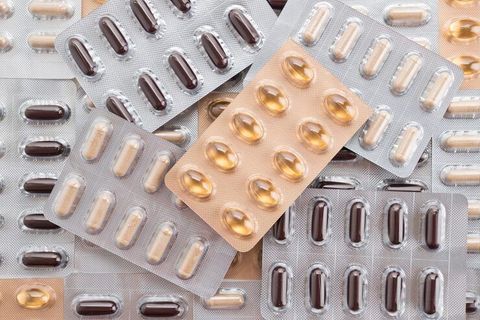
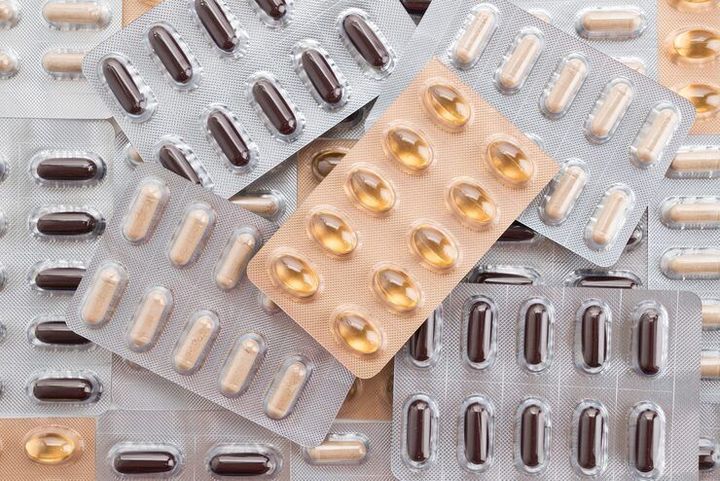
Aluminum foil provides a strong barrier against moisture, oxygen, and light when incorporated into a properly designed packaging structure. It is widely used in pharmaceutical blister packs, strip packs, and multilayer laminates. Aluminum-based barrier systems are particularly useful for products that require greater environmental protection than conventional polymer packaging can provide.
Blister packaging may use aluminum foil with suitable forming materials, while foil-based strip packaging can enclose individual tablets or capsules. The effectiveness of these systems depends on foil integrity, seal quality, packaging design, and the suitability of the materials for the specific medicine.
Glass Pharmaceutical Containers
Glass bottles and vials are used for many pharmaceutical products because glass provides a strong barrier against moisture and gases when the container and closure system are properly designed. Glass is also valued for its chemical resistance and suitability for many pharmaceutical formulations.
Nevertheless, glass containers still require appropriate closures, seals, and compatibility assessments. The complete container closure system must be evaluated because moisture protection depends on the entire package rather than the container material alone.
Desiccants Used in Pharmaceutical Packaging
What Is a Pharmaceutical Desiccant?
A desiccant is a material that helps reduce moisture within an enclosed environment by adsorbing or absorbing water. In pharmaceutical packaging, desiccants can help maintain suitable humidity conditions for moisture-sensitive medicines during storage. They are commonly used in bottles, containers, and selected packaging systems for solid oral dosage forms.
The appropriate desiccant depends on the product's moisture sensitivity, the package volume, the expected moisture exposure, and the intended storage period. Manufacturers must also ensure that the desiccant is compatible with the packaging system and does not introduce unacceptable contamination or safety risks.
Silica Gel Desiccants
Silica gel is a widely used desiccant made from porous silicon dioxide. Its porous structure allows it to adsorb moisture from the surrounding air. Silica gel is commonly supplied in sachets, canisters, or other packaging formats designed for controlled use.
In pharmaceutical applications, silica gel can help control humidity inside a sealed container. The quantity and format should be selected according to the moisture load and the performance requirements of the product. Packaging designs must prevent accidental ingestion, leakage, or unwanted contact between the desiccant and the medicine.
Molecular Sieve Desiccants
Molecular sieves are porous materials with carefully controlled pore structures that can adsorb water molecules efficiently. Certain molecular sieve formulations are useful when low humidity levels are required or when moisture must be controlled under specific environmental conditions.
Their suitability depends on the target humidity, adsorption capacity, package design, and compatibility with the product. Pharmaceutical manufacturers generally evaluate molecular sieves through application-specific testing before incorporating them into commercial packaging systems.
Other Moisture-Control Materials
Other moisture-control materials may include selected clay-based desiccants and specially engineered humidity-control components. Their performance varies according to composition, temperature, relative humidity, and packaging conditions.
Not every desiccant is suitable for every pharmaceutical product. Selection should consider adsorption characteristics, material quality, potential extractables or contaminants, and relevant regulatory requirements. Desiccants should not be treated as substitutes for adequate moisture barrier packaging.
Best Practices for Pharmaceutical Moisture Protection
Select Packaging According to Product Sensitivity
The first step in moisture protection is understanding the medicine's sensitivity to humidity. Manufacturers should evaluate the active pharmaceutical ingredient, excipients, dosage form, and known degradation pathways. Stability data can help determine whether a standard polymer bottle, high-barrier blister, aluminum laminate, or another packaging configuration is appropriate.
Packaging decisions should also account for distribution conditions and the possibility of exposure to changing temperature and humidity. A packaging system suitable for one medicine may not provide sufficient protection for another, even when both products have the same dosage form.
Evaluate Container Closure Integrity
Container closure integrity testing helps assess whether a packaging system maintains an effective barrier against environmental ingress. Defects in seals, closures, liners, or package materials can allow moisture to enter and compromise the intended protection.
Depending on the product and packaging design, manufacturers may use appropriate deterministic or probabilistic testing methods to assess package integrity. Testing should be selected and validated according to the product's risk profile, applicable standards, and regulatory expectations.
Control Packaging and Storage Environments
Humidity control during manufacturing and packaging can reduce unnecessary moisture exposure. Appropriate environmental monitoring, material handling procedures, and storage controls help maintain consistent packaging conditions. Moisture-sensitive materials should be protected during production, especially when containers remain open before final sealing.
Finished pharmaceutical products should be stored according to their approved labeling and stability requirements. Temperature and humidity conditions should be monitored where necessary, and packaging components should be stored in conditions that preserve their intended properties.
Use Stability Testing to Verify Performance
Stability testing provides evidence about how a medicine's quality changes under defined environmental conditions. Pharmaceutical manufacturers use stability data to evaluate packaging suitability, establish shelf life, and support appropriate storage instructions.
Testing programs may include long-term, accelerated, and other relevant studies in accordance with applicable regulatory guidance. Where moisture protection is a major concern, evaluations may include moisture content, appearance, assay, degradation products, dissolution, and other product-specific quality attributes.
Maintain Packaging Quality Control
Quality control helps ensure that packaging materials and finished packages meet established specifications. Incoming material inspection, seal testing, dimensional checks, supplier qualification, and documented manufacturing controls can help identify packaging defects before products are distributed.
Manufacturers should also maintain traceability for packaging components and investigate deviations that could affect product quality. Changes to a container, closure, desiccant, or packaging supplier may require a documented assessment to determine whether additional compatibility or stability studies are necessary.
Pharmaceutical Packaging Regulations and Quality Standards
Good Manufacturing Practices
Good Manufacturing Practices (GMP) provide a framework for controlling pharmaceutical manufacturing and packaging processes. These requirements support consistent product quality, appropriate documentation, contamination prevention, and controlled handling of packaging materials.
The specific GMP requirements depend on the market, product category, and applicable regulatory authority. Pharmaceutical manufacturers should follow the relevant regulations and maintain records demonstrating that packaging processes are controlled and suitable for their intended use.
Stability and Packaging Validation
Packaging validation and stability studies help establish whether a selected packaging configuration provides adequate protection throughout the intended shelf life. Assessments may consider material compatibility, moisture transmission, closure performance, and the effect of storage conditions on the finished medicine.
Regulatory guidance, including relevant International Council for Harmonisation (ICH) stability guidelines and applicable regional requirements, can help inform study design. The appropriate testing program should reflect the product, package configuration, and intended markets.
Emerging Trends in Pharmaceutical Moisture Barrier Technology
Advanced Barrier Films and Multilayer Packaging
Advances in polymer engineering and multilayer packaging have expanded the options available for protecting moisture-sensitive pharmaceutical products. These structures may combine materials with different barrier, mechanical, and sealing properties to achieve a suitable balance of protection and usability.
Material development continues to focus on reliable barrier performance, consistent manufacturing, and compatibility with pharmaceutical packaging processes. Any new material must be evaluated for its intended application rather than assumed to provide superior protection solely because it uses an advanced structure.
Smart Packaging and Environmental Monitoring
Digital monitoring technologies are increasingly relevant to pharmaceutical supply chains. Temperature and humidity sensors, data loggers, and connected monitoring systems can help document environmental conditions during storage and transportation.
These technologies provide useful information about potential exposure events, but they do not replace a validated packaging system. Their value depends on sensor accuracy, appropriate placement, reliable data collection, and procedures for responding to recorded deviations.
Sustainable Pharmaceutical Packaging
Environmental considerations are influencing the development of pharmaceutical packaging materials. Manufacturers are evaluating material reduction, recyclable structures, and alternative polymers while maintaining the protection required for medicines.
Moisture barrier performance remains a central requirement. Any packaging change intended to improve sustainability must be assessed for material compatibility, sealing integrity, stability, and compliance with relevant pharmaceutical regulations.
Frequently Asked Questions
Which packaging material provides the best moisture protection for medicines?
The most suitable material depends on the medicine's moisture sensitivity and its storage requirements. Aluminum foil-based structures can provide strong moisture barriers, while properly designed glass containers and selected polymer packaging systems may also be suitable. Performance should be verified through testing of the complete packaging system.
Why are desiccants used in pharmaceutical bottles?
Desiccants help reduce moisture within sealed containers by adsorbing or absorbing water. They can help protect moisture-sensitive tablets, capsules, and other products when used with an appropriate container and closure system.
Is silica gel safe for pharmaceutical packaging?
Silica gel is used in many pharmaceutical packaging applications when supplied in a suitable, controlled format. It must be selected and packaged appropriately to prevent accidental ingestion, contamination, or unintended contact with the medicine. Product-specific safety and packaging requirements should always be followed.
How does moisture affect pharmaceutical shelf life?
Moisture can contribute to chemical degradation, physical changes, and alterations in product performance. The effect varies by formulation. Appropriate packaging, controlled storage, and stability testing help establish the conditions needed to maintain product quality.
How can manufacturers test pharmaceutical moisture protection?
Manufacturers can evaluate moisture protection through appropriate moisture transmission studies, container closure integrity testing, packaging compatibility assessments, and stability studies. The selected methods should be suitable for the package design and the medicine's quality requirements.
Conclusion
Pharmaceutical packaging and moisture protection are closely connected to medicine stability, quality, and shelf-life management. Packaging materials such as HDPE, polypropylene, glass, and aluminum-based barrier structures offer different levels of protection and must be selected according to the product's specific requirements.
Desiccants, including silica gel and molecular sieves, can provide additional humidity control when incorporated into a suitable packaging system. However, effective moisture management also depends on container closure integrity, manufacturing controls, environmental monitoring, and stability testing.
By evaluating the complete packaging system and following applicable pharmaceutical quality standards, manufacturers can make informed decisions about moisture barrier packaging and help maintain medicine quality throughout storage and distribution.