MG Hector Tomahawk EV Complete Overview & Guide
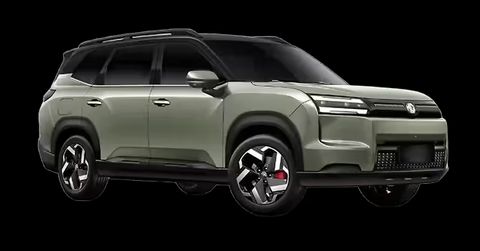
The MG Hector Tomahawk EV is the name currently being used by Indian automotive media for JSW MG Motor India’s upcoming three-row electric SUV.
An important clarification is necessary. As of 17 August 2026, JSW MG Motor India officially refers to the upcoming vehicle as the first creation of MG ADAPT. The company has not yet publicly confirmed “Hector Tomahawk” as the final production name on its official product page. The Tomahawk name should therefore be treated as a reported name until the formal unveiling.
MG describes ADAPT as India’s first multi-NEV platform. According to the manufacturer, the architecture can support:
- Battery electric vehicles or EVs
- Plug-in hybrid electric vehicles or PHEVs
- Hybrid electric vehicles or HEVs
- Range-extended electric vehicles or REEVs
MG also highlights battery monitoring, structural protection and different operating strategies for electrified powertrains on the ADAPT architecture.
Current reports indicate that the first ADAPT-based SUV will arrive in electric form, while a plug-in hybrid version may follow later. Reports also identify it as a seven-seat vehicle.
The upcoming Indian SUV is closely related to the Wuling Eksion, which is already available in Indonesia with both EV and PHEV powertrains. The Eksion therefore provides a useful technical reference, although its specifications should not automatically be treated as confirmed India specifications.
Why the MG Hector Tomahawk EV Matters
India’s electric passenger-vehicle market is gradually expanding beyond small urban EVs and conventional five-seat crossovers.
A three-row electric SUV addresses people who require additional seating, larger cabin packaging and longer-distance mobility while considering an electric drivetrain.
This type of vehicle also raises different practical questions. Battery capacity, DC charging speed, highway energy efficiency, passenger load and home charger installation become important areas of research.
Financial planning can also include:
- Car insurance
- Insurance premium
- Vehicle finance
- Auto loan
- EMI calculator
- Road tax
- Vehicle registration
- Battery warranty
MG ADAPT is also significant because it is designed around several propulsion formats rather than only a battery-electric configuration. This could allow future vehicles to address different charging conditions and driving requirements across India.
For readers researching the Hector Tomahawk EV, it is useful to separate confirmed information from international reference specifications.
| Area | Current Information | India Status |
|---|---|---|
| Platform | MG ADAPT multi-NEV architecture | Confirmed |
| Seating | Seven-seat layout indicated | Strong pre-launch indication |
| Initial powertrain | Battery electric | Reported |
| Battery | 69.2 kWh LFP on Wuling Eksion | India figure pending |
| Motor | 150 kW, 310 Nm on Eksion | India figure pending |
| Range | Up to 530 km CLTC on Eksion | Not India-certified |
| Charging | CCS2 DC charging on Eksion | India details pending |
| PHEV | Available internationally | India timeline pending |
Battery, Range and Charging Explanation
The Wuling Eksion EV provides the clearest technical reference before JSW MG publishes the Indian specifications.
Wuling officially lists a 69.2 kWh lithium-iron-phosphate battery, a 150 kW electric motor producing 310 Nm, front-wheel drive and a claimed electric driving range of up to 530 km under the CLTC test cycle.
However, 530 km should not be described as the certified Indian range of the Hector Tomahawk EV.
CLTC is a testing method used in China and international specifications can differ from Indian homologation figures. Real-world EV range can also change according to:
- Driving speed
- Air-conditioning use
- Outside temperature
- Passenger and luggage load
- Road gradients
- Tyre pressure
- Traffic conditions
Charging capability is equally important for a large electric SUV. The Wuling Eksion supports CCS2 DC fast charging, but the charging power and charging-time figures for the Indian MG version remain unconfirmed.
A simple calculation can help understand EV energy efficiency:
Energy use per 100 km = Battery energy used ÷ Distance travelled × 100
For example, using 50 kWh over 300 km would equal approximately 16.7 kWh per 100 km. This is only a general calculation and not a prediction for the upcoming MG.
Expected Exterior, Interior and Features
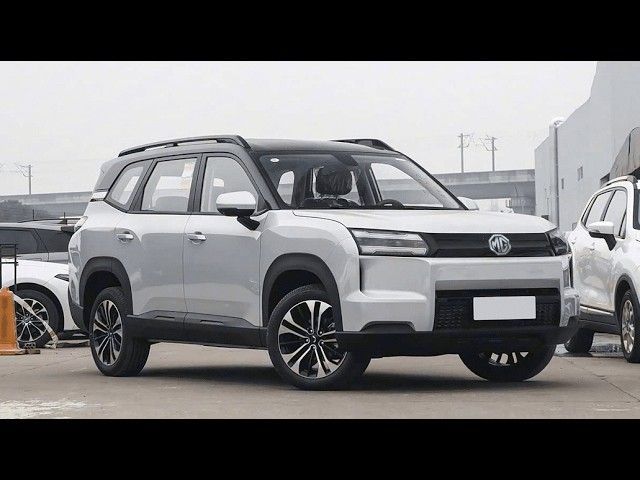
Images of an undisguised vehicle reported on 16 August 2026 showed what appears to be a production-ready SUV.
Visible design elements included a largely closed front treatment suitable for an EV, split lighting elements, prominent body cladding, roof rails, conventional door handles and large dual-tone alloy wheels.
Autocar India reports that the model is related to the Wuling Eksion and could retain dimensions close to:
| Dimension | Wuling Eksion Reference |
| Length | 4,745 mm |
| Width | 1,850 mm |
| Height | 1,755 mm |
| Wheelbase | 2,810 mm |
| Seating | 7 |
These figures are official specifications for the Indonesian Wuling Eksion. They are not yet confirmed specifications for the Indian MG model.
The Indonesian Eksion also provides an indication of the technology that the architecture can support. Depending on version, its equipment includes a 12.8-inch central display, 8.8-inch driver display, powered tailgate, ventilated front seats, rear climate vents, 360-degree camera and Level 2 driver-assistance functions.
Indian equipment may differ substantially between variants. Airbags, ADAS, infotainment, upholstery, wheel size and connected technology should therefore be verified from the final India specification sheet.
Recent Updates
The MG ADAPT project developed rapidly during 2026.
In April 2026, Wuling published detailed specifications for the Eksion in Indonesia. Its EV uses a 69.2 kWh LFP battery, while its PHEV uses a 1.5-litre dedicated hybrid engine combined with a 20.5 kWh battery.
During July 2026, JSW MG began highlighting its ADAPT architecture in India. Its current official page confirms compatibility with EV, PHEV, HEV and REEV technologies.
By August 2026, MG had activated a pre-reservation page for the first ADAPT vehicle. The manufacturer’s official communication indicates an unveiling on 26 August 2026.
On 16 August 2026, an undisguised example was photographed in Pune, providing the clearest indication so far of the likely production exterior.
India’s wider charging network is also expanding. A Government of India update published in August stated that 67,657 EV chargers were installed across States and Union Territories as of 7 August 2026, including battery-swapping station chargers.
Actual charger compatibility still depends on connector type, charging power and operational availability.
Indian EV Laws and Policies
Electric passenger vehicles in India are influenced by central taxation, homologation rules, registration requirements, charging standards and state-level EV policies.
The current CBIC GST schedule lists electrically operated vehicles under a total 5% GST rate.
The PM E-DRIVE scheme has an overall financial outlay of ₹10,900 crore, including ₹2,000 crore for public EV charging infrastructure.
Its direct demand incentives focus mainly on specified categories such as electric two-wheelers, three-wheelers, buses and certain commercial segments rather than providing a general incentive for private electric passenger cars. For a vehicle such as the upcoming MG EV, the scheme is particularly relevant through the expansion of public charging infrastructure.
The Ministry of Power’s EV charging guidelines provide a framework for connected and interoperable charging infrastructure across India.
Vehicle registration and road tax can vary between States and Union Territories. Readers should therefore check the applicable state transport authority rather than applying one state’s EV rules to another.
Final Indian vehicles must also complete applicable homologation requirements before registration.
Any future Bharat NCAP rating for the Indian MG model should be considered separately from overseas equipment specifications or international safety information.
Tools and Resources for EV Research
Several tools can help readers evaluate an electric SUV more accurately.
- JSW MG Motor India website: Check the final name, battery specification, range, variants and warranty information.
- MG ADAPT platform information: Understand the platform’s EV, PHEV, HEV and REEV capability.
- MG EV Trip Planner: Useful for planning routes around charging locations.
- MG charger locator: Helps identify compatible charging points in the MG ecosystem.
- VAHAN and Parivahan: Useful for vehicle registration and transport information.
- PM E-DRIVE portal: Useful for current EV policy and charging-infrastructure information.
- EMI calculator: Helps compare auto loan and vehicle finance scenarios.
- Car insurance worksheet: Compare IDV, insurance premium, deductibles and coverage terms.
- Home charging checklist: Record electrical load, parking availability, cable route and charger capacity.
- Energy calculator: Track battery consumption in kWh per 100 km.
Frequently Asked Questions
Is MG Hector Tomahawk EV the official name?
Not yet. As of 17 August 2026, JSW MG officially refers to the vehicle as the first creation of MG ADAPT. Hector Tomahawk is currently a name reported by automotive publications.
When will the upcoming MG electric SUV be unveiled?
Current official communication points to 26 August 2026 for the unveiling of the first MG ADAPT vehicle.
Will it have a 69.2 kWh battery and 530 km range?
Those are official specifications of the Wuling Eksion EV in Indonesia. The Indian battery capacity and certified range have not yet been announced by JSW MG.
Will it be a seven-seater?
Current reports and the related international model indicate a seven-seat, three-row configuration. Final India variant details should still be verified after the unveiling.
Will a PHEV version also come to India?
Reports indicate that an EV could arrive first, followed by a PHEV. MG ADAPT officially supports plug-in hybrid technology, but the Indian PHEV timeline and final specifications remain unconfirmed.
Conclusion
The MG Hector Tomahawk EV is currently best understood as the reported identity of JSW MG Motor India’s first ADAPT-based three-row vehicle rather than a model with fully confirmed India specifications.
MG has officially confirmed the multi-NEV ADAPT architecture and its first vehicle, while the formal unveiling is expected on 26 August 2026.
The closely related Wuling Eksion provides useful technical context with seven seats, a 69.2 kWh LFP battery, 150 kW motor, 310 Nm and a range of up to 530 km under CLTC in its EV configuration. Those figures should remain reference information until JSW MG confirms Indian homologation data.
For meaningful evaluation, the most relevant India-specific details will be certified range, battery capacity, DC charging capability, safety equipment, battery warranty, home charger installation requirements, car insurance, insurance premium, vehicle finance, auto loan terms, road tax and vehicle registration rules.
Once the official specifications are published, these factors will provide a more reliable understanding of the MG ADAPT electric SUV than pre-launch estimates alone.