Laboratory Automation: Smart Solutions for Modern Labs
Laboratory automation is transforming the way modern laboratories operate. As research becomes more complex and data volumes continue to grow, laboratories are increasingly relying on automated systems to improve efficiency, accuracy, and productivity.
From clinical diagnostics and pharmaceutical research to environmental testing and industrial quality control, automated laboratory technologies are helping organizations streamline workflows and reduce manual tasks. The result is faster data processing, improved compliance, and more reliable outcomes.
Today, laboratory automation is considered one of the most important advancements in scientific research and analytical testing.
What Is Laboratory Automation?
Laboratory automation refers to the use of software, robotics, intelligent instruments, and data management systems to perform laboratory tasks with minimal human intervention.
Traditional laboratory processes often involve repetitive activities such as sample preparation, liquid handling, testing, data recording, and reporting. Automation technologies can perform these tasks consistently while reducing the risk of human error.
Modern laboratory automation systems often integrate multiple technologies, including:
- Laboratory Information Management Systems (LIMS)
- Robotic sample handling systems
- Automated liquid handling platforms
- Artificial intelligence analytics
- Machine learning algorithms
- Laboratory data management software
- Digital workflow solutions
- Remote monitoring systems
These technologies work together to create a more connected and efficient laboratory environment.
Why Laboratory Automation Matters
Laboratories generate enormous amounts of data every day. Managing this information manually can slow operations and increase the likelihood of errors.
Automation addresses these challenges by improving speed, consistency, and traceability.
Some of the key benefits include:
- Improved testing accuracy
- Faster sample processing
- Enhanced regulatory compliance
- Better data integrity
- Reduced operational risks
- Increased laboratory throughput
- Improved resource utilization
According to industry reports, automated laboratory systems can significantly reduce processing times while improving reproducibility across scientific workflows.
As laboratories face growing demands for high-volume testing and data analysis, automation continues to play a critical role in operational success.
Key Technologies Driving Laboratory Automation
Robotic Sample Handling
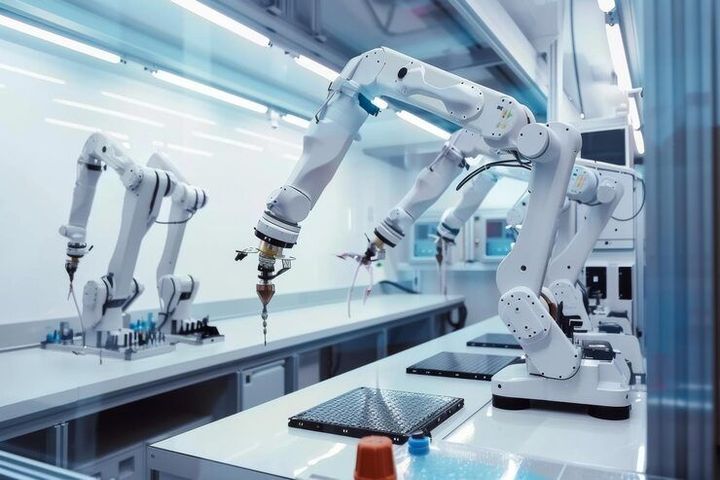
Robotic systems are widely used for transporting, sorting, labeling, and preparing samples.
These systems can operate continuously with high precision, helping laboratories manage large sample volumes without sacrificing quality.
Robotic automation is especially valuable in clinical laboratories where thousands of samples may be processed daily.
Automated Liquid Handling
Liquid handling is one of the most repetitive laboratory activities.
Automated pipetting systems can dispense liquids with exceptional accuracy, reducing variability and improving experimental consistency.
These systems are commonly used in:
- Drug discovery
- Genomics research
- Molecular biology
- Biotechnology laboratories
Laboratory Information Management Systems
A Laboratory Information Management System (LIMS) serves as the digital backbone of many automated laboratories.
LIMS platforms help laboratories manage:
- Sample tracking
- Data storage
- Quality control documentation
- Regulatory reporting
- Workflow automation
The integration of laboratory software with analytical instruments allows data to flow seamlessly across departments.
Artificial Intelligence and Machine Learning
Artificial intelligence is becoming increasingly important in laboratory operations.
AI-powered analytics can identify patterns within large datasets, support predictive modeling, and assist researchers in making informed decisions.
Machine learning tools are also helping laboratories improve quality assurance and optimize testing procedures.
Applications of Laboratory Automation
Laboratory automation is used across numerous industries.
Healthcare and Clinical Diagnostics
Clinical laboratories rely heavily on automation for blood testing, disease detection, and diagnostic analysis.
Automated systems help healthcare organizations deliver faster results while maintaining strict quality standards.
Pharmaceutical Research
Drug development involves extensive testing, screening, and validation processes.
Automation enables pharmaceutical laboratories to manage large-scale experiments more efficiently while improving reproducibility.
Environmental Testing
Environmental laboratories analyze water, soil, and air samples to monitor pollution levels and regulatory compliance.
Automated testing systems improve sample throughput and support accurate environmental monitoring.
Industrial Quality Control
Manufacturing organizations use laboratory automation to verify product quality and maintain production standards.
Automated testing supports consistency across industries such as chemicals, food processing, electronics, and advanced materials.
Laboratory Automation and Regulatory Compliance
Compliance remains a top priority for modern laboratories.
Regulatory agencies require laboratories to maintain accurate records, consistent procedures, and reliable data management practices.
Automated laboratory systems help organizations meet compliance requirements by providing:
- Electronic audit trails
- Secure data storage
- Standardized workflows
- Automated reporting
- Real-time monitoring
These features improve transparency and support quality assurance initiatives across laboratory operations.
Emerging Trends in Laboratory Automation
The laboratory automation market continues to evolve as new technologies enter the industry.
Several trends are shaping the future of laboratory operations.
Cloud-Based Laboratory Management
Cloud computing allows laboratories to access data securely from multiple locations.
Cloud-based laboratory software improves collaboration, scalability, and data accessibility.
Smart Laboratories
Smart laboratories combine connected instruments, sensors, and digital platforms to create highly efficient research environments.
These systems support real-time monitoring and automated decision-making.
Artificial Intelligence Integration
AI-driven laboratory analytics are helping researchers process complex datasets faster than traditional methods.
Advanced algorithms can support experimental design, predictive analysis, and operational optimization.
Digital Transformation Initiatives
Organizations worldwide are investing in laboratory digital transformation strategies to improve efficiency and remain competitive.
The integration of automation, analytics, and intelligent software is becoming a standard practice across many scientific fields.
Challenges of Implementing Laboratory Automation
While automation offers substantial benefits, implementation requires careful planning.
Common challenges include:
- System integration complexities
- Staff training requirements
- Data migration processes
- Workflow redesign
- Technology adoption concerns
Successful implementation typically involves a phased approach that aligns technology investments with organizational objectives.
Laboratories that prioritize employee training and process optimization often achieve stronger long-term results.
The Future of Laboratory Automation
The future of laboratory automation is closely linked to advancements in artificial intelligence, robotics, and digital laboratory technologies.
As scientific research continues to expand, laboratories will increasingly depend on automated workflows to manage growing data volumes and testing demands.
Future laboratories are expected to become more intelligent, connected, and autonomous. Automated systems will not only perform routine tasks but also assist with decision-making, predictive analytics, and research optimization.
Organizations that embrace laboratory automation will be better positioned to improve efficiency, maintain compliance, and support innovation in an increasingly data-driven world.