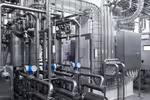
Masterbatch production requires controlled mixing, melting, dispersion, cooling, and pelletizing. The quality of the machine used in these processes can influence color consistency, additive distribution, production efficiency, material waste, and operating costs.
This guide explains what masterbatch machines are, how they work, the major machine types, applications, important components, and factors businesses should consider when evaluating equipment.
What Are Masterbatch Machines?
Masterbatch machines are industrial processing systems designed to manufacture concentrated plastic compounds containing pigments or functional additives.
A typical masterbatch formulation may contain:
-
Polymer carrier resin
-
Color pigments
-
UV stabilizers
-
Antioxidants
-
Processing additives
-
Flame-retardant additives
-
Fillers
-
Other performance-enhancing materials
The ingredients are processed under controlled temperature, pressure, and mixing conditions. The resulting material is commonly converted into small pellets that can be added to plastic during manufacturing.
Masterbatch machines are widely used in industries such as packaging, automotive components, consumer products, construction materials, agriculture, electrical products, and general plastics manufacturing.
How Does a Masterbatch Machine Work?
Although machine configurations vary, masterbatch production generally follows several stages.
1. Raw Material Preparation
The first stage involves preparing the polymer carrier, pigments, additives, and other ingredients according to a specific formulation.
Accurate weighing and dosing are important because variations in ingredient concentration can affect the final color or physical properties of the masterbatch.
2. Feeding and Dosing
Materials are introduced into the processing system through feeding equipment.
Gravimetric or volumetric feeders may be used depending on the machine design and production requirements. Consistent feeding helps maintain a stable formulation throughout production.
3. Mixing and Melting
Inside the processing chamber, heat and mechanical energy soften or melt the polymer carrier.
The screw system mixes the polymer with pigments and additives. Efficient mixing helps distribute the ingredients throughout the polymer matrix.
4. Dispersion
Dispersion is particularly important for color masterbatch production.
Pigment particles need to be distributed evenly within the polymer. Poor dispersion can result in color variations, visible particles, inconsistent opacity, or processing problems.
5. Extrusion
The processed material is transported through the extrusion section.
Pressure and temperature are controlled to produce a consistent melt suitable for the next production stage.
6. Cooling
After extrusion, the material needs to be cooled.
Depending on the production system, cooling may involve water, air, or specialized cooling equipment.
7. Pelletizing
The cooled or semi-cooled material is converted into pellets using a pelletizing system.
Pellet size and consistency are important because masterbatch pellets are generally designed to be conveniently mixed with base polymers during subsequent plastics processing.
Main Types of Masterbatch Machines
Different formulations and production requirements call for different equipment configurations.
Twin-Screw Extruder
Twin-screw extruders are widely associated with masterbatch and polymer compounding applications.
They use two screws to provide controlled conveying, melting, mixing, and dispersion. Their configuration can be adjusted for different materials and formulations.
Twin-screw systems are often considered when production requires strong mixing performance and flexible processing conditions.
Single-Screw Extruder
Single-screw extrusion systems have a simpler screw arrangement and are used for certain compounding and extrusion applications.
They may be suitable for materials that do not require the same level of intensive mixing as some complex masterbatch formulations.
High-Speed Mixer
High-speed mixers can be used during the pre-mixing stage.
They help distribute pigments, additives, and polymer materials before the mixture enters the main processing equipment.
Pelletizing Machine
Pelletizing equipment converts processed polymer into manageable pellets.
Common pelletizing approaches include strand pelletizing and water-ring or underwater pelletizing systems, depending on the material and production setup.
Automatic Dosing System
Automatic dosing equipment controls the quantity of individual ingredients entering the production line.
Modern dosing systems can improve repeatability and reduce manual handling when properly calibrated and maintained.
Important Components of a Masterbatch Production Line
A complete production line can contain several interconnected components.
Feeding System
The feeding system controls the movement of raw materials into the extruder.
Accurate feeding is especially important when formulations contain small quantities of high-concentration pigments or additives.
Extruder Screw
The screw is one of the most important components in an extrusion system.
Its geometry influences:
-
Material conveying
-
Melting
-
Mixing
-
Dispersion
-
Residence time
-
Pressure development
Different screw configurations can be selected for different polymers and formulations.
Barrel and Heating System
The barrel surrounds the screw and provides controlled processing zones.
Heating elements and temperature sensors help maintain the required processing conditions.
Vacuum Degassing System
Some formulations can release moisture or volatile substances during processing.
A vacuum degassing system can help remove unwanted gases and volatiles from the polymer melt when the process requires it.
Screen Changer and Filtration
Filtration systems can help remove unwanted contaminants or unmelted particles from the polymer melt.
The appropriate filtration arrangement depends on the raw materials and quality requirements.
Pelletizing System
The pelletizing section determines how the extruded material is converted into finished granules.
Consistent pellet dimensions can improve handling, storage, and subsequent dosing.
Applications of Masterbatch Machines
Masterbatch production supports a broad range of plastic manufacturing applications.
Plastic Packaging
Masterbatch is commonly used to provide color and functional properties to packaging materials.
Applications may include films, containers, caps, bags, and other plastic packaging products.
Automotive Plastics
Automotive manufacturers use colored and additive-modified polymers for various interior and exterior components.
Masterbatch technology can help manufacturers achieve consistent color and selected material characteristics.
Agricultural Films
Agricultural plastics may require additives that provide specific performance characteristics.
Specialized masterbatch formulations can be incorporated into agricultural films and related products.
Consumer Products
Plastic household products, storage containers, toys, appliances, and other consumer goods may use masterbatch for color and material modification.
Electrical and Electronic Components
Certain plastic components used in electrical applications may require specialized additive packages or flame-retardant formulations.
The appropriate material formulation depends on the product's technical and regulatory requirements.
Construction Materials
Plastic pipes, profiles, sheets, and other construction-related products can incorporate masterbatch for coloring or performance modification.
Benefits of Using Modern Masterbatch Equipment
Modern processing equipment can provide several potential operational advantages when properly selected and maintained.
Consistent Material Quality
Controlled feeding, temperature management, and mixing can improve consistency between production batches.
Better Pigment Dispersion
Efficient mixing can help distribute pigments throughout the polymer carrier and reduce visible inconsistencies.
Production Efficiency
Automated feeding, temperature control, and pelletizing can reduce the amount of manual intervention required during production.
Reduced Material Waste
Accurate dosing and stable processing conditions can help reduce rejected material and unnecessary raw-material consumption.
Process Monitoring
Modern industrial equipment may include sensors, digital controls, alarms, and monitoring systems that allow operators to observe important production parameters.
Factors to Consider Before Purchasing a Masterbatch Machine
Selecting equipment should be based on the actual production requirements rather than machine capacity alone.
Production Capacity
Determine the required output in kilograms per hour or another appropriate production unit.
Buying equipment with substantially more capacity than required can increase capital and operating costs, while insufficient capacity can limit production.
Material Compatibility
Different polymers and additives have different processing requirements.
The machine should be evaluated for compatibility with the intended materials, processing temperatures, formulation, and production method.
Mixing Requirements
Color masterbatch and additive masterbatch may require different mixing and dispersion characteristics.
The screw configuration and processing section should therefore be evaluated according to the formulation.
Energy Consumption
Energy efficiency can influence long-term operating expenses.
When comparing industrial equipment, businesses can consider motor efficiency, heating efficiency, cooling requirements, and overall energy consumption.
Automation and Controls
Digital control systems can provide greater process visibility.
Useful features may include:
-
Temperature monitoring
-
Motor-load monitoring
-
Pressure monitoring
-
Automated feeding
-
Production data recording
-
Alarm systems
-
Operator interfaces
Maintenance Requirements
Routine maintenance affects equipment reliability and operating costs.
Before purchasing machinery, businesses should understand the availability of replacement components, maintenance procedures, technical support, and service requirements.
Initial Investment and Total Cost
The purchase price is only one part of the total cost of ownership.
Businesses should also evaluate:
-
Installation costs
-
Energy consumption
-
Labor requirements
-
Maintenance expenses
-
Replacement parts
-
Downtime
-
Production efficiency
-
Expected service life
A machine with a higher initial cost may be economically reasonable if it provides appropriate efficiency and reliability over its operating life.
Masterbatch Machines and Quality Control
Quality control is an important part of masterbatch production.
Manufacturers may evaluate finished material using tests related to:
-
Color consistency
-
Pigment dispersion
-
Moisture content
-
Pellet dimensions
-
Melt flow characteristics
-
Additive concentration
-
Thermal properties
Laboratory testing and production-line monitoring should be designed around the specific masterbatch formulation and end-use requirements.
Safety Considerations
Masterbatch production involves heat, mechanical movement, electrical systems, polymer processing, and sometimes powdered pigments or additives.
Industrial facilities should establish appropriate safety procedures.
Important considerations include:
Machine Guarding
Moving components should have suitable guards and safety mechanisms.
Temperature Protection
Extrusion systems operate at elevated temperatures, so operators should be protected from hot surfaces and polymer melt.
Electrical Safety
Electrical installations, control panels, motors, and sensors should be properly installed and maintained.
Dust Management
Powdered pigments and additives may create airborne dust during handling. Appropriate ventilation, housekeeping, and workplace safety controls should be considered based on the materials involved.
Operator Training
Workers should receive appropriate training covering machine operation, emergency procedures, maintenance practices, and material-handling requirements.
Environmental Considerations
The plastics industry increasingly considers resource efficiency and environmental performance.
Manufacturers can evaluate opportunities to reduce:
-
Material waste
-
Energy consumption
-
Water consumption
-
Production rejects
-
Unnecessary packaging
-
Equipment downtime
Energy-efficient motors, optimized processing conditions, accurate dosing, and effective quality control can contribute to more efficient production.
Masterbatch Machines vs. Conventional Plastic Compounding Equipment
Masterbatch production and general plastic compounding can use similar extrusion technologies, but their objectives may differ.
Masterbatch production often focuses heavily on pigment concentration, dispersion, color consistency, and additive distribution.
General compounding may focus more broadly on modifying mechanical, thermal, electrical, or processing characteristics of the base polymer.
Consequently, machine configuration should be selected according to the formulation and intended application rather than assuming that one extrusion setup is suitable for every polymer-processing task.
Frequently Asked Questions
What is the main purpose of a masterbatch machine?
A masterbatch machine processes polymer carriers with concentrated pigments or additives to produce a material that can later be blended with plastics during manufacturing.
Which machine is commonly used for masterbatch production?
Twin-screw extrusion systems are commonly considered for masterbatch and polymer-compounding applications because they can provide controlled mixing, melting, conveying, and dispersion.
What factors affect masterbatch quality?
Raw-material quality, formulation accuracy, pigment dispersion, temperature control, feeding accuracy, screw configuration, processing conditions, and pelletizing can all influence final product quality.
Is automation important for masterbatch production?
Automation can improve process consistency and monitoring. Automated feeding, temperature control, pressure monitoring, and production data collection can be useful for industrial operations.
How should a masterbatch machine be selected?
Selection should consider production capacity, polymer compatibility, formulation requirements, mixing performance, energy consumption, automation, maintenance, technical support, and total cost of ownership.
Conclusion
Masterbatch machines play an important role in modern plastic manufacturing by converting concentrated pigments and additives into consistent, processable materials. Twin-screw extruders, feeding systems, mixing equipment, filtration systems, cooling units, and pelletizers can work together as part of a complete production line.
For businesses evaluating industrial machinery, the most important considerations are not simply machine size or purchase price. Material compatibility, mixing performance, production capacity, energy efficiency, automation, maintenance, quality control, and total cost of ownership should all be considered.
A properly designed masterbatch production system can help manufacturers achieve consistent material quality while supporting efficient and controlled plastics processing.