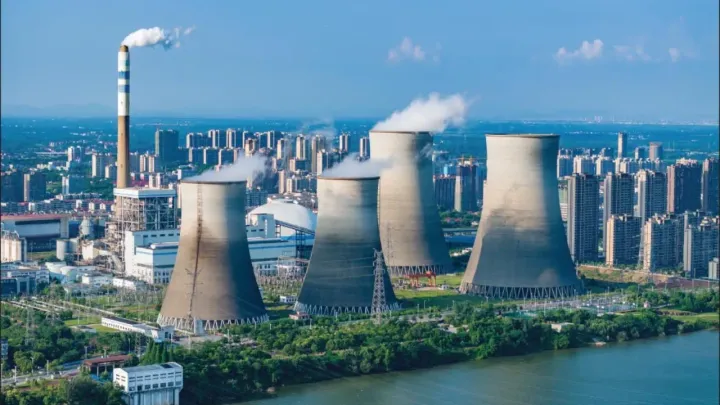
Industrial Thermal Power Plant Guide: Efficiency, Technology & Clean Energy Trends
An easy-to-understand guide to industrial thermal power plants, covering working principles, efficiency, modern technologies, recent developments, Indian policies, and cleaner energy trends.
An industrial thermal power plant is a facility that converts heat energy into electrical energy. In many large plants, coal, natural gas, or other fuels are used to produce heat, which converts water into high-pressure steam. The steam drives a turbine connected to a generator, producing electricity for industrial and grid applications.
The basic process follows a sequence:
- Fuel is prepared and supplied to a boiler.
- Heat converts water into high-pressure steam.
- Steam expands through a turbine.
- The turbine rotates an electrical generator.
- Electricity passes through transformers and transmission equipment.
- Exhaust steam is condensed and returned to the water cycle.
Coal-fired thermal power plants remain an important part of electricity generation in India because they can provide large amounts of continuous power. Thermal generation can also support the electricity system when solar and wind production changes during the day.
Modern plants are increasingly designed around higher thermal efficiency, improved combustion control, advanced steam conditions, better heat recovery, and digital monitoring. Supercritical and ultra-supercritical technologies are particularly important because they can generate more electricity from a given amount of fuel than older designs.
A thermal power plant normally includes several major systems:
- Boiler and steam generation system
- Turbine and generator
- Condenser and cooling system
- Fuel handling equipment
- Water treatment and circulation systems
- Air pollution control equipment
- Ash handling system
- Electrical switchgear and transformers
- Monitoring and control systems
The overall objective is to convert available thermal energy into dependable electricity while controlling fuel use, emissions, water consumption, and operating risks.
Why Thermal Power Plant Efficiency Matters Today
Efficiency is one of the most important factors in modern power generation. Higher efficiency means more electrical output can be obtained from the same quantity of thermal energy.
For an industrial facility, improved thermal efficiency can support more predictable plant operation and better resource management. It also has an environmental effect because using less fuel for the same electricity output can reduce associated emissions.
Several groups are affected by thermal power plant performance:
- Electricity generators
- Industrial facilities
- Grid operators
- Energy planners
- Environmental authorities
- Communities near generating stations
- Manufacturers of power-generation equipment
Thermal power plants also play an important role in grid reliability. Electricity demand can rise sharply during extreme weather, industrial production periods, and evening hours. Thermal generation can help provide firm capacity during these periods.
At the same time, the electricity sector is changing rapidly. Solar power, wind power, battery storage, hydropower, nuclear generation, and other low-carbon technologies are expanding. This means conventional plants increasingly need to operate flexibly rather than simply running continuously at a fixed output.
Efficiency therefore involves more than the boiler or turbine. Plant performance depends on the complete system, including:
- Boiler heat-transfer performance
- Steam pressure and temperature
- Turbine efficiency
- Condenser performance
- Cooling-water conditions
- Auxiliary electricity consumption
- Fuel quality
- Combustion control
- Maintenance condition
- Load level
Common Thermal Power Plant Technologies
| Technology | Main Characteristic | Typical Role |
|---|---|---|
| Subcritical | Conventional steam conditions | Older and established plants |
| Supercritical | Higher pressure and temperature | Higher-efficiency generation |
| Ultra-supercritical | Advanced steam conditions | Further efficiency improvement |
| Combined-cycle gas | Gas turbine plus steam cycle | Flexible, efficient generation |
| Biomass co-firing | Biomass blended with conventional fuel | Reduced dependence on coal in suitable units |
The choice of technology depends on fuel availability, grid requirements, environmental conditions, plant age, and technical feasibility.
Recent Developments in Thermal Power Generation
India's power sector has experienced significant changes during 2025 and 2026. In June 2025, India reached 50% of installed electricity capacity from non-fossil sources, according to government data. By September 2025, total installed electricity capacity had reached about 500.89 GW, with non-fossil sources accounting for more than half of installed capacity.
Thermal generation continues to remain important despite the rapid expansion of renewable energy. In February 2026, the Government of India reported that thermal capacity requirements for 2034–35 were estimated at approximately 307 GW, reflecting expectations of continuing electricity demand and the need for dependable generation capacity.
Technology modernization is also progressing. A government update published in December 2025 reported that 70,190 MW across 101 supercritical units and 7,680 MW across 11 ultra-supercritical units had been commissioned by October 31, 2025.
Another important trend is flexible operation. As renewable generation increases, thermal plants may need to adjust their output more frequently. In July 2026, the Central Electricity Authority published information concerning a proposed ramp-rate compliance framework and scheduling methodology for coal-based generating units.
Biomass co-firing is also receiving attention. A policy issued in November 2025 addressed the use of biomass pellets and certain municipal-waste-derived fuels in coal-based power plants, subject to technical feasibility.
These developments show that thermal power is increasingly being viewed as part of a changing electricity system rather than as an isolated generation technology.
Key Energy Capacity Trend
| Period | Important Development |
| June 2025 | Non-fossil capacity reached 50% of installed electricity capacity |
| September 2025 | Total installed capacity crossed 500 GW |
| October 2025 | Large supercritical and ultra-supercritical capacity reported |
| January 2026 | Installed generation capacity reached about 520.5 GW |
| July 2026 | Further attention to flexible operation and ramp-rate compliance |
Government data reported approximately 520.5 GW of installed generation capacity as of January 31, 2026, with non-fossil sources accounting for about 52.3%.
Laws, Regulations, and Policies in India
Industrial thermal power plants in India operate within a regulatory framework covering electricity generation, environmental protection, emissions, construction, energy efficiency, fuel use, and grid operation.
The Electricity Act, 2003 provides the broader legal framework for the electricity sector. Technical requirements for electrical plants and associated infrastructure are also governed by Central Electricity Authority regulations.
The Central Electricity Authority maintains technical standards for construction and electrical infrastructure. Its regulations include requirements relevant to generating stations and grid-connected equipment. Amendments were also listed during 2025 and 2026.
Environmental requirements are another major consideration. Coal-based plants may need systems for controlling particulate matter, sulfur dioxide, nitrogen oxides, and other pollutants. Flue-gas desulfurization is one technology used for sulfur dioxide control where applicable.
The Ministry of Power's 2025–26 annual report describes different categories of thermal plants and associated timelines for sulfur dioxide requirements. For certain Category B plants where the standard is made applicable, the stated compliance timeline is December 31, 2028. Category C plants have requirements related to stack-height criteria, with a stated timeline extending to December 31, 2029.
Energy efficiency is also addressed through the Perform, Achieve and Trade framework for designated energy-intensive sectors. Thermal power plants can be included within energy-efficiency programs designed to encourage improved performance.
The regulatory environment continues to develop as India balances electricity reliability, industrial growth, environmental protection, and the transition toward lower-carbon energy.
Tools and Resources for Thermal Power Plant Analysis
Professionals, students, researchers, and energy planners can use several categories of tools to understand thermal power plant performance.
Useful Calculation Tools
- Heat-rate calculators
- Thermal-efficiency calculators
- Boiler efficiency calculators
- Steam-table calculators
- Fuel-to-electricity conversion tools
- Carbon-emission estimation spreadsheets
- Load-factor calculators
- Plant-performance benchmarking templates
Technical Resources
- Boiler performance manuals
- Turbine operation guides
- Steam-property tables
- Electrical safety guidelines
- Energy-audit templates
- Environmental monitoring formats
- Plant maintenance checklists
- Grid-operation documents
The Central Electricity Authority provides thermal performance information, energy-auditing guidance, environmental data formats, and other technical publications relevant to thermal generating stations. Its thermal performance division was updated in August 2026.
For learning purposes, students can also use engineering textbooks, simulation software, technical calculators, plant diagrams, and educational datasets to understand the Rankine cycle, heat balance, turbine performance, and energy conversion.
Frequently Asked Questions
How Does a Thermal Power Plant Generate Electricity?
A thermal plant uses heat to produce steam. The steam expands through a turbine, causing the turbine shaft to rotate. The shaft drives a generator that converts mechanical energy into electrical energy.
What Is the Difference Between Subcritical and Supercritical Plants?
The main difference is the pressure and temperature of the steam cycle. Supercritical plants operate at higher steam conditions and can achieve greater thermal efficiency than conventional subcritical designs when properly operated.
Why Are Thermal Plants Important During the Energy Transition?
Thermal plants can provide dependable electricity and support grid stability when renewable generation varies. Their role is changing as renewable capacity, storage, and grid flexibility increase.
What Technologies Can Improve Thermal Power Plant Efficiency?
Important technologies include supercritical and ultra-supercritical steam cycles, improved boiler controls, advanced turbine designs, condenser optimization, heat recovery, digital monitoring, and better combustion management.
Are Thermal Power Plants Becoming More Flexible?
Yes. Increasing renewable generation creates a greater need for some thermal units to adjust output more rapidly. Recent Indian regulatory and technical work has increasingly examined flexible operation, low-load performance, and ramp-rate requirements.
Conclusion
Industrial thermal power plants remain an important component of India's electricity infrastructure, even as renewable energy expands rapidly. Their future role is increasingly connected with efficiency, flexibility, emissions management, and integration with a more diverse electricity system.