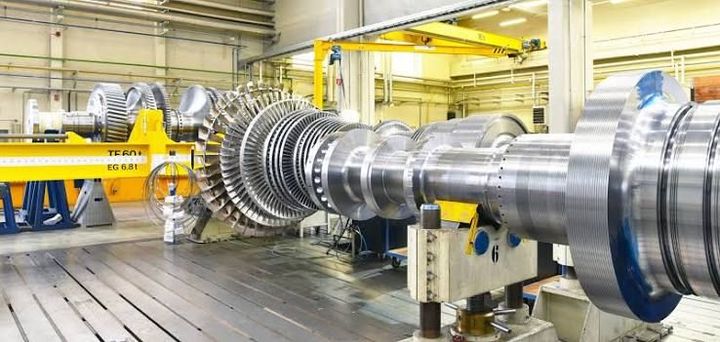
Industrial Equipment Manufacturers Explained: Machinery Types, Technologies, Applications & Manufacturing Insights
Industrial equipment manufacturers design and produce machinery, systems, components, and equipment used across manufacturing, construction, energy, agriculture, logistics, healthcare, mining, food processing, and other industrial sectors.
Industrial equipment can range from relatively simple mechanical machines to highly automated systems combining mechanical components, electronics, software, sensors, robotics, artificial intelligence, and industrial communication networks.
Modern machinery manufacturing is increasingly connected to automation, industrial IoT, digital twins, robotics, computer-aided engineering, advanced controls, additive manufacturing, and industrial AI. Recent developments in digital-twin technology are also allowing machine builders to simulate, validate, and optimize equipment before physical commissioning.
What Are Industrial Equipment Manufacturers?
Industrial equipment manufacturers are organizations involved in the engineering, development, production, testing, integration, and delivery of machinery or equipment intended for industrial applications.
Their activities can involve:
- Product design
- Mechanical engineering
- Electrical engineering
- Control-system development
- Software development
- Component manufacturing
- Machine assembly
- Automation integration
- Quality testing
- Performance validation
- Documentation
- Lifecycle support
Some manufacturers specialize in a particular type of machine, while others develop complete production systems or customized industrial equipment.
Main Types of Industrial Equipment
Industrial equipment covers a broad range of machinery.
1. Machine Tools
Machine tools are used to shape, cut, drill, grind, or otherwise process materials.
Examples include:
- CNC machining centers
- CNC turning machines
- Milling machines
- Grinding machines
- Drilling machines
- Laser cutting machines
- Press brakes
- EDM machines
Modern machine tools increasingly combine CNC controls, sensors, robotics, simulation, and digital manufacturing technologies.
2. Material Handling Equipment
Material handling equipment moves, stores, lifts, or positions materials.
Examples include:
- Conveyors
- Cranes
- Hoists
- Forklifts
- Automated guided vehicles
- Robotic handling systems
- Palletizers
- Automated storage systems
These systems are widely used in factories, warehouses, ports, distribution centers, and production facilities.
3. Industrial Automation Equipment
Automation equipment controls or performs production activities with limited manual intervention.
Examples include:
- Programmable logic controllers
- Industrial robots
- Servo systems
- Motion controllers
- Sensors
- Machine vision systems
- Human-machine interfaces
- Industrial control systems
4. Packaging Equipment
Packaging machinery prepares products for storage, transportation, and distribution.
Examples include:
- Filling machines
- Capping machines
- Labeling machines
- Cartoning machines
- Wrapping machines
- Sealing machines
- Inspection systems
5. Food Processing Equipment
Food-processing machinery can perform activities such as:
- Mixing
- Cutting
- Grinding
- Cooking
- Drying
- Filling
- Sorting
- Packaging
Equipment design must consider hygiene, material compatibility, process control, and product requirements.
6. Chemical Processing Equipment
Chemical industries use specialized equipment for:
- Mixing
- Separation
- Filtration
- Reaction
- Heating
- Cooling
- Storage
- Material transfer
Equipment selection depends heavily on process conditions, material properties, temperature, pressure, and applicable safety requirements.
7. Construction Equipment
Construction machinery includes:
- Excavators
- Loaders
- Cranes
- Concrete equipment
- Compactors
- Drilling equipment
- Material handling machinery
Modern construction equipment increasingly incorporates telematics, sensors, automation, and remote monitoring.
8. Agricultural Equipment
Agricultural machinery includes:
- Tractors
- Harvesters
- Seeders
- Sprayers
- Irrigation equipment
- Tillage equipment
- Sorting machinery
Precision agriculture is also introducing GPS, sensors, drones, automation, and data-driven equipment control.
9. Mining Equipment
Mining operations use equipment such as:
- Drilling rigs
- Crushers
- Excavators
- Haul trucks
- Conveyors
- Screening equipment
- Mineral-processing systems
Mining equipment increasingly incorporates automation, remote operation, sensors, and predictive maintenance.
10. Energy Equipment
Industrial energy equipment can include:
- Turbines
- Generators
- Boilers
- Heat exchangers
- Compressors
- Pumps
- Power-conversion equipment
These systems are used across electricity generation, industrial processing, utilities, and energy infrastructure.
How Industrial Equipment Is Designed
Industrial machinery development normally begins with understanding the intended application and operating environment.
A simplified development process is:
Requirements → Concept → Engineering Design → Simulation → Prototype → Testing → Manufacturing → Commissioning
Requirements Engineering
Engineers define:
- Operating conditions
- Capacity
- Materials
- Dimensions
- Performance requirements
- Safety requirements
- Automation requirements
- Environmental conditions
- Connectivity requirements
Mechanical Design
Mechanical engineers develop components such as:
- Frames
- Shafts
- Bearings
- Gears
- Actuators
- Enclosures
- Mechanical assemblies
Computer-aided design tools are widely used to create detailed models.
Electrical Design
Electrical systems can include:
- Motors
- Drives
- Sensors
- Switchgear
- Control panels
- Power supplies
- Wiring
- Safety circuits
Software and Controls
Modern industrial equipment frequently depends on software for:
- Motion control
- Process control
- Machine sequencing
- Monitoring
- Data collection
- Diagnostics
- Human-machine interfaces
Manufacturing Technologies Used by Equipment Manufacturers
Industrial equipment manufacturing combines traditional production techniques with increasingly advanced digital technologies.
CNC Machining
CNC equipment produces precision components according to programmed instructions.
It can be used for:
- Milling
- Turning
- Drilling
- Grinding
- Precision finishing
Welding and Fabrication
Welding and fabrication are important for frames, structures, tanks, enclosures, and other components.
Casting
Casting produces components by forming material within a mold.
It is commonly used for complex metal components and high-volume manufacturing.
Forging
Forging shapes material through controlled force.
It can provide strong components for demanding mechanical applications.
Additive Manufacturing
Additive manufacturing creates parts layer by layer from digital designs.
Applications can include:
- Prototyping
- Complex geometries
- Specialized components
- Lightweight structures
- Tooling
Surface Treatment
Equipment components may require:
- Coating
- Plating
- Painting
- Heat treatment
- Surface hardening
The selected treatment depends on material and operating conditions.
Role of Automation
Automation is one of the most important technologies influencing industrial equipment manufacturing.
Automated equipment can use:
- Sensors
- PLCs
- Robots
- Servo motors
- Machine vision
- Industrial networks
- Motion controllers
- Software
Automation can improve repeatability and support consistent production processes when properly designed and maintained.
Industrial Robotics
Robots can perform repetitive, precise, or physically demanding tasks.
Common applications include:
- Welding
- Assembly
- Palletizing
- Pick-and-place
- Machine tending
- Packaging
- Inspection
- Material handling
Collaborative robots, or cobots, are designed for specific applications where people and robotic systems may work in close proximity under appropriate safety arrangements.
Industrial IoT and Connected Equipment
Industrial Internet of Things technologies connect equipment to data networks.
Sensors can collect information about:
- Temperature
- Pressure
- Vibration
- Speed
- Energy consumption
- Machine status
- Production output
This information can be processed locally at the edge or transferred to higher-level systems.
Connected machinery can support:
- Remote monitoring
- Predictive maintenance
- Production analysis
- Equipment diagnostics
- Energy monitoring
- Performance optimization
Digital Twins in Industrial Equipment Manufacturing
A digital twin is a digital representation of a physical asset or system.
For industrial equipment manufacturers, digital twins can connect engineering information with simulation and operational data.
Current industrial machinery developments are moving toward comprehensive digital twins that combine mechanical, electrical, software, automation, simulation, manufacturing, and operational information.
A digital twin can support:
- Design validation
- Simulation
- Virtual commissioning
- Performance analysis
- Predictive maintenance
- Operator training
- Process optimization
Siemens describes comprehensive digital twins as spanning multiple product domains and supporting simulation and virtual commissioning before physical implementation.
Digital Thread in Machinery Manufacturing
A digital thread connects information across the equipment lifecycle.
A simplified model is:
Design → Engineering → Manufacturing → Commissioning → Operation → Maintenance → Product Improvement
The digital thread can connect information from different departments and systems.
For example, a design change can flow into manufacturing documentation, while field-performance data can later inform engineering improvements.
This is particularly useful for complex machines containing mechanical, electrical, electronic, software, and automation components.
Industrial AI
Artificial intelligence is becoming increasingly relevant to industrial equipment development and operation.
Predictive Maintenance
AI models can analyze sensor information to identify patterns associated with potential equipment problems.
Quality Inspection
Machine vision combined with AI can identify certain defects or irregularities.
Process Optimization
AI can analyze operational data to identify patterns and potential process improvements.
Engineering Assistance
AI tools can support engineering analysis, documentation, design exploration, and software development.
Production Planning
AI can help analyze production information and support scheduling and resource planning.
Industrial AI is increasingly being combined with digital twins and connected equipment to create feedback between virtual models and physical operations.
Industrial Equipment Applications
Industrial machinery is used across many sectors.
Automotive Manufacturing
Equipment can support:
- Stamping
- Welding
- Painting
- Assembly
- CNC machining
- Inspection
- Material handling
Aerospace Manufacturing
Equipment may support:
- Precision machining
- Composite processing
- Assembly
- Inspection
- Testing
High accuracy and traceability are particularly important in aerospace production.
Pharmaceutical Manufacturing
Pharmaceutical equipment can include:
- Mixing systems
- Granulation equipment
- Tablet-processing equipment
- Filling systems
- Inspection equipment
- Packaging systems
Equipment design must account for hygiene, contamination control, validation, and applicable regulatory requirements.
Electronics Manufacturing
Electronics production can use:
- Pick-and-place systems
- Soldering equipment
- Inspection machines
- Semiconductor manufacturing equipment
- Automated testing systems
Food and Beverage Manufacturing
Equipment can support:
- Processing
- Mixing
- Filling
- Packaging
- Inspection
- Cleaning processes
Chemical Manufacturing
Industrial machinery can support:
- Chemical reactions
- Mixing
- Separation
- Filtration
- Material transfer
- Storage
Logistics and Warehousing
Automation equipment can include:
- Conveyor systems
- Automated storage and retrieval systems
- Sorting systems
- Mobile robots
- Robotic palletizers
Industrial Equipment Manufacturing Workflow
A typical machinery manufacturing workflow can include:
Step 1: Requirement Definition
The manufacturer establishes technical and operational requirements.
Step 2: Concept Development
Engineers develop possible machine configurations.
Step 3: Detailed Engineering
Mechanical, electrical, software, and automation systems are developed.
Step 4: Simulation
Simulation can be used to test mechanical movement, control logic, production processes, and machine performance.
Step 5: Component Manufacturing
Individual parts are produced or sourced.
Step 6: Assembly
Mechanical, electrical, and control components are integrated.
Step 7: Factory Testing
The equipment is tested against defined technical requirements.
Step 8: Installation and Commissioning
The equipment is installed and configured in its operating environment.
Step 9: Performance Validation
Machine performance is evaluated under defined operating conditions.
Step 10: Lifecycle Monitoring
Connected equipment can provide operational data for monitoring, maintenance, and future engineering improvements.
Industrial Equipment Quality Control
Quality control is important throughout the machinery lifecycle.
It can include:
- Incoming component inspection
- Dimensional inspection
- Material verification
- Weld inspection
- Electrical testing
- Software validation
- Machine safety checks
- Functional testing
- Performance testing
- Final inspection
Digital inspection systems can improve traceability by associating measurement data with specific components or production records.
Industrial Equipment Safety
Industrial machinery can contain moving parts, electrical systems, high temperatures, pressure systems, cutting tools, robotics, and other hazards.
Safety engineering can involve:
- Machine guarding
- Emergency stops
- Interlocks
- Safety sensors
- Light curtains
- Protective enclosures
- Safe operating procedures
- Risk assessment
- Electrical protection
- Safety control systems
Applicable safety requirements vary according to equipment type, industry, and jurisdiction.
Manufacturers should identify applicable standards and regulations during the engineering stage rather than treating safety as a final inspection step.
Industrial Equipment Maintenance
Maintenance helps equipment remain reliable throughout its operating life.
Preventive Maintenance
Scheduled inspections and component replacement are performed according to defined intervals.
Predictive Maintenance
Sensor and operational data are analyzed to identify potential problems before failure.
Condition-Based Maintenance
Maintenance activities are triggered by measured equipment conditions rather than only fixed schedules.
Remote Diagnostics
Connected equipment can transmit operational information that helps technical teams investigate machine conditions remotely.
Energy Efficiency in Industrial Equipment
Energy efficiency has become an important engineering consideration.
Equipment manufacturers can evaluate:
- Motor efficiency
- Variable-speed drives
- Compressed-air consumption
- Hydraulic efficiency
- Heat recovery
- Standby power
- Process optimization
- Machine utilization
Digital monitoring can provide information about energy consumption during different operating conditions.
Industrial Equipment and Industry 4.0
Industry 4.0 refers broadly to the integration of digital technologies into industrial production.
Industrial equipment can become part of an Industry 4.0 environment through:
- IoT sensors
- Industrial Ethernet
- OPC UA
- MQTT
- Cloud connectivity
- Edge computing
- Robotics
- AI
- Digital twins
- Data analytics
- Automated control systems
The objective is not simply to connect machines, but to create useful information flows between equipment, production systems, engineering platforms, and business applications.
Industrial Communication Technologies
Connected equipment may use industrial communication technologies such as:
- Industrial Ethernet
- OPC UA
- MQTT
- PROFINET
- Modbus
- EtherNet/IP
- CAN-based networks
The appropriate technology depends on factors such as:
- Required speed
- Deterministic behavior
- Distance
- Device compatibility
- Security
- Existing infrastructure
- Application requirements
Role of Computer-Aided Engineering
Computer-aided engineering tools allow engineers to evaluate equipment designs before physical manufacturing.
Applications include:
- Structural analysis
- Computational fluid dynamics
- Thermal analysis
- Motion simulation
- Electrical simulation
- Control-system simulation
Combining CAD, engineering simulation, automation data, and digital twins can reduce the need for repeated physical experimentation.
Current industrial machinery platforms increasingly integrate simulation and digital-twin technologies across engineering and production workflows.
Virtual Commissioning
Virtual commissioning involves testing machine behavior and automation logic in a simulated environment before physical commissioning.
A virtual environment can represent:
- Mechanical movement
- Sensors
- Actuators
- Control logic
- Production sequences
- Robot movements
- Safety conditions
This can allow engineers to identify certain problems earlier in the development cycle.
Siemens highlights virtual commissioning as a major application of comprehensive digital twins for machine engineering.
Industrial Equipment Customization
Many industrial machines are configured for specific production requirements.
Customization can involve:
- Machine dimensions
- Production capacity
- Automation level
- Tooling
- Sensors
- Software
- Control systems
- Material-handling configuration
- Safety architecture
Digital engineering tools can help manufacturers manage product variants and configuration information.
Siemens notes that digitalization can help machine manufacturers manage changing specifications and customization requirements across the development lifecycle.
OEM, Component Manufacturer and System Integrator
Industrial equipment ecosystems can contain several types of organizations.
OEM
An Original Equipment Manufacturer (OEM) designs and produces equipment under its own product architecture or brand.
Component Manufacturer
Component manufacturers produce individual parts or subsystems such as motors, sensors, drives, pumps, controllers, bearings, or valves.
System Integrator
A system integrator combines equipment, controls, software, and other components into a larger operational system.
These roles can overlap depending on the industry.
How to Evaluate Industrial Equipment
When researching industrial equipment, several factors should be considered.
Application Fit
Does the machine match the intended production process?
Capacity
Can it handle the required production volume?
Precision
Does it provide the required level of accuracy and repeatability?
Automation
What level of automation is appropriate?
Compatibility
Can it communicate with existing equipment and software?
Safety
Does the equipment incorporate appropriate safety systems?
Maintainability
Are inspection, diagnostics, and maintenance procedures practical?
Data Connectivity
Can operational information be collected and integrated into existing systems?
Scalability
Can the equipment architecture accommodate future production requirements?
Current Trends in Industrial Equipment Manufacturing
Digital Twins
Digital twins are expanding from simple asset representations toward broader lifecycle models incorporating simulation, engineering, operational data, and AI.
Industrial AI
AI is increasingly integrated with machine engineering, automation, simulation, quality control, and operational analytics.
Robotics
Industrial and collaborative robots are becoming increasingly integrated into manufacturing processes.
Virtual Engineering
Simulation and virtual commissioning allow engineers to validate aspects of equipment before physical implementation.
Connected Machinery
Sensors and industrial networks are transforming standalone machines into connected assets.
Edge Computing
Processing data closer to machines can support lower-latency monitoring and control while reducing unnecessary data transmission.
Additive Manufacturing
Additive techniques are expanding the possibilities for complex parts, prototypes, tooling, and specialized components.
Sustainable Engineering
Manufacturers are increasingly evaluating energy consumption, material use, machine efficiency, and lifecycle impacts.
Future of Industrial Equipment Manufacturing
The industrial equipment sector is moving toward machines that are more connected, automated, software-defined, intelligent, and adaptable.
Future equipment may increasingly combine:
- Mechanical engineering
- Electronics
- Industrial software
- Robotics
- AI
- Digital twins
- IoT
- Advanced sensors
- Edge computing
- Cloud platforms
- Real-time analytics
The digital thread, digital twin, and industrial AI are increasingly being viewed as interconnected technologies rather than isolated tools.
This convergence can allow equipment manufacturers to move from designing machines as isolated physical products toward developing complete digital-physical systems that can be simulated, monitored, analyzed, and improved throughout their lifecycle.
Tools and Resources
Industrial equipment development can involve several categories of tools:
- CAD software
- CAE software
- CAM systems
- PLM platforms
- Manufacturing execution systems
- ERP platforms
- CNC programming systems
- PLC programming tools
- Industrial automation platforms
- Robotics software
- Digital twin platforms
- IoT platforms
- Industrial AI systems
- Machine vision systems
- Quality inspection systems
- Asset monitoring platforms
The appropriate combination depends on the equipment type, manufacturing process, production scale, and digital architecture.
FAQs
What are industrial equipment manufacturers?
Industrial equipment manufacturers design and produce machinery, equipment, components, and integrated systems used in industrial sectors such as manufacturing, construction, agriculture, energy, mining, logistics, food processing, and pharmaceuticals.
What types of machinery do industrial equipment manufacturers produce?
They can produce machine tools, automation equipment, material-handling systems, packaging machines, processing equipment, construction machinery, agricultural equipment, mining machinery, energy equipment, and specialized production systems.
How is AI used in industrial equipment?
AI can support predictive maintenance, quality inspection, process optimization, production analysis, engineering assistance, anomaly detection, and machine-performance analysis.
What is a digital twin in industrial equipment?
A digital twin is a digital representation of a physical machine, production system, or other asset. It can combine engineering models, simulation, sensor information, and operational data to support analysis and optimization.
What is virtual commissioning?
Virtual commissioning involves testing machine behavior, control logic, automation sequences, and other aspects in a simulated environment before physical commissioning.
Conclusion
Industrial equipment manufacturers play an important role in building the machinery and production systems used across modern industries.
Their work combines mechanical engineering, electrical systems, automation, software, robotics, materials, manufacturing processes, and increasingly advanced digital technologies.
Traditional machinery remains important, but modern industrial equipment is becoming increasingly connected. Sensors, industrial networks, IoT, AI, digital twins, simulation, and robotics are changing how equipment is designed, manufactured, tested, operated, and maintained.
Digital twins and digital threads are particularly important developments because they can connect engineering, manufacturing, operation, and lifecycle information. Current industrial machinery research and technology development increasingly combines these capabilities with industrial AI and virtual commissioning.
The result is a shift toward industrial equipment that is not only physically capable but also data-aware, connected, adaptable, and digitally integrated.
Disclaimer
This article is provided for general educational and informational purposes only. It is not engineering, manufacturing, safety, regulatory, or professional advice and is not intended to promote any particular manufacturer, machine, technology, or product. Industrial equipment requirements, technical standards, safety regulations, and manufacturing technologies vary according to application, industry, and jurisdiction. Always verify current technical specifications, applicable standards, safety requirements, and regulatory obligations with qualified professionals and authoritative sources before making engineering or operational decisions.