Import Export Business: Discover Trade Documents, Regulations and Business Opportunities
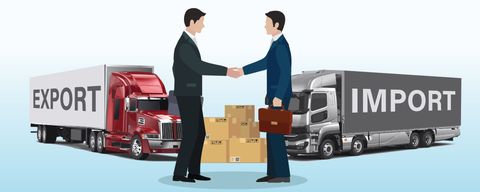
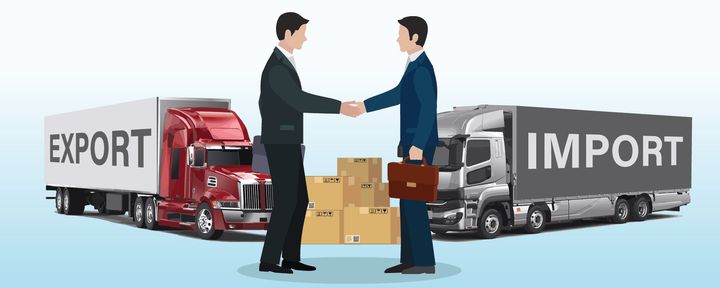
International trade allows businesses to purchase products from overseas suppliers and supply Indian goods to customers in foreign markets. An import-export business can operate through manufacturing, wholesale distribution, merchant exporting, sourcing, trading or cross-border ecommerce.
India has a broad range of products that participate in international trade, including textiles, engineering goods, pharmaceuticals, agricultural products, processed foods, chemicals, electronics, machinery, handicrafts and consumer products. Businesses can also import raw materials, components, specialised equipment and finished products to meet domestic demand.
However, international trade involves more than identifying a product and finding a buyer. Businesses must understand customs procedures, import-export registration, product classifications, trade documents, foreign exchange regulations, taxation, shipping arrangements and destination-country requirements.
A well-planned import-export operation starts with product research and market selection. It then develops reliable supplier or buyer relationships, prepares the required documentation and establishes a financial process for receiving or making international payments.
This guide explains the major import-export business models, documents, regulatory requirements and practical planning considerations for entrepreneurs in India.
What Is an Import Export Business?
An import-export business is a commercial activity involving the movement of goods or, in certain arrangements, services across international borders.
The two main activities are:
Import business: Purchasing products, raw materials, machinery or components from another country and bringing them into India for resale, manufacturing or business use.
Export business: Supplying products manufactured, sourced or produced in India to customers in international markets.
Some companies specialise in one activity, while others operate as both importers and exporters.
For example, an Indian textile trader may import specialised fabric from another country and export finished garments to overseas retailers. A manufacturer may import electronic components and export assembled products.
The business model determines the capital requirement, documentation, logistics arrangements and regulatory responsibilities.
Major Import Export Business Models
Entrepreneurs can select different business structures depending on their experience, financial capacity and access to suppliers or international customers.
1. Merchant Exporting
A merchant exporter purchases products from Indian manufacturers or suppliers and exports them to international buyers under their own business arrangements.
The exporter does not necessarily own a manufacturing facility.
This model may be suitable for entrepreneurs who understand product sourcing, international marketing, documentation and buyer relationships.
Important considerations include:
Supplier verification
Product quality inspection
Export pricing
Packaging and labelling
Shipping arrangements
Buyer payment terms
Export documentation
2. Manufacturer Exporting
A manufacturer exporter produces goods in India and supplies them directly to overseas customers.
Examples include textile manufacturers, engineering companies, food processors, pharmaceutical manufacturers and industrial component producers.
This model provides greater control over production and quality but requires manufacturing capacity, working capital, regulatory compliance and international distribution planning.
3. Import Trading
An import trading company sources products from international suppliers and distributes them within India.
Potential product categories include:
Industrial machinery
Electronic components
Specialised equipment
Consumer electronics
Packaging materials
Raw materials
Selected medical and laboratory equipment
Importers must assess customs duties, product standards, import restrictions, local demand and landed expenses before placing an order.
4. Export Sourcing and Consolidation
This model involves sourcing products from several Indian manufacturers and combining them into shipments for overseas buyers.
It may be useful for businesses dealing with handicrafts, textiles, agricultural products, home products and selected consumer goods.
The exporter needs reliable supplier coordination, consistent quality standards, accurate packing information and shipment planning.
5. Import Export Agency or Commission-Based Trading
An intermediary connects overseas buyers with manufacturers or suppliers and earns a commission under an agreed commercial arrangement.
The intermediary may not own the goods, but should clearly define responsibilities for customer introductions, negotiation, payment, confidentiality and transaction documentation.
The business should also establish whether it is acting as an agent, broker, merchant exporter or principal in the transaction because the legal and tax treatment may differ.
6. Cross-Border Ecommerce Exporting
Businesses can sell eligible products to international customers through ecommerce platforms, online marketplaces or their own websites.
Common product categories include apparel, accessories, handicrafts, home products, personal care products and selected specialised goods.
Cross-border ecommerce requires attention to product restrictions, customs declarations, international shipping, customer returns, destination-country taxes and marketplace requirements.
Import Export Business Opportunities in India
India's manufacturing base, agricultural sector, industrial ecosystem and consumer-product industries provide opportunities across multiple trade categories.
The suitability of a product depends on international demand, competition, product quality, regulatory requirements, supplier reliability and logistics.
1. Textiles and Garments
Indian textiles and garments are supplied to international markets through manufacturers, merchant exporters and sourcing companies.
Potential categories include:
Cotton garments
Home furnishing products
Technical textiles
Bed linen
Apparel accessories
Sustainable textile products
Exporters should evaluate fabric specifications, international sizing standards, labelling, product testing and delivery schedules.
2. Agricultural and Processed Food Products
India has a significant agricultural and food-processing sector.
Potential export categories include rice, spices, tea, coffee, processed foods, fruits, vegetables, selected cereals and food ingredients.
However, agricultural exports may involve additional requirements relating to food safety, phytosanitary certification, quality testing, residue limits, packaging and destination-country regulations.
Businesses should check the applicable requirements for each product and destination.
3. Engineering Goods and Industrial Components
Engineering products are relevant to international manufacturing, construction, infrastructure and industrial supply chains.
Examples include:
Industrial fasteners
Automotive components
Pumps and valves
Electrical equipment
Metal components
Machine parts
Fabricated products
This category may require technical specifications, material certifications, quality inspections and industry-specific standards.
4. Pharmaceuticals and Healthcare Products
Pharmaceutical products, medical equipment and healthcare-related goods participate in international trade.
However, this is a highly regulated category. Exporters and importers must examine manufacturing permissions, product registration, quality standards, destination-country approvals and applicable regulatory requirements.
5. Chemicals and Speciality Materials
Industrial chemicals, speciality compounds, dyes, pigments and selected chemical products can be relevant to international manufacturing markets.
Businesses must pay particular attention to hazardous material classification, labelling, safety documentation, transport rules and import-export restrictions.
6. Electronics and Electrical Products
Electronic components, electrical equipment, cables, accessories and selected finished products can form part of import-export operations.
Entrepreneurs should review technical standards, product testing, quality certification, intellectual property rights and applicable import restrictions.
7. Handicrafts and Home Products
Indian handicrafts, decorative products, furniture, home textiles and lifestyle products may appeal to international retailers and specialised buyers.
Product presentation, packaging, consistency, production capacity and shipping protection are important considerations.
Import Export Business Opportunities by Market
Market selection should be based on the product's demand, competition, trade agreements, logistics and regulatory requirements.
| Market | Potential trade categories | Important considerations |
|---|---|---|
| United States | Textiles, engineering goods, consumer products | Product standards, customs duties, buyer requirements |
| United Arab Emirates | Food products, jewellery, textiles, machinery | Product registration, customs and distribution |
| United Kingdom | Garments, processed foods, engineering products | Labelling, product compliance and customs |
| European Union | Engineering goods, textiles, chemicals | Product safety, environmental and technical standards |
| Singapore | Electronics, industrial products, chemicals | Technical specifications and trade documentation |
| Saudi Arabia | Food, construction products, machinery | Product conformity and import approvals |
| Australia | Textiles, food products, selected manufactured goods | Biosecurity, product standards and customs |
| Bangladesh | Cotton, machinery, chemicals and industrial inputs | Trade policy, origin rules and border procedures |
These are examples of potential market categories, not guaranteed demand forecasts. Exporters should research the exact product and its HS classification before choosing a destination.
Essential Registrations for an Import Export Business in India
Setting up an import-export business involves selecting a suitable business structure and obtaining relevant registrations.
1. Choose a Business Structure
An entrepreneur can operate through a:
Sole proprietorship
Partnership firm
Limited Liability Partnership
Private limited company
The choice depends on ownership, investment, liability, funding requirements and expansion plans.
A company with multiple investors may prefer an LLP or private limited structure, while an individual entrepreneur may consider a proprietorship after evaluating its implications.
2. Obtain PAN and Open a Business Bank Account
A business needs appropriate tax and banking arrangements.
The business bank account should support the international payment requirements of the import-export operation. The bank will also guide the business on applicable foreign exchange documentation and transaction procedures.
3. Obtain Importer Exporter Code (IEC)
The Importer Exporter Code is a key registration for businesses importing goods into or exporting goods from India, except for specified exempt categories.
IEC is issued by the Directorate General of Foreign Trade (DGFT). It is linked to the applicant's PAN and is generally required for customs and foreign trade transactions.
The broad application process includes:
Register on the DGFT portal.
Select the IEC application facility.
Enter the business and applicant details.
Provide the required PAN, bank and address information.
Complete the applicable verification and payment steps.
Submit the application and track its status.
Access the IEC details after successful issuance.
IEC holders should also review DGFT requirements for updating or confirming their IEC details within the prescribed annual period.
4. GST Registration
GST registration may be required depending on the business's activities and applicable registration provisions.
Export supplies are generally treated as zero-rated supplies under the GST framework, subject to applicable conditions.
Eligible exporters may export under a Letter of Undertaking (LUT) without payment of integrated tax, or use another permitted route under the applicable rules.
Importers should understand the treatment of customs duties, integrated GST on imports and input tax credit eligibility.
5. Registration-cum-Membership Certificate
A Registration-cum-Membership Certificate, or RCMC, may be relevant when an exporter applies for certain benefits or authorisations under the Foreign Trade Policy.
It is generally obtained from the relevant Export Promotion Council or commodity board, depending on the product category and applicable requirements.
Not every export transaction automatically requires an RCMC. Businesses should check the specific scheme or authorisation conditions.
6. Product-Specific Registrations
Some products require additional approvals or registrations.
Examples include:
FSSAI registration or licensing for relevant food businesses
APEDA-related registration for applicable agricultural and processed food exports
Plant quarantine and phytosanitary documentation for regulated plant products
Drug regulatory approvals for pharmaceutical products
BIS compliance where applicable
Environmental and hazardous material permissions for specified goods
A valid IEC does not replace product-specific licences or quality requirements.
Essential Import Export Documents
International trade depends on accurate documentation. Missing or inconsistent details can lead to customs queries, shipment delays, payment disputes or additional expenses.
The documents required vary by product, transport mode, destination and transaction structure.
1. Commercial Invoice
A commercial invoice records the transaction between the exporter and overseas buyer.
It generally includes:
Exporter and buyer details
Invoice number and date
Product description
Quantity
Unit price and total value
Currency
Country of origin
Delivery and payment terms
The invoice should accurately describe the goods and match the other shipment documents.
2. Packing List
The packing list describes how goods are packed for shipment.
It may contain:
Package count
Carton or container details
Gross weight
Net weight
Dimensions
Product quantities
Package identification marks
This document supports cargo handling, inspection and customs procedures.
3. Bill of Lading
A bill of lading is an important shipping document used in sea transportation.
Depending on its form and function, it can serve as a receipt for cargo, evidence of the contract of carriage and a document of title.
The exporter should check the consignee, notify party, shipment description, port details and freight terms.
4. Air Waybill
An air waybill is used for air cargo transportation. It records important shipment and carrier information.
Unlike a negotiable ocean bill of lading, an air waybill generally does not function as a document of title.
5. Shipping Bill
A shipping bill is a key customs declaration for goods exported by sea or air from India.
The exporter or authorised customs representative files the required declaration electronically through the customs system.
The declaration should contain accurate product classification, value, quantity, export details and relevant scheme information.
6. Bill of Entry
A bill of entry is filed by the importer for customs clearance of goods entering India.
It contains details of the imported goods, value, classification, origin and other required information.
The importer must ensure that supporting invoices and declarations are accurate.
7. Certificate of Origin
A Certificate of Origin identifies the country in which goods originate under the applicable rules.
It may be required by an overseas buyer, customs authority or trade agreement.
A preferential Certificate of Origin may help an eligible importer claim preferential customs treatment under an applicable trade agreement, provided the goods satisfy the relevant rules of origin.
8. Insurance Certificate
An insurance certificate or policy document may be required to establish that cargo is covered during transportation.
The requirement depends on the agreed Incoterm, financing arrangement and commercial contract.
9. Inspection and Product Certificates
Depending on the product and destination, additional documentation may include:
Phytosanitary certificate
Health certificate
Quality inspection certificate
Test report
Fumigation certificate
Dangerous goods declaration
Product conformity certificate
Food safety documentation
Businesses should confirm requirements before production or shipment rather than waiting until the cargo reaches the port.
Import Export Process: Step-by-Step
A structured process helps businesses manage international transactions more effectively.
Step 1: Select the Product
Identify a product based on international demand, supplier availability, pricing, quality and regulatory requirements.
Research whether the item is freely importable or exportable, restricted, prohibited or subject to special conditions.
Step 2: Identify the HS Code
The Harmonized System code is used to classify traded goods.
The correct classification helps determine customs duties, import-export policy conditions, documentation requirements and possible trade benefits.
Do not rely only on a supplier's product description. Confirm the applicable Indian tariff classification and destination-country classification where required.
Step 3: Research the Target Market
Evaluate the target country's:
Customer demand
Import duties
Product standards
Labelling requirements
Trade agreements
Competing suppliers
Distribution channels
Shipping routes
Trade data and customs tariff information can help businesses shortlist markets.
Step 4: Verify Buyers or Suppliers
Before signing a transaction, check the commercial background of the other party.
Verification may include company registration, business references, payment history, physical address, banking details and trade references.
For higher-value transactions, consider independent credit checks and professional due diligence.
Step 5: Negotiate the Commercial Agreement
The contract should clearly describe:
Product specifications
Quantity
Price and currency
Delivery schedule
Packaging standards
Payment terms
Inspection arrangements
Dispute resolution
Applicable Incoterms
The agreement should also explain responsibility for freight, insurance, customs clearance and delivery.
Step 6: Arrange International Payments
International payments can be structured through advance payment, documentary collection, letters of credit or other permitted banking arrangements.
The selected structure should balance payment security, transaction expenses, buyer confidence and cash-flow requirements.
Step 7: Prepare the Documents
Prepare the invoice, packing list, transport document, customs declaration and any applicable product certificates.
Check that the product description, quantity, value, origin and consignee details are consistent across documents.
Step 8: Arrange Customs Clearance and Shipping
Coordinate with the freight forwarder, customs broker, carrier and relevant authorities.
The shipment may be examined or assessed by customs before release. Product-specific approvals may also be required.
Step 9: Track Delivery and Complete Payment Formalities
Monitor shipment progress and confirm delivery documentation.
Exporters should follow up on payment realisation and maintain records required under applicable RBI and banking rules.
Importers should verify the received goods against the purchase contract and shipment documents.
Import Export Payment Methods
Payment structure is one of the most important commercial decisions in international trade.
| Payment method | How it works | Main consideration |
|---|---|---|
| Advance payment | Buyer pays before shipment | Greater payment protection for exporter |
| Open account | Goods are shipped before payment is due | Higher credit exposure for exporter |
| Documentary collection | Banks handle documents against payment or acceptance | Banks generally do not guarantee payment |
| Letter of credit | Issuing bank undertakes payment subject to compliant documents and terms | Document accuracy and bank conditions |
| Part advance and balance payment | Payment is divided into agreed stages | Contract clarity and milestone verification |
A letter of credit can reduce certain buyer and seller risks, but it does not eliminate all commercial or documentary risks.
Businesses should work with an authorised dealer bank to understand permitted payment arrangements, currency rules and reporting requirements.
Understanding Incoterms in International Trade
Incoterms are internationally recognised commercial terms published by the International Chamber of Commerce. They clarify important responsibilities between buyers and sellers concerning delivery, transportation, risk transfer and certain expenses.
Some commonly used Incoterms include:
EXW – Ex Works: The seller makes goods available at the agreed location, with relatively limited delivery responsibility.
FCA – Free Carrier: The seller delivers goods to the carrier or another agreed party at the specified place.
FOB – Free on Board: Used for sea or inland waterway transport; the seller delivers goods on board the nominated vessel.
CFR – Cost and Freight: The seller arranges and pays freight to the named destination port, while risk transfers according to the rule.
CIF – Cost, Insurance and Freight: Similar to CFR, with the seller also arranging the required minimum cargo insurance.
DAP – Delivered at Place: The seller arranges delivery to the named destination, ready for unloading.
DDP – Delivered Duty Paid: The seller takes responsibility for delivery with import clearance and duties, subject to the rule's requirements and local legal feasibility.
The selected term should always include a clearly named place or port and the applicable Incoterms edition. Businesses should not assume that freight payment and risk transfer always occur at the same point.
Customs Duties, Taxes and Trade Compliance
Import-export businesses must understand the customs and tax treatment of each product.
Customs Duty
Import duties depend on the product's tariff classification, country of origin, applicable exemptions and customs notifications.
Depending on the item, the duty structure may include basic customs duty, surcharge and other applicable levies.
Businesses should calculate the landed value before placing an import order.
Integrated GST on Imports
Imports may attract integrated GST under the applicable customs and GST framework. Eligible registered businesses may claim input tax credit subject to statutory conditions and documentation.
GST on Exports
Exports are generally treated as zero-rated supplies under GST.
Eligible exporters may use an LUT route or another permitted mechanism under the law. Refund eligibility and documentation depend on the chosen route and applicable conditions.
Export Incentives and Schemes
India has several export-related policy mechanisms and facilitation arrangements.
Examples include:
Remission of Duties and Taxes on Exported Products (RoDTEP)
Advance Authorisation
Export Promotion Capital Goods scheme
Duty Drawback, where applicable
Relevant sector-specific export promotion arrangements
Eligibility, rates, product coverage and deadlines can change through DGFT and government notifications. Businesses should not include an incentive in their financial projections until they confirm eligibility.
Recent Developments in India's Import Export Framework
India's trade environment continues to evolve through customs changes, foreign exchange regulations, export facilitation and digital trade processes.
DGFT Foreign Trade Policy notifications in 2026: DGFT issued several policy amendments during 2026. These include changes to import and export policy conditions for selected commodities and updates to the Foreign Trade Policy framework. This reinforces the need to check the current ITC (HS) classification and policy status before each transaction.
RoDTEP continuation: DGFT Notification No. 41/2026-27, dated 30 September 2026, continued the RoDTEP scheme through 31 December 2026. Exporters should verify the applicable product rates and conditions for their shipping date rather than relying on older schedules.
Cross-border ecommerce exports: DGFT Notification No. 27/2026-27, dated 5 August 2026, introduced an inventory-based cross-border ecommerce export framework under the Foreign Trade Policy. This is relevant to eligible businesses exploring international online sales and inventory-based fulfilment models.
RBI foreign exchange regulations: RBI issued the Foreign Exchange Management (Export and Import of Goods and Services) Regulations, 2026, followed by an amendment notification dated 22 September 2026. Exporters and importers should consult their authorised dealer bank about applicable realisation, remittance and reporting requirements.
Trade facilitation and digital documentation: Online customs declarations, electronic certificates of origin and digital compliance systems continue to play an important role in international trade. Businesses should maintain accurate digital records and use official government platforms for applications and declarations.
These developments are date-sensitive. The latest notifications and amendments should be checked before entering into a trade contract or dispatching goods.
Laws and Regulations Relevant to Import Export Businesses in India
International trade is governed by several laws and regulatory frameworks.
Foreign Trade (Development and Regulation) Act, 1992
This Act provides the statutory framework for regulating India's foreign trade. It supports the formulation and implementation of the Foreign Trade Policy and related rules.
Foreign Trade Policy, 2023
The Foreign Trade Policy, 2023 provides the framework for import-export policy, authorisations, export promotion measures and related procedures.
It should be read together with subsequent DGFT notifications, public notices and amendments.
Customs Act, 1962
The Customs Act, 1962 governs the import and export of goods, customs declarations, assessment, examination, clearance and other customs-related procedures.
Section 46 addresses the entry of imported goods through a bill of entry, while Section 50 addresses export entry through a shipping bill or bill of export.
Customs Tariff Act, 1975
The Customs Tariff Act, 1975 provides the framework for customs tariff classification and applicable duty structures.
The correct tariff classification is essential for calculating import duties and identifying product-specific conditions.
Foreign Exchange Management Act, 1999
The Foreign Exchange Management Act, 1999 and RBI regulations govern foreign exchange transactions, including international trade payments and related reporting obligations.
Businesses should coordinate with their authorised dealer bank to understand the current rules.
Goods and Services Tax Laws
The CGST Act, IGST Act and relevant GST rules govern applicable tax treatment, zero-rated exports, input tax credit and documentation.
Importers and exporters should maintain proper invoices, declarations and supporting records.
Product-Specific Laws
Depending on the goods, additional regulations may apply, including:
Food Safety and Standards Act, 2006
Drugs and Cosmetics Act, 1940
Legal Metrology Act, 2009
Plant Quarantine regulations
BIS-related quality control requirements
Environmental and hazardous substances regulations
Businesses should confirm the relevant laws for the exact product and destination.
Common Risks in Import Export Business
International trade offers commercial opportunities, but it also creates financial, logistical and compliance risks.
Payment Default
An overseas buyer may delay or fail to make payment.
Businesses can manage this exposure through buyer verification, suitable payment terms, credit checks, letters of credit or trade credit insurance where appropriate.
Supplier Fraud
An importer may encounter false supplier identities, misleading product samples or incorrect banking details.
Verify suppliers independently and avoid transferring significant funds based only on email instructions or online listings.
Customs Delays
Incorrect product classification, incomplete documentation or missing approvals can delay cargo clearance.
A pre-shipment compliance check can reduce avoidable documentation problems.
Currency Fluctuations
Changes in foreign exchange rates can affect the profitability of an import or export contract.
Businesses should consider the currency of the contract, payment schedule and available risk-management arrangements with their bank.
Product Quality Disputes
Products may fail to meet agreed specifications or destination-country standards.
Use clear technical specifications, inspection procedures, sample approval and documented quality requirements.
Logistics Disruptions
Port congestion, shipping delays, route changes and geopolitical events can affect delivery schedules.
Businesses should plan realistic lead times and understand the insurance and contractual arrangements for shipment delays or damage.
Tools and Resources for Import Export Businesses
Official portals and trade resources can help entrepreneurs research regulations, obtain registrations and manage trade documentation.
DGFT Portal: IEC applications, Foreign Trade Policy notifications, authorisations and trade-related information.
ICEGATE: Indian Customs electronic filing, customs services and trade-related procedures.
CBIC Customs Information: Customs legislation, notifications, tariff information and guidance.
Trade Connect ePlatform: Trade information, market resources and export-related guidance.
eCoO 2.0: Digital applications for Certificates of Origin under applicable arrangements.
APEDA: Information and registration resources for relevant agricultural and processed food exports.
FIEO: Export guidance, trade information and industry support.
RBI: Foreign exchange regulations and authorised dealer bank guidance.
GST Portal: GST registration, returns, LUT filing and tax-related information.
Indian Trade Portal: Trade information, tariffs and market access resources.
Entrepreneurs should use official sources to confirm current product restrictions, duty rates, licensing conditions and export incentive eligibility.
Practical Checklist Before Starting an Import Export Business
Before making the first international shipment, review the following:
Select a product with identifiable domestic or overseas demand.
Confirm the correct HS classification.
Check whether the product is free, restricted or prohibited.
Research destination-country product requirements.
Choose a suitable business structure.
Obtain IEC and other required registrations.
Confirm GST and product-specific compliance.
Verify the overseas buyer or supplier.
Agree on product specifications and inspection procedures.
Select suitable Incoterms and shipping arrangements.
Finalise payment terms with appropriate risk controls.
Prepare the commercial invoice and packing list.
Confirm shipping and customs documentation.
Arrange cargo insurance where appropriate.
Maintain records of shipments and foreign exchange transactions.
Frequently Asked Questions
1. How can I start an import-export business in India?
Choose a product, research its target market, establish a suitable business structure, obtain IEC where required, complete relevant tax and product registrations, identify reliable buyers or suppliers and arrange shipping and international payments. Product classification and regulatory checks should be completed before committing to a shipment.
2. Is IEC mandatory for import and export in India?
IEC is generally required for importing goods into or exporting goods from India, subject to specified exemptions. It is issued by DGFT and is linked to the business's PAN. Certain service-export situations are treated differently under the Foreign Trade Policy.
3. What are the most important import-export documents?
Common documents include the commercial invoice, packing list, shipping bill, bill of entry, bill of lading or air waybill, Certificate of Origin and applicable insurance or product certificates. The exact requirements depend on the product, destination and shipping arrangement.
4. Can a small business become an exporter?
Yes. Eligible small businesses can participate through merchant exporting, manufacturing, sourcing, distribution or cross-border ecommerce. They should begin with a manageable product range, reliable suppliers and a clear understanding of documentation and payment requirements.
5. Which products are suitable for an import-export business?
Textiles, engineering components, agricultural products, processed foods, handicrafts, home products, chemicals and electronics are examples of trade categories. The most suitable product depends on demand, margins, compliance, competition, supplier capacity and logistics.
Conclusion
An import-export business can connect Indian manufacturers, suppliers and entrepreneurs with international markets. Opportunities exist in textiles, agriculture, engineering goods, food processing, electronics, chemicals, handicrafts and many other sectors.
However, successful international trade depends on careful preparation. Businesses need accurate product classification, valid registrations, reliable commercial partners, complete documentation, suitable payment arrangements and a clear understanding of customs and foreign exchange regulations.
Entrepreneurs should begin with detailed product and market research, verify all regulatory requirements and calculate the complete landed or export transaction economics before committing capital. A disciplined approach to documentation, quality, logistics and financial risk can help build a more sustainable international trading operation.