Cybersecurity for Business: Explore Security Solutions, Threats and Protection Tips
Cybersecurity for business involves protecting digital systems, networks, applications, devices and information from unauthorised access, disruption, theft and malicious activity. As companies increasingly depend on cloud platforms, online transactions, enterprise software and connected devices, cybersecurity has become an important part of daily business management.
A cyberattack can affect more than a company's technology infrastructure. It may interrupt operations, expose confidential information, affect customer relationships, create financial losses and lead to regulatory or contractual consequences.
Businesses of every size face cybersecurity risks. Small companies may be targeted through phishing emails and compromised accounts, while larger enterprises may face ransomware, advanced persistent threats, supply chain attacks and attacks against cloud infrastructure.
An effective cybersecurity programme combines technology, employee awareness, documented procedures and regular risk assessments. It should also establish clear responsibilities for identifying threats, reporting incidents, containing damage and restoring affected systems.
In India, companies should understand relevant requirements under the Information Technology Act, CERT-In directions, applicable data-protection legislation and sector-specific regulations. Cybersecurity planning should be treated as an ongoing business responsibility rather than a one-time technology project.
Why Cybersecurity Matters for Businesses
Digital security directly influences business continuity, customer confidence and financial stability.
Important reasons include:
Protection of business information: Security controls help safeguard customer records, financial information, employee details and confidential documents.
Operational continuity: Preparedness and recovery procedures help companies restore systems after disruptions.
Financial risk management: Preventive controls can reduce exposure to fraudulent transactions, ransomware and unauthorised access.
Customer confidence: Responsible handling of personal and commercial information supports stronger business relationships.
Regulatory compliance: Appropriate security measures help companies meet relevant legal, contractual and industry requirements.
Protection of intellectual property: Cybersecurity helps safeguard research, product designs, software, business strategies and proprietary information.
Third-party risk management: Supplier and technology-provider assessments help reduce risks arising from external systems.
Business reputation: Effective security management can limit the impact of incidents that might otherwise damage customer and partner relationships.
Cybersecurity cannot eliminate every possible threat. Its purpose is to reduce the likelihood and impact of incidents while improving an organisation's ability to respond and recover.
Common Cybersecurity Threats Facing Businesses
Understanding common attack methods helps companies identify weaknesses and select appropriate security controls.
1. Phishing Attacks
Phishing involves deceptive emails, messages, websites or other communications designed to trick people into sharing confidential information or performing unsafe actions.
Attackers may impersonate:
Banks and financial institutions.
Company executives.
Customers and suppliers.
Technology providers.
Government departments.
Delivery and payment platforms.
A phishing message may contain a fraudulent login page, malicious attachment or payment instruction.
Protection tips:
Train employees to identify suspicious messages.
Verify unusual payment or account-change requests independently.
Use email filtering and anti-phishing controls.
Enable multi-factor authentication.
Avoid opening unexpected attachments or links.
2. Ransomware
Ransomware is malicious software that can encrypt business files, disrupt systems or threaten to expose stolen information.
Attackers may demand payment in exchange for a decryption key or promise not to disclose confidential data.
Ransomware can affect servers, employee devices, cloud environments and connected business applications.
Protection tips:
Maintain separate, protected backups.
Apply security updates promptly.
Restrict administrative permissions.
Monitor unusual file activity.
Segment critical systems.
Maintain an incident response and recovery plan.
Businesses should not assume that paying a ransom guarantees data recovery or prevents information disclosure.
3. Malware and Spyware
Malware is software designed to damage systems, disrupt operations, steal information or provide unauthorised access.
Common categories include viruses, trojans, spyware, keyloggers and malicious browser extensions.
Malware can enter a business environment through compromised websites, email attachments, infected downloads and vulnerable applications.
Protection tips:
Use centrally managed endpoint security.
Restrict software installation privileges.
Download applications from trusted sources.
Monitor unusual device behaviour.
Keep operating systems and applications updated.
4. Business Email Compromise
Business Email Compromise (BEC) involves the misuse of legitimate or impersonated business email accounts to manipulate employees into transferring money, disclosing information or changing payment details.
Attackers may study a company's communication patterns before sending convincing payment instructions.
Protection tips:
Verify bank account changes through a separate trusted channel.
Introduce approval requirements for large payments.
Use multi-factor authentication.
Monitor suspicious email forwarding rules.
Apply email authentication measures such as SPF, DKIM and DMARC.
5. Distributed Denial-of-Service Attacks
A Distributed Denial-of-Service (DDoS) attack attempts to overwhelm a website, server or network with excessive traffic, making the targeted resource unavailable.
Online retailers, financial platforms, technology companies and other internet-dependent businesses may experience operational disruption.
Protection tips:
Use suitable DDoS mitigation arrangements.
Monitor network traffic.
Work with hosting and infrastructure providers.
Prepare a response procedure for service disruption.
Identify critical applications that need additional protection.
6. Insider Threats
Insider threats may arise from employees, contractors or other authorised users who misuse access intentionally or accidentally.
Examples include:
Unauthorised copying of business records.
Sharing confidential documents.
Misusing administrator privileges.
Accidentally exposing customer information.
Using unapproved applications to store business data.
Protection tips:
Apply role-based access controls.
Review employee permissions periodically.
Monitor access to sensitive information.
Establish clear data-handling policies.
Remove access promptly when responsibilities change or employment ends.
7. Supply Chain and Third-Party Attacks
Businesses depend on external software vendors, cloud platforms, technology providers, logistics partners and professional contractors.
A security weakness in one provider can create risks for connected organisations.
Protection tips:
Assess vendors before granting access.
Review security responsibilities in contracts.
Restrict third-party permissions.
Monitor integrations and external connections.
Require suitable incident notification procedures.
Reassess critical providers periodically.
Essential Cybersecurity Solutions for Businesses
A layered security approach is generally more reliable than depending on a single security product.
1. Endpoint Detection and Response
Endpoint Detection and Response (EDR) solutions monitor devices such as laptops, desktops and servers for suspicious behaviour.
Depending on the product, EDR tools can help security teams:
Detect unusual processes.
Identify suspicious file activity.
Investigate security alerts.
Isolate affected devices.
Collect evidence for incident analysis.
Support containment and recovery.
Larger organisations may also consider Extended Detection and Response (XDR), which correlates security information across endpoints, email, networks and cloud environments.
2. Firewall and Network Security
Firewalls control network traffic according to defined security rules. They help restrict unauthorised connections and protect internal systems from external threats.
Network security may also include:
Intrusion Detection Systems (IDS).
Intrusion Prevention Systems (IPS).
Secure web gateways.
Network segmentation.
Virtual Private Networks (VPNs).
Network access control.
DNS security.
Secure wireless configurations.
Businesses should review firewall rules regularly and remove unnecessary access paths.
3. Multi-Factor Authentication
Multi-Factor Authentication (MFA) requires users to verify their identity through more than one authentication factor.
For example, a login may require a password along with an authenticator application, hardware security key or another approved verification method.
MFA is particularly important for:
Administrator accounts.
Corporate email.
Cloud management dashboards.
Financial applications.
Remote access systems.
Customer information platforms.
Phishing-resistant authentication methods, such as suitable hardware security keys and passkeys, can provide stronger protection than password-only access.
4. Data Encryption
Encryption protects information by making it unreadable without the required decryption key.
Businesses should consider encryption for:
Stored customer records.
Financial documents.
Employee information.
Portable devices.
Database backups.
Data transmitted between systems.
Encryption arrangements should include secure key management and suitable access restrictions.
5. Backup and Disaster Recovery
Backups help businesses restore information after accidental deletion, hardware failure, ransomware or other disruptions.
A useful backup strategy includes:
Regular backup schedules.
Protected backup storage.
Separate backup credentials.
Offline or immutable copies where appropriate.
Periodic restoration tests.
Documented recovery responsibilities.
The 3-2-1 backup approach is a practical starting point: maintain three copies of important information, on two different storage types, with one copy stored separately.
Businesses should also define recovery objectives. Recovery Time Objective (RTO) describes the target time for restoring a system, while Recovery Point Objective (RPO) describes the acceptable amount of data loss measured in time.
6. Vulnerability Management
Vulnerability management identifies weaknesses in software, hardware, networks and business applications.
A typical programme includes:
Maintain an inventory of technology assets.
Identify known vulnerabilities.
Assess their severity and business impact.
Prioritise remediation.
Apply security patches or other controls.
Verify that the weakness has been addressed.
Maintain records of outstanding risks.
Penetration testing and vulnerability assessments can help organisations identify weaknesses before attackers exploit them. Testing should be properly authorised and performed within a defined scope.
7. Security Information and Event Management
Security Information and Event Management (SIEM) platforms collect and analyse security logs from different systems.
They can help security teams identify suspicious activity by correlating information from:
Servers.
Firewalls.
Applications.
Endpoint devices.
Cloud platforms.
Authentication systems.
Network infrastructure.
SIEM is particularly useful for organisations that need centralised security monitoring and investigation.
Comparing Major Cybersecurity Solutions
| Security solution | Primary function | Suitable business need |
|---|---|---|
| Firewall | Controls network traffic | Network protection |
| EDR | Monitors and investigates endpoint threats | Device security |
| MFA | Strengthens user authentication | Account protection |
| SIEM | Collects and analyses security events | Centralised monitoring |
| DLP | Helps prevent unauthorised data disclosure | Sensitive information protection |
| WAF | Protects web applications from selected attacks | Website and application security |
| Backup platform | Supports data restoration | Business continuity |
| Vulnerability scanner | Identifies technical weaknesses | Security assessment |
| Email security gateway | Filters malicious and suspicious email | Phishing prevention |
| IAM platform | Manages digital identities and permissions | Access governance |
Businesses should select solutions based on their size, infrastructure, data sensitivity, risk exposure and internal security capabilities.
Cloud Security for Modern Businesses
Cloud computing allows companies to use remote infrastructure, applications and storage without maintaining every technology resource internally.
However, cloud adoption introduces security responsibilities involving identity management, configuration, data protection and external access.
Important cloud security practices include:
Enable multi-factor authentication.
Restrict administrative access.
Review cloud storage permissions.
Encrypt sensitive information.
Monitor account activity.
Maintain secure backup arrangements.
Review application programming interfaces.
Protect cloud workloads and virtual machines.
Monitor unusual data transfers.
Assess cloud-provider security arrangements.
Businesses should understand the shared responsibility model. Cloud providers protect parts of the underlying infrastructure, while customers remain responsible for many aspects of account configuration, data handling, application security and user access.
Employee Cybersecurity Awareness
Employees play an important role in protecting business systems. Even sophisticated technology controls can be weakened by unsafe behaviour or poor security practices.
Companies should introduce regular awareness programmes covering:
Password management: Employees should use unique passwords and approved password management tools rather than reusing credentials.
Phishing recognition: Staff should learn how to identify suspicious links, unexpected attachments and unusual requests.
Device protection: Company devices should use supported software, screen locks, security updates and approved applications.
Data handling: Employees should understand how confidential information may be stored, shared and transmitted.
Remote working: Staff should use approved access methods and avoid connecting to sensitive business systems through unsecured networks.
Incident reporting: Employees should know how to report suspicious activity without delay.
Training should be practical and repeated periodically. Simulated phishing exercises can help assess awareness, provided they are conducted responsibly and followed by useful guidance.
Cybersecurity for Small and Medium Businesses
Smaller companies may not have dedicated security departments, but they still need a basic cybersecurity programme.
CERT-In published guidance for MSMEs in 2025 outlining practical cyber defence controls. Businesses can use a structured security checklist to improve their protection without immediately adopting complex enterprise infrastructure.
Important priorities include:
Maintain an inventory of computers, applications and online accounts.
Enable MFA for important business accounts.
Install endpoint protection on company devices.
Keep operating systems and applications updated.
Maintain separate and tested backups.
Use secure Wi-Fi and network configurations.
Restrict access to sensitive documents.
Train employees to identify phishing attempts.
Review supplier and cloud-provider security.
Prepare a written incident response procedure.
Small businesses should prioritise high-impact risks first, especially corporate email compromise, financial fraud, ransomware and loss of customer information.
Cybersecurity Platforms and Technology Providers
Several companies provide cybersecurity products for businesses. Their capabilities vary by deployment type, organisation size and security requirements.
Microsoft Security: <Entity value="Microsoft" category="brand" disambig="Software, cloud computing and cybersecurity technology provider"/> provides identity protection, endpoint security, cloud security and security monitoring capabilities through its business security portfolio.
CrowdStrike: <Entity value="CrowdStrike" category="brand" disambig="Cybersecurity and endpoint protection technology provider"/> provides endpoint security, threat detection and incident response technologies.
Palo Alto Networks: <Entity value="Palo Alto Networks" category="brand" disambig="Enterprise network, cloud and cybersecurity technology provider"/> provides network security, cloud protection and security operations platforms.
Fortinet: <Entity value="Fortinet" category="brand" disambig="Network security and cybersecurity technology provider"/> provides firewall, network protection and security management products.
Cisco: <Entity value="Cisco" category="brand" disambig="Networking and enterprise cybersecurity technology provider"/> provides network security, identity and threat protection technologies.
Sophos: <Entity value="Sophos" category="brand" disambig="Business endpoint, network and cybersecurity provider"/> provides endpoint protection, firewall and managed security capabilities.
Cloudflare: <Entity value="Cloudflare" category="brand" disambig="Internet infrastructure, application security and network protection provider"/> provides website security, DDoS mitigation and web application protection capabilities.
Before choosing a provider, businesses should compare supported systems, deployment requirements, detection capabilities, integration, reporting, technical support and total ownership requirements. Product selection should follow a risk assessment rather than brand popularity alone.
How to Build a Business Cybersecurity Strategy
A cybersecurity strategy should connect technology controls with business objectives and risk priorities.
Step 1: Identify Critical Business Assets
List the systems and information that are essential to business operations.
Examples include:
Customer databases.
Financial and accounting systems.
Corporate email.
Employee records.
Ecommerce platforms.
Production systems.
Cloud storage.
Intellectual property.
Classify assets according to sensitivity and operational importance.
Step 2: Conduct a Cybersecurity Risk Assessment
Identify threats, weaknesses and potential consequences.
A risk assessment should consider:
Likelihood of an incident.
Potential financial impact.
Data sensitivity.
Operational disruption.
Regulatory implications.
Third-party dependencies.
Existing security controls.
Prioritise risks that could cause serious business interruption or expose sensitive information.
Step 3: Establish Security Policies
Document the rules employees and external providers must follow.
Useful policies include:
Information security policy.
Password and authentication policy.
Acceptable-use policy.
Remote access policy.
Data classification policy.
Backup and recovery policy.
Incident response policy.
Third-party access policy.
Policies should identify responsibilities and escalation procedures.
Step 4: Implement Layered Security Controls
Use appropriate combinations of identity protection, endpoint security, network controls, encryption, backups and monitoring.
Security measures should be tested regularly to confirm that they work as intended.
Step 5: Monitor and Review Security Performance
Track security indicators such as:
Number of detected incidents.
Time taken to identify threats.
Time taken to contain incidents.
Percentage of devices receiving security updates.
MFA coverage across important accounts.
Backup restoration success.
Vulnerability remediation progress.
Employee training completion.
Management should review these indicators periodically and adjust security priorities as business systems change.
Cyber Incident Response and Recovery
A cybersecurity incident may involve compromised accounts, ransomware, data exposure, fraudulent payments or unauthorised system access.
A written incident response plan helps employees act quickly and consistently.
A practical response process includes:
1. Identify: Determine what happened, which systems are affected and whether the incident is continuing.
2. Contain: Isolate affected devices or accounts where appropriate. Prevent further unauthorised access without destroying useful evidence.
3. Preserve evidence: Secure relevant logs, messages, system records and other information needed for investigation.
4. Notify responsible teams: Escalate the incident to management, the internal security team and relevant external parties according to the incident response plan and applicable legal requirements.
5. Investigate: Identify the entry point, affected information, attacker activity and likely business impact.
6. Recover: Restore systems from verified backups, reset compromised credentials and apply necessary security improvements.
7. Review: Document the incident, identify weaknesses and update security controls to reduce the likelihood of recurrence.
Companies should also consider legal reporting requirements, customer communications, contractual obligations and insurance notification conditions where applicable.
Recent Cybersecurity Developments in India
1. CERT-In AI Security Auditing Guidelines, November 2026
On 4 November 2026, CERT-In published its Artificial Intelligence Security Auditing Guidelines (CISG-2026-04).
The new guidance reflects the increasing importance of evaluating security risks associated with AI systems. Businesses using AI applications should consider how data is accessed, processed, stored and shared, as well as how system weaknesses and unauthorised use are identified.
Organisations should review AI-related technology risks alongside their existing application and information security assessments.
2. AI-Assisted Vulnerability Protection Guidance, May 2026
CERT-In published guidance on reducing exposure and defending against AI-assisted vulnerability exploitation on 25 May 2026.
This development highlights the need for faster vulnerability identification, prioritised patch management and stronger coordination between technology providers and organisations operating digital infrastructure.
3. CERT-In Guidance for MSMEs, September 2025
CERT-In published its 15 Elemental Cyber Defense Controls for Micro, Small, and Medium Enterprises on 1 September 2025.
The guidance focuses on practical security measures that smaller organisations can use to strengthen their protection against common cyber threats.
4. Digital Personal Data Protection Rules, 2025
The Government of India notified the Digital Personal Data Protection Rules, 2025 on 14 November 2025.
The Rules establish implementation details under the Digital Personal Data Protection Act, 2023, including requirements relating to personal data processing, safeguards and responsibilities. Their provisions have staggered commencement dates, so companies should check which requirements are applicable at the time of their activities.
5. RBI Cybersecurity Directions, 2026
On 31 July 2026, the Reserve Bank of India issued updated Cybersecurity, Technology: Risk, Resilience and Assurance Framework Directions for commercial banks.
The framework addresses IT governance, information security, risk assessment, continuous monitoring, incident response and resilience. These directions apply to the entities specified by RBI and should not be treated as a universal cybersecurity rule for every Indian business.
Laws and Regulatory Requirements in India
Businesses should identify the legal requirements relevant to their industry, activities, data and technology infrastructure.
Information Technology Act, 2000: Provides the legal framework for electronic records, electronic transactions and specified cyber offences. Section 43A and other provisions should be considered in the context of applicable amendments, commencement notifications and current legal requirements.
CERT-In Directions, 2022: Directions issued under Section 70B(6) of the Information Technology Act establish requirements for specified entities concerning cyber incident reporting and information security practices. They include reporting of specified cyber incidents within six hours of noticing them or being brought to notice, and maintenance of ICT system logs for a rolling period of 180 days within Indian jurisdiction, as applicable.
Digital Personal Data Protection Act, 2023: Establishes requirements and responsibilities concerning the processing of digital personal data, subject to applicable commencement provisions.
Digital Personal Data Protection Rules, 2025: Provide detailed implementation requirements under the Act, including safeguards and procedures. Businesses should check the staggered commencement schedule.
RBI Cybersecurity Directions: Apply to the financial institutions and regulated entities specified by RBI. Banks and other regulated financial institutions may have additional security and reporting obligations.
Sector-specific regulations: Insurance, securities, telecommunications, healthcare and other regulated industries may have additional cybersecurity, privacy, audit and reporting requirements.
Contractual and industry standards: Organisations may also need to meet customer, supplier, payment network and industry security requirements. PCI DSS, ISO/IEC 27001 and other recognised standards may be relevant depending on the business environment.
Legal requirements differ according to the organisation's role and sector. Companies should obtain professional advice before determining which reporting and compliance obligations apply.
Practical Business Cybersecurity Checklist
Businesses can use this checklist to review their security position:
Maintain an inventory of hardware, software and cloud accounts.
Identify and classify sensitive business information.
Enable MFA for important accounts.
Use endpoint protection on company devices.
Keep software and operating systems updated.
Restrict administrator privileges.
Review firewall and network configurations.
Encrypt sensitive information where appropriate.
Maintain separate, tested backups.
Conduct vulnerability assessments periodically.
Review third-party and supplier access.
Train employees about phishing and social engineering.
Monitor suspicious login and network activity.
Document incident response and recovery procedures.
Review applicable CERT-In and data-protection obligations.
Test recovery procedures and update security policies.
Tools and Resources for Business Cybersecurity
Businesses can use official resources and security platforms to improve their security management.
CERT-In: Provides cybersecurity advisories, incident reporting information, guidelines and security updates for Indian organisations.
National Cyber Crime Reporting Portal: Provides a government facility for reporting cybercrime-related matters.
Cyber Swachhta Kendra: Provides information and tools related to botnet cleaning and cybersecurity awareness.
NIST Cybersecurity Framework: Offers a structured approach to identifying, protecting, detecting, responding to and recovering from cybersecurity risks.
ISO/IEC 27001: Provides requirements for establishing and maintaining an Information Security Management System.
OWASP: Publishes application security guidance, including resources for web application risks and secure software development.
CISA: Provides cybersecurity alerts, risk guidance and resources that may be useful to businesses reviewing international security practices.
Security Monitoring Platforms: SIEM, EDR and vulnerability management platforms can help companies monitor their technology environments and investigate security events.
Businesses should use official documentation and qualified security professionals when implementing controls or responding to serious incidents.
Frequently Asked Questions
1. What is cybersecurity for business?
Business cybersecurity refers to the policies, technologies and procedures used to protect company networks, applications, devices and information from cyber threats. It includes prevention, detection, incident response and recovery.
2. What are the most common cybersecurity threats for companies?
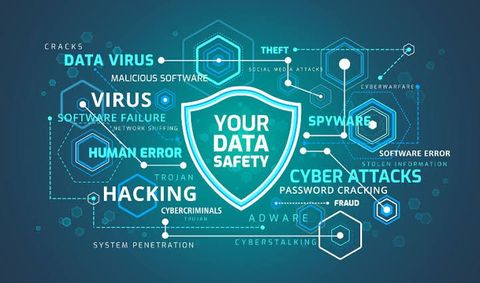
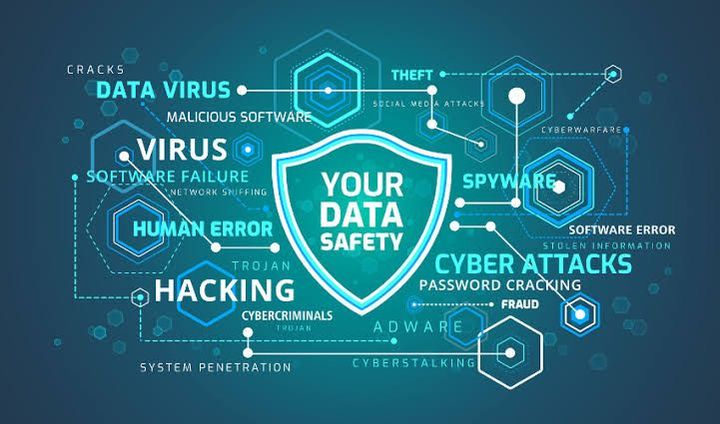
Common threats include phishing, ransomware, malware, business email compromise, insider threats, DDoS attacks, credential theft and supply chain attacks.
3. Which cybersecurity solutions should a business implement first?
Businesses should generally begin with multi-factor authentication, endpoint protection, regular software updates, secure backups, access controls, email security and employee awareness training. Additional tools should be selected according to a risk assessment.
4. What is the CERT-In six-hour incident reporting requirement?
CERT-In's 2022 directions require specified cyber incidents to be reported within six hours of noticing them or being brought to notice. The requirement applies to entities covered by the directions and should be assessed according to the incident category and current guidance.
5. How can small businesses improve cybersecurity?
Small businesses can improve protection by using strong authentication, updating software, maintaining backups, restricting account permissions, securing email, training employees and preparing an incident response plan.
Conclusion
Cybersecurity is an essential part of business risk management. Companies depend on digital systems for communication, payments, customer records, operations and financial management, making protection against cyber threats increasingly important.
A strong cybersecurity strategy combines secure networks, protected endpoints, identity management, encryption, backups, employee awareness and regular risk assessments. Businesses should also maintain clear incident response procedures and understand the legal requirements applicable to their industry.
As cyber threats continue to evolve, organisations should review their security controls regularly, assess third-party exposure and invest in practical protection measures. A consistent approach to prevention, detection and recovery can help businesses protect critical information, maintain operational continuity and strengthen customer confidence.