The idea behind customer relationship management emerged as businesses began handling larger volumes of customer data. Spreadsheets and manual tracking were no longer efficient. Companies needed structured CRM tools to track communication, monitor sales pipelines, and analyze performance.
Modern cloud-based CRM systems now combine automation, CRM analytics, reporting dashboards, workflow management, and integration with other business applications. These platforms are widely used across industries including retail, finance, education, healthcare, and technology.
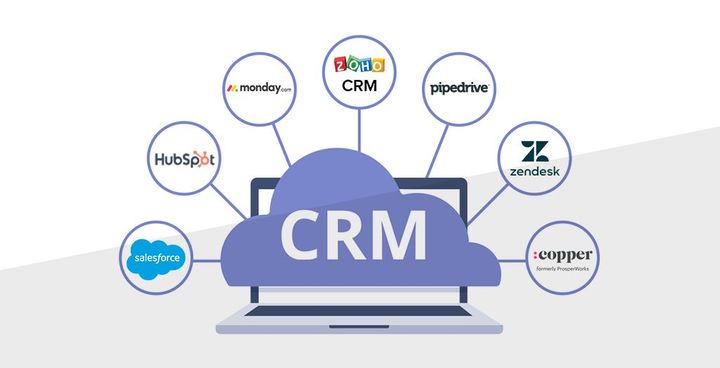
Some well-known CRM platforms include:
Each platform provides tools for managing customer data, tracking communication, generating CRM reports, and improving business processes.
Choosing the best CRM platform means selecting one that aligns with your workflow, compliance needs, reporting requirements, and integration ecosystem.
Why Choosing the Right CRM Platform Matters
In today’s digital environment, customer data is one of the most valuable business assets. Organizations generate large volumes of data from websites, emails, social media, mobile applications, and support interactions. Without a structured CRM system, managing this data becomes difficult.
A well-selected CRM software solution helps address several key challenges:
Improved Data Organization
Better Decision-Making
Enhanced Productivity
-
Workflow automation
-
Automated follow-ups
-
Task reminders
Compliance and Data Protection
-
Access controls
-
Data encryption
-
Audit trails
CRM platforms affect multiple groups:
-
Small and medium enterprises seeking structured growth
-
Large enterprises managing multi-channel communication
-
Marketing teams handling campaigns
-
Sales teams tracking pipelines
-
Customer support departments managing tickets
Without a proper CRM platform, businesses may experience data silos, missed follow-ups, inconsistent reporting, and compliance risks.
Recent Trends and Updates in CRM Platforms (2024–2025)
The CRM industry has evolved significantly over the past year. Several notable developments have shaped how CRM software is designed and implemented.
AI-Powered CRM Automation
In 2024, AI integration expanded across major CRM platforms. For example, Salesforce enhanced its AI capabilities through expanded generative AI tools within its ecosystem. Similarly, HubSpot introduced AI-driven content and reporting features in 2024 to improve automation and predictive analytics.
These tools now assist with:
Greater Focus on Data Privacy
In 2024 and early 2025, stricter enforcement of global data privacy regulations increased demand for CRM platforms with built-in compliance tools. Businesses are prioritizing secure cloud-based CRM systems that include consent tracking and role-based access control.
CRM Integration Expansion
Modern CRM platforms now emphasize integration ecosystems. For example, Microsoft continued expanding Dynamics 365 integrations across productivity tools in 2024. Meanwhile, Zoho strengthened its unified business suite model in 2024 to support cross-functional workflows.
Mobile-First CRM Design
With remote and hybrid work continuing in 2025, mobile CRM access has become standard. Many platforms now prioritize responsive dashboards and real-time notifications.
Below is a simplified comparison of common CRM platform categories:
| Feature Area | Basic CRM | Advanced CRM | Enterprise CRM |
|---|
| Contact Management | Yes | Yes | Yes |
| CRM Automation | Limited | Moderate | Extensive |
| CRM Analytics | Basic | Advanced | Predictive |
| Integration Ecosystem | Limited | Moderate | Extensive |
| Compliance Controls | Standard | Enhanced | Advanced |
Understanding these categories helps beginners assess which type of CRM platform aligns with their operational needs.
Laws and Regulations That Affect CRM Platforms
CRM systems manage personal and sensitive customer information. Therefore, data protection laws play a critical role in CRM platform selection.
Key regulations include:
General Data Protection Regulation (GDPR) – European Union
GDPR requires businesses handling EU citizen data to implement strict consent tracking, data access controls, and deletion mechanisms.
Digital Personal Data Protection Act (DPDP Act) – India (2023)
India enacted the DPDP Act in 2023, strengthening requirements around consent, purpose limitation, and data security for organizations processing personal data.
California Consumer Privacy Act (CCPA) – United States
CCPA mandates transparency around data collection and allows consumers to request access to their stored information.
When selecting a CRM software solution, check whether the platform:
-
Supports data encryption
-
Provides user access controls
-
Includes audit logs
-
Enables data export and deletion
-
Maintains regional data hosting options
Compliance is not only a legal necessity but also an operational safeguard.
Practical Criteria for Choosing the Best CRM Platform
Selecting the best CRM platform involves evaluating multiple factors rather than focusing on popularity.
Define Your Objectives
Identify whether your primary focus is:
-
Sales pipeline management
-
Marketing automation
-
Customer support tracking
-
CRM analytics and reporting
-
Multi-channel communication
Assess Integration Needs
Ensure compatibility with:
Evaluate Usability
A beginner-friendly CRM software interface should offer:
Review Security and Compliance
Check for:
-
Multi-factor authentication
-
Data encryption standards
-
Compliance certifications
-
Backup and disaster recovery features
Scalability
Choose a CRM platform that can handle increasing users, data volume, and automation complexity over time.
Helpful CRM Tools and Resources
Several tools can assist in CRM evaluation and implementation.
CRM Comparison Platforms
-
Official documentation from Salesforce
-
Product resources from HubSpot
-
Unified business suite documentation from Zoho
Workflow Mapping Tools
Data Protection Resources
-
Government data protection authority websites
-
GDPR compliance checklists
-
DPDP Act guidelines from Indian regulatory portals
CRM Evaluation Checklist Example
| Evaluation Area | Questions to Ask |
|---|
| Features | Does it support CRM automation and analytics? |
| Security | Is encryption included? |
| Integration | Can it connect with existing systems? |
| Reporting | Are dashboards customizable? |
| Scalability | Can it grow with the organization? |
You can create a simple comparison table listing shortlisted CRM platforms and rating them on these criteria.
Frequently Asked Questions
What is the main purpose of CRM software?
CRM software centralizes customer data, tracks interactions, supports CRM analytics, and helps manage communication across sales, marketing, and support teams.
Is cloud-based CRM better than on-premise CRM?
Cloud-based CRM platforms provide remote accessibility, automatic updates, and easier scalability. On-premise systems offer greater direct control over infrastructure. The right choice depends on security policies and IT resources.
How long does it take to implement a CRM platform?
Implementation timelines vary depending on organization size, data migration needs, customization complexity, and training requirements. Smaller setups may take weeks, while enterprise implementations can take several months.
What features should beginners prioritize?
Beginners should focus on contact management, reporting dashboards, CRM automation for routine tasks, mobile access, and integration with existing email tools.
How does CRM help with data security compliance?
CRM platforms can include encryption, role-based access controls, audit logs, and consent management tools. These features help align operations with regulations such as GDPR, DPDP Act, and CCPA.
Conclusion
Choosing the best CRM platform requires careful evaluation of business objectives, integration requirements, compliance obligations, and scalability needs. CRM software has evolved from basic contact management tools to comprehensive cloud-based CRM ecosystems featuring automation, analytics, and AI-driven insights.
Recent developments in 2024 and 2025 have emphasized AI integration, stronger data privacy controls, and mobile-first functionality. Regulations such as GDPR, India’s DPDP Act, and CCPA have made compliance features a central consideration.
A structured comparison process, supported by evaluation checklists and clear criteria, helps ensure informed decision-making. Rather than focusing solely on brand recognition, organizations should prioritize alignment with workflow needs, data protection standards, and long-term growth strategy.
By understanding how customer relationship management platforms function and what features truly matter, beginners can confidently navigate the CRM selection process with clarity and practical insi