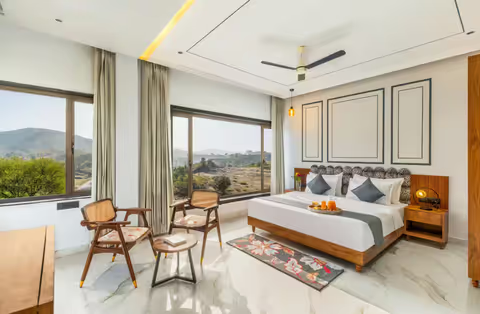
Homes Knowledge: Understanding Housing, Design, and Community Living
Homes are residential spaces designed to provide shelter, comfort, security, and a place for daily living. They serve as the foundation of family life, personal well-being, and community development. Throughout history, homes have evolved from simple shelters into complex living environments equipped with modern technologies, sustainable materials, and advanced infrastructure.
Today, homes are more than physical structures. They support work, education, recreation, communication, and health-related activities. The growing emphasis on comfort, energy efficiency, and digital connectivity has transformed the way homes are planned, built, and maintained.
How Homes Are Structured
A home consists of several interconnected elements that work together to create a functional living environment. These elements vary depending on location, climate, cultural preferences, and building practices.
| Component | Purpose |
|---|---|
| Foundation | Supports the structure and distributes weight |
| Walls | Provide enclosure, insulation, and protection |
| Roof | Protects occupants from weather conditions |
| Doors and Windows | Allow access, ventilation, and natural light |
| Electrical Systems | Power appliances, lighting, and devices |
| Plumbing Systems | Supply water and manage wastewater |
| Heating and Cooling Systems | Maintain indoor comfort |
| Interior Spaces | Support daily activities such as cooking, sleeping, and working |
The combination of these components creates a safe and efficient living space suitable for long-term occupancy.
Why Homes Are Important
Homes play a vital role in individual and societal development. They influence quality of life, health, safety, and economic stability.
Key Benefits
- Provide protection from environmental conditions
- Support physical and emotional well-being
- Create spaces for family interaction
- Enable education and remote work activities
- Promote privacy and personal security
- Contribute to community growth and social stability
- Support long-term sustainability initiatives
A well-designed home can improve productivity, comfort, and overall life satisfaction.
Types of Homes
Residential housing exists in many forms to accommodate different lifestyles, population densities, and geographic conditions.
Common Housing Types
- Single-family homes
- Multi-family residences
- Apartments
- Condominiums
- Townhouses
- Duplexes
- Manufactured homes
- Tiny homes
- Modular homes
- Eco-friendly homes
- Smart homes
- Retirement communities
Each type offers unique advantages depending on household size, location, accessibility requirements, and available infrastructure.
Key Features of Modern Homes
Modern residential design focuses on functionality, efficiency, sustainability, and convenience.
Important Features
- Open floor plans
- Energy-efficient lighting systems
- High-performance insulation
- Smart security systems
- Automated climate control
- Water conservation technologies
- Sustainable building materials
- Flexible workspaces
- Improved indoor air quality systems
- Renewable energy integration
These features help improve comfort while reducing environmental impact.
Real-World Applications of Homes
Homes support a wide range of daily activities and social functions.
Common Uses
- Family living
- Remote work environments
- Online education
- Home-based businesses
- Healthcare monitoring
- Recreation and entertainment
- Elderly care
- Child development
- Community engagement
- Emergency preparedness
The increasing integration of technology has expanded the practical functions of residential spaces.
Problems Homes Help Solve
Effective housing addresses numerous social, environmental, and personal challenges.
Challenges Addressed
- Exposure to extreme weather
- Lack of privacy
- Health and safety concerns
- Overcrowding
- Energy inefficiency
- Poor indoor environmental quality
- Accessibility barriers
- Community instability
- Limited work-from-home capabilities
Modern housing strategies focus on creating resilient, adaptable, and efficient living environments.
Smart Homes and Digital Transformation
One of the most significant developments in residential housing is the rise of smart home technology. Connected devices allow homeowners to manage lighting, climate systems, security, and appliances through mobile applications and voice commands.
Common Smart Home Technologies
- Smart thermostats
- Connected lighting systems
- Video doorbells
- Smart locks
- Home security cameras
- Voice assistants
- Energy monitoring systems
- Automated irrigation controls
- Air quality sensors
- Smart appliances
These technologies improve convenience, energy management, and home security.
Sustainability and Green Housing
Environmental concerns have accelerated the adoption of sustainable housing practices. Builders and homeowners increasingly prioritize resource conservation and reduced environmental impact.
Sustainable Housing Practices
- Solar energy systems
- Rainwater harvesting
- Energy-efficient windows
- Green roofs
- Sustainable construction materials
- Efficient insulation systems
- Low-emission building products
- Smart energy management
- Water-saving fixtures
- Waste reduction initiatives
Green housing contributes to environmental protection while improving long-term operational efficiency.
Housing Trends and Developments in 2025–2026
The housing sector continues to evolve in response to technological, environmental, and demographic changes.
Recent Trends
- Increased adoption of artificial intelligence in home automation
- Growing interest in net-zero energy homes
- Expansion of prefabricated and modular housing
- Greater emphasis on resilient housing design
- Increased use of sustainable construction materials
- Enhanced cybersecurity for connected home devices
- Growth of multi-generational living arrangements
- Rising implementation of smart energy management systems
- Increased demand for dedicated home office spaces
- Wider integration of electric vehicle charging infrastructure
During 2025 and early 2026, many residential developments worldwide incorporated advanced energy monitoring systems and improved sustainability standards to support environmental goals and energy efficiency initiatives.
Housing Regulations and Building Standards
Homes are typically governed by building regulations designed to protect occupants and ensure structural integrity.
Common Regulatory Areas
- Building safety standards
- Fire protection requirements
- Electrical safety regulations
- Plumbing standards
- Accessibility guidelines
- Environmental compliance requirements
- Energy efficiency standards
- Structural engineering requirements
- Zoning regulations
- Occupancy requirements
These regulations help ensure residential structures remain safe, functional, and environmentally responsible.
Useful Tools and Learning Resources
Various tools and educational resources help individuals understand housing design, construction, and management.
Helpful Platforms and Resources
- Building information modeling software
- Home design applications
- Energy efficiency assessment tools
- Smart home management platforms
- Architectural learning resources
- Construction planning software
- Sustainable housing research publications
- Government housing information portals
- Residential safety guidelines
- Home maintenance tracking applications
These resources support informed decision-making and ongoing home improvement efforts.
Future of Homes
The future of residential housing is expected to focus on sustainability, resilience, connectivity, and adaptability. Emerging technologies will continue to improve energy management, comfort, and environmental performance.
Expected Developments
- AI-driven home management systems
- Advanced renewable energy integration
- Self-monitoring building infrastructure
- Improved water conservation technologies
- Enhanced home cybersecurity measures
- Climate-resilient construction techniques
- Expanded use of sustainable materials
- Greater automation of household functions
- Health-focused indoor environments
- Intelligent energy distribution systems
These innovations aim to create safer, healthier, and more efficient living spaces.
FAQs
What is a home?
A home is a residential space where individuals or families live, providing shelter, comfort, security, and support for daily activities.
What is the difference between a traditional home and a smart home?
A traditional home primarily relies on manual controls, while a smart home uses connected technologies and automation to manage systems such as lighting, security, and climate control.
Why is sustainable housing important?
Sustainable housing reduces environmental impact, conserves resources, improves energy efficiency, and supports long-term environmental goals.
What are the most common types of homes?
Common types include single-family homes, apartments, condominiums, townhouses, duplexes, manufactured homes, and modular homes.
How are modern homes becoming more efficient?
Modern homes use energy-efficient materials, smart technologies, renewable energy systems, improved insulation, and advanced water conservation methods to enhance efficiency.
Conclusion
Homes are essential components of modern society, providing shelter, security, comfort, and support for daily life. As technology advances and sustainability becomes increasingly important, residential housing continues to evolve beyond basic living spaces.
Modern homes now incorporate smart technologies, energy-efficient systems, and environmentally responsible design principles that improve quality of life while reducing resource consumption. Understanding the structure, types, features, regulations, and emerging trends associated with homes helps individuals better appreciate their role in supporting healthy, resilient, and connected communities.