Jump to a Chapter

Forklift Forks Guide: Explore Types, Materials, Load Capacity & Expert Insights

Forklift Forks Guide: Explore Types, Materials, Load Capacity & Expert Insights

Forklift forks are among the most important load-handling components of industrial lift trucks. Every day, they move millions of pallets, containers, machinery, construction materials, and warehouse goods across manufacturing facilities, logistics centers, retail warehouses, ports, and distribution hubs worldwide. Although they may appear simple, forklift forks are precision-engineered components designed to withstand heavy loads, repeated lifting cycles, and demanding industrial environments.


Modern forklift forks are manufactured using high-strength alloy steels and advanced forging or heat-treatment processes to provide durability, structural integrity, and long service life. Their design influences load stability, lifting efficiency, equipment safety, and overall warehouse productivity. Fork dimensions, load ratings, mounting systems, and specialized attachments vary depending on the forklift model and intended application.

Understanding forklift fork types, materials, capacities, maintenance practices, and safety principles helps operators, warehouse managers, engineering students, and logistics professionals gain a better understanding of industrial material handling systems.

This guide explores forklift forks, their construction, types, manufacturing methods, load capacity concepts, inspection procedures, safety practices, and emerging technologies.

What Are Forklift Forks?

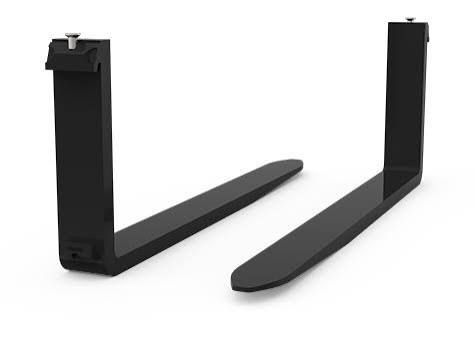
Forklift forks are heavy-duty steel load-supporting arms attached to the front of a forklift truck. They slide beneath pallets or other loads, allowing the hydraulic lifting system to raise, transport, and position materials safely.

Forklift forks are commonly used in:

  • Warehouses
  • Manufacturing plants
  • Distribution centers
  • Construction sites
  • Shipping terminals
  • Retail logistics
  • Cold storage facilities
  • Industrial processing plants

They are designed to support both static and dynamic loads during material handling operations.

Primary Functions

Forklift forks perform several essential tasks.

Their primary functions include:

  • Lifting palletized goods
  • Transporting materials
  • Supporting industrial loads
  • Assisting loading operations
  • Unloading freight
  • Rack placement
  • Inventory movement
  • Production support

Their design directly affects load stability and operational efficiency.

Main Parts of a Forklift Fork

Although forks appear simple, they consist of several engineered sections.

Major parts include:

  • Blade
  • Shank
  • Heel
  • Tip
  • Mounting hook
  • Locking mechanism

Each section contributes to structural strength and secure attachment to the forklift carriage.

Blade

The blade is the horizontal section that supports the load.

Its characteristics include:

  • Flat load-bearing surface
  • Uniform thickness
  • High structural strength
  • Smooth pallet entry

Blade dimensions vary according to application.

Shank

The shank is the vertical section attached to the forklift carriage.

Functions include:

  • Supporting the blade
  • Transferring lifting forces
  • Connecting to the mounting system

The shank must withstand significant bending stresses during lifting operations.

Heel

The heel is the curved transition between the blade and the shank.

It experiences the greatest mechanical stress during lifting and is therefore a key inspection area.

Mounting Hooks

Mounting hooks connect the forks to the carriage.

Common designs include:

  • Hook-type mounting
  • Pin-type mounting
  • Shaft mounting

These systems allow secure installation while enabling fork adjustment.

Common Types of Forklift Forks

Different industrial applications require different fork designs.

Standard Pallet Forks

These are the most commonly used forks.

Applications include:

  • General warehousing
  • Manufacturing
  • Distribution centers
  • Retail logistics

They are designed for handling standard pallets.

Tapered Forks

Tapered forks feature thinner tips that allow easier pallet entry.

Benefits include:

  • Reduced pallet damage
  • Easier insertion
  • Improved handling efficiency

Block Forks

Block forks have a thicker cross-section for handling heavier loads.

Typical applications include:

  • Construction materials
  • Stone products
  • Industrial equipment

Specialty Forks

Specialized forks are designed for unique material handling tasks.

Examples include:

  • Lumber forks
  • Coil forks
  • Carpet forks
  • Container forks
  • Telescopic forks

Each design addresses specific operational requirements.

Fork Dimensions

Fork dimensions influence load handling performance.

Important measurements include:

  • Fork length
  • Blade width
  • Blade thickness
  • Shank height
  • Overall height

Dimension selection depends on the forklift model and intended application.

Materials Used

Forklift forks are typically manufactured from high-strength alloy steel.

Desired material properties include:

  • High tensile strength
  • Wear resistance
  • Fatigue resistance
  • Impact toughness
  • Structural durability

Material selection helps ensure reliable performance under demanding conditions.

Manufacturing Process

Forklift forks undergo multiple manufacturing stages.

Typical processes include:

  • Steel selection
  • Forging
  • Heat treatment
  • Machining
  • Surface finishing
  • Quality inspection
  • Load testing

These processes improve strength, durability, and dimensional accuracy.

Heat Treatment

Heat treatment enhances the mechanical properties of steel.

Benefits include:

  • Increased hardness
  • Improved toughness
  • Better fatigue resistance
  • Enhanced wear resistance

Proper heat treatment contributes to long service life.

Load Capacity

Every forklift fork has a specified rated load capacity.

Capacity depends on several factors, including:

  • Fork dimensions
  • Steel grade
  • Load center
  • Fork length
  • Mounting configuration
  • Manufacturer specifications

Using forks beyond their rated capacity can reduce structural safety.

Understanding Load Centers

The load center represents the horizontal distance between the fork face and the load's center of gravity.

As the load center increases:

  • Effective lifting capacity may decrease
  • Stability requirements become more important
  • Structural stress increases

Operators should always follow the forklift manufacturer's rated load information.

Surface Finishes

Forklift forks may include protective finishes to reduce corrosion and wear.

Common finishes include:

  • Industrial paint coatings
  • Powder coating
  • Protective primers
  • Corrosion-resistant treatments

Surface protection extends service life in demanding environments.

Fork Position Adjustment

Many forklifts allow operators to adjust fork spacing.

Proper adjustment helps:

  • Improve load stability
  • Match pallet dimensions
  • Reduce handling risks
  • Improve operational efficiency

Some forklifts include hydraulic fork positioners for automatic adjustment.

Fork Attachments

Various attachments expand forklift capabilities.

Examples include:

  • Fork extensions
  • Fork positioners
  • Side shifters
  • Rotators
  • Clamps
  • Load stabilizers

Attachments should be compatible with both the forklift and the intended application.

Safety Considerations

Forklift forks play a critical role in workplace safety.

Important practices include:

  • Inspecting forks before use
  • Avoiding overloading
  • Ensuring proper fork spacing
  • Keeping loads balanced
  • Using appropriate attachments
  • Following manufacturer recommendations

Safe operation reduces the likelihood of equipment damage and workplace incidents.

Inspection Practices

Routine inspections help identify wear before it affects performance.

Inspection areas commonly include:

  • Heel wear
  • Blade straightness
  • Surface cracks
  • Hook condition
  • Locking mechanism
  • Corrosion
  • Excessive deformation

Damaged forks should be evaluated according to applicable inspection procedures and manufacturer guidance.

Maintenance Concepts

Routine maintenance supports long-term reliability.

Typical maintenance activities include:

  • Cleaning
  • Corrosion inspection
  • Lubricating moving attachment components
  • Checking locking systems
  • Monitoring wear
  • Replacing damaged parts where appropriate

Preventive maintenance helps maintain operational performance.

Applications Across Industries

Forklift forks are widely used in numerous sectors.

Warehousing

Applications include:

  • Pallet transport
  • Inventory storage
  • Order fulfillment
  • Shipping preparation

Manufacturing

Forks assist with:

  • Raw material handling
  • Production support
  • Finished goods movement

Construction

Common uses include:

  • Building materials
  • Equipment transport
  • Site logistics

Logistics

Forklift forks support:

  • Freight handling
  • Container loading
  • Distribution operations
  • Cross-docking

Technological Advancements

Material handling technology continues evolving.

Emerging developments include:

  • High-strength lightweight alloys
  • Wear-resistant coatings
  • Smart load monitoring
  • Digital maintenance tracking
  • RFID equipment identification
  • Predictive maintenance systems
  • Automated inspection technologies
  • Industry 4.0 integration

These innovations support safer and more efficient warehouse operations.

Sustainability in Manufacturing

Manufacturers increasingly focus on sustainable production practices.

Examples include:

  • Recyclable steel materials
  • Energy-efficient manufacturing
  • Reduced material waste
  • Longer service life
  • Environmentally responsible surface treatments
  • Improved production efficiency

Sustainability continues influencing industrial equipment design.

Helpful Learning Resources

Readers interested in forklift components may explore:

  • Material handling engineering textbooks
  • Mechanical engineering references
  • Industrial safety publications
  • Warehouse management guides
  • Manufacturing process textbooks
  • Metallurgy resources
  • Logistics engineering journals

These resources provide additional educational information about industrial lifting equipment.

Frequently Asked Questions

What are forklift forks?

Forklift forks are heavy-duty steel arms attached to a forklift that support, lift, and transport palletized or industrial loads.

What materials are forklift forks made from?

Most forklift forks are manufactured from high-strength alloy steel that undergoes forging and heat treatment to improve durability and load-bearing capability.

How is fork load capacity determined?

Load capacity depends on factors such as fork dimensions, material properties, load center, mounting configuration, and the manufacturer's specifications.

Why is the fork heel important?

The heel experiences the highest mechanical stress during lifting operations and is one of the most important areas to inspect for wear or damage.

What are fork extensions?

Fork extensions are accessories that increase the effective fork length for handling larger loads. They should only be used in accordance with the forklift and attachment manufacturer's guidance.

What technologies are shaping the future of forklift forks?

Emerging innovations include lightweight high-strength materials, smart load monitoring, predictive maintenance, digital identification systems, and Industry 4.0-enabled equipment management.

Conclusion

Forklift forks are fundamental components of industrial material handling systems, providing the strength and stability required to lift, transport, and position heavy loads safely. Their design, material selection, manufacturing quality, and maintenance directly influence operational efficiency and workplace safety across warehouses, manufacturing facilities, construction sites, and logistics centers.

As industrial technologies continue advancing, forklift forks are benefiting from stronger materials, improved manufacturing processes, digital monitoring, predictive maintenance, and smart warehouse integration. Understanding their types, construction, load capacity principles, inspection requirements, and technological developments provides valuable knowledge for anyone involved in modern material handling operations.

Disclaimer

This article is intended solely for educational and informational purposes. It provides a general overview of forklift forks, material handling components, engineering concepts, and maintenance practices. It does not constitute engineering, operational, safety, procurement, regulatory, or legal advice, nor does it recommend or endorse any specific manufacturer, product, or equipment. Fork dimensions, load ratings, inspection criteria, and operational procedures vary by forklift model, manufacturer, applicable standards, and workplace requirements. Readers should consult official equipment documentation and qualified professionals before operating, inspecting, or modifying industrial material handling equipment.

author-image

Ravi Shankar Maurya

We create purposeful content that speaks, resonates, and drives action.

July 31, 2026 . 9 min read