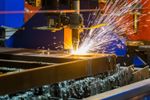
Explore Sheet Cutting Machines: A Guide to Clean Cut, Accuracy, and Machine Basics
Sheet cutting machines are industrial machines used to cut flat sheets of metal into specific shapes, sizes, and dimensions. These machines are commonly used to process materials such as stainless steel, mild steel, aluminium, copper, and other industrial metals.
Understanding Sheet Cutting Machines
They play an important role in manufacturing because many products require accurately shaped metal components before assembly. Automotive parts, electrical cabinets, industrial enclosures, construction materials, machinery panels, and household appliances are examples of products that depend on sheet metal processing.
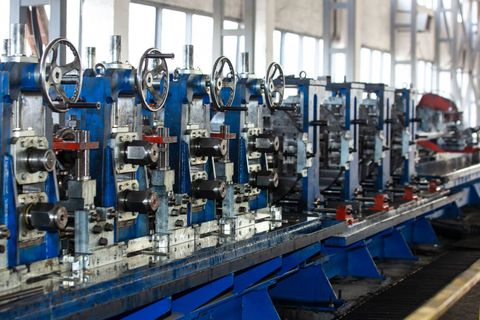
An Industrial Sheet Cutting Machine uses different cutting technologies depending on material thickness, production volume, required accuracy, and design complexity. Traditional mechanical systems use blades or shearing mechanisms, while modern machines may use laser, plasma, or other automated cutting technologies.
A CNC Sheet Cutting Machine operates through computer numerical control (CNC), allowing operators to prepare cutting patterns and control machine movements through programmed instructions. This approach supports repeatable production and complex cutting designs.
How Sheet Cutting Machines Work
The general cutting process involves several steps:
Material preparation: Metal sheets are inspected and positioned on the machine table.
Design preparation: Operators create or import a cutting layout using suitable design software.
Machine configuration: Cutting parameters are adjusted according to material type and thickness.
Cutting operation: The machine follows the programmed path or mechanical cutting sequence.
Quality inspection: Finished components are checked for dimensions, edge quality, and surface condition.
Material handling: Cut components are separated and transferred for further processing.
The actual procedure varies according to the machine type and cutting technology.
Importance of Sheet Cutting Machines in Modern Manufacturing
Sheet cutting technology is important because manufacturers need components with consistent dimensions and predictable edge quality. Accurate cutting helps reduce unnecessary material waste, supports efficient assembly, and improves coordination between different manufacturing stages.
Industries that use sheet cutting equipment include:
Automotive manufacturing: Vehicle body panels, brackets, structural components, and chassis-related parts.
Construction: Roofing panels, metal frames, structural sheets, and architectural components.
Electrical manufacturing: Control panels, switchgear enclosures, electrical cabinets, and equipment housings.
Aerospace: Selected sheet metal components requiring controlled dimensions and material specifications.
Industrial machinery: Machine covers, support plates, brackets, and fabricated components.
Consumer appliances: Refrigerator panels, washing machine housings, and metal appliance parts.
Key Advantages of Modern Cutting Systems
A Precision Sheet Metal Cutting Machine can support accurate dimensional processing when properly configured and maintained.
Important operational advantages include:
Dimensional consistency: CNC programming supports repeatable cutting patterns.
Design flexibility: Digital layouts allow manufacturers to process different shapes and component designs.
Production automation: Automated feeding and material handling can reduce repetitive manual operations.
Material utilization: Nesting software can arrange component designs to improve sheet utilization.
Process coordination: Automated systems can connect cutting with bending, welding, and assembly operations.
These benefits depend on material properties, machine condition, operator experience, and the selected cutting method.
Common Types of Sheet Cutting Machines
Different machines are designed for different manufacturing requirements.
| Machine type | Working principle | Common applications |
|---|---|---|
| Mechanical shearing machine | Uses blades to cut sheet material | Straight-line cuts |
| Hydraulic sheet cutting machine | Uses hydraulic force to operate cutting blades | Industrial sheet processing |
| CNC sheet cutting machine | Uses computer-controlled movements | Complex and repeatable shapes |
| Fiber laser cutting machine | Uses a focused fiber laser beam | Detailed metal cutting |
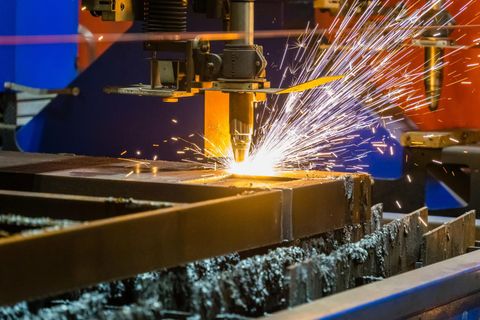
| Plasma cutting machine | Uses a high-temperature plasma arc | Conductive metal sheets and plates |
| Automatic sheet cutting machine | Uses automated controls and material handling | Continuous production |
Laser and CNC Cutting Technology
A Laser Sheet Metal Cutting Machine uses a concentrated laser beam to melt, burn, or vaporize material along a programmed cutting path. Assist gases help remove molten material from the cutting area.
A Fiber Laser Cutting Machine uses a fiber-based laser source and is widely used for processing suitable metal materials. Its performance depends on laser power, optical configuration, material characteristics, thickness, and cutting parameters.
A CNC Metal Cutting Machine may use laser, plasma, or mechanical cutting technology. CNC describes the control method rather than one specific cutting process.
An Automated Metal Sheet Cutting System can combine CNC controls, loading equipment, cutting tables, sorting mechanisms, and production monitoring to coordinate multiple operations.
Recent Updates and Trends in Sheet Cutting Technology
During 2025 and 2026, industrial sheet cutting continued to develop around automation, digital production planning, energy management, and improved process monitoring. These developments are relevant to manufacturers seeking greater production consistency and more flexible manufacturing operations.
Advanced Fiber Laser Technology
Fiber laser systems remain an important development in industrial metal processing. Manufacturers are working with different laser power configurations, improved beam delivery, and process-control features.
Higher laser power does not automatically mean better results for every application. Material thickness, surface condition, gas selection, cutting speed, and machine configuration all influence the final cutting quality.
Artificial Intelligence and Smart Manufacturing
Digital manufacturing systems increasingly use production data to monitor machine performance and identify process variations.
Some advanced manufacturing environments use machine vision and automated inspection to identify cutting defects, incorrect positioning, and dimensional variations.
These technologies can support production monitoring, although their capabilities differ between equipment models.
Automated Material Handling
Automated loading and unloading systems are becoming important in production environments where large metal sheets are processed repeatedly.
These systems can reduce manual handling and coordinate sheet movement with CNC cutting operations. Proper safety controls and material positioning remain essential.
CAD, CAM, and Nesting Software
Computer-aided design (CAD) and computer-aided manufacturing (CAM) software help convert engineering drawings into machine-readable cutting instructions.
Nesting software arranges multiple component designs on a sheet to improve material utilization. Advanced planning systems can also account for cutting sequences, part spacing, and machine limitations.
Laws, Policies, and Industrial Safety in India
Sheet cutting machines must operate according to applicable industrial safety, electrical, workplace, and machinery requirements. The specific rules depend on the machine category, manufacturing activity, and location.
Machinery Safety and BIS Standards
The Bureau of Indian Standards (BIS) develops and administers Indian standards relating to machinery safety and conformity assessment.
In 2025, the Ministry of Heavy Industries published category-specific guidelines for metal cutting machines under its machinery safety regulatory framework.
However, the regulatory position subsequently changed. The Ministry of Heavy Industries records the withdrawal of the Machinery and Electrical Equipment Safety (Omnibus Technical Regulation) Order, 2024, on 16 January 2026. Therefore, manufacturers should not assume that the earlier implementation dates or certification requirements remain applicable. They should check the latest government notifications for any replacement requirements.
Workplace Safety Requirements
Industrial operators should consider applicable workplace safety legislation and state factory rules.
Important safety measures include:
Installing suitable machine guards and protective enclosures.
Providing emergency stopping mechanisms.
Using appropriate eye and face protection.
Ensuring proper electrical grounding and isolation.
Maintaining ventilation and fume extraction where required.
Training operators in machine operation and maintenance.
Following laser safety precautions for enclosed and open laser systems.
Laser cutting operations require particular attention to optical radiation, fire hazards, fumes, and reflected laser energy.
Environmental and Energy Considerations
Manufacturing facilities should also follow applicable pollution-control requirements for industrial emissions, waste handling, and electricity usage.
Material scraps, cutting residues, used consumables, and extraction-system waste should be handled according to applicable environmental requirements.
Tools and Resources for Sheet Cutting Operations
Several technical tools help manufacturers plan cutting operations, evaluate equipment, and maintain production accuracy.
Important Software and Resources
AutoCAD: Used for creating and editing technical drawings.
SolidWorks: Supports three-dimensional mechanical design and sheet metal modelling.
Autodesk Fusion: Provides design and manufacturing tools for suitable production workflows.
SigmaNEST: Used for sheet metal nesting and production planning.
Lantek: Provides CAD/CAM software solutions for sheet metal processing.
Digital measurement tools: Vernier calipers, micrometers, and measuring systems help check component dimensions.
Laser power calculators: Help estimate suitable process parameters, although actual settings must follow machine and material specifications.
BIS official website: Provides information about Indian standards and applicable certification requirements.
Factors to Consider When Evaluating Equipment
Before selecting an Industrial Laser Cutting Equipment configuration or hydraulic cutting machine, manufacturers should examine:
Material type and maximum sheet thickness.
Required cutting dimensions and accuracy.
Machine working-table dimensions.
Cutting speed and expected production volume.
Electrical power requirements.
Software and CNC controller compatibility.
Safety enclosure and extraction arrangements.
Maintenance requirements and operator training.
Understanding Machine Price Estimates
The price of a sheet cutting machine depends on several technical factors, including cutting technology, laser power, hydraulic capacity, working area, automation features, software, and installation requirements.
For example, a basic hydraulic sheet cutting machine has a different configuration from a high-power CNC fiber laser system.
Informational disclaimer: This aticle is for information purpose only. Machine prices and equipment packages are indicative and vary according to specifications, manufacturer, location, taxes, accessories, and installation scope. A technical quotation should be evaluated against the actual production requirements.
Frequently Asked Questions
What is a sheet cutting machine used for?
A sheet cutting machine processes flat metal sheets into specific shapes and dimensions. It is used in automotive, construction, electrical equipment, appliance, and general engineering manufacturing.
What is the difference between CNC and laser sheet cutting?
CNC refers to computer-controlled machine operation, whereas laser cutting is a method that uses a focused laser beam to process material. A laser cutting machine can use CNC controls to follow programmed designs.
Which machine is suitable for thick metal sheets?
The suitable machine depends on metal type, thickness, required edge quality, and production volume. Hydraulic shearing, plasma cutting, and suitable high-capacity laser systems may be considered for different applications.
How can manufacturers improve cutting accuracy?
Accuracy can be improved through proper machine calibration, correct cutting parameters, suitable tooling, stable material positioning, regular maintenance, and inspection of finished components.
How often should sheet cutting machines be maintained?
Maintenance frequency depends on operating hours, machine design, and manufacturer instructions. Regular checks should cover blades, laser optics, filters, hydraulic systems, electrical connections, cooling systems, and safety equipment.
Conclusion
Sheet cutting machines are essential equipment in modern metal fabrication and industrial manufacturing. From conventional hydraulic systems to CNC Sheet Cutting Machines and advanced fiber laser technology, different machine types support different material-processing requirements.
Understanding cutting methods, machine specifications, software tools, and workplace safety practices helps manufacturers plan suitable production operations. As automated manufacturing and digital process monitoring continue to develop, accurate cutting, responsible material utilization, and regular equipment maintenance remain important considerations.