EV Battery Manufacturing: An Explore of Modern Energy Storage Production
Electric vehicle (EV) battery manufacturing is the process of producing rechargeable batteries that power electric vehicles. These batteries serve as the primary energy source for EVs and play a critical role in vehicle performance, driving range, charging speed, and overall efficiency.
As global transportation shifts toward cleaner energy solutions, EV battery manufacturing has become one of the most important sectors in modern industrial production. Manufacturers use advanced materials, precision engineering, automation systems, and quality control procedures to create batteries capable of delivering reliable performance over many years of operation.
The manufacturing process involves multiple stages, including raw material preparation, cell production, module assembly, battery pack integration, testing, and recycling. Continuous innovation is helping improve battery capacity, safety, sustainability, and production efficiency.
Importance of EV Battery Manufacturing
EV batteries are essential for the growth of electric mobility. Without efficient battery production, large-scale adoption of electric vehicles would be difficult.
Key Benefits
Supports the transition toward lower-emission transportation
Enables longer driving ranges for electric vehicles
Improves energy efficiency compared to conventional fuel systems
Strengthens renewable energy integration through energy storage
Encourages technological innovation in advanced materials
Contributes to industrial development and manufacturing expansion
Battery manufacturing also supports sectors such as energy storage, public transportation, logistics, and smart mobility infrastructure.
Major Components Used in EV Batteries
Modern EV batteries contain several critical materials and components that work together to store and deliver electrical energy.
Primary Components
Cathode materials
Lithium Nickel Manganese Cobalt (NMC)
Lithium Iron Phosphate (LFP)
Nickel Cobalt Aluminum (NCA)
Anode materials
Graphite
Silicon-enhanced graphite
Electrolyte
Conducts lithium ions between electrodes
Separator
Prevents direct contact between electrodes
Current collectors
Copper and aluminum foils
Battery Management System (BMS)
Monitors battery performance and safety
EV Battery Manufacturing Process
Battery production involves highly controlled environments to maintain product quality and safety.
| Manufacturing Stage | Purpose |
|---|---|
| Raw Material Processing | Preparation of lithium, nickel, graphite, and other materials |
| Electrode Manufacturing | Coating active materials onto metal foils |
| Cell Assembly | Combining electrodes, separator, and electrolyte |
| Cell Formation | Initial charging and performance stabilization |
| Module Assembly | Grouping cells into modules |
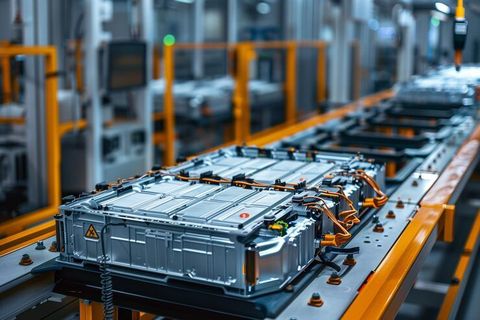
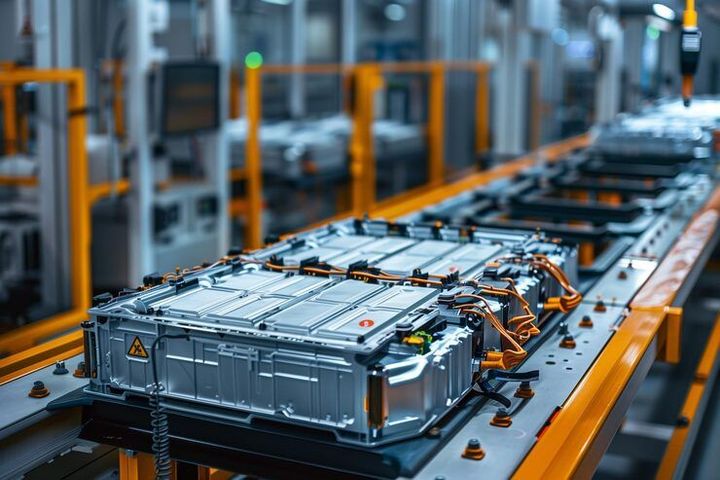
| Battery Pack Assembly | Integrating modules into complete battery packs |
| Testing and Validation | Safety, durability, and performance verification |
| Recycling and Recovery | Recovering valuable materials from used batteries |
Raw Material Processing
The first stage involves refining and preparing battery materials to meet strict quality requirements.
Common Materials
Lithium compounds
Nickel
Manganese
Cobalt
Graphite
Copper
Aluminum
Material purity significantly affects battery performance and lifespan. Manufacturers use advanced analytical systems to verify chemical composition before production begins.
Electrode Manufacturing
Electrodes are among the most important parts of an EV battery.
Main Activities
Mixing active materials into slurry
Coating slurry onto metal foils
Drying coated materials
Calendering for thickness control
Cutting electrodes to precise dimensions
Automated equipment ensures consistent coating quality and production accuracy.
Cell Assembly and Formation
Battery cells are assembled in controlled environments with low humidity to prevent contamination.
Cell Types
Cylindrical cells
Prismatic cells
Pouch cells
During formation, cells undergo controlled charging and discharging cycles. This process helps establish stable electrochemical performance and identifies potential defects before final assembly.
Battery Module and Pack Assembly
Individual cells are combined into modules and then integrated into battery packs.
Key Features
Thermal management systems
Battery Management System integration
Electrical connections
Cooling structures
Protective enclosures
Safety monitoring systems
The completed battery pack becomes the energy source installed within an electric vehicle.
Quality Control and Safety Measures
Battery manufacturing requires extensive testing because safety and reliability are critical.
Common Testing Procedures
Capacity testing
Cycle life testing
Thermal testing
Vibration testing
Short-circuit testing
Impact testing
Environmental testing
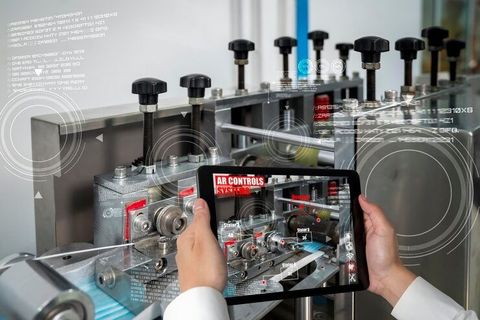
Advanced manufacturing facilities often use artificial intelligence and machine vision systems to detect defects during production.
Real-World Applications
EV batteries support a wide range of transportation and energy applications.
Common Uses
Passenger electric vehicles
Electric buses
Commercial delivery fleets
Electric trucks
Two-wheel electric mobility
Marine electrification
Stationary energy storage systems
These applications help reduce dependence on conventional fossil-fuel transportation systems.
Types of EV Batteries
Different battery chemistries are used depending on performance requirements.
Lithium Iron Phosphate (LFP)
Strong safety characteristics
Long cycle life
Lower reliance on critical minerals
Nickel Manganese Cobalt (NMC)
High energy density
Suitable for long-range vehicles
Widely used globally
Nickel Cobalt Aluminum (NCA)
High performance capability
Common in premium EV applications
Emerging Solid-State Batteries
Higher energy density potential
Improved safety characteristics
Faster charging possibilities
Several manufacturers are actively developing commercial solid-state battery technologies.
Recent Industry Trends and Developments (2025–2026)
The EV battery sector continues to evolve rapidly with new manufacturing approaches and technological improvements.
Notable Developments
Increased adoption of LFP battery chemistry during 2025
Expansion of large-scale battery manufacturing facilities worldwide
Greater investment in battery recycling infrastructure
Continued research into solid-state batteries
Growth of silicon-enhanced anode technologies
Increased use of artificial intelligence in manufacturing quality control
Development of dry-electrode production techniques to improve efficiency
Throughout 2025 and early 2026, manufacturers have focused on reducing material waste, improving energy density, and strengthening supply chain resilience.
Regulations and Policy Considerations
Governments and regulatory bodies continue to establish standards for battery production, transportation, and recycling.
Important Regulatory Areas
Battery safety standards
Environmental compliance requirements
Material sourcing transparency
Recycling obligations
Transportation regulations for lithium batteries
Carbon footprint reporting
Many regions are introducing battery passport initiatives that improve traceability across the battery lifecycle.
Useful Tools, Platforms, and Learning Resources
Professionals and students can use various resources to learn about battery technology and manufacturing.
Learning Resources
Technical publications on battery engineering
University energy storage programs
Industry research reports
Battery technology conferences
Manufacturing automation training programs
Common Engineering Tools
Battery simulation software
Manufacturing execution systems
Quality inspection platforms
Process monitoring systems
Thermal analysis tools
These resources help engineers understand battery design, production optimization, and performance analysis.
FAQs
What is EV battery manufacturing?
EV battery manufacturing is the process of producing rechargeable batteries used in electric vehicles through stages such as material preparation, cell assembly, testing, and pack integration.
Which battery type is most commonly used in electric vehicles?
Lithium-ion batteries remain the most widely used technology, including LFP, NMC, and NCA chemistries.
Why is battery manufacturing important for electric vehicles?
Battery manufacturing determines vehicle range, efficiency, charging performance, safety, and overall reliability.
What challenges does EV battery manufacturing face?
Key challenges include raw material availability, production scalability, recycling requirements, quality control, and supply chain management.
What future technologies may influence battery manufacturing?
Solid-state batteries, silicon-based anodes, advanced recycling systems, artificial intelligence, and next-generation manufacturing techniques are expected to shape future development.
Conclusion
EV battery manufacturing is a foundational part of the global transition toward electric mobility and advanced energy storage. The process combines sophisticated materials science, precision manufacturing, automation technologies, and rigorous quality control systems to produce batteries that power modern electric vehicles.
As demand for electric transportation continues to grow, manufacturers are focusing on safer battery chemistries, improved production efficiency, sustainable material sourcing, and enhanced recycling capabilities. Recent developments in solid-state technology, artificial intelligence, and advanced manufacturing methods indicate that the industry will continue evolving rapidly. Understanding how EV batteries are manufactured provides valuable insight into one of the most important technologies driving the future of transportation and energy systems.