ERP Manufacturing Systems: Explore Modern Production Management
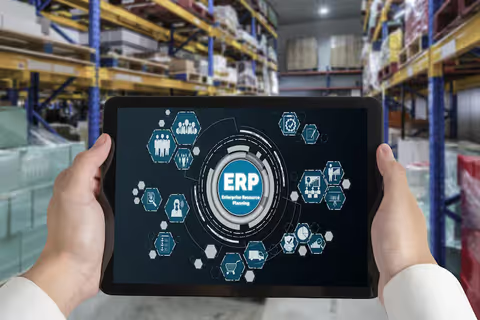
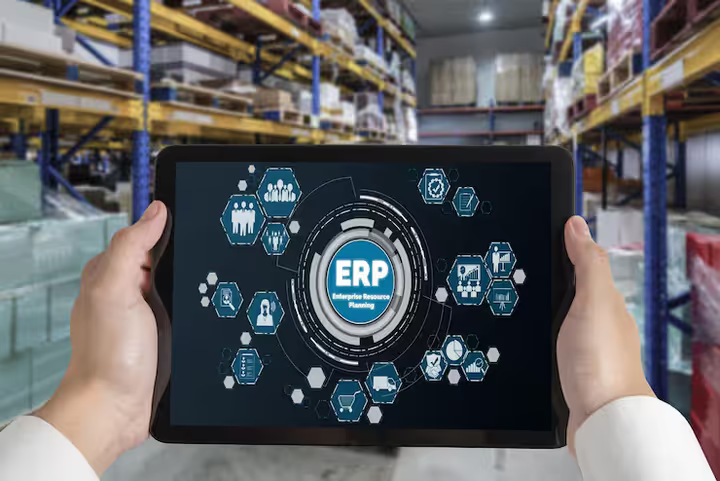
ERP Manufacturing Systems are integrated software platforms that help manufacturers manage and coordinate business processes from a single environment. ERP stands for Enterprise Resource Planning, which combines production, inventory, purchasing, sales, accounting, quality management, warehouse operations, and supply chain activities into one connected system.
Instead of using separate applications for each department, manufacturers use ERP systems to maintain consistent information across the organization. This improves communication, reduces duplicate data, and provides real-time visibility into manufacturing operations.
Modern ERP manufacturing systems support businesses of different sizes, from small production facilities to global manufacturing enterprises. They are commonly used in industries such as automotive, electronics, pharmaceuticals, food processing, aerospace, textiles, chemicals, packaging, and industrial equipment manufacturing.
How ERP Manufacturing Systems Work
ERP manufacturing systems collect data from every department and store it within a centralized database. Every transaction automatically updates related modules, allowing employees to access accurate information without waiting for manual updates.
A typical workflow includes:
- Customer order entry
- Material planning
- Production scheduling
- Procurement management
- Inventory allocation
- Manufacturing execution
- Quality inspection
- Warehouse management
- Shipping and delivery
- Financial reporting
As production progresses, the ERP system continuously updates inventory levels, machine utilization, labor information, purchasing requirements, and production status. Managers can monitor operations through dashboards and reports that support informed decision-making.
ERP Manufacturing System Components
Production Planning
- Production scheduling
- Capacity planning
- Material Requirements Planning (MRP)
- Bill of Materials (BOM)
- Shop floor management
Inventory Management
- Raw material tracking
- Finished goods monitoring
- Warehouse management
- Barcode integration
- Inventory forecasting
Procurement
- Supplier management
- Purchase requests
- Purchase orders
- Material receiving
- Vendor performance analysis
Supply Chain Management
- Demand forecasting
- Distribution planning
- Logistics coordination
- Shipment tracking
- Supplier collaboration
Quality Management
- Inspection planning
- Quality testing
- Non-conformance tracking
- Corrective actions
- Compliance documentation
Financial Management
- General ledger
- Budget management
- Manufacturing accounting
- Asset management
- Financial reporting
Human Resource Management
- Employee records
- Workforce scheduling
- Payroll integration
- Attendance management
- Performance monitoring
Key Features of ERP Manufacturing Systems
Centralized Data Management
A unified database ensures all departments work with consistent information, reducing manual errors and improving operational efficiency.
Real-Time Production Visibility
Production managers can monitor manufacturing progress, machine utilization, inventory movement, and order completion in real time.
Automated Workflow
Routine activities such as purchase approvals, production scheduling, inventory updates, and reporting can be automated to reduce repetitive work.
Production Planning
Advanced planning tools balance demand, available resources, and production capacity to improve scheduling accuracy.
Inventory Optimization
ERP systems monitor inventory continuously, helping organizations maintain appropriate stock levels while reducing unnecessary storage.
Reporting and Analytics
Built-in dashboards generate reports covering production performance, inventory trends, operational efficiency, and business metrics.
Integration
ERP platforms integrate with manufacturing equipment, barcode systems, Industrial Internet of Things (IIoT) devices, Customer Relationship Management (CRM), and Manufacturing Execution Systems (MES).
Benefits of ERP Manufacturing Systems
| Benefit | Business Impact |
|---|---|
| Centralized information | Better collaboration across departments |
| Production planning | Improved scheduling accuracy |
| Inventory visibility | Reduced stock shortages and excess inventory |
| Supply chain coordination | Faster material availability |
| Quality monitoring | Improved product consistency |
| Process automation | Reduced manual administrative work |
| Real-time reporting | Faster business decisions |
| Regulatory documentation | Better compliance management |
| Resource utilization | Improved equipment and workforce efficiency |
| Business scalability | Supports organizational growth |
Real-World Applications
ERP manufacturing systems are widely used across manufacturing sectors.
Automotive Manufacturing
- Production scheduling
- Supplier coordination
- Parts traceability
- Quality inspections
Electronics Manufacturing
- Component tracking
- Assembly management
- Product lifecycle management
- Demand forecasting
Pharmaceutical Manufacturing
- Batch production
- Regulatory documentation
- Quality validation
- Material traceability
Food and Beverage
- Ingredient tracking
- Shelf-life management
- Production planning
- Compliance documentation
Textile Manufacturing
- Fabric inventory
- Production scheduling
- Order management
- Warehouse operations
Industrial Equipment Manufacturing
- Custom manufacturing
- Engineering change management
- Spare parts tracking
- Project management
Problems ERP Manufacturing Systems Solve
Manufacturers often experience operational challenges caused by disconnected software and manual processes. ERP systems help address many of these issues.
Common Challenges
- Duplicate information across departments
- Poor inventory visibility
- Delayed production schedules
- Manual reporting
- Limited production tracking
- Communication gaps
- Supply chain disruptions
- Quality inconsistencies
ERP Solutions
- Unified business data
- Automated workflows
- Accurate production planning
- Real-time inventory monitoring
- Integrated reporting
- Better supplier collaboration
- Improved quality control
- Faster decision-making
Recent Trends and Developments (2025–2026)
Manufacturing ERP technology continues to evolve rapidly as organizations adopt digital transformation strategies.
Recent developments include:
Artificial Intelligence Integration
Throughout 2025 and 2026, ERP platforms have expanded AI-powered forecasting, production scheduling, predictive maintenance recommendations, and intelligent reporting to improve operational planning.
Cloud ERP Adoption
Cloud-based ERP deployments continue to increase because they provide easier scalability, simplified updates, improved accessibility, and reduced infrastructure management.
Industrial IoT Connectivity
Manufacturers increasingly connect ERP systems with industrial sensors, smart machines, and connected equipment to capture real-time production data automatically.
Advanced Analytics
Interactive dashboards now provide predictive insights into production efficiency, equipment utilization, inventory trends, and supply chain performance.
Sustainability Reporting
Many ERP vendors have expanded environmental reporting capabilities, helping manufacturers monitor energy usage, material consumption, emissions data, and sustainability metrics.
Cybersecurity Enhancements
ERP platforms continue strengthening security through multi-factor authentication, role-based access controls, encryption, continuous monitoring, and improved audit logging.
Regulations and Compliance
ERP manufacturing systems support compliance with various industry standards depending on manufacturing sectors.
Common regulations include:
Data Protection Regulations
- Supports quality management documentation and continuous improvement processes.
- Assists organizations in managing environmental responsibilities and sustainability initiatives.
- Important for pharmaceutical, biotechnology, and food manufacturing operations by supporting documentation and process control.
- Relevant for regulated industries that require secure electronic records and electronic signatures.
- ERP platforms increasingly include features that help organizations manage personal and operational data according to applicable privacy requirements.
Useful Tools, Platforms, and Learning Resources
Popular ERP manufacturing platforms include:
ERP Platforms
- SAP S/4HANA
- Oracle Fusion Cloud ERP
- Microsoft Dynamics 365
- Infor CloudSuite Industrial
- Epicor Kinetic
- IFS Cloud
- Acumatica Manufacturing Edition
- Odoo Manufacturing
- SYSPRO ERP
- Plex Smart Manufacturing Platform
Learning Resources
- Vendor documentation
- Manufacturing technology publications
- Industrial automation webinars
- ERP certification programs
- Supply chain management courses
- Production planning training
- Quality management resources
Frequently Asked Questions
What is an ERP manufacturing system?
An ERP manufacturing system is integrated software that manages production, inventory, purchasing, accounting, supply chain, quality, and other manufacturing operations within one centralized platform.
How does ERP improve manufacturing efficiency?
ERP improves efficiency by connecting departments, automating workflows, providing real-time visibility, improving production planning, and reducing manual data entry.
Which industries commonly use ERP manufacturing systems?
Automotive, electronics, pharmaceuticals, food processing, aerospace, machinery, chemical, textile, packaging, and industrial manufacturing organizations commonly use ERP systems.
Can ERP systems integrate with factory equipment?
Yes. Modern ERP platforms often integrate with Manufacturing Execution Systems (MES), Industrial IoT devices, barcode scanners, warehouse systems, and industrial automation equipment.
Why is cloud ERP becoming more popular?
Cloud ERP simplifies deployment, enables remote access, supports automatic updates, improves scalability, and allows organizations to manage manufacturing operations from multiple locations.
Conclusion
ERP Manufacturing Systems have become an essential foundation for modern manufacturing organizations seeking better operational visibility, improved coordination, and data-driven decision-making. By integrating production planning, inventory management, procurement, quality control, finance, warehouse operations, and supply chain activities into one connected platform, ERP enables manufacturers to streamline workflows and improve overall efficiency.
Recent advances in artificial intelligence, cloud computing, Industrial IoT integration, advanced analytics, cybersecurity, and sustainability reporting continue to expand ERP capabilities. As manufacturing environments become increasingly connected and data-focused, ERP manufacturing systems remain a key technology for supporting productivity, operational resilience, regulatory compliance, and long-term business growth.