Discover Industrial Solar Panel Technologies and Energy Solutions
Industrial solar panels are large-scale photovoltaic systems designed to generate electricity for factories, warehouses, production facilities, logistics centers, and other industrial operations. These systems convert sunlight into electrical energy and help industries meet growing energy demands through renewable energy sources.
As industries worldwide seek cleaner and more efficient energy solutions, industrial solar panels have become an important part of modern infrastructure. They support energy diversification, reduce dependence on conventional power sources, and contribute to environmental sustainability goals.
Understanding Industrial Solar Panels
Industrial solar panels operate using photovoltaic (PV) technology. Solar cells within the panels absorb sunlight and generate direct current (DC) electricity. This electricity is then converted into alternating current (AC) through inverters so that industrial equipment and electrical systems can use it.
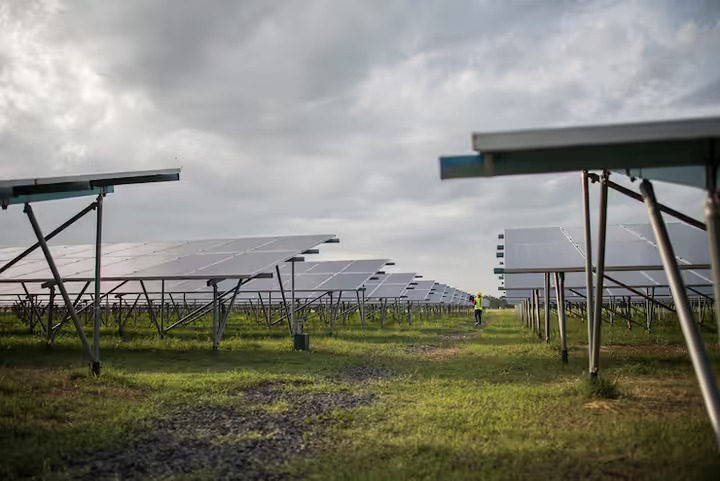
Industrial installations are generally much larger than residential systems and may cover rooftops, parking structures, manufacturing campuses, or dedicated solar fields.
The overall system typically includes:
Main Components
- Solar photovoltaic panels
- Solar inverters
- Mounting structures
- Power monitoring systems
- Electrical protection equipment
- Energy management systems
- Battery storage units (where applicable)
- Grid connection infrastructure
How Industrial Solar Panel Systems Work
The energy generation process follows several stages.
- Solar panels capture sunlight.
- Photovoltaic cells generate DC electricity.
- Inverters convert DC electricity into AC electricity.
- Power is distributed throughout industrial facilities.
- Monitoring systems track performance and efficiency.
- Excess electricity may be stored or supplied to utility networks where regulations permit.
This process enables continuous electricity generation during daylight hours and supports various industrial operations.
Industrial Solar Panel System Types
Different industries use different configurations depending on space availability and energy requirements.
| System Type | Installation Location | Typical Application |
|---|---|---|
| Rooftop Solar Systems | Factory rooftops | Manufacturing plants |
| Ground-Mounted Systems | Industrial land areas | Large-scale production facilities |
| Solar Carport Systems | Parking structures | Logistics centers |
| Floating Solar Systems | Reservoirs and water bodies | Industrial water facilities |
| Hybrid Solar Systems | Combined solar and storage | Energy-intensive operations |
Importance of Industrial Solar Panels
Industrial facilities consume significant amounts of electricity. Rising energy demands and sustainability objectives have increased interest in renewable energy technologies.
Industrial solar panels help organizations:
Key Benefits
- Improve energy reliability
- Support sustainability initiatives
- Reduce greenhouse gas emissions
- Enhance long-term energy planning
- Diversify energy sources
- Improve environmental performance reporting
- Support corporate sustainability goals
Many industries also use solar energy to strengthen operational resilience and reduce exposure to energy supply disruptions.
Industries Using Industrial Solar Panels
Industrial solar panel systems are now used across numerous sectors.
Common Industrial Applications
- Manufacturing facilities
- Automotive production plants
- Food processing facilities
- Pharmaceutical production centers
- Textile manufacturing units
- Chemical processing industries
- Logistics and warehousing operations
- Mining operations
- Agricultural processing facilities
- Data centers
These industries often have large roof areas and substantial daytime electricity consumption, making solar integration practical.
Problems Solved by Industrial Solar Panels
Industrial solar technology addresses several challenges faced by modern industries.
Operational Challenges Addressed
- Growing electricity demand
- Carbon emission reduction targets
- Environmental compliance requirements
- Energy diversification needs
- Sustainability reporting expectations
- Long-term energy security concerns
By generating electricity directly at industrial sites, organizations can strengthen energy management strategies and improve resource utilization.
Key Features of Modern Industrial Solar Panels
Solar technology has advanced significantly in recent years.
Notable Features
- High-efficiency photovoltaic cells
- Advanced power conversion systems
- Real-time monitoring platforms
- Weather-resistant construction
- Smart fault detection capabilities
- Integration with energy management software
- Long operational lifespan
- Compatibility with battery storage systems
These features improve overall system performance and operational visibility.
Recent Trends and Developments
Industrial solar technology continues to evolve rapidly.
Major Developments During 2025–2026
- Increased adoption of bifacial solar panels that generate electricity from both sides.
- Growing deployment of AI-powered energy monitoring platforms.
- Expansion of battery energy storage integration within industrial facilities.
- Improved photovoltaic cell efficiency through advanced semiconductor materials.
- Wider use of digital twins for solar asset management.
- Enhanced predictive maintenance through industrial IoT sensors.
- Growth of floating solar projects in industrial water management facilities.
- Increased implementation of smart grid connectivity technologies.
Several manufacturers have also introduced next-generation photovoltaic modules with improved durability and higher energy conversion performance during 2025 and early 2026.
Regulations and Policy Considerations
Industrial solar installations are often influenced by national and regional energy regulations.
Important Regulatory Areas
- Renewable energy policies
- Grid interconnection standards
- Electrical safety regulations
- Environmental compliance requirements
- Building and construction standards
- Industrial energy efficiency programs
- Carbon reduction frameworks
Organizations planning industrial solar projects typically evaluate local regulatory requirements to ensure compliance and safe operation.
Integration with Industrial Digital Technologies
Modern industrial solar systems increasingly work alongside advanced digital technologies.
Technology Integration Areas
- Industrial IoT platforms
- SCADA system software
- Energy management systems
- Predictive maintenance platforms
- Industrial automation solutions
- Condition monitoring technology
- Smart manufacturing infrastructure
This integration provides greater visibility into energy generation, equipment performance, and operational efficiency.
Useful Tools and Learning Resources
Several tools and educational resources help professionals understand industrial solar technology.
Helpful Platforms and Resources
- National renewable energy research organizations
- International Energy Agency publications
- Industrial energy management training programs
- Solar photovoltaic design software
- Renewable energy engineering courses
- Technical standards documentation
- Energy monitoring platforms
- Industrial sustainability reports
These resources provide valuable information for engineers, facility managers, energy planners, and sustainability professionals.
Environmental Impact
Industrial solar panels play an important role in supporting environmental objectives.
Environmental Contributions
- Lower carbon emissions
- Reduced dependence on fossil-fuel-based electricity
- Support for renewable energy adoption
- Improved industrial sustainability metrics
- Contribution to climate action initiatives
- Enhanced resource efficiency
As industrial sectors pursue environmental targets, solar technology continues to become a key component of energy transition strategies.
Future Outlook
The future of industrial solar panels appears promising due to technological innovation and increasing renewable energy adoption.
Expected developments include:
Future Trends
- Higher photovoltaic efficiency levels
- Expanded energy storage integration
- Greater use of AI-based optimization
- Advanced smart grid participation
- Improved solar forecasting systems
- More durable photovoltaic materials
- Enhanced industrial microgrid deployment
These advancements are expected to improve performance, reliability, and operational flexibility across industrial sectors.
FAQs
What is an industrial solar panel?
An industrial solar panel is a photovoltaic module designed for large-scale electricity generation in factories, warehouses, production facilities, and other industrial environments.
How do industrial solar panels generate electricity?
Solar cells capture sunlight and convert it into direct current electricity. Inverters then convert that electricity into alternating current suitable for industrial equipment.
Which industries commonly use industrial solar panels?
Manufacturing, logistics, pharmaceuticals, food processing, mining, textiles, and automotive industries frequently use industrial solar panel systems.
What technologies are commonly integrated with industrial solar systems?
Industrial solar systems often integrate with energy management systems, industrial IoT platforms, SCADA system software, battery storage solutions, and predictive maintenance tools.
Are industrial solar panels important for sustainability initiatives?
Yes. Industrial solar panels support renewable energy adoption, carbon emission reduction efforts, and long-term sustainability objectives across industrial sectors.
Conclusion
Industrial solar panels have become an essential component of modern industrial energy infrastructure. By converting sunlight into usable electricity, these systems support sustainability goals, energy diversification, and operational efficiency across numerous industries.
Advances in photovoltaic technology, battery storage, industrial automation, and digital energy management continue to improve system performance and reliability. As renewable energy adoption expands throughout 2026 and beyond, industrial solar panels are expected to play an increasingly important role in powering industrial operations while supporting environmental and energy management objectives.