Data Center Infrastructure: Explore Cloud Systems, Security and Management
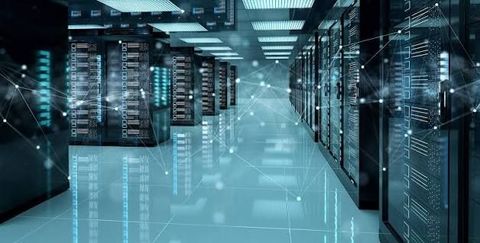
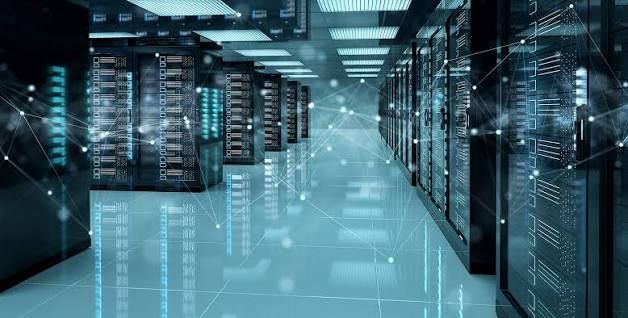
Modern organizations depend on digital infrastructure to operate applications, manage information, communicate with customers, process transactions, and support business operations. Behind these activities are data centers: facilities that house the computing equipment, storage systems, networking hardware, power infrastructure, and environmental controls required to keep digital systems running.
Data center infrastructure includes much more than servers and storage devices. It combines physical facilities, electrical systems, cooling equipment, network connections, cybersecurity controls, monitoring platforms, and operational procedures. These components must work together to support availability, performance, security, and business continuity.
Cloud computing has also changed how organizations plan their infrastructure. Instead of maintaining every system inside their own facilities, businesses can use public cloud platforms, private cloud environments, colocation facilities, or hybrid architectures. Each approach has different implications for control, capacity, security responsibilities, operational complexity, and long-term planning.
Understanding data center infrastructure helps business owners, technology managers, IT professionals, and enterprise decision-makers evaluate how digital systems are hosted, protected, maintained, and expanded.
What Is Data Center Infrastructure?
Data center infrastructure refers to the physical, technical, and operational components used to operate computing environments and deliver digital capabilities.
A typical facility may contain:
Servers: Physical computers that run applications, databases, virtual machines, and other workloads.
Storage systems: Hardware and software used to store business records, application files, backups, and databases.
Networking equipment: Switches, routers, firewalls, load balancers, and other devices that connect systems and manage data traffic.
Power infrastructure: Utility connections, uninterruptible power supplies, generators, distribution units, and backup arrangements.
Cooling systems: Equipment that controls temperature, humidity, and airflow to protect computing hardware.
Security systems: Physical access controls, surveillance, identity management, network protection, and monitoring tools.
Management platforms: Software used to monitor infrastructure performance, capacity, availability, and operational events.
These components form an interconnected environment. A server may be functioning correctly, for example, but an electrical failure, network interruption, or cooling problem can still affect the application running on it.
A successful infrastructure design therefore considers the entire environment rather than treating individual systems as separate assets.
Importance of Data Center Infrastructure
Reliable infrastructure supports business operations across industries, including banking, healthcare, retail, manufacturing, telecommunications, education, and enterprise technology.
Business continuity: Redundant systems and recovery arrangements help organizations maintain important operations when equipment or facilities experience problems.
Application performance: Suitable computing capacity, storage architecture, and network connectivity help applications respond efficiently to user requests.
Data protection: Security controls, backup systems, and recovery procedures help protect business information against unauthorized access, accidental deletion, and system failures.
Scalability: Modular infrastructure and cloud resources can help organizations accommodate changing workloads and business requirements.
Operational visibility: Monitoring platforms provide information about equipment health, resource utilization, security events, and potential capacity constraints.
Infrastructure efficiency: Properly designed power, cooling, and computing systems can reduce unnecessary resource consumption and improve operational performance.
Regulatory readiness: Appropriate security, access, documentation, and data-handling controls can help organizations address applicable regulatory and contractual requirements.
Infrastructure decisions should reflect business priorities. A financial institution processing sensitive transactions may have different availability and security requirements from a small company hosting an informational website.
Core Components of a Data Center
1. Server Infrastructure
Servers provide the computing resources required to run applications, databases, websites, virtual machines, and enterprise workloads.
Common server configurations include:
Rack servers: Individual servers installed in standardized racks.
Blade servers: Compact server modules installed within shared chassis systems.
Tower servers: Standalone systems commonly used in smaller environments.
High-performance computing systems: Specialized computing environments designed for demanding scientific, engineering, and analytical workloads.
GPU-based servers: Systems equipped with graphics processing units for parallel computing, machine learning, and artificial intelligence workloads.
Server selection depends on processing requirements, memory capacity, storage needs, network performance, application compatibility, and energy consumption.
Organizations should also evaluate server utilization. Hardware operating far below its intended capacity may create unnecessary power and cooling requirements, while excessive utilization can reduce performance and leave insufficient capacity for unexpected demand.
2. Data Storage Infrastructure
Storage infrastructure holds the information required by applications and business operations.
Common storage technologies include:
Direct-attached storage (DAS): Storage connected directly to an individual server.
Network-attached storage (NAS): Shared file storage accessed through a network.
Storage area networks (SAN): Dedicated network environments providing block-level storage to connected systems.
Object storage: A system designed to store large amounts of unstructured information using objects and metadata.
Solid-state drives (SSD): Storage devices using flash memory to provide fast data access.
Backup storage: Separate storage environments used to preserve recoverable copies of important information.
Storage architecture should account for performance, capacity, redundancy, data retention, encryption, access controls, and recovery requirements.
Organizations should also distinguish between high-availability storage and independent backups. Replication can improve availability, but it may reproduce accidental deletions or corrupted information. A separate, appropriately protected backup strategy remains important.
3. Network Infrastructure
Network infrastructure connects servers, storage devices, applications, users, and external networks.
Important components include:
Routers that direct traffic between networks.
Switches that connect devices within network environments.
Firewalls that enforce network security policies.
Load balancers that distribute application traffic.
Network interface cards that connect servers to communication networks.
Optical fiber and structured cabling.
Network monitoring and traffic analysis systems.
Network design should consider bandwidth, latency, redundancy, segmentation, routing, and security.
For example, a business application may require fast communication between application servers and databases. Network congestion or a poorly configured connection can create delays even when the servers themselves have sufficient computing capacity.
4. Power and Electrical Systems
Data centers require dependable electrical infrastructure because servers, storage systems, network devices, and cooling equipment operate continuously.
Common electrical components include:
Utility power connections.
Electrical switchgear and distribution panels.
Uninterruptible power supply (UPS) systems.
Backup generators.
Power distribution units (PDUs).
Electrical monitoring systems.
Grounding and protection equipment.
A UPS can provide temporary power during an interruption and support an orderly transition to backup generation or another power source. Generators may support longer interruptions, subject to fuel availability, maintenance, and operating conditions.
Electrical capacity planning should account for current equipment demand, future expansion, redundancy requirements, and the power needed by cooling systems.
5. Cooling and Environmental Management
Computing equipment generates heat during operation. Without suitable environmental controls, excessive temperatures can reduce equipment reliability and create shutdown risks.
Common cooling approaches include:
Computer room air conditioning (CRAC).
Computer room air handling (CRAH).
Hot-aisle and cold-aisle containment.
Chilled-water cooling.
In-row cooling.
Direct-to-chip liquid cooling.
Immersion cooling in specialized environments.
The appropriate method depends on equipment density, facility design, climate, available water resources, operating requirements, and expansion plans.
Airflow management is also important. Poor airflow can create localized hot spots even when the overall room temperature appears acceptable.
For facilities supporting high-density computing and AI workloads, liquid cooling may become an important design consideration because conventional air-based approaches may not be sufficient for every equipment configuration.
Cloud Systems and Data Center Architecture
Cloud computing allows organizations to access computing, storage, networking, and application resources through provider-operated infrastructure or privately managed environments.
The main architectural approaches include public cloud, private cloud, hybrid cloud, and multi-cloud.
Public Cloud
Public cloud environments provide computing resources through platforms operated by external providers.
Organizations can provision virtual machines, databases, storage, networking, and managed application capabilities without operating the underlying data center facilities themselves.
Potential advantages include flexible capacity, geographic availability, managed infrastructure, and usage-based resource allocation.
However, organizations remain responsible for understanding their security configuration, access permissions, data protection requirements, and contractual responsibilities.
Private Cloud
A private cloud environment is dedicated to one organization and may operate within its own facilities or through a third-party hosting arrangement.
It can provide greater control over architecture, access policies, and resource allocation. However, the organization or its infrastructure partner must manage the relevant hardware, software, maintenance, and operational requirements.
Hybrid Cloud
Hybrid cloud combines private infrastructure with public cloud resources.
For example, an organization may retain certain sensitive databases in a controlled environment while using public cloud resources for application development, analytics, or additional computing capacity.
Hybrid architecture can support workload flexibility, but it requires consistent identity management, network connectivity, monitoring, and data governance across environments.
Multi-Cloud
Multi-cloud architecture uses services from multiple cloud providers.
Organizations may adopt this model to address specific technical requirements, geographic needs, provider capabilities, or resilience objectives.
However, operating across several providers can introduce differences in security controls, identity systems, logging, configuration management, and compliance procedures.
NIST's August 2026 draft research on multi-cloud architecture highlights challenges involving identity and access management, telemetry, configuration management, data protection, and centralized security. The document is a draft rather than a finalized mandatory standard.
Data Center Infrastructure Management
Data Center Infrastructure Management (DCIM) refers to the monitoring and management of facility resources and physical infrastructure.
DCIM platforms can help teams understand how power, cooling, space, and IT equipment interact.
Infrastructure Monitoring
Monitoring systems collect information about:
Server temperature and utilization.
Rack-level power consumption.
UPS performance and battery condition.
Cooling equipment operation.
Humidity and environmental conditions.
Network connectivity and device status.
Rack capacity and available space.
Equipment alarms and maintenance events.
Centralized monitoring helps operators identify developing problems and investigate abnormal operating conditions.
Capacity Planning
Capacity planning estimates whether infrastructure can support current and future workloads.
Organizations should assess computing, storage, network, electrical, cooling, and physical-space requirements together.
For example, adding more high-performance servers may increase processing capacity but also create additional electrical and cooling demand. Expansion plans should evaluate these dependencies before equipment is installed.
Asset and Configuration Management
An accurate asset inventory helps teams understand which equipment is installed, where it is located, who is responsible for it, and how it supports business operations.
Records may include equipment identifiers, installation dates, warranties, firmware versions, network connections, maintenance history, and configuration details.
Change management procedures should document material modifications to infrastructure so that teams can investigate problems and maintain consistent operating conditions.
Maintenance and Lifecycle Management
Infrastructure components require inspection, testing, repair, and replacement.
A maintenance program may include:
Server and storage health checks.
Firmware and operating system updates.
UPS battery inspections.
Generator testing.
Cooling system maintenance.
Network device configuration reviews.
Physical security inspections.
Backup restoration tests.
Lifecycle planning helps organizations identify aging equipment, unsupported software, capacity limitations, and components approaching replacement.
Data Center Security and Risk Management
Data center security requires coordinated protection of facilities, networks, applications, equipment, and information.
Physical Security
Physical safeguards help prevent unauthorized access to infrastructure and sensitive equipment.
Common measures include:
Controlled entry points.
Access cards and identity verification.
Visitor registration and escort procedures.
CCTV monitoring.
Restricted server-room access.
Rack and cabinet locks.
Environmental and intrusion alarms.
Documented access reviews.
Physical controls should reflect the sensitivity of the information and the criticality of the equipment.
Network and Cybersecurity
Cybersecurity controls protect systems against unauthorized access, malicious activity, and data compromise.
Useful measures include:
Network segmentation.
Multi-factor authentication.
Role-based access control.
Privileged access management.
Encryption in transit and at rest.
Endpoint protection.
Vulnerability assessment.
Secure configuration management.
Centralized security logging.
Incident detection and response procedures.
Administrative access should be restricted to authorized personnel and reviewed regularly. Unnecessary accounts, excessive permissions, and outdated credentials can increase the risk of compromise.
Backup and Disaster Recovery
Backup and disaster recovery planning helps organizations restore information and critical systems after an incident.
Two useful planning measures are:
Recovery Time Objective (RTO): The target period within which a system or business process should be restored.
Recovery Point Objective (RPO): The maximum targeted period of data loss measured in time.
For example, a database with an RPO of one hour is designed around a recovery point no more than one hour before the disruption, subject to the backup and recovery architecture.
Recovery plans should be tested. A backup that has never been restored may not provide the expected level of protection.
Operational Technology Security
Power, cooling, building management, and environmental monitoring systems may connect to corporate networks or remote management platforms.
These connections can create cybersecurity exposure if they are not appropriately segmented and monitored.
A January 2026 Schneider Electric guidance document discusses cybersecurity considerations for connected data center power and cooling infrastructure, including risks associated with network-connected monitoring and management systems. It emphasizes security across the design, installation, operation, and maintenance lifecycle.
Data Center Infrastructure Comparison
Different hosting models offer different levels of control and operational responsibility.
| Infrastructure model | Main characteristics | Common considerations |
|---|---|---|
| On-premises data center | Organization operates its own facility and equipment | Direct control, capital planning, staffing, maintenance |
| Colocation facility | Organization places its equipment in a third-party facility | Facility power, cooling, physical access, connectivity |
| Public cloud | Provider operates underlying infrastructure | Flexible capacity, configuration responsibility, provider dependency |
| Private cloud | Dedicated cloud environment for one organization | Control, infrastructure management, security governance |
| Hybrid cloud | Combines private infrastructure and public cloud | Integration, data movement, identity and monitoring |
| Multi-cloud | Uses multiple cloud providers | Provider diversity, complexity, consistent governance |
No single model suits every organization. Selection should reflect application requirements, security needs, data location, availability objectives, internal expertise, and the total operating model.
Data Center Performance and Efficiency Metrics
Performance metrics help organizations evaluate infrastructure reliability and resource utilization.
Power Usage Effectiveness (PUE): Compares total facility energy consumption with the energy used by IT equipment. A lower PUE indicates that a smaller proportion of total energy is used by supporting infrastructure, although PUE alone does not measure the full environmental impact.
IT equipment utilization: Measures how effectively computing resources are being used.
Availability: Tracks the proportion of time systems or facilities remain operational according to defined measurement criteria.
Mean Time to Repair (MTTR): Measures the average time required to restore a failed component or system.
Mean Time Between Failures (MTBF): Estimates the average operating time between failures for a repairable component or system, subject to the measurement method.
Cooling efficiency: Evaluates the energy and performance characteristics of cooling infrastructure.
Storage utilization: Tracks used and available storage capacity.
Network performance: Measures latency, throughput, packet loss, and connection reliability.
Metrics should be interpreted together. A facility can have an efficient PUE while still experiencing poor application performance, inadequate resilience, or security weaknesses.
Recent Developments in Data Center Infrastructure
Data center infrastructure is evolving as organizations expand cloud adoption, AI workloads, and high-performance computing.
1. Increasing Electricity Demand
The U.S. Energy Information Administration published an updated Annual Energy Outlook 2026 analysis on May 19, 2026, projecting substantial growth in electricity used by data center servers.
Its scenarios estimate that server electricity consumption could reach between 446 billion and 818 billion kilowatt-hours by 2050. These are projections rather than guaranteed outcomes, and the range reflects different assumptions about future demand and infrastructure growth.
The analysis reinforces the importance of electrical capacity planning, cooling efficiency, energy sourcing, and coordination with local power infrastructure.
2. Greater Attention to AI Data Center Security
On July 27, 2026, NIST published the initial public draft of Special Publication 800-239, AI Data Center Security Analysis: A High-Performance Computing (HPC) Driven Approach.
The draft examines security threats associated with AI infrastructure, including hardware, software stacks, computing workflows, and data storage. It is particularly relevant to organizations operating specialized environments for AI training and inference.
Because this is a draft publication, organizations should treat it as emerging guidance rather than a finalized mandatory requirement.
3. Energy and Water Efficiency Frameworks
The PNNL, ASHRAE, and NEMA AI Data Center Energy Performance Framework addresses planning, design, commissioning, operation, energy efficiency, water efficiency, grid interaction, and modernization.
The framework is intended to support better infrastructure planning and performance. It does not replace applicable building codes, electrical requirements, or other mandatory standards.
4. Cybersecurity for Connected Facility Systems
Connected power, cooling, and environmental monitoring equipment creates additional network dependencies. Organizations are increasingly required to consider these systems as part of the wider cybersecurity environment rather than treating them only as physical infrastructure.
U.S. Laws, Standards, and Regulatory Considerations
Data center obligations depend on the facility, the information processed, the organization operating it, and the industries it supports. Several U.S. frameworks may be relevant.
Federal Information Security Modernization Act (FISMA): Establishes information security requirements for federal agencies and relevant systems. Contractors and other organizations may have related obligations when handling federal information or operating covered systems under applicable agreements.
NIST Cybersecurity Framework: Provides a voluntary framework for identifying, protecting against, detecting, responding to, and recovering from cybersecurity risks. It can help organizations structure enterprise security governance.
NIST Special Publication 800-53: Provides a catalog of security and privacy controls used in various information system environments. Applicability depends on the system and governing requirements.
HIPAA Security Rule: May apply to covered entities and business associates handling electronic protected health information. Relevant safeguards include administrative, physical, and technical protections.
Gramm-Leach-Bliley Act (GLBA): Certain financial institutions subject to the Act must maintain safeguards for covered customer information. Data center arrangements may form part of the institution's broader security program and third-party oversight.
State privacy and data security laws: State-level requirements may affect personal information, breach notification, data handling, and contractual arrangements. Organizations should assess the laws applicable to their operations and the people whose information they process.
Building, fire, electrical, and environmental codes: Data center facilities must comply with applicable local and state requirements, which may address electrical systems, emergency power, fire protection, water use, construction, and environmental controls.
Organizations should verify the current requirements applicable to their specific facility and business activities. A technical framework is not automatically a legal requirement simply because it is widely used.
Data Center Implementation and Management Checklist
Organizations planning a new facility or improving an existing environment can use the following steps:
Define business requirements: Identify applications, workloads, availability needs, security expectations, and growth forecasts.
Choose an infrastructure model: Compare on-premises, colocation, public cloud, private cloud, hybrid, and multi-cloud arrangements.
Assess facility requirements: Evaluate site suitability, power availability, cooling, connectivity, physical security, and expansion capacity.
Design network architecture: Plan segmentation, redundancy, bandwidth, routing, and secure external connectivity.
Select computing and storage systems: Match hardware and architecture to application performance, data retention, and recovery requirements.
Establish security controls: Implement identity management, access reviews, encryption, monitoring, and incident response.
Plan backup and recovery: Define RTO and RPO targets and test restoration procedures.
Implement infrastructure monitoring: Track equipment health, power, cooling, capacity, and network performance.
Document operational procedures: Maintain asset records, maintenance schedules, change approvals, and escalation contacts.
Review performance regularly: Assess availability, energy use, security events, capacity, and recovery readiness.
A phased approach can help organizations improve infrastructure without introducing unnecessary operational complexity.
Tools and Resources
Organizations can consult several resources when planning and managing data center infrastructure:
NIST Cybersecurity Framework: A reference for organizing cybersecurity risk management and governance.
NIST Computer Security Resource Center: Publications and guidance covering cloud, infrastructure, security controls, and emerging technology risks.
U.S. Department of Energy Federal Energy Management Program: Guidance and resources for energy-efficient data center design and operation.
ASHRAE: Technical resources covering data center thermal management, cooling, and facility design.
ENERGY STAR: Resources for energy performance and efficiency assessment.
Uptime Institute: Data center infrastructure, availability, resilience, and operational resources.
Cloud provider architecture documentation: Technical guidance on cloud networking, identity, storage, resilience, and security configuration.
DCIM platforms: Tools for monitoring facility capacity, power, cooling, and equipment.
Infrastructure monitoring platforms: Tools for tracking server health, application performance, storage, and network conditions.
Organizations should evaluate tools according to technical compatibility, security requirements, integration needs, licensing arrangements, and operational expertise.
Frequently Asked Questions
1. What are the main components of data center infrastructure?
The main components include servers, storage systems, networking equipment, electrical infrastructure, cooling systems, physical security, cybersecurity controls, and infrastructure management platforms. All must operate together to support reliable digital services.
2. What is the difference between cloud computing and a data center?
A data center is a physical facility containing computing and supporting infrastructure. Cloud computing is a model for accessing computing, storage, networking, and application resources. Cloud platforms operate through data centers, but customers generally access resources without directly managing the underlying facility.
3. What is Data Center Infrastructure Management (DCIM)?
DCIM refers to platforms and procedures used to monitor and manage data center resources such as power, cooling, space, equipment, and capacity. It helps teams understand infrastructure conditions and identify operational issues.
4. How do data centers protect business information?
Protection typically involves physical access controls, network segmentation, identity management, encryption, monitoring, vulnerability management, backups, and tested recovery procedures. The appropriate combination depends on the information, infrastructure, and applicable requirements.
5. Why are power and cooling important in data center management?
Computing equipment requires continuous electricity and generates heat during operation. Reliable power systems help maintain availability, while cooling equipment keeps hardware within suitable operating conditions. Both areas require monitoring, maintenance, and capacity planning.
Conclusion
Data center infrastructure provides the foundation for modern digital operations. Servers, storage, networking, power, cooling, cloud platforms, and security controls must be designed and managed as an integrated environment.
As cloud computing and AI workloads expand, organizations face growing requirements for computing capacity, electrical infrastructure, cooling efficiency, cybersecurity, and operational resilience. Effective management involves more than selecting hardware or a cloud provider. It requires clear business requirements, careful architecture, reliable monitoring, tested recovery arrangements, and ongoing governance.
Organizations that regularly review infrastructure performance, security, capacity, and efficiency are better positioned to support changing workloads while maintaining dependable digital operations.