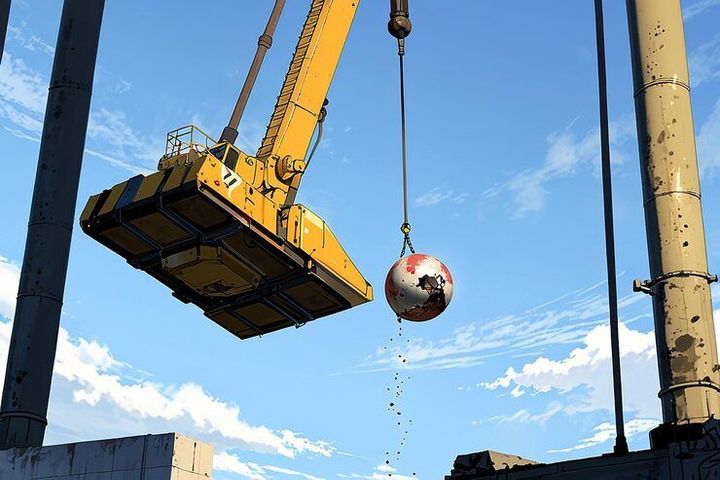
The importance of understanding crane parts has increased as lifting operations become more complex and project timelines become tighter. Proper knowledge of components helps improve efficiency, reduce downtime, and support safer operations.
Recent trends include automation, smart monitoring systems, and predictive maintenance tools. These innovations help operators track equipment health and improve performance. Understanding crane parts and their functions is essential for better lifting efficiency and long-term reliability.
Who It Affects and What Problems It Solves
Crane part knowledge is relevant for crane operators, site managers, engineers, logistics professionals, and maintenance technicians.
Problems It Helps Solve
-
Reduced lifting efficiency
-
Equipment breakdowns
-
Unsafe load handling
-
Higher maintenance costs
-
Delays due to downtime
-
Difficulty identifying faulty parts
Recent Updates and Trends
In the past year, crane systems have advanced with smart monitoring technologies and automation. IoT sensors now monitor load weight, wind conditions, and equipment wear in real time.
Predictive maintenance systems use analytics to detect component issues early. This reduces unexpected failures and improves uptime.
Electric and hybrid cranes are gaining popularity for better energy efficiency and lower emissions.
Remote-control and semi-autonomous crane systems are improving precision and reducing operator risk.
Digital inspection systems and stricter safety standards are also shaping crane maintenance practices.
Main Crane Parts and Their Functions
| Part | Description | Function | Outcome |
|---|
| Boom | Main lifting arm | Reach and lift | Efficiency |
| Hook | Load attachment point | Secure lifting | Safety |
| Hoist | Lifting mechanism | Raise/lower load | Control |
| Counterweight | Balancing mass | Stability | Safe operation |
| Wire Rope | Heavy-duty cable | Supports load | Strength |
| Cab | Operator control area | Precision control | Productivity |
| Jib | Extension arm | Extra reach | Flexibility |
These components are critical for crane performance.
Structural Components for Stability
| Component | Description | Purpose | Result |
|---|
| Outriggers | Extendable supports | Prevent tipping | Stability |
| Mast/Tower | Vertical support | Height | Reach |
| Turntable | Rotating base | Rotation | Flexibility |
| Base Frame | Main support structure | Load support | Balance |
These parts provide structural support.
Mechanical and Hydraulic Systems
| Component | Description | Application | Benefit |
|---|
| Hydraulic Cylinders | Use fluid pressure | Lift and movement | Power |
| Gearbox | Adjust speed and torque | Motion control | Efficiency |
| Brake System | Controls stopping | Safety | Stability |
| Engine/Motor | Power source | Crane operation | Performance |
These systems drive crane movement.
Safety and Monitoring Components
| Component | Description | Purpose | Outcome |
|---|
| Load Indicator | Shows load weight | Prevent overload | Safety |
| Wind Sensor | Measures wind conditions | Safe operation | Risk reduction |
| Limit Switch | Restricts movement beyond limits | Protect equipment | Safety |
| Alarm System | Alerts operators | Awareness | Prevention |
These tools improve operational safety.
Maintenance and Best Practices
| Practice | Description | Importance | Result |
|---|
| Routine Inspection | Identify wear and damage | Prevent failures | Reliability |
| Lubrication | Reduce friction | Smooth movement | Longevity |
| Load Testing | Confirm lifting capacity | Compliance | Safety |
| Operator Training | Improve handling | Reduce errors | Efficiency |
These practices improve performance.
Performance Factors and Optimization
| Factor | Description | Importance | Result |
|---|
| Load Capacity | Maximum weight handled | Project suitability | Safety |
| Reach | Distance crane can extend | Efficiency | Better coverage |
| Stability | Balance during lifting | Prevent accidents | Safe lifting |
| Maintenance Quality | Condition of parts | Reliability | Productivity |
| Energy Efficiency | Power use | Cost savings | Sustainability |
Optimizing these factors enhances lifting efficiency.
Applications Across Industries
Crane systems are used across industries for lifting and material handling.
Construction projects use cranes for heavy materials and structural work. Ports and shipping yards use cranes for containers and cargo.
Factories and warehouses use overhead cranes for moving materials. Energy and infrastructure projects rely on cranes for large installations.
These applications highlight the importance of efficient crane systems.
Laws and Policies Related to Crane Operations
Crane operations are governed by industrial safety and equipment regulations.
In India, crane standards are influenced by the Bureau of Indian Standards and occupational safety laws.
Practical Guidance Table
| Situation | Recommended Approach | Practical Benefit |
|---|
| Heavy Lifting | Use high-capacity cranes | Efficiency |
| Frequent Maintenance | Implement predictive systems | Reliability |
| Safety Concerns | Monitor load and weather | Risk reduction |
| Tight Deadlines | Optimize crane performance | Faster completion |
Tools and Resources for Crane Management
Various tools and systems support crane operations and maintenance.
Common Tools and Resources
-
Monitoring software
-
Diagnostic systems
-
Maintenance checklists
-
Safety inspection tools
-
Training platforms
Tools Comparison Table
| Tool Type | Functionality | Best Use Case |
|---|
| Monitoring Systems | Track performance | Optimization |
| Diagnostics Tools | Detect faults | Maintenance |
| Inspection Tools | Ensure safety | Compliance |
| Training Tools | Improve skills | Workforce development |
| Checklists | Standardize maintenance | Consistency |
Frequently Asked Questions
What is the most important crane part?
The boom and hoist are among the most critical lifting components.
How do outriggers improve efficiency?
They improve stability and allow safer lifting.
Why is maintenance important?
It reduces downtime and improves performance.
What does a load indicator do?
It helps prevent overloading.
Where are cranes commonly used?
Construction, shipping, warehouses, and infrastructure projects.
Conclusion
Understanding crane parts is essential for improving lifting efficiency and overall equipment performance. By maintaining structural, mechanical, and safety components, businesses can improve reliability and reduce risks.
Recent advancements in automation, monitoring, and predictive maintenance have improved crane operations significantly. These developments support safer and more efficient lifting.
A data-driven approach indicates that proper maintenance, operator training, and performance optimization are key to successful crane management. By applying these strategies, organizations can improve safety, productivity, and long-term equipment performance.