BYD Denza India Launch: A Complete Guide to the Brand and Its Models
Denza is a premium automotive brand within the BYD Group. It began in 2010 as a partnership between BYD and Daimler, now Mercedes-Benz Group. BYD subsequently became its sole owner. The Mercedes-Benz connection explains its origins, but Denza is currently a BYD-owned brand.
The brand combines electrified powertrains with an emphasis on cabin comfort, vehicle technology and design. Its international portfolio includes battery-electric vehicles and plug-in hybrids, with availability varying between countries.
The BYD Denza India launch is an upcoming development. As of 26 October 2026, automotive reporting identifies 13 November 2026 as the scheduled India debut. The D9 MPV and Z9 GT are expected to lead the introduction. Final local specifications require India-specific documentation.
An unveiling, a model introduction and the start of deliveries are separate milestones. A debut date alone does not establish when every variant will reach customers.
Understanding the main models
The following overview separates international product information from expectations for India.
| Model | Vehicle format | Main focus | India position as of 26 October 2026 |
|---|---|---|---|
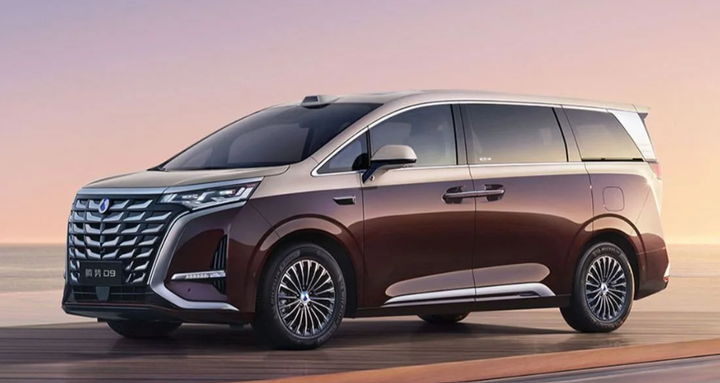
| Denza D9 | Large, three-row MPV | Passenger space and rear-seat comfort | Expected among the initial models |
| Denza Z9 GT | Shooting brake, combining a low roof with an extended rear body | Performance and luggage flexibility | Expected among the initial models |
| Denza B5 | SUV in selected international markets | Off-road capability and versatility | Not established as an initial India model |
BYD has presented the D9, Z9 GT and B5 internationally. Their presence overseas does not establish that all three will be introduced in India.
Importance: Why Denza’s India Entry Matters
Denza’s arrival would broaden India’s premium electric vehicle landscape. It would also introduce another way to assess luxury mobility: through seating flexibility, charging compatibility, software and battery technology alongside traditional measures of refinement.
For families travelling with several adults, an electric MPV raises practical questions about third-row access, luggage space and cabin cooling. For people interested in a performance-oriented EV, energy consumption, tyre requirements and charging stops become equally relevant.
The broader significance extends to apartment communities, charging operators and vehicle insurers. Larger battery-electric vehicles require suitable parking arrangements, dependable electrical connections and clear information about battery protection.
Different vehicles address different needs
The D9’s MPV layout emphasises passenger accommodation. The Z9 GT combines a lower body with a practical rear compartment. Neither format is automatically better; suitability depends on passenger numbers, parking dimensions and daily routes.
These vehicles cannot resolve infrastructure gaps by themselves. A large battery does not replace reliable charging access, and advanced parking functions do not remove the need to check clearances.
What matters beyond headline specifications
A useful assessment should include:
- Battery warranty: Duration, distance limits, exclusions and any stated capacity-retention threshold.
- Home charging: Parking access, electrical load and installation requirements.
- Electric vehicle insurance: Battery-related terms, exclusions, deductibles and approved repair procedures.
- Connected features: Phone compatibility, navigation, software updates and data permissions.
- Practical dimensions: Turning space, basement access and luggage capacity with all seats occupied.
These details help explain ownership more clearly than acceleration figures alone.
Recent Updates: Developments During the Past Year
April 2026: Global expansion
On 8 April 2026, BYD announced Denza’s worldwide brand presentation in Paris. The announcement identified the Z9GT and D9 DM-i as key international models. It also described a wider rollout of the group’s FLASH Charging technology.
The D9 DM-i is a plug-in hybrid. It combines an externally rechargeable battery with a petrol engine. That distinction matters because international coverage of a D9 hybrid should not be treated as a specification sheet for an India-bound D9 electric variant.
October 2026: India entry becomes clearer
On 2 October 2026, automotive reporting highlighted Denza’s announcement of its India entry through a social media post. The D9 and Z9 GT were identified as the expected initial pair.
By 24 October 2026, reporting identified a scheduled India debut on 13 November 2026. Readers should distinguish that date from the eventual delivery schedule and final variant announcements.
Battery range and charging information
Selected international specifications provide context, rather than guaranteed India figures.
| Specification | D9 electric version in Hong Kong | Z9GT electric version in European documentation |
|---|---|---|
| Vehicle category | Seven-seat MPV | Shooting brake |
| Published driving range | Up to 520 km, WLTP | 600 km, WLTP |
| Battery information | BYD Blade Battery | Approximately 122.49 kWh |
| Key qualification | Market and variant specific | Market and variant specific |
The D9 figure relates to the Hong Kong market. The Z9GT figures appear in the manufacturer’s European product documentation. India specifications may differ.
WLTP is a standardised vehicle test procedure. Its range figures support comparisons under defined conditions; they are not guaranteed distances for every journey. Speed, temperature, gradients, payload and air-conditioning use affect actual results.
Charging claims also need context. BYD’s April announcement described up to 1,500 kW FLASH Charging and a 10–97% charging interval of nine minutes under the stated technology framework. These figures should not be interpreted as routine results at Indian public chargers.
The vehicle, charger and electrical connection must all support the required power. Peak charging power is also different from the average power maintained throughout a session.
Laws and Policies: What Applies in India?
Vehicle approval and battery safety
Electric passenger vehicles must meet applicable Indian regulatory requirements. Rule 126 of the Central Motor Vehicles Rules requires manufacturers or importers to submit vehicle prototypes to a notified testing agency for type approval.
For electric powertrains and rechargeable energy storage systems, AIS-038 Revision 2, together with applicable amendments, is an important safety framework. Its requirements cover the relevant vehicle and battery systems.
International specifications and overseas approvals do not, by themselves, establish completion of Indian regulatory requirements for a particular variant.
GST and state-level treatment
Government information identifies 5% GST for electric vehicles. State road-tax treatment is a separate matter, and readers should consult the current transport department notification for the state where the vehicle will be registered.
Battery-electric vehicles and plug-in hybrids should not be assumed to receive identical tax treatment. Their powertrain classifications differ.
Imports and domestic manufacturing
India’s Scheme to Promote Manufacturing of Electric Passenger Cars in India links specified customs concessions to approval and manufacturing commitments.
Government guidelines describe requirements including a minimum investment of ₹4,150 crore and domestic value-addition milestones. The scheme is conditional; an overseas brand’s India announcement does not automatically establish eligibility.
This distinction is relevant when reading claims about local assembly, import arrangements or future manufacturing. Each requires its own supporting announcement.
Charging infrastructure rules
The Ministry of Power’s 2024 charging guidelines address installation and operation of EV charging infrastructure. Practical planning should also consider electrical safety, local connection requirements and permissions associated with the parking location.
For apartment residents, confirming a permitted installation route is a useful early step. A suitable charger still needs an appropriate electrical supply and safe cable routing.
Tools and Resources: Where to Find Reliable Information
A small set of authoritative resources can make research easier.
| Resource | How it helps |
|---|---|
| Denza and BYD official websites | Brand announcements and market-specific product information |
| Bureau of Energy Efficiency’s EV Yatra | Public charging-station information and route preparation |
| Ministry of Heavy Industries and PIB | Government schemes, eligibility conditions and policy explanations |
| MoRTH and ARAI | Vehicle regulations and technical standards |
| State transport department | Current registration and road-tax information |
| Insurer policy documents | Electric vehicle insurance terms and exclusions |
The Bureau of Energy Efficiency publishes EV Yatra as a charging-information app. Confirm station details with the relevant network before depending on a particular location for a long journey.
A simple charging-time calculator
For an initial estimate:
Charging time in hours ≈ energy added in kWh ÷ average charging power in kW.
For example, adding 40 kWh at an average 80 kW produces a basic estimate of 30 minutes. Actual time can increase because of charging losses, temperature management and power tapering.
Use average power rather than the charger’s advertised maximum. A charger’s rating does not guarantee that the vehicle will continuously accept that amount.
A useful comparison template
Record each model’s exact variant, battery capacity, range test cycle, AC charging limit, DC charging information, warranty terms and dimensions. Add the publication date and source beside each entry.
This prevents specifications from different countries or model years being combined into a misleading comparison.
FAQs
When is Denza expected to debut in India?
Reporting published in October 2026 identifies 13 November 2026 as the scheduled debut. That date should be distinguished from final delivery timelines and the availability of individual variants.
Is Denza owned by Mercedes-Benz?
Denza began as a partnership involving BYD and Daimler. BYD now wholly owns the brand. Its historical Mercedes-Benz connection does not mean Mercedes-Benz currently owns Denza.
Which Denza models are expected in India first?
The D9 MPV and Z9 GT shooting brake are the expected initial models in current reporting. Their final India equipment, variants and documentation should be checked when released.
Are all Denza vehicles fully electric?
No. Denza’s international portfolio includes battery-electric and plug-in hybrid powertrains. A model name alone may not identify its powertrain, so check the specific variant and market.
Will Denza’s fastest charging figures apply everywhere in India?
No. Charging performance depends on compatible vehicle hardware, charging equipment, available electrical power, battery temperature and charge level. International peak figures should not be treated as guaranteed results across India’s charging network.
Conclusion
The BYD Denza India launch brings attention to two distinct vehicle formats: a passenger-focused MPV and a performance-oriented shooting brake. Understanding that difference is more useful than treating the entire brand as one product.
For an informed overview, keep international specifications separate from India documentation. Check battery warranty terms, charging compatibility, electric vehicle insurance and practical dimensions alongside range figures. As the debut approaches, dated manufacturer announcements will provide the clearest basis for updating model comparisons