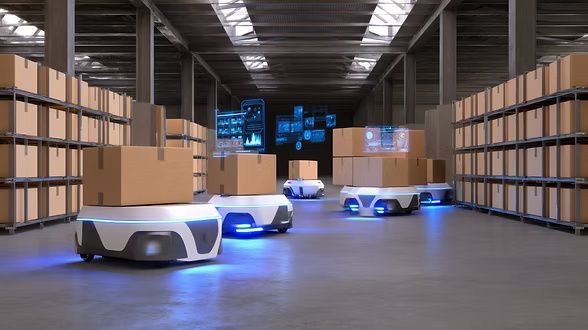
Autonomous Mobile Robots: Complete Guide to Technology, Applications, and Benefits
Autonomous Mobile Robots (AMRs) are transforming the way industries move materials, manage workflows, and improve operational efficiency.
Unlike traditional automated machines that follow fixed paths, AMRs can navigate independently using sensors, cameras, and intelligent navigation systems.
As warehouses, manufacturing facilities, healthcare centers, and logistics operations become more advanced, autonomous mobile robots are playing an increasingly important role. They help improve productivity, enhance workplace safety, and support digital transformation initiatives.
From transporting products across warehouses to delivering supplies within hospitals, AMR technology continues to expand across multiple industries. Understanding how these robots work and where they are used can provide valuable insights into the future of industrial automation and smart factory environments.
Understanding the Concept
An Autonomous Mobile Robot is a robotic system capable of moving through an environment without direct human control. Instead of relying on tracks, wires, or fixed routes, AMRs use sensors and intelligent navigation technology to understand their surroundings and make movement decisions.
These robots can identify obstacles, select efficient routes, and adapt to changing conditions in real time. This flexibility makes them suitable for dynamic environments where people, equipment, and inventory are constantly moving.
AMRs are often considered a major part of industrial automation because they help automate repetitive transportation and material handling tasks. They can move products, tools, equipment, and inventory while reducing manual movement throughout a facility.
The combination of robotics, artificial intelligence, machine vision, and smart navigation systems allows AMRs to perform complex tasks with minimal supervision.
Key Types or Categories
Autonomous mobile robots are available in several categories designed for different operational requirements.
Warehouse AMRs
Warehouse robots are designed to transport inventory between storage locations, packing stations, and shipping areas.
Common tasks include:
- Inventory movement
- Order fulfillment
- Material transportation
- Pallet handling
- Storage optimization
These robots are frequently used in modern logistics automation environments.
Manufacturing AMRs
Manufacturing facilities use AMRs to move components and raw materials between production areas.
Applications include:
- Production line support
- Component delivery
- Tool transportation
- Assembly line assistance
These systems help create more efficient smart factory operations.
Healthcare AMRs
Healthcare facilities utilize autonomous mobile robots to transport medical supplies and equipment.
Examples include:
- Medication delivery
- Laboratory sample transportation
- Supply distribution
- Equipment movement
This helps staff focus on patient-related activities.
Inspection and Security AMRs
Some robots are designed for monitoring and inspection activities.
Their responsibilities may include:
- Facility inspections
- Equipment monitoring
- Environmental analysis
- Security patrols
These robots can operate continuously while collecting valuable operational data.
Important Subsections
Navigation Technology
Navigation is one of the most important features of autonomous mobile robots.
AMRs commonly use:
- Cameras
- Laser scanners
- Sensors
- Mapping systems
- Artificial intelligence algorithms
These technologies help robots understand their surroundings and make navigation decisions.
Machine Vision Systems
Machine vision allows robots to interpret visual information.
The system can identify:
- Obstacles
- Floor markings
- Equipment
- Storage locations
- Human workers
This visual awareness improves operational safety and efficiency.
Fleet Management
Large facilities often operate multiple robots simultaneously.
Fleet management systems help:
- Coordinate robot movement
- Prevent traffic congestion
- Optimize travel routes
- Balance workloads
This improves overall operational performance.
Human-Robot Collaboration
Modern AMRs are designed to work safely alongside people.
Advanced sensors continuously monitor nearby activity and adjust movement when necessary. This allows collaborative robotics environments where humans and robots work together efficiently.
How It Works
Autonomous mobile robots follow a structured process to complete tasks.
Step 1: Environment Mapping
The robot first creates a digital map of its surroundings.
Using sensors and cameras, it identifies:
- Walls
- Pathways
- Equipment
- Storage areas
- Operational zones
This map becomes the foundation for navigation.
Step 2: Task Assignment
The robot receives a transportation or operational request.
Examples include:
- Move inventory to shipping
- Deliver components to production
- Transport equipment between departments
- Collect materials from storage
The robot then begins planning its route.
Step 3: Route Calculation
Using intelligent navigation systems, the robot calculates the most efficient path.
Factors considered include:
- Distance
- Traffic conditions
- Obstacles
- Priority levels
- Available pathways
This process happens automatically.
Step 4: Autonomous Navigation
The robot moves through the environment while continuously monitoring its surroundings.
If it detects:
- People
- Equipment
- Temporary obstacles
It can adjust its route instantly without requiring manual intervention.
Step 5: Task Completion
Upon reaching its destination, the robot completes the assigned activity and becomes available for additional tasks.
The entire process occurs with minimal human involvement.
Benefits and Advantages
Autonomous mobile robots provide numerous advantages across industrial and commercial environments.
Improved Operational Efficiency
AMRs reduce the time required for repetitive transportation activities.
Employees can focus on higher-value responsibilities while robots handle routine movement tasks.
Enhanced Productivity
Continuous operation allows facilities to move materials more efficiently throughout the day.
This helps improve workflow consistency and operational performance.
Increased Workplace Safety
Advanced obstacle detection systems help reduce collisions and navigation risks.
Robots can identify people and objects in real time, creating safer working environments.
Greater Flexibility
Unlike fixed automation systems, AMRs can adapt to changing layouts and operational requirements.
Facilities can modify workflows without major infrastructure changes.
Better Resource Utilization
Autonomous mobile robots help organizations optimize equipment, inventory movement, and production support activities.
This often results in smoother operational processes.
Support for Digital Transformation
AMRs play a significant role in Industry 4.0 initiatives.
They contribute to:
- Smart manufacturing
- Warehouse automation
- Industrial robotics
- Data-driven operations
- Connected facilities
These capabilities support modern business transformation strategies.
Real-World Examples or Applications
Autonomous mobile robots are widely used across many industries.
E-Commerce Warehouses
Large distribution centers use AMRs to transport products between storage areas and packing stations.
This improves order processing speed and inventory management efficiency.
Automotive Manufacturing
Vehicle manufacturers use robotic automation systems to move parts between production areas.
Components arrive exactly where they are needed, helping maintain production flow.
Healthcare Facilities
Hospitals utilize mobile robots to transport supplies and equipment between departments.
This improves operational efficiency while reducing manual transportation requirements.
Electronics Production
Electronics manufacturers use AMRs to deliver components to assembly lines.
The robots help maintain consistent production schedules and reduce delays.
Distribution Centers
Logistics operations use AMRs for:
- Inventory transportation
- Pallet movement
- Sorting support
- Material handling
These applications contribute to more efficient supply chain management.
Important Factors to Understand
Several considerations influence the successful implementation of autonomous mobile robots.
Facility Layout
The physical environment affects robot performance.
Organizations should evaluate:
- Pathway width
- Storage locations
- Traffic patterns
- Operational workflows
Proper planning improves navigation efficiency.
Integration Requirements
AMRs often work alongside existing automation systems.
Successful implementation requires coordination between robotics technology and operational processes.
Safety Standards
Safety remains a critical consideration.
Organizations should ensure that robots operate according to established industrial safety guidelines and procedures.
Scalability
Facilities should consider future growth when evaluating robotic automation strategies.
Scalable systems can support increasing operational demands without significant disruptions.
Employee Training
Workers should understand how robots operate within the facility.
Training helps improve collaboration between employees and robotic systems.
Future Trends and Industry Insights
The future of autonomous mobile robots is closely connected to advances in artificial intelligence, machine learning, and industrial automation.
Smarter Artificial Intelligence
Future robots will become increasingly capable of analyzing environments and making complex decisions independently.
Improved learning capabilities may enhance navigation and operational efficiency.
Advanced Sensor Technology
New sensors will provide greater environmental awareness and accuracy.
This may improve obstacle detection, mapping precision, and safety performance.
Expanded Warehouse Automation
Warehouse automation continues growing rapidly across global supply chains.
AMRs are expected to become standard components of modern distribution facilities.
Greater Human-Robot Collaboration
Collaborative robotics will continue evolving.
Future systems may support closer interaction between people and robots while maintaining high safety standards.
Smart Factory Expansion
Industry 4.0 initiatives are driving demand for connected automation technologies.
Autonomous mobile robots are expected to become central elements of smart factory ecosystems where machines, equipment, and production systems communicate seamlessly.
Conclusion
Autonomous mobile robots represent a major advancement in industrial automation, logistics automation, and smart manufacturing. Their ability to navigate independently, adapt to changing environments, and support material handling tasks makes them valuable across numerous industries.
From warehouses and manufacturing plants to healthcare facilities and distribution centers, AMRs help improve productivity, operational efficiency, and workplace safety. Their flexible design allows organizations to modernize workflows without relying on fixed transportation systems.
As artificial intelligence, machine vision, and robotic automation technologies continue advancing, autonomous mobile robots will likely become even more capable and widely adopted. Understanding their technology, applications, and benefits provides a strong foundation for exploring the future of intelligent automation.