Table of Contents

AAC Block Production Machines: Equipment Types, Manufacturing Process, and Industry Applications

AAC Block Production Machines: Equipment Types, Manufacturing Process, and Industry Applications

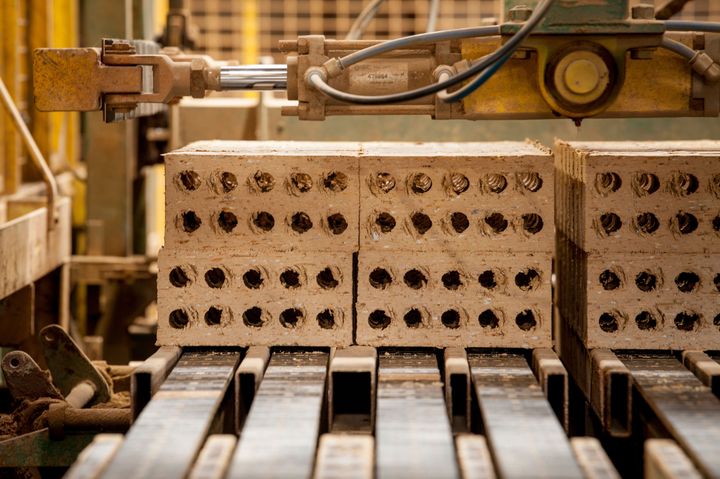
Autoclaved Aerated Concrete (AAC) blocks have become an important building material in modern construction due to their lightweight structure, thermal insulation properties, and construction efficiency. Behind the production of AAC blocks lies a sophisticated manufacturing process supported by specialized machinery, automation technologies, and quality control systems.


AAC block production plants utilize integrated equipment for raw material preparation, mixing, molding, cutting, curing, and packaging. Modern manufacturing facilities increasingly incorporate automation, digital monitoring, and smart factory technologies to improve productivity and consistency.

This guide explores AAC block production machines, manufacturing processes, equipment categories, automation systems, and industry applications from an educational perspective. It does not provide engineering, construction, investment, operational, legal, financial, or professional advice.

Understanding AAC Block Manufacturing

AAC blocks are produced through a controlled process that creates a lightweight cellular concrete material containing millions of microscopic air pockets.

The manufacturing process generally includes:

  • Raw material preparation
  • Mixing and batching
  • Aeration
  • Molding
  • Cutting
  • Autoclave curing
  • Quality inspection
  • Packaging

Each stage relies on specialized equipment designed for precision and efficiency.

Overview of an AAC Block Production Plant

A modern AAC production facility typically consists of several integrated systems working together.

Major production areas may include:

  • Raw material storage
  • Batching and mixing
  • Casting and molding
  • Cutting operations
  • Autoclave curing
  • Packaging and logistics
  • Quality control laboratories

Plant configurations vary depending on production capacity and operational objectives.

Raw Material Preparation Equipment

The production process begins with handling and preparing raw materials.

Common materials may include:

  • Cement
  • Lime
  • Sand
  • Fly ash
  • Water
  • Aluminum powder

Equipment used may include:

  • Storage silos
  • Conveying systems
  • Material feeders
  • Crushing equipment
  • Grinding systems

Proper material preparation supports production consistency.

Material Batching Systems

Batching systems are responsible for measuring ingredients according to production requirements.

Functions may include:

  • Automated weighing
  • Ingredient dosing
  • Process monitoring
  • Formula control

Modern batching technologies often utilize computerized control systems.

AAC Mixing Machines

Mixing equipment combines raw materials into a homogeneous slurry before aeration.

Common features may include:

  • High-capacity mixers
  • Automated controls
  • Variable-speed operation
  • Digital monitoring systems

Mixing accuracy is important for achieving consistent product quality.

Aeration Technology

AAC production relies on a chemical reaction that creates air pockets within the material.

Aeration systems help facilitate:

  • Uniform expansion
  • Controlled pore formation
  • Material consistency
  • Density management

The resulting cellular structure contributes to the lightweight characteristics of AAC blocks.

Casting and Molding Equipment

After mixing, the slurry is transferred into molds.

Molding systems may include:

  • Casting stations
  • Mold preparation equipment
  • Automated pouring systems
  • Mold handling mechanisms

During this stage, the material expands and begins initial hardening.

AAC Cutting Machines

Once partially hardened, the material is cut into desired block dimensions.

Cutting systems are among the most important components of AAC production facilities.

Functions may include:

  • Horizontal cutting
  • Vertical cutting
  • Precision shaping
  • Size customization

Advanced cutting equipment helps achieve dimensional accuracy and product consistency.

Wire Cutting Technology

Many AAC plants utilize wire-cutting systems.

Potential advantages may include:

  • Precise dimensions
  • Smooth surfaces
  • Reduced material waste
  • Efficient production speeds

Wire-cutting technologies vary according to plant design and production requirements.

Autoclave Systems

Autoclaves are one of the defining pieces of equipment in AAC manufacturing.

These specialized pressure vessels use high-temperature steam curing to strengthen the material.

Functions may include:

  • Controlled curing
  • Structural development
  • Material stabilization
  • Performance enhancement

Autoclaving plays a critical role in the production process.

Material Handling Equipment

AAC manufacturing plants require extensive material transportation systems.

Common equipment may include:

  • Conveyors
  • Transfer carts
  • Lifting systems
  • Automated handling equipment
  • Pallet transportation systems

Efficient material flow contributes to plant productivity.

Packaging Machines

After curing and inspection, blocks are prepared for storage and transportation.

Packaging equipment may include:

  • Palletizing systems
  • Wrapping machines
  • Strapping equipment
  • Labeling systems

Packaging methods vary according to logistics requirements.

Quality Control Equipment

Quality assurance is an important part of AAC production.

Testing and inspection systems may evaluate:

  • Density
  • Dimensions
  • Compressive strength
  • Moisture content
  • Surface quality

Quality control procedures vary according to standards and production objectives.

Plant Automation Systems

Automation has become increasingly important within AAC manufacturing.

Potential applications include:

  • Material batching
  • Production monitoring
  • Equipment coordination
  • Process control
  • Reporting systems

Automation technologies support consistency and operational efficiency.

PLC and Control Technologies

Many production plants utilize programmable control systems.

Functions may include:

  • Equipment synchronization
  • Process management
  • Operational monitoring
  • Production analytics

Digital control platforms are common in modern manufacturing facilities.

Artificial Intelligence in AAC Production

AI technologies are gradually being adopted within construction material manufacturing.

Potential applications may include:

  • Predictive maintenance
  • Quality forecasting
  • Process optimization
  • Equipment diagnostics
  • Production analytics

AI supports increasingly data-driven manufacturing operations.

Smart Factory Integration

Modern AAC plants may incorporate smart manufacturing concepts.

Examples include:

  • Connected machinery
  • Real-time monitoring
  • Digital production dashboards
  • Cloud-based reporting
  • Automated performance analysis

Smart factory technologies continue transforming industrial operations.

Factors Influencing Production Plant Capacity

AAC production facilities vary significantly in size and output.

Factors affecting capacity may include:

  • Plant design
  • Equipment specifications
  • Automation level
  • Production schedules
  • Product dimensions
  • Operational efficiency

Capacity requirements depend on market demand and business objectives.

Industry Applications of AAC Blocks

AAC blocks produced by these manufacturing systems are commonly used in:

Residential Construction

Housing developments and apartment projects.

Commercial Buildings

Office complexes, retail centers, and mixed-use facilities.

Industrial Projects

Factories, warehouses, and manufacturing facilities.

Institutional Infrastructure

Schools, hospitals, and public buildings.

Application suitability depends on engineering and project requirements.

Sustainability and Resource Efficiency

Environmental considerations continue influencing manufacturing technologies.

Areas of focus may include:

  • Energy-efficient operations
  • Water management
  • Waste reduction
  • Resource optimization
  • Sustainable production practices

Manufacturers increasingly seek solutions that improve environmental performance.

AAC Manufacturing Trends in 2026

Several developments continue shaping AAC production technology.

Current trends include:

  • Smart factory integration
  • AI-assisted production management
  • Advanced automation systems
  • Digital quality monitoring
  • Energy-efficient equipment
  • Predictive maintenance solutions
  • Data-driven manufacturing
  • Sustainable production initiatives

These trends reflect broader advancements occurring across industrial manufacturing sectors.

Frequently Asked Questions

What machines are used in AAC block production?

Common equipment includes batching systems, mixers, molds, cutting machines, autoclaves, conveyors, packaging systems, and quality control equipment.

What is the role of an autoclave?

An autoclave cures AAC material using high-pressure steam, helping develop its structural properties.

Why are cutting machines important?

Cutting equipment helps achieve accurate dimensions and consistent block quality.

How is automation used in AAC plants?

Automation may assist with batching, process monitoring, equipment coordination, production control, and reporting.

What industries use AAC blocks?

AAC blocks are widely used in residential, commercial, industrial, and institutional construction projects.

Conclusion

AAC block production machines form the foundation of modern AAC manufacturing facilities. Through integrated systems for material preparation, mixing, cutting, autoclaving, handling, packaging, and quality control, manufacturers can produce lightweight construction materials efficiently and consistently.

As automation, artificial intelligence, smart factory technologies, and sustainability initiatives continue advancing, AAC production facilities are expected to become increasingly connected, efficient, and technologically sophisticated while supporting the growing demand for modern construction materials.

Disclaimer

This article is intended solely for informational and educational purposes. It does not provide engineering, construction, manufacturing, investment, legal, financial, regulatory, environmental, or professional consulting advice. It does not endorse, recommend, compare, rank, review, market, or promote any manufacturer, supplier, equipment provider, contractor, technology platform, or service. Equipment specifications, plant capacities, production methods, regulatory requirements, costs, and operational outcomes vary significantly across facilities and jurisdictions. Readers should consult qualified professionals before making technical, operational, or business decisions.

author-image

Ravi Shankar Maurya

We create purposeful content that speaks, resonates, and drives action.

June 24, 2026 . 10 min read