Water Purifiers: Complete Guide to Filtration Technologies and Features
Clean drinking water is essential for everyday health and well-being.
Although water may appear clear, it can contain impurities, sediments, microorganisms, and dissolved substances that affect its quality. This is why water purifiers have become an important part of many homes, offices, schools, and commercial facilities.
Modern water purification systems use different filtration technologies to improve water quality and make it suitable for drinking and cooking. Understanding how these systems work helps people make informed decisions about water treatment and filtration options.
This guide explains water purifiers, their filtration technologies, important features, practical applications, and future developments in the water purification industry.
Understanding the Concept
A water purifier is a device designed to remove unwanted particles, contaminants, and microorganisms from water. The goal is to improve water quality by reducing impurities that may affect taste, odor, clarity, and safety.
Different regions face different water quality challenges. Some areas may have high levels of sediment, while others may contain dissolved minerals, bacteria, or chemical residues. Because of these differences, modern water filtration systems often combine multiple purification methods.
Water purification technology has evolved significantly over the years. Today's advanced water purification systems use several stages of filtration to address a wide range of water quality concerns.
Many households now rely on drinking water systems that incorporate reverse osmosis filtration, UV water purification, activated carbon filtration, and multi-stage filtration technology.
Key Types or Categories
Several types of water purifiers are available, each using different purification methods.
Reverse Osmosis Water Purifiers
Reverse osmosis water purifiers are among the most widely used purification systems.
This technology uses a semi-permeable membrane that allows water molecules to pass through while blocking many dissolved impurities.
Commonly removed substances include:
- Dissolved salts
- Heavy metals
- Certain chemicals
- Excess minerals
RO water purifier systems are often used in areas where water contains high levels of dissolved solids.
UV Water Purification Systems
UV water purification uses ultraviolet light to deactivate bacteria, viruses, and other microorganisms.
This technology does not add chemicals to the water. Instead, the UV light disrupts the microorganisms' ability to reproduce.
UV purification is commonly combined with other filtration methods for comprehensive treatment.
Activated Carbon Filters
Activated carbon filtration focuses on improving taste and odor.
These filters can help reduce:
- Chlorine
- Organic compounds
- Unpleasant smells
- Certain chemical residues
Activated carbon filters are commonly found in residential water filtration systems.
Ultrafiltration Systems
Ultrafiltration technology uses a specialized membrane with tiny pores.
These membranes can remove:
- Suspended particles
- Bacteria
- Certain microorganisms
Unlike some other systems, ultrafiltration can operate without electricity in certain designs.
Important Subsections
Multi-Stage Water Filtration
Many advanced water filtration systems combine multiple purification technologies.
A typical multi-stage process may include:
- Sediment filtration
- Activated carbon filtration
- Reverse osmosis filtration
- UV purification
- Final polishing filter
This layered approach helps address different water quality issues simultaneously.
Smart Water Purification Features
Modern water purifiers increasingly include smart monitoring capabilities.
Examples include:
- Filter replacement alerts
- Water quality indicators
- Maintenance notifications
- Performance monitoring displays
These features help users maintain efficient operation.
Storage and Dispensing Systems
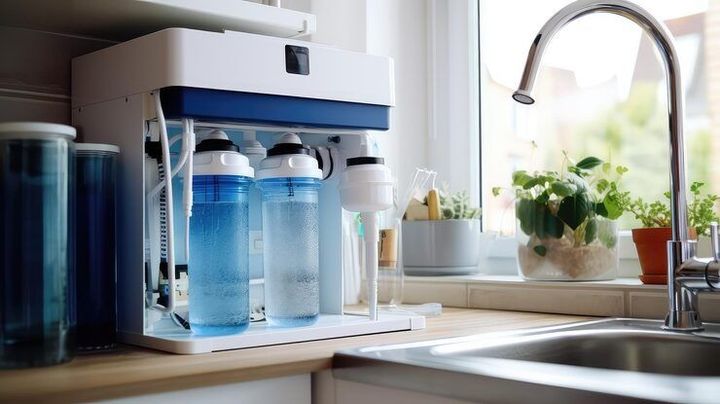
Many residential water purification units include storage tanks.
These tanks provide:
- Immediate access to purified water
- Consistent water availability
- Convenient dispensing options
Storage capacity varies depending on household requirements.
Energy-Efficient Designs
Manufacturers continue developing energy-efficient water purification technologies that minimize electricity consumption while maintaining purification performance.
How It Works
Water purification typically follows a step-by-step process.
Step 1: Initial Sediment Filtration
The first stage removes visible particles such as:
- Dust
- Sand
- Rust particles
- Sediment
This stage protects downstream filtration components.
Step 2: Carbon Filtration
Water passes through activated carbon media.
During this stage:
- Odors are reduced
- Chlorine levels decrease
- Certain organic compounds are filtered
This process improves overall water quality and taste.
Step 3: Advanced Filtration
Depending on the system, water may pass through:
- Reverse osmosis membranes
- Ultrafiltration membranes
- Specialized purification layers
These stages target dissolved contaminants and microscopic particles.
Step 4: UV Treatment
In systems equipped with UV purification, ultraviolet light treats the water to reduce microorganisms.
This additional protection supports microbiological safety.
Step 5: Storage and Distribution
Purified water enters a storage chamber or directly reaches the dispensing outlet for consumption.
The entire process occurs continuously whenever water flows through the system.
Benefits and Advantages
Water purification systems provide several practical benefits.
Improved Drinking Water Quality
Advanced filtration technologies help reduce various contaminants and unwanted substances.
This contributes to cleaner and better-quality drinking water.
Better Taste and Odor
Activated carbon filtration can significantly improve taste and smell by reducing chlorine and other compounds.
Many users notice a more pleasant drinking experience.
Multiple Layers of Protection
Multi-stage water filtration systems use different purification methods together.
This layered approach addresses a broader range of water quality concerns.
Convenience for Daily Use
Having purified water available at home simplifies daily activities such as:
- Drinking
- Cooking
- Preparing beverages
- Food preparation
Support for Household Needs
Water purification systems are suitable for:
- Families
- Apartments
- Offices
- Educational institutions
- Healthcare environments
Their flexibility makes them useful in many settings.
Long-Term Water Quality Management
Regular filtration helps maintain consistent water quality over time.
This is especially important in areas where water conditions may fluctuate seasonally.
Real-World Examples or Applications
Water purifiers are used in many practical situations.
Residential Homes
Families commonly install home water purification systems to improve drinking water quality.
For example, a household receiving municipal water may use a multi-stage purification unit to address chlorine taste and dissolved impurities.
Office Environments
Workplaces often use commercial water filtration systems to provide purified drinking water for employees and visitors.
Reliable access to clean water supports workplace comfort.
Educational Institutions
Schools and colleges use water purification equipment to supply students and staff with safe drinking water throughout the day.
Healthcare Facilities
Hospitals and clinics often depend on advanced filtration systems to maintain strict water quality standards.
Water quality plays an important role in many healthcare processes.
Hospitality Industry
Hotels, resorts, and restaurants frequently use water treatment systems to support food preparation and guest satisfaction.
Consistent water quality contributes to a better overall experience.
Important Factors to Understand
Several factors should be considered when evaluating water purification technologies.
Water Source Quality
Different water sources contain different impurities.
Examples include:
- Municipal water
- Groundwater
- Borewell water
- Surface water
Understanding the source helps determine appropriate filtration requirements.
Filtration Technology Selection
Not all purification methods address the same contaminants.
For instance:
- Reverse osmosis targets dissolved solids.
- UV purification focuses on microorganisms.
- Activated carbon improves taste and odor.
Many households benefit from systems that combine these technologies.
Filter Maintenance
Filters gradually accumulate trapped particles and impurities.
Regular maintenance helps ensure:
- Consistent performance
- Efficient filtration
- Reliable water quality
Following manufacturer recommendations is important.
Storage Capacity
Households with higher water consumption may require larger storage capacity.
The appropriate size depends on:
- Family size
- Daily water usage
- Consumption patterns
Certification and Quality Standards
Consumers often look for systems that meet recognized water quality and safety standards.
Certification helps demonstrate that purification technologies have been evaluated under established testing procedures.
Future Trends and Industry Insights
The water purification industry continues to evolve through innovation and technological advancement.
Smart Connected Systems
Future water purifiers are expected to include more connected features.
Potential capabilities include:
- Mobile monitoring
- Performance tracking
- Predictive maintenance alerts
- Automated diagnostics
These features improve convenience and system management.
Enhanced Filtration Materials
Researchers continue developing advanced filtration materials that improve contaminant removal while maintaining efficient water flow.
New membrane technologies may provide greater purification efficiency.
Sustainable Water Treatment Solutions
Environmental sustainability is becoming increasingly important.
Future systems may focus on:
- Reduced water waste
- Improved efficiency
- Longer-lasting filtration components
- Lower energy consumption
AI-Assisted Monitoring
Artificial intelligence may help monitor water quality in real time and identify maintenance needs before performance declines.
This can support more reliable operation and user convenience.
Compact and Modular Designs
Modern consumers increasingly prefer compact systems that fit smaller living spaces.
Future designs are likely to become:
- More space-efficient
- Easier to maintain
- Simpler to install
- More adaptable to different environments
Conclusion
Water purifiers play an important role in improving drinking water quality through advanced filtration technologies and purification methods. From reverse osmosis water purifiers and UV water purification systems to activated carbon filtration and ultrafiltration technology, modern solutions address a wide range of water quality concerns.
Understanding how these technologies work helps individuals and organizations select suitable water treatment options for their specific needs. Features such as multi-stage water filtration, smart monitoring, energy efficiency, and advanced purification capabilities continue to shape the industry.
As innovation advances, future water purification systems are expected to become more intelligent, efficient, and sustainable, supporting the ongoing demand for cleaner and higher-quality drinking water.