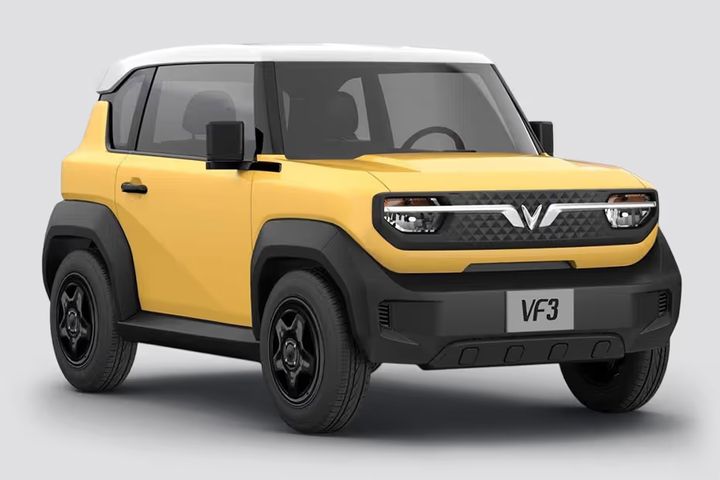
VinFast VF3 Guide: Explore Key Details and Information
The VinFast VF3 is a compact electric vehicle designed for urban mobility, short-distance commuting, and simple everyday driving. It is part of VinFast’s global electric vehicle portfolio and has gained attention because of its small size, boxy design, electric powertrain, and city-friendly positioning.
VinFast is a Vietnamese electric vehicle manufacturer that has been expanding into international automobile markets. In India, the company formally entered the market at Bharat Mobility Global Expo 2025, where it showcased the VF6 and VF7 electric SUVs. VinFast India’s own page lists January 2025 as the point when the brand officially entered the Indian market with these models.
The VF3 exists because many cities need smaller electric vehicles that are easier to drive, easier to park, and more suitable for dense traffic conditions. Large SUVs may appeal to families and highway users, but compact EVs can address a different requirement: efficient daily movement inside urban areas.
Globally, the VF3 has been positioned as a mini electric SUV with a simple layout and practical design. In available public specifications, the VF3 is associated with a compact battery pack, electric motor, automatic transmission setup, and short-range urban mobility use. Autocar India reported in May 2024 that the VF3 uses an 18.64 kWh lithium-ion battery and has a claimed range of up to 210 km on the NEDC cycle.
For Indian readers, the VF3 topic is useful because it explains how compact electric vehicles may develop in the country. India already has a strong two-wheeler and small-car culture. If compact EVs become more visible, they can influence discussions around city transport, EV charging access, vehicle loan planning, motor insurance, battery health, and public policy.
Why the VinFast VF3 Topic Matters Today
The VF3 matters because India’s mobility pattern is different from many developed automobile markets. A large share of daily travel happens within cities, where road space is limited, parking is tight, and traffic speed is often moderate. In this environment, a compact electric vehicle can be relevant for households, students, office commuters, small families, and urban mobility planners.
The topic also matters because electric vehicles are no longer discussed only as premium products. Many people now want to understand EV basics such as battery capacity, driving range, charging time, warranty terms, motor output, safety rating, vehicle registration rules, and insurance premium structure. A model like the VF3 brings these topics into a simpler, more accessible format.
VinFast’s India entry has also made the VF3 discussion more relevant. Reuters reported that VinFast inaugurated its first Indian production facility in Thoothukudi, Tamil Nadu, in August 2025. The report stated that the plant is part of a larger investment arrangement with Tamil Nadu and is planned with annual production potential of up to 150,000 vehicles.
For India, such development is important because local assembly and manufacturing can affect product planning, supply chain maturity, component availability, charging ecosystem expansion, and long-term EV adoption. While the VF3’s final India specifications should be confirmed only through official communication, its category is directly linked with India’s larger electric mobility transition.
Simple Overview Table
| Area | Basic Information |
|---|---|
| Vehicle Name | VinFast VF3 |
| Vehicle Type | Compact electric SUV-style vehicle |
| Main Use Case | Urban driving and short-distance travel |
| Key Topic Areas | Battery range, charging, safety, policy, insurance, registration |
| India Relevance | Linked with VinFast’s India expansion and EV market entry |
| Reader Benefit | Helps understand compact EV basics and electric mobility trends |
Key Details and Basic Information
The VF3 has attracted attention because of its design. It uses a boxy shape, upright stance, and compact proportions. This makes it visually different from many hatchbacks and crossovers. The design approach appears to focus on utility and simplicity rather than luxury.
Available public information points toward a small battery and city-oriented range. Autocar India reported an 18.64 kWh battery and up to 210 km NEDC claimed range. NEDC is a test cycle and may not always reflect real-world Indian conditions. Real driving range can vary depending on traffic, air conditioning use, speed, road gradient, passenger load, driving style, and battery state.
Some India-focused automobile listings mention figures such as 39 bhp power, 110 Nm torque, automatic transmission, electric fuel type, and fast charging reference of 10–70% in around 36 minutes. These figures should be treated as informational until the brand publishes final India-specific details.
Feature Understanding Table
| Feature Area | What Readers Should Understand |
|---|---|
| Battery | Determines range, charging behavior, and energy use |
| Motor Output | Affects acceleration and city driving response |
| Charging Time | Depends on charger type and battery state |
| Safety | Should be checked through official rating data when available |
| Cabin Space | Important because compact EVs have limited footprint |
| Registration | Depends on Indian vehicle category and state rules |
| Insurance | Depends on vehicle classification, battery value, and coverage type |
Recent Updates and Market Trends
The past year has been important for VinFast in India. VinFast India’s official site states that the company entered the Indian market in January 2025 by unveiling the VF6 and VF7 at Bharat Mobility Global Expo 2025.
On August 4, 2025, VinFast officially inaugurated its EV assembly plant at SIPCOT Industrial Park in Thoothukudi, Tamil Nadu. The company described this plant as a major part of its India expansion and long-term market plan.
VinFast India’s official update page also lists September 4, 2025, as the date when the company launched made-in-India premium electric SUVs VF6 and VF7. This is relevant because it shows that VinFast has moved beyond display-stage participation and has started formal product activity in India.
For the VF3 specifically, India launch timing has been discussed by auto publications. Autocar India reported in December 2025 that the VF3 was expected in India in the first half of 2026. However, readers should treat this as expected information unless VinFast India gives a final announcement.
Globally, VinFast has continued to scale its EV operations. Reuters reported in March 2026 that VinFast targeted at least 300,000 global EV deliveries in 2026 and also planned range-extended EVs from 2027 for markets where charging infrastructure remains limited.
This trend matters for India because compact EVs, range-extended EVs, and city mobility products can all play different roles. India does not have a single EV use case. Urban commuting, fleet mobility, family transport, highway travel, and two-wheeler electrification all require different vehicle formats.
EV Trend Graph
| Trend Area | 2024 | 2025 | 2026 Direction |
|---|---|---|---|
| Compact EV Awareness | Medium | High | Higher |
| Charging Infrastructure Discussion | High | High | Very High |
| Battery Range Awareness | Medium | High | Very High |
| EV Insurance Research | Medium | High | Higher |
| Urban Mobility Focus | High | High | Very High |
Laws, Policies, and Government Programs
The VinFast VF3 topic is affected by India’s broader electric mobility policy environment. EVs in India are influenced by central rules, state-level road tax treatment, registration norms, vehicle safety standards, charging guidelines, and battery safety requirements.
A key national program is PM E-DRIVE. The Press Information Bureau noted that the PM E-DRIVE scheme, with an outlay of ₹10,900 crore, came into effect from October 1, 2024, and was designed to accelerate electric mobility in India.
PM E-DRIVE is especially focused on categories such as electric two-wheelers, electric three-wheelers, e-buses, e-trucks, e-ambulances, charging infrastructure, and testing agency upgrades. For private electric cars, the direct impact can be different from two-wheelers and public mobility categories, so readers should verify the exact applicability for any specific vehicle category. The official PM E-DRIVE portal continues to provide scheme-related notifications and category-specific claim information.
Safety standards are also important. Any passenger vehicle introduced in India must follow Indian homologation, safety, and compliance requirements. For consumers, Bharat NCAP is a useful reference point when an eligible vehicle is tested. Bharat NCAP evaluates adult occupant protection, child occupant protection, and safety assist technologies for eligible M1 category vehicles up to 3,500 kg. Its public rating system can help readers compare safety information in a structured manner.
Motor insurance is another important area. EV insurance can involve different considerations compared with internal combustion vehicles because the battery pack, motor, electronic controller, and charging hardware are critical components. Readers should study policy wording carefully, including coverage terms for battery damage, water ingress, charging-related events, and roadside assistance provisions.
State-level rules may also affect EV adoption. Some Indian states provide registration-related benefits or road tax relaxation for certain EV categories, while others may change rules over time. Because state policy can change, readers should verify information from transport department websites or official notification portals.
Tools and Resources for Readers
Readers can use the following tools and resources to study the VinFast VF3 and similar compact EVs in a factual way:
- VinFast India official website: For brand announcements, confirmed model details, and India updates.
- VinFast global website: For global vehicle information and model positioning.
- Bharat NCAP portal: For safety ratings when a vehicle is tested under the Indian program.
- PM E-DRIVE portal: For government scheme notifications and electric mobility updates.
- VAHAN portal: For vehicle registration category information and transport data.
- State transport department websites: For state-level EV rules and registration-related details.
- EV range calculators: For estimating practical range under different driving conditions.
- Charging station locator apps: For identifying public charging points near regular routes.
- Motor insurance comparison worksheets: For checking coverage inclusions, exclusions, and add-on terms.
- Vehicle loan EMI calculators: For understanding monthly payment planning and finance structure.
- Battery health checklist: For learning how charging habits, heat, and usage patterns affect long-term performance.
- EV comparison templates: For comparing range, battery size, charging time, warranty, safety, dimensions, and cabin practicality.
Research Checklist
| Research Point | What to Check |
|---|---|
| Official India Status | Confirm through VinFast India announcements |
| Battery Data | Verify India-specific capacity and range |
| Charging Details | Check AC and DC charging compatibility |
| Safety | Look for Bharat NCAP or official safety data |
| Warranty | Review battery and vehicle warranty terms |
| Insurance | Study battery-related coverage clauses |
| Registration | Check state-level EV registration rules |
| Practical Use | Compare daily route distance with expected range |
| Support Network | Review official workshop and assistance coverage |
FAQs
What is the VinFast VF3?
The VinFast VF3 is a compact electric vehicle with SUV-inspired styling. It is designed mainly for city-focused mobility and short-distance use. Globally, it has been discussed as a small EV with a compact battery and simple practical layout.
Is the VinFast VF3 available in India?
As of June 4, 2026, VinFast has launched other models in India and has established its Indian manufacturing base. The VF3 has been reported by automobile publications as an expected India model, but readers should rely on VinFast India’s official announcement for final timing, specifications, and variant details.
What is the claimed range of the VinFast VF3?
Autocar India reported that the VF3 uses an 18.64 kWh lithium-ion battery and has a claimed range of up to 210 km on the NEDC cycle. Real-world range may differ due to driving pattern, climate, traffic, road type, and accessory use.
Why is the VF3 important for Indian cities?
The VF3 is important because it represents the idea of a compact electric city vehicle. Indian cities face congestion, limited parking, and rising interest in lower-emission mobility. A compact EV format can be relevant for short daily routes, urban families, and first-time EV learners.
Which policies affect compact EVs in India?
Compact EVs are affected by vehicle safety norms, registration rules, insurance regulations, state-level EV policies, battery safety standards, and national electric mobility programs such as PM E-DRIVE. The exact impact depends on vehicle category, homologation, state rules, and final specifications.
Conclusion
The VinFast VF3 is an important topic for anyone trying to understand the future of compact electric mobility in India. It combines three major ideas: small vehicle practicality, electric powertrain simplicity, and urban transport relevance.
The model’s global profile shows a compact EV with city-oriented range and SUV-inspired styling. In India, the topic becomes more relevant because VinFast has already entered the market, inaugurated its Tamil Nadu plant, and started formal EV activity with other models.
For readers, the best approach is to separate confirmed information from expected information. Official India specifications, safety rating data, warranty terms, insurance classification, charging compatibility, and state-level registration details should be checked once final documents are available.
From an educational perspective, the VinFast VF3 is not only about one compact EV. It is a useful example of how India’s automobile market may evolve toward smaller, smarter, and more city-focused electric vehicles. As charging infrastructure improves and EV awareness grows, compact models like the VF3 category can help more people understand electric mobility in practical, everyday terms.