Jump to a Chapter

Tata Sierra EV vs Mahindra BE 6 Explained: Battery, Range, Features, Technology & Electric SUV Comparison Guide

Tata Sierra EV vs Mahindra BE 6 Explained: Battery, Range, Features, Technology & Electric SUV Comparison Guide

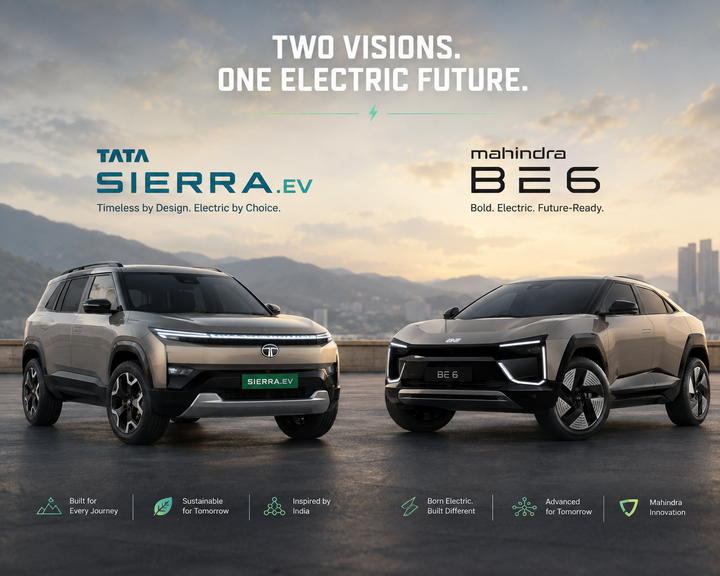
Electric SUVs continue to transform the automotive industry by combining zero tailpipe emissions, intelligent software, connected technologies, and advanced battery systems. Two of the most talked-about electric SUVs in India are the Tata Sierra EV and the Mahindra BE 6. While the Sierra EV represents Tata Motors' modern interpretation of a classic SUV nameplate, the BE 6 showcases Mahindra's next-generation Born Electric platform with a strong focus on digital technology and performance.


Both vehicles highlight the evolution of electric mobility through advanced battery management systems, connected infotainment, driver assistance technologies, and software-defined vehicle architecture. Rather than identifying a single "better" vehicle, understanding their design philosophies, technology, and capabilities helps readers appreciate the direction of modern electric mobility.

This guide compares the Tata Sierra EV and Mahindra BE 6 from an educational perspective. It does not provide purchasing, investment, or driving advice.

Overview

FeatureTata Sierra EVMahindra BE 6
Vehicle TypeElectric SUVElectric SUV
PlatformTata EV architectureINGLO Born Electric platform
PowertrainFully electricFully electric
FocusComfort, family practicality, heritage-inspired designPerformance, technology, futuristic design
SeatingMulti-passenger SUVMulti-passenger SUV
Software UpdatesExpected OTA supportOTA support
Connected FeaturesAdvanced infotainmentAdvanced connected ecosystem

Specifications may vary depending on production variants and regional availability.

Exterior Design Philosophy

Tata Sierra EV

The Sierra EV blends modern styling with design cues inspired by the original Tata Sierra.

Expected highlights include:

  • Signature panoramic side glass
  • Clean aerodynamic profile
  • LED lighting
  • SUV stance
  • Modern front fascia
  • Practical proportions
  • Large alloy wheels
  • Contemporary design language

Mahindra BE 6

The BE 6 adopts a futuristic design developed specifically for Mahindra's Born Electric range.

Key characteristics include:

  • Sharp body lines
  • Aerodynamic styling
  • Closed EV front fascia
  • LED lighting signature
  • Coupe-inspired profile
  • Modern alloy wheels
  • Sporty proportions
  • Digital-first design approach

Battery Technology

Battery systems are among the most important components of any electric SUV.

Tata Sierra EV

Expected battery technologies include:

  • High-voltage lithium-ion battery
  • Intelligent battery management
  • Thermal management system
  • Fast charging compatibility
  • Regenerative braking
  • Battery health monitoring
  • Energy optimization
  • Smart charging management

Mahindra BE 6

The BE 6 incorporates battery technologies designed for Mahindra's INGLO platform.

Key technologies include:

  • Advanced lithium-ion battery pack
  • Efficient thermal management
  • Battery management software
  • High-speed charging capability
  • Energy recovery system
  • Intelligent charging controls
  • Battery diagnostics
  • Optimized energy distribution

Driving Range

Driving range depends on battery capacity, driving conditions, climate, terrain, speed, and vehicle configuration.

General factors influencing EV range include:

  • Battery size
  • Driving style
  • Ambient temperature
  • Tire pressure
  • Regenerative braking usage
  • Vehicle load
  • Road conditions
  • HVAC usage

Official certified range figures should always be referenced from the manufacturer for specific variants.

Charging Technology

Both vehicles are designed to support modern EV charging infrastructure.

Common charging features include:

  • Home AC charging
  • Public AC charging
  • DC fast charging
  • Smart charging schedules
  • Battery pre-conditioning
  • Charging status monitoring
  • Mobile app integration
  • Connected charging services

Charging times vary depending on battery size and charger output.

Performance

Tata Sierra EV

Expected characteristics include:

  • Smooth acceleration
  • Quiet electric operation
  • Family-oriented driving comfort
  • Balanced suspension
  • Regenerative braking
  • Stable ride quality
  • Urban and highway usability
  • Efficient power delivery

Mahindra BE 6

Expected characteristics include:

  • Responsive acceleration
  • Performance-focused tuning
  • Advanced driving modes
  • Regenerative braking
  • Dynamic handling
  • Intelligent traction systems
  • Balanced weight distribution
  • Smooth electric driving experience

Performance specifications differ between variants.

Interior Comparison

Tata Sierra EV

Expected interior features include:

  • Spacious cabin
  • Large infotainment display
  • Digital instrument cluster
  • Panoramic roof
  • Premium seating
  • Flexible cargo area
  • Wireless charging
  • Ambient lighting

Mahindra BE 6

Expected interior highlights include:

  • Digital cockpit
  • Large touchscreen displays
  • Premium upholstery
  • Connected infotainment
  • Wireless smartphone connectivity
  • Ambient lighting
  • Driver-focused layout
  • Modern cabin materials

Connected Technology

Modern electric SUVs increasingly function as software-defined vehicles.

Shared technology trends include:

  • Over-the-air software updates
  • Smartphone integration
  • Cloud connectivity
  • Voice assistant support
  • Navigation systems
  • Digital driver displays
  • Mobile applications
  • Connected vehicle services

Software capabilities continue improving through updates.

Artificial Intelligence

AI is becoming a key part of modern electric vehicles.

Applications may include:

  • Intelligent navigation
  • Predictive energy management
  • Voice recognition
  • Personalized driver profiles
  • Smart charging recommendations
  • Driver assistance support
  • Predictive maintenance alerts
  • Cabin comfort optimization

AI enhances convenience and efficiency rather than replacing driver responsibility.

Safety Features

Both vehicles are expected to include advanced safety technologies.

Examples include:

  • Multiple airbags
  • Electronic stability control
  • ABS with EBD
  • Adaptive cruise control
  • Lane assistance
  • Blind-spot monitoring
  • Parking cameras
  • Driver attention monitoring

Equipment availability depends on model variant and market.

Sustainability

Electric SUV manufacturers continue focusing on environmental responsibility.

Examples include:

  • Recycled materials
  • Lightweight construction
  • Sustainable interiors
  • Efficient manufacturing
  • Renewable energy initiatives
  • Battery recycling research
  • Responsible sourcing
  • Reduced operational emissions

Sustainability efforts continue evolving across the automotive industry.

Which SUV May Suit Different Priorities?

The two vehicles reflect different design philosophies.

Tata Sierra EV may appeal to readers interested in:

  • Heritage-inspired styling
  • Spacious family-oriented cabin
  • Practical SUV design
  • Comfort-focused driving experience

Mahindra BE 6 may appeal to readers interested in:

  • Futuristic styling
  • Performance-oriented engineering
  • Advanced digital technologies
  • Software-defined vehicle platform

The most suitable option depends on individual preferences, driving requirements, budget, and the final production specifications.

Emerging Trends in 2026

Electric vehicle innovation continues advancing.

Current developments include:

  • AI-powered vehicle management
  • Faster charging technologies
  • Software-defined vehicles
  • Advanced battery chemistry
  • Connected mobility platforms
  • Vehicle-to-cloud communication
  • Intelligent driver assistance
  • Sustainable manufacturing practices

These technologies continue shaping the future of electric SUVs.

Frequently Asked Questions

Are both vehicles fully electric?

Yes. Both the Tata Sierra EV and Mahindra BE 6 are designed as fully electric SUVs.

Which vehicle has the longer driving range?

Official certified range depends on the specific production variant. Readers should refer to manufacturer specifications for the latest figures.

Do both support fast charging?

Yes. Both vehicles are expected to support modern DC fast charging and AC charging options, depending on the model and charging infrastructure.

Are software updates available?

Both vehicles are expected to support over-the-air (OTA) software updates for compatible systems and features.

Which SUV is better?

Neither vehicle is universally better. The Tata Sierra EV emphasizes heritage-inspired design and practicality, while the Mahindra BE 6 focuses on futuristic styling, digital technologies, and a performance-oriented approach. The right choice depends on individual priorities.

Conclusion

The Tata Sierra EV and Mahindra BE 6 represent two distinct approaches to the future of electric SUVs. The Sierra EV blends modern electric mobility with a design inspired by a classic nameplate, while the BE 6 highlights Mahindra's vision for software-defined, technology-focused electric vehicles.

Both vehicles showcase advancements in battery technology, connected services, AI-assisted features, safety systems, and sustainable engineering. As electric mobility continues to evolve, these SUVs illustrate how manufacturers are balancing innovation, comfort, performance, and intelligent digital experiences. Understanding their respective strengths and technologies helps readers make informed comparisons as the electric vehicle market continues to grow.

Disclaimer

This article is intended solely for informational and educational purposes. It does not provide purchasing, financial, investment, legal, automotive repair, or driving advice. It does not endorse, recommend, compare for buying purposes, rank, review, market, or promote Tata Motors, Mahindra, or any other automobile manufacturer. Vehicle specifications, battery capacity, certified driving range, charging performance, software features, safety equipment, pricing, and availability may vary by model year, variant, market, and future updates. Readers should consult official manufacturer documentation for the latest product information before making any vehicle-related decisions.


author-image

Ravi Shankar Maurya

We create purposeful content that speaks, resonates, and drives action.

August 06, 2026 . 8 min read