TATA Sierra EV Variants Explained: Complete Guide and Overview
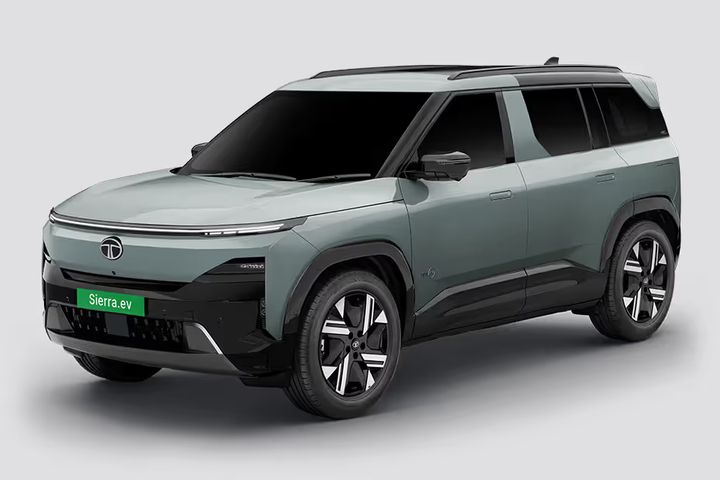
The TATA Sierra EV is one of the most anticipated electric sport utility vehicles (SUVs) from Tata Motors. Inspired by the iconic Tata Sierra introduced in the 1990s, the electric version combines modern vehicle technology with a design that reflects the heritage of the original model. Built on Tata Motors' dedicated electric vehicle architecture, the Sierra EV is expected to strengthen the company's growing electric mobility portfolio.
Vehicle variants play an important role in helping customers understand the differences between available configurations. Each variant typically includes a different combination of battery capacity, driving range, technology, safety equipment, comfort features, and connected vehicle functions. Explaining these variants allows prospective owners and automotive enthusiasts to compare specifications and understand which configuration may best suit different driving needs.
Although Tata Motors has officially showcased the Sierra EV at major automotive events, complete production specifications and variant-wise details may continue to evolve until all production versions become widely available. This guide summarizes the expected variant structure based on officially revealed information and industry developments available during 2026.
As electric vehicle technology continues to improve, manufacturers increasingly introduce multiple variants to accommodate varying driving requirements while maintaining consistent safety and performance standards.
Expected TATA Sierra EV Variant Overview
The following table summarizes the expected structure of the Tata Sierra EV lineup. Final production specifications may vary depending on official announcements.
| Expected Variant | Primary Focus | Key Highlights |
|---|---|---|
| Entry Variant | Everyday urban driving | Essential safety features, digital displays, connected technology |
| Mid Variant | Enhanced comfort | Larger infotainment display, additional convenience features, advanced connectivity |
| Premium Variant | Technology-focused | ADAS, panoramic sunroof, premium interior, enhanced digital features |
| Long Range Variant | Extended travel | Larger battery pack, higher certified driving range, fast charging support |
Expected Battery and Performance Options
The Tata Sierra EV is expected to offer multiple battery configurations to accommodate different driving patterns.
| Specification | Standard Configuration | Long Range Configuration |
|---|---|---|
| Battery Type | Lithium-ion | Lithium-ion |
| Expected Capacity | Around 55–60 kWh | Around 70–75 kWh |
| Estimated Range | Approximately 450–500 km | Approximately 550–600 km |
| Charging Support | AC & DC Charging | AC & DC Charging |
| Regenerative Braking | Available | Available |
Actual specifications may differ when Tata Motors releases complete production details.
Why Understanding Variants Matters
Modern electric vehicles include a wide range of technologies, making it increasingly important to understand the differences between variants before evaluating a vehicle.
Different variants generally affect:
- Battery capacity.
- Certified driving range.
- Interior technology.
- Driver assistance systems.
- Charging capability.
- Safety equipment.
- Wheel design.
- Connected vehicle features.
For many drivers, selecting the appropriate variant is less about appearance and more about matching the vehicle's capabilities with daily commuting, highway travel, family usage, or long-distance driving requirements.
Understanding variant differences also helps consumers interpret automotive reviews, specification sheets, and manufacturer announcements more effectively.
Electric vehicles continue to evolve rapidly, making accurate specification comparisons increasingly valuable for researchers, journalists, and automotive enthusiasts.
Expected Features Across the Sierra EV Lineup
Although official variant-wise equipment may vary, the Sierra EV is expected to include numerous modern technologies.
Likely standard equipment includes:
- Digital instrument cluster.
- Touchscreen infotainment system.
- Wireless smartphone connectivity.
- Automatic climate control.
- LED lighting.
- Multiple airbags.
- Electronic Stability Control.
- Anti-lock Braking System.
- Regenerative braking.
- Multiple driving modes.
Higher variants may additionally include:
- Panoramic sunroof.
- Premium upholstery.
- Ventilated seats.
- Powered driver's seat.
- 360-degree camera.
- Wireless charging.
- Premium sound system.
- Ambient lighting.
- Connected vehicle technology.
- Over-the-air software updates.
Advanced Safety Technologies
The Tata Sierra EV is expected to feature comprehensive safety equipment across its variants.
Possible safety technologies include:
- Six or more airbags.
- Electronic Stability Program.
- Hill Hold Control.
- Hill Descent Control.
- ISOFIX child seat anchors.
- Tire Pressure Monitoring System.
- Rear parking sensors.
- Front parking sensors.
- Electronic parking brake.
- All-wheel disc brakes.
Higher variants may also include Advanced Driver Assistance Systems (ADAS), such as:
- Adaptive Cruise Control.
- Lane Keep Assist.
- Autonomous Emergency Braking.
- Blind Spot Detection.
- Forward Collision Warning.
- Traffic Sign Recognition.
- Driver Attention Monitoring.
These technologies are intended to support safer driving but require active driver supervision at all times.
Recent Updates and Industry Developments
The Tata Sierra EV has remained one of the most discussed electric SUV projects in India throughout 2025 and 2026.
Important developments include:
| Date | Update |
|---|---|
| January 2025 | Sierra EV showcased with updated production-oriented design |
| Throughout 2025 | Interior previews revealed digital cockpit technologies |
| Early 2026 | Continued testing of production-ready vehicles on Indian roads |
| Mid-2026 | Industry expectations of launch preparations and certification activities |
Additional trends affecting the Sierra EV include:
- Growing demand for electric SUVs.
- Expansion of India's public charging infrastructure.
- Improvements in battery energy density.
- Increasing adoption of connected vehicle software.
- Wider implementation of ADAS technologies.
- Greater localization of EV manufacturing.
The Sierra EV is expected to become part of Tata Motors' broader electric vehicle ecosystem, complementing existing electric models while introducing a more premium SUV experience.
Regulations and Government Policies
Electric vehicles in India operate within an evolving regulatory environment designed to improve safety, charging compatibility, and environmental sustainability.
Important regulatory areas include:
Vehicle Safety Standards
All production electric vehicles must comply with automotive safety regulations established by relevant Indian authorities. These include crash testing, braking performance, occupant protection, and electrical safety standards.
Battery Safety Requirements
Battery packs must satisfy safety regulations related to thermal management, water resistance, vibration testing, and electrical protection.
Charging Standards
Electric vehicles sold in India are designed to support nationally recognized charging standards, improving interoperability between public charging stations and compatible vehicles.
Environmental Objectives
Electric vehicles contribute to India's broader objectives related to reducing transport-sector emissions and improving energy efficiency.
Government EV Programs
National and state-level initiatives continue to support electric mobility through:
- Charging infrastructure expansion.
- Domestic battery manufacturing.
- Electric vehicle research.
- Component localization.
- Clean transportation initiatives.
Policies may change over time; therefore, official government notifications remain the most reliable source of regulatory information.
Useful Tools and Resources
Several digital platforms and official resources can help individuals understand the Tata Sierra EV and electric mobility more broadly.
| Resource | Purpose |
|---|---|
| Tata Motors Official Website | Vehicle specifications and announcements |
| Tata.ev Platform | Electric mobility information |
| iRA Connected Vehicle App | Connected vehicle features |
| Ministry of Heavy Industries | National EV policies |
| Ministry of Road Transport & Highways | Vehicle regulations |
| Bureau of Indian Standards | Technical standards |
| PlugShare | Charging station locator |
| Google Maps | EV charging navigation |
Helpful digital tools include:
- EV charging station locators.
- Battery range estimation tools.
- Route planning applications.
- Charging time calculators.
- Connected vehicle mobile applications.
- Electricity consumption estimators.
- Maintenance tracking applications.
These resources can help drivers better understand charging infrastructure, battery performance, and electric vehicle ownership.
Expected Variant Feature Comparison
| Feature | Entry | Mid | Premium | Long Range |
|---|---|---|---|---|
| Digital Instrument Cluster | ✓ | ✓ | ✓ | ✓ |
| Touchscreen Infotainment | ✓ | ✓ | ✓ | ✓ |
| Wireless Connectivity | ✓ | ✓ | ✓ | ✓ |
| Connected Vehicle Features | ✓ | ✓ | ✓ | ✓ |
| Panoramic Sunroof | — | Optional | ✓ | ✓ |
| ADAS | — | Optional | ✓ | ✓ |
| Larger Battery | — | — | Optional | ✓ |
| Extended Driving Range | — | — | Optional | ✓ |
Expected feature distribution based on currently available information. Final production specifications may vary.
Estimated Driving Range Comparison
Estimated Driving Range

Standard Battery
██████████████████████████████
450–500 km

Long Range Battery
█████████████████████████████████████
550–600 km
Expected Battery Capacity Comparison
Battery Capacity

Standard Variant
██████████████████████
55–60 kWh

Long Range Variant
███████████████████████████████
70–75 kWh
Frequently Asked Questions
Is the Tata Sierra EV officially available in multiple variants?
Tata Motors has showcased the Sierra EV and is expected to introduce multiple production variants. Complete variant-wise specifications will be confirmed through official announcements.
What battery options are expected?
Industry reports and official previews indicate battery capacities ranging from approximately 55–60 kWh to around 70–75 kWh, depending on the variant.
Will every variant include connected technology?
Connected vehicle features are expected across much of the lineup, although higher variants may include additional digital capabilities and premium software functions.
Is ADAS expected on all variants?
Advanced Driver Assistance Systems are likely to be available primarily on higher-end variants, while entry variants are expected to focus on essential safety technologies.
What charging options will the Sierra EV support?
The Tata Sierra EV is expected to support both AC home charging and DC fast charging, enabling compatibility with residential charging setups and public charging infrastructure.
Conclusion
The Tata Sierra EV represents the next stage in Tata Motors' expanding electric vehicle strategy, combining the legacy of the original Sierra with modern electric mobility technologies. As one of the most anticipated electric SUVs in India, it is expected to offer multiple variants tailored to different driving preferences, battery capacities, technology requirements, and comfort expectations.
Understanding the differences between variants helps consumers, researchers, and automotive enthusiasts interpret specifications more effectively and follow future product announcements with greater clarity. While official production specifications may continue to evolve, the Sierra EV is expected to feature advanced battery technology, connected vehicle capabilities, modern safety systems, and practical electric SUV performance.
As India's electric mobility ecosystem continues to mature through improvements in charging infrastructure, battery technology, and government support, vehicles like the Tata Sierra EV highlight the ongoing evolution of sustainable transportation. For the latest and most accurate information, readers should refer to official Tata Motors announcements and relevant government resources as production details become available.