Jump to a Chapter

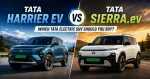
Tata Harrier EV vs Tata Sierra EV Guide: Discover Specifications, Technology, and Value

Tata Harrier EV vs Tata Sierra EV Guide: Discover Specifications, Technology, and Value

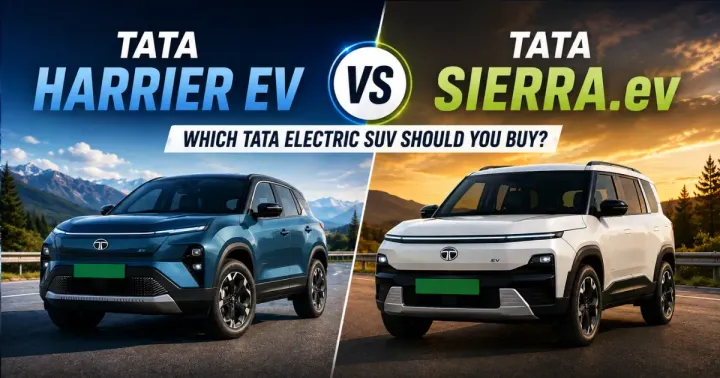
Electric vehicles are becoming an important part of the automotive industry as governments, manufacturers, and consumers focus on cleaner transportation technologies. Among the upcoming electric sport utility vehicles (SUVs), the Tata Harrier EV and Tata Sierra EV have attracted significant attention due to their modern designs, advanced battery systems, and connected vehicle technologies.

The Tata Harrier EV represents the electric version of the Harrier platform, integrating battery-electric architecture with modern safety and driving technologies. The Tata Sierra EV, inspired by the iconic Sierra nameplate, combines retro-inspired styling with contemporary electric mobility features.

Both vehicles exist to address growing demand for electric SUVs that provide spacious interiors, digital technology, enhanced safety systems, and improved energy efficiency.

Key Specifications Overview

FeatureTata Harrier EVTata Sierra EV*
Vehicle TypeElectric SUVElectric SUV
PlatformActi.ev ArchitectureAdvanced EV Platform
PowertrainDual-Motor and AWD Variants ExpectedMultiple Powertrain Options Expected
Charging SupportFast Charging CompatibleFast Charging Compatible
Connected FeaturesAdvanced ConnectivityAdvanced Connectivity
Safety SystemsMultiple Driver Assistance TechnologiesModern Safety Technologies
Interior LayoutPremium SUV CabinLifestyle-Oriented Cabin

*Specifications may vary as manufacturers continue introducing updated configurations and features.

Why Electric SUV Technology Matters Today

The transition toward electric transportation has accelerated due to environmental goals, advancements in battery technology, and expanding charging infrastructure. Electric SUVs are particularly relevant because they combine passenger space, cargo flexibility, and modern technology within a single vehicle category.

Several groups benefit from developments in electric SUV technology:

  • Families seeking spacious transportation solutions
  • Daily commuters interested in energy-efficient mobility
  • Fleet operators exploring electrification strategies
  • Technology-focused consumers interested in connected vehicles
  • Policymakers working toward emission reduction objectives

Modern electric vehicles also help address challenges such as:

  • Urban air quality concerns
  • Dependence on conventional fuels
  • Transportation-related carbon emissions
  • Noise pollution in metropolitan areas
  • Demand for intelligent mobility systems

Electric Vehicle Technology Comparison

Technology AreaImportance
Lithium-Ion Battery SystemsEnergy storage and driving range
Regenerative BrakingImproves efficiency by recovering energy
Fast Charging TechnologyReduces charging duration
Battery Management System (BMS)Protects battery health and performance
Vehicle ConnectivityEnables remote monitoring and updates
Advanced Driver Assistance Systems (ADAS)Supports safety and driver awareness

The Harrier EV and Sierra EV are expected to incorporate many of these technologies as electric vehicle platforms continue evolving.

Battery Performance and Driving Range Considerations

Battery performance remains one of the most discussed aspects of electric vehicle development. Manufacturers increasingly focus on improving battery density, thermal management, and charging efficiency.

Key factors influencing EV performance include:

  • Battery capacity
  • Vehicle weight
  • Aerodynamics
  • Tire efficiency
  • Driving conditions
  • Climate and temperature

The latest electric SUV designs typically incorporate advanced battery management systems that continuously monitor cell temperatures, charging rates, and energy consumption patterns.

Safety Features in Modern Electric SUVs

Safety remains a major priority in electric vehicle engineering. Modern EV platforms are designed with reinforced structures that protect battery components while enhancing passenger protection.

Common safety technologies include:

  • Electronic Stability Control
  • Multiple Airbag Systems
  • Anti-Lock Braking Systems
  • Traction Control Systems
  • Driver Monitoring Systems
  • Blind Spot Monitoring
  • Adaptive Cruise Control
  • Emergency Braking Assistance

As automotive technology advances, safety features increasingly rely on cameras, sensors, radar systems, and software integration.

Recent Developments in Electric SUV Technology

The electric vehicle market has experienced notable developments throughout the past year.

In 2025 and 2026, several trends continued shaping the EV industry:

  • Expansion of fast-charging infrastructure networks
  • Improvements in battery energy density
  • Increased adoption of software-defined vehicle architecture
  • Growth of connected car ecosystems
  • Wider integration of advanced driver assistance technologies
  • Enhanced vehicle-to-cloud communication systems

Manufacturers have also focused on introducing more SUV-focused electric platforms, reflecting strong consumer interest in this vehicle category.

EV Technology Trends

Battery Efficiency       ██████████████
Fast Charging Growth     ███████████████
ADAS Integration         █████████████
Connected Features       ███████████████
Software Updates         █████████████
Charging Infrastructure  ████████████████

The graph illustrates major areas receiving increased attention across the electric vehicle industry.

Digital Features and Connected Vehicle Systems

Connected vehicle technology is becoming a standard component of modern EV platforms.

Examples include:

  • Smartphone integration
  • Cloud-connected navigation
  • Over-the-air software updates
  • Remote vehicle diagnostics
  • Charging management applications
  • Digital instrument clusters
  • Voice-controlled systems

These technologies help improve convenience while supporting long-term vehicle functionality through software improvements.

Regulatory Environment and EV Policies

Electric vehicle adoption is influenced by a combination of automotive regulations, safety requirements, and environmental policies.

Common regulatory areas affecting electric SUVs include:

Policy AreaPurpose
Vehicle Safety StandardsPassenger protection requirements
Battery Transportation RulesSafe handling and logistics
Charging Infrastructure StandardsCompatibility and interoperability
Emission Reduction ProgramsSupport lower-emission transportation
Data Privacy RegulationsProtection of connected vehicle information
Recycling FrameworksResponsible battery disposal and recovery

Many countries continue updating transportation policies to support electric mobility development and charging network expansion.

Battery recycling regulations have also become increasingly important as governments focus on sustainable lifecycle management of EV batteries.

Environmental and Sustainability Considerations

Electric vehicles play a role in broader sustainability strategies by reducing direct tailpipe emissions. Manufacturers are also investing in cleaner battery production methods and circular economy initiatives.

Important sustainability topics include:

  • Battery material sourcing
  • Renewable energy integration
  • Vehicle recycling programs
  • Energy-efficient manufacturing
  • Battery second-life applications
  • Resource recovery technologies

These initiatives contribute to long-term environmental objectives while supporting technological innovation.

Helpful Tools and Resources for EV Research

Individuals researching electric SUVs can benefit from several digital resources and information platforms.

Useful resources include:

  • Official manufacturer specification pages
  • Electric vehicle charging network maps
  • Battery range estimation calculators
  • EV route planning applications
  • Vehicle safety rating databases
  • Government transportation portals
  • Charging station locator tools
  • Automotive technology research publications

Common research categories include:

Resource TypePurpose
Charging Station MapsLocate charging infrastructure
EV Range CalculatorsEstimate driving distance
Safety DatabasesReview vehicle safety information
Route Planning AppsOptimize long-distance travel
Battery Information ResourcesLearn about battery technology
Energy Consumption ToolsUnderstand efficiency metrics

These tools help consumers understand electric vehicle technologies and charging ecosystems more effectively.

Frequently Asked Questions

What is the primary difference between the Tata Harrier EV and Tata Sierra EV?

The Harrier EV focuses on a modern SUV platform with advanced electric powertrain capabilities, while the Sierra EV combines electric mobility technology with styling inspired by the historic Sierra design.

Why are battery management systems important in electric vehicles?

Battery management systems monitor temperature, charging activity, and energy flow to improve safety, efficiency, and battery longevity.

What is regenerative braking?

Regenerative braking captures kinetic energy during deceleration and converts it into electricity, which is then stored in the battery for future use.

How do connected vehicle technologies benefit drivers?

Connected technologies provide navigation assistance, remote diagnostics, software updates, vehicle monitoring, and enhanced user convenience through digital platforms.

What factors influence electric vehicle driving range?

Driving range depends on battery capacity, driving style, vehicle weight, road conditions, climate, speed, and energy management systems.

Are fast-charging technologies becoming more common?

Yes. Fast-charging infrastructure has expanded significantly in recent years, supporting shorter charging times and improved accessibility for electric vehicle users.

Conclusion

The Tata Harrier EV and Tata Sierra EV highlight the continuing evolution of electric SUV technology. Both vehicles reflect broader industry trends focused on battery innovation, connected mobility, advanced safety systems, and sustainable transportation solutions.

As electric vehicle adoption continues growing, technologies such as fast charging, intelligent battery management, advanced driver assistance systems, and connected vehicle ecosystems are expected to play an increasingly important role. Understanding these developments helps consumers, researchers, and automotive enthusiasts better evaluate the future direction of electric mobility and the expanding electric SUV segment.

author-image

Harshit Sharma

We are a performance-driven media buying team focused on scaling brands through smart, data-backed advertising strategies

August 06, 2026 . 8 min read