Jump to a Chapter

Tata Harrier EV Guide: Explore Key Details, Features, and Information

Tata Harrier EV Guide: Explore Key Details, Features, and Information

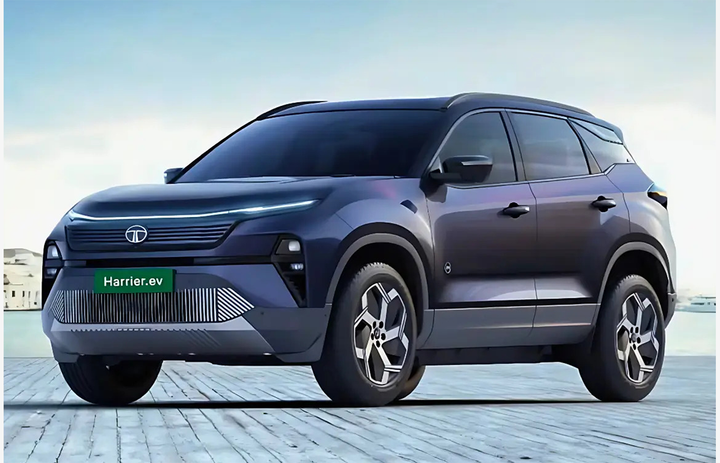
The Tata Harrier EV, also written as Harrier.ev, is an electric SUV from Tata Motors. It is based on the familiar Harrier SUV identity but uses an electric drivetrain instead of a combustion engine. The vehicle exists because India’s passenger vehicle market is moving toward cleaner mobility, stronger safety expectations, and more advanced connected technology.

Tata Motors officially lists the Harrier EV with 65 kWh and 75 kWh battery pack options, permanent magnet synchronous motor technology, liquid-cooled thermal management, IP67 protection for the motor and battery pack, and a 7.2 kW AC wall-mounted charging unit option. The official specifications page also mentions multiple drive modes and terrain response modes, depending on the version.

The Harrier EV is important because it is not positioned as a small city electric car. It is a larger electric SUV aimed at users who want more cabin space, stronger road presence, higher range confidence, and advanced technology. Tata Motors also highlights features such as Quad Wheel Drive dual-motor setup, Vehicle-to-Load technology, Vehicle-to-Vehicle charging, six terrain response modes, and the brand’s t.idal software-defined vehicle architecture on the official Harrier EV page.

In simple terms, the Harrier EV exists to answer a practical question: can a large Indian SUV move into the electric era without losing the strong SUV character that buyers associate with the Harrier name?

Importance

The Tata Harrier EV matters because electric SUVs are becoming a major part of India’s mobility transition. Earlier, many EV discussions in India were focused on smaller city cars and two-wheelers. Now, attention is shifting toward larger electric SUVs that can support family travel, office routes, weekend routes, and highway use.

For general readers, the Harrier EV is useful because it explains several important EV topics in one product: battery size, range rating, charging method, terrain modes, safety rating, software architecture, motor layout, and vehicle insurance planning.

It affects different groups in different ways:

Audience GroupWhy It Matters
Daily commutersHelps understand electric SUV range and charging basics
Family usersBrings focus to cabin space, safety, comfort, and road presence
EV learnersExplains battery capacity, motor type, and charging terminology
Policy observersShows how Indian EV adoption is moving into larger vehicle segments
Auto researchersGives a case study of Indian electric SUV development

The Harrier EV also helps reduce common doubts around electric vehicles. Many people still ask whether EVs are practical for regular driving, whether larger EVs can deliver range confidence, and whether electric SUVs can handle different road conditions. The Harrier EV addresses these questions through larger battery packs, terrain response modes, and rear-wheel-drive or Quad Wheel Drive layouts, depending on version.

Another important factor is safety. Bharat NCAP lists the Tata Harrier EV as a tested vehicle from June 2025 onwards, with 32.00/32.00 points in Adult Occupant Protection and 45.00/49.00 points in Child Occupant Protection. This makes safety a central part of the Harrier EV discussion.

Recent Updates

The Tata Harrier EV was formally introduced in India in 2025. Reports from June 2025 state that the model was launched with three broad personas: Adventure, Fearless, and Empowered, along with a Stealth Edition. The exterior details mentioned in launch coverage included LED headlights, connected LED DRLs, 19-inch alloy wheels, and connected LED tail lamps.

Tata Motors announced introductory details for the rear-wheel-drive versions in June 2025 and stated that bookings would begin from July 2, 2025. The company also noted that Quad Wheel Drive dual-motor personas would have separate details announced on June 27, 2025.

One of the biggest updates came from Bharat NCAP. The Harrier EV received strong safety results, and Bharat NCAP lists a full 32/32 Adult Occupant Protection score and 45/49 Child Occupant Protection score. CarDekho’s June 2025 coverage also reported that the 2025 Tata Harrier EV achieved a 5-star Bharat NCAP rating for both adult and child occupant protection.

The Harrier EV’s powertrain discussion also became more detailed after launch. Third-party specification listings mention 65 kWh and 75 kWh battery packs, with single-motor and dual-motor versions. CarWale notes that the dual-motor version uses Quad Wheel Drive and marks Tata’s return to an all-wheel-drive style SUV setup after the Safari Storme era.

Key Details Overview

Detail AreaTata Harrier EV Information
Vehicle typeElectric SUV
Battery options65 kWh and 75 kWh
Motor typePermanent Magnet Synchronous Motor
Cooling systemLiquid-cooled thermal management
Motor and battery protectionIP67 rating listed officially
Charging support7.2 kW AC wall-mounted charging unit option
Drive layoutRWD and Quad Wheel Drive, depending on version
Main personasAdventure, Fearless, Empowered
Safety resultBharat NCAP 5-star reported
Seating layout5-seat SUV format

Battery, Range, and Performance Basics

The battery is the core of any electric vehicle. In the Harrier EV, the two main battery references are 65 kWh and 75 kWh. A larger battery generally supports longer driving range, but the final result depends on traffic, driving speed, route elevation, tyre pressure, air-conditioning use, payload, terrain, and driving mode.

Tata Motors officially confirms the 65 kWh and 75 kWh battery pack options on its specifications page. CarDekho’s model page mentions a claimed range of up to 627 km, while Tata’s official blog mentions a 622 km range reference for the Harrier EV battery. These values should be read as certified or claimed figures, not guaranteed real-world range in every condition.

Battery PackBasic Understanding
65 kWhSuitable for users focused on daily driving and regular city-plus-highway routes
75 kWhHigher range confidence and available with more advanced drivetrain options
Dual-motor QWDDesigned for stronger traction and terrain response
Liquid coolingHelps manage battery temperature during Indian weather and charging conditions

Simple Range Visualization

This is a simplified text graph for understanding the range discussion.

Range ReferenceVisual
65 kWh battery███████████████████
75 kWh battery█████████████████████████
Up to 622–627 km claimed/certified references███████████████████████████

Actual range can vary because EV range is affected by real-world driving behavior and road conditions.

Laws or Policies

The Tata Harrier EV is shaped by India’s electric mobility rules, safety standards, registration framework, battery norms, and charging infrastructure policies.

Electric SUVs in India must meet applicable vehicle approval and safety requirements before public availability. Since the Harrier EV has a large battery pack, battery safety and thermal management are important. Tata’s official specification page mentions liquid-cooled thermal management and IP67 protection for the battery pack and motor, which are relevant technical details for Indian weather, water exposure, and road usage.

The Bharat NCAP rating is also important. Bharat NCAP was created to give Indian consumers clearer safety information through structured crash testing. For the Harrier EV, Bharat NCAP publishes the Adult Occupant Protection and Child Occupant Protection scores directly on its official listing.

Policy-related areas that affect the Harrier EV include:

  • Vehicle registration: Electric SUVs require standard registration through applicable transport systems.
  • Motor insurance: EV owners should review policy wording for battery, charger, motor, and electrical component coverage.
  • Battery safety norms: These help define safety expectations for battery packs and charging systems.
  • Charging infrastructure rules: Public and private charging networks affect day-to-day EV practicality.
  • State EV policies: Rules and benefits can vary by state.
  • Road safety regulations: ADAS, braking systems, airbags, and structural safety influence vehicle evaluation.
  • Data and connected technology: Software-defined vehicles may involve connected apps, diagnostics, and vehicle data handling.

The Harrier EV also reflects India’s broader movement toward cleaner vehicles, lower urban emissions, and domestic EV development. As more large electric SUVs enter the market, policy discussions will increasingly focus on charging reliability, grid readiness, battery recycling, and consumer protection.

Tools and Resources

A person researching the Tata Harrier EV can use several neutral tools and resources to understand the vehicle clearly.

Tool or ResourcePurpose
Tata Motors EV websiteOfficial specifications, features, and vehicle information
Bharat NCAP websiteSafety rating and crash-test score reference
EV range calculatorHelps estimate practical range based on usage
Charging time calculatorHelps understand approximate charging duration
Public charging locator appsUseful for planning routes with charging points
State EV policy portalsHelpful for local EV rules and registration details
Vehicle insurance comparison platformsHelps review EV-related insurance categories
RTO portalsUseful for vehicle documentation knowledge
Battery warranty documentHelps understand coverage conditions
Owner communitiesUseful for long-term real-world feedback

A simple research checklist can include:

  • Battery capacity
  • Certified range
  • Real-world range feedback
  • AC charging duration
  • DC fast-charging compatibility
  • Charging connector type
  • Battery warranty terms
  • Motor layout
  • Safety rating
  • Airbags and ADAS features
  • Ground clearance
  • Boot space
  • Tyre profile
  • Software update support
  • Vehicle insurance wording

Practical Insights

The Tata Harrier EV should be understood as a technology-forward electric SUV rather than only an electric version of an existing nameplate. It brings together electric drivetrain architecture, software-defined features, terrain response modes, safety testing, and large-SUV usability.

A key insight is that EV learning should not focus only on range. Range is important, but it is only one part of the decision framework. Battery safety, thermal management, charging access, insurance coverage, software reliability, braking performance, ride comfort, and crash-test results are also important.

The Harrier EV’s 5-star Bharat NCAP result strengthens its relevance for family-focused users. Safety ratings help readers compare vehicles beyond design and features. Bharat NCAP’s direct score listing gives a clear reference point for adult and child occupant protection.

Another useful point is drivetrain variety. Rear-wheel-drive versions can suit regular road use, while Quad Wheel Drive versions are aimed at users who want stronger traction and terrain capability. Tata’s official page describes six terrain response modes and off-road assist features, showing that the Harrier EV is not presented only as a city-focused EV.

The Harrier EV also helps explain how Indian EVs are becoming more software-centric. Tata mentions t.idal, its intelligent digital architecture layer, as part of the Harrier EV’s software-defined vehicle foundation. This signals that future EVs may rely more on software, connected systems, diagnostics, and digital controls.

FAQs

What is the Tata Harrier EV?

The Tata Harrier EV is an electric SUV from Tata Motors. It uses an electric drivetrain and is available with 65 kWh and 75 kWh battery pack references, depending on version. It is positioned as a larger electric SUV with advanced technology, safety features, and terrain-focused capability.

What battery options are available in the Tata Harrier EV?

Tata Motors officially lists 65 kWh and 75 kWh battery pack options for the Harrier EV. The vehicle also uses a permanent magnet synchronous motor and liquid-cooled thermal management.

What is the claimed range of the Tata Harrier EV?

Range references vary by source and version. Tata’s official battery blog mentions 622 km, while CarDekho’s model page mentions claimed range up to 627 km. These figures should be treated as certified or claimed references, while real-world range may vary.

What is the Bharat NCAP safety result of the Tata Harrier EV?

Bharat NCAP lists the Tata Harrier EV with 32.00/32.00 points for Adult Occupant Protection and 45.00/49.00 points for Child Occupant Protection. Reports also state that it received a 5-star Bharat NCAP rating.

Does the Tata Harrier EV have Quad Wheel Drive?

Yes, Tata Motors highlights a Quad Wheel Drive dual-motor setup on the official Harrier EV page. This layout is linked with improved traction and terrain capability.

Conclusion

The Tata Harrier EV is an important electric SUV for India because it combines a familiar SUV identity with electric drivetrain technology, large battery options, advanced safety results, software-defined architecture, and terrain-focused capability.

Its key highlights include 65 kWh and 75 kWh battery options, liquid-cooled thermal management, IP67 battery and motor protection, Bharat NCAP safety performance, rear-wheel-drive and Quad Wheel Drive configurations, and connected EV features. These details make it useful for anyone trying to understand how larger electric SUVs are evolving in India.

For readers, the most responsible approach is to study official specifications, certified range, Bharat NCAP data, charging options, insurance terms, and long-term user feedback. The Harrier EV is best viewed as a major example of India’s shift toward advanced electric SUVs, where safety, battery knowledge, charging infrastructure, and software features are becoming as important as design and performance.

author-image

Saurabh Chawla

We are a performance-driven media buying team focused on scaling brands through smart, data-backed advertising strategies

June 05, 2026 . 7 min read