Solitaire Engagement Rings Guide: Basics, Styles, Facts, and Information
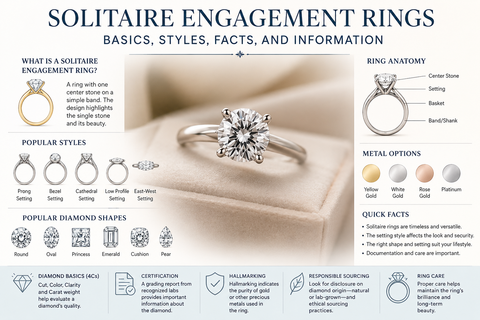
Solitaire engagement rings are one of the most recognized ring styles in jewelry design. A solitaire ring usually has one main center stone placed on a simple band. The design keeps attention on the central stone instead of using many side stones or heavy decorative details.
The word “solitaire” means a single stone. In engagement rings, this stone is often a diamond, but other gemstones may also be used depending on personal preference, tradition, and design choice. The main idea behind a solitaire ring is simplicity. The ring design allows the shape, cut, setting, and metal to remain clearly visible.
Solitaire rings exist because many people prefer a clean and timeless jewelry style. The design is easy to understand and can be adapted into many forms. A round solitaire can look classic. An oval solitaire can look elongated. An emerald-cut solitaire can appear structured and geometric. A bezel solitaire can look smooth and modern.
This article is for general educational purposes only. It does not provide financial, valuation, legal, or purchasing advice. Jewelry details such as metal purity, gemstone origin, and diamond grading should be reviewed through appropriate documentation.
What Are Solitaire Engagement Rings?
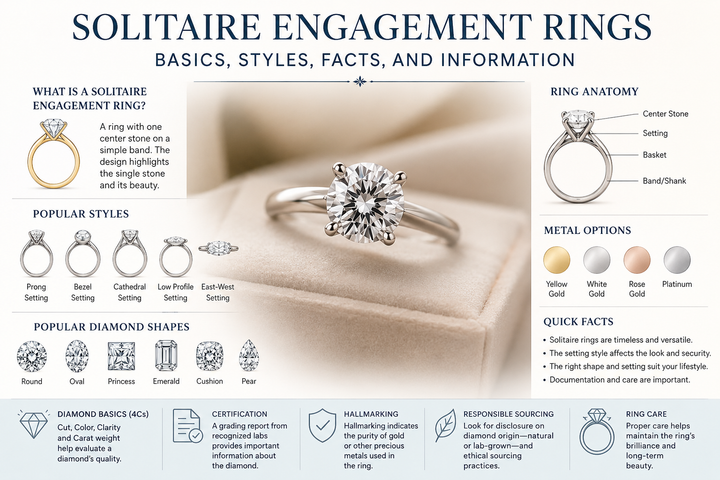
A solitaire engagement ring is a ring with one main center stone. The band may be plain, slightly curved, tapered, or shaped, but the focus remains on the single stone.
The center stone is usually held by a setting. The setting is the part of the ring that keeps the stone in place. Common setting types include prong, bezel, cathedral, tension-style, and low-profile settings.
A solitaire ring may include:
- One main center stone
- A simple or shaped band
- A prong, bezel, or cathedral setting
- Gold, platinum, or another precious metal
- A design focused on clarity and balance
The visual appearance of a solitaire ring depends on several factors. These include stone shape, stone size, cut quality, band width, setting height, metal color, and overall symmetry.
Why Solitaire Engagement Rings Matter
Solitaire engagement rings matter because they are linked with personal milestones, jewelry tradition, design education, and gemstone awareness. Their simple structure makes them useful for understanding basic jewelry design.
This topic affects:
- People learning about ring styles
- Couples comparing engagement ring designs
- Families discussing jewelry traditions
- Jewelry design learners
- Gemology students
- People studying diamond certification
- People reviewing hallmarking information
A solitaire ring solves a design problem by keeping the center stone visually clear. Some ring styles use multiple stones, halo designs, or decorative side details. A solitaire design keeps the layout simple, making the center stone easier to observe.
| Ring Feature | Meaning | Why It Matters |
|---|---|---|
| Center stone | Main gemstone in the ring | Creates the visual focus |
| Setting | Structure holding the stone | Affects appearance and security |
| Band | Circular metal part of the ring | Affects comfort and style |
| Metal type | Gold, platinum, or other material | Affects tone and durability |
| Stone shape | Outline of the gemstone | Changes the overall look |
Common Solitaire Ring Styles
Solitaire rings can look different depending on the setting and stone shape. The basic idea stays the same: one main stone placed at the center.
Prong solitaire setting
A prong setting uses small metal claws to hold the stone. Four-prong and six-prong settings are common. Four prongs may show more of the stone, while six prongs may create a more rounded visual appearance.
Bezel solitaire setting
A bezel setting surrounds the stone with a thin metal rim. This gives the ring a smooth outline and can create a modern appearance.
Cathedral solitaire setting
A cathedral setting has metal arches that rise from the band toward the center stone. This can make the stone appear elevated and structured.
Low-profile solitaire setting
A low-profile setting keeps the stone closer to the finger. This may be preferred by people who like a simpler daily-wear design.
East-west solitaire setting
In this setting, elongated shapes such as oval, emerald, marquise, or radiant stones are placed horizontally across the finger. It is a modern variation of the solitaire style.
Diamond and Stone Basics
Solitaire engagement rings are often discussed with the 4Cs of diamonds. These are cut, color, clarity, and carat weight.
| Diamond Factor | Meaning |
|---|---|
| Cut | How well the diamond interacts with light |
| Color | The body color grade of the diamond |
| Clarity | Natural inclusions or internal features |
| Carat weight | Weight measurement of the diamond |
Cut has a major effect on sparkle and light performance. Color and clarity affect appearance under different viewing conditions. Carat weight affects size perception, but shape and cut can also change how large a stone appears visually.
Common stone shapes include:
- Round
- Oval
- Princess
- Emerald
- Cushion
- Pear
- Marquise
- Radiant
Each shape creates a different visual effect. A round stone is often associated with a classic look. An oval stone may create a longer appearance. An emerald cut has step-like facets and a structured style. A pear shape combines rounded and pointed features.
Recent Trends in Solitaire Engagement Rings
Recent jewelry trends show that solitaire engagement rings remain popular, but design preferences are becoming more personal. Many people now look at diamond origin, stone shape, ring profile, metal tone, and documentation.
Current style trends include:
- Oval solitaire rings
- East-west stone placement
- Lab-grown diamond awareness
- Mixed metal designs
- Vintage-inspired band details
- Minimal ring profiles
- Bezel settings
- Elongated stone shapes
A simple trend view:
Classic round solitaire       ██████████
Oval solitaire                ████████
East-west setting             ███████
Bezel solitaire               ███████
Lab-grown diamond awareness   █████████
Mixed metal designs           ██████
This chart is illustrative and is not a market measurement.
Hallmarking, Certification, and Responsible Jewelry Information
Solitaire engagement rings may involve precious metals, diamonds, gemstones, and certification documents. Because of this, hallmarking and documentation are important for jewelry education.
In India, BIS hallmarking is important for gold jewelry because it helps identify the stated purity of precious metal. A hallmark may include details that help consumers understand metal purity information.
Diamond certification is also important. A diamond grading report may include information such as:
- Diamond shape
- Measurements
- Cut grade
- Color grade
- Clarity grade
- Carat weight
- Fluorescence
- Natural or laboratory-grown origin
- Report number
Responsible jewelry information may include diamond origin, lab-grown diamond disclosure, natural diamond documentation, and ethical sourcing references.
Natural diamonds form under the earth over geological time. Lab-grown diamonds are created in controlled laboratory conditions. Imitation stones are different materials that may only look similar. Clear disclosure helps people understand what type of stone they are reviewing.
| Documentation Type | Purpose |
|---|---|
| Hallmark | Indicates metal purity information |
| Diamond grading report | Records diamond characteristics |
| Appraisal record | Describes jewelry details |
| Care record | Helps track maintenance |
| Origin disclosure | Identifies natural or lab-grown status |
Helpful Tools and Resources
Useful educational resources for solitaire engagement rings include:
- Diamond 4Cs learning guide
- Ring setting comparison chart
- Stone shape comparison sheet
- Ring measurement guide
- Gold hallmarking information
- Diamond grading report checklist
- Jewelry care checklist
- Personal style preference worksheet
- Ring documentation folder
- Metal comparison chart
A basic solitaire ring checklist may include:
- Preferred stone shape
- Setting type
- Metal type
- Band profile
- Diamond or gemstone origin
- Grading report availability
- Hallmarking details
- Comfort during regular wear
- Care and cleaning routine
- Long-term maintenance notes
Basic Ring Care Information
Solitaire rings are usually worn regularly, so care habits matter. Proper care can help maintain appearance and reduce the chance of avoidable wear.
General care tips include:
- Keep jewelry away from harsh chemicals
- Store the ring separately from harder jewelry pieces
- Clean gently using suitable methods
- Check prongs or bezel edges periodically
- Avoid rough handling during physical activity
- Keep certification and hallmarking documents safely
- Review the ring if the stone feels loose
Care needs can vary depending on metal type, stone type, setting style, and wear pattern.
Frequently Asked Questions
What is a solitaire engagement ring?
A solitaire engagement ring is a ring with one main center stone. The design focuses attention on that single stone.
Which diamond shape is common in solitaire rings?
Round diamonds are common, but oval, princess, emerald, cushion, pear, marquise, and radiant shapes are also used.
What is the difference between natural and lab-grown diamonds?
Natural diamonds form underground over long geological periods. Lab-grown diamonds are created in controlled laboratory settings. Certification and disclosure help identify diamond origin.
What does the setting do in a solitaire ring?
The setting holds the center stone in place and affects the ring’s appearance. Prong, bezel, cathedral, and low-profile settings are common examples.
Why is hallmarking important?
Hallmarking helps identify the stated purity of precious metal. In India, BIS hallmarking is an important reference for gold jewelry information.
Information Notice
This article is for general educational purposes only. It does not provide financial, legal, valuation, or purchasing advice. Jewelry details such as metal purity, gemstone origin, and diamond grading should be reviewed through appropriate certification and hallmarking documents.
Conclusion
Solitaire engagement rings are known for their simple structure and focus on one central stone. Their design can appear classic, modern, minimal, or decorative depending on stone shape, setting style, and metal choice.
For safe and informed jewelry education, the main points to understand are ring setting, stone shape, diamond characteristics, hallmarking, certification, and care basics. A solitaire ring may look simple, but its details provide useful information about design, structure, documentation, and long-term maintenance.