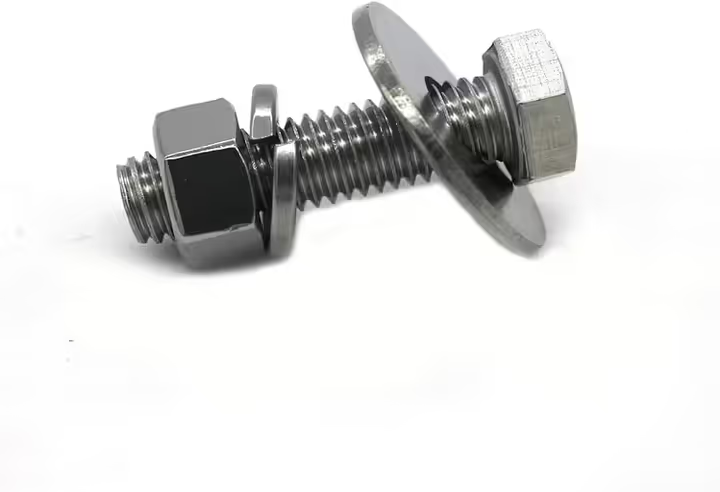
Screws and Bolts in China: Types, Manufacturing & Industry Guide
Screws and bolts are essential mechanical components used to connect, secure, and assemble different materials. They are commonly found in buildings, automobiles, industrial machinery, electronic equipment, household appliances, and infrastructure projects. Although these components are relatively small, they play an important role in the safety, stability, and performance of larger structures and machines.
China has developed a substantial fastener manufacturing industry that produces different types of screws, bolts, nuts, washers, threaded rods, and related components. These products support domestic industrial activities and international manufacturing supply chains.
The Chinese fastener industry includes manufacturers specializing in standard components as well as companies producing precision-engineered and application-specific fasteners. Production methods include cold heading, hot forging, thread rolling, machining, heat treatment, and surface finishing.
What Are Screws and Bolts?
Screws and bolts are threaded fasteners designed to hold materials together. Their construction and installation methods vary depending on the application.
Screws: Generally feature external threads and are commonly driven directly into materials or threaded holes.
Bolts: Typically work with matching nuts or threaded components to create a secure mechanical connection.
Nuts: Internally threaded components used with bolts.
Washers: Flat or specially shaped components placed beneath fastener heads or nuts to distribute pressure and protect surfaces.
Threaded rods: Long metal components featuring continuous or partial external threads.
Major Types of Screws and Bolts Manufactured in China
China's fastener manufacturing sector produces several product categories for different industrial requirements.
| Fastener Type | Common Applications |
|---|---|
| Hex bolts | Construction and machinery |
| Hex socket screws | Equipment and mechanical assemblies |
| Stainless steel screws | Outdoor and corrosion-sensitive environments |
| Self-tapping screws | Sheet metal and furniture |
| Machine screws | Electronics and appliances |
| Carriage bolts | Woodworking and structural connections |
| High-strength bolts | Heavy machinery and infrastructure |
| Threaded rods | Industrial installation and construction |
The appropriate fastener depends on material compatibility, thread dimensions, load requirements, environmental conditions, and installation methods.
How Are Screws and Bolts Manufactured?
Fastener manufacturing involves several stages. Each stage influences the dimensional accuracy, mechanical properties, and overall consistency of the finished component.
Raw material preparation: Steel, stainless steel, alloy steel, or other suitable materials are selected according to product specifications.
Wire drawing: Metal wire is processed to achieve the required diameter and surface condition.
Cold heading or forging: The material is shaped into the required fastener head and body.
Thread rolling: Threads are formed using specialized dies.
Heat treatment: Selected fasteners undergo controlled heating and cooling to achieve specified mechanical properties.
Surface finishing: Coatings or treatments may be applied to improve corrosion resistance and surface performance.
Quality inspection: Dimensions, hardness, tensile properties, thread accuracy, and surface conditions are checked.
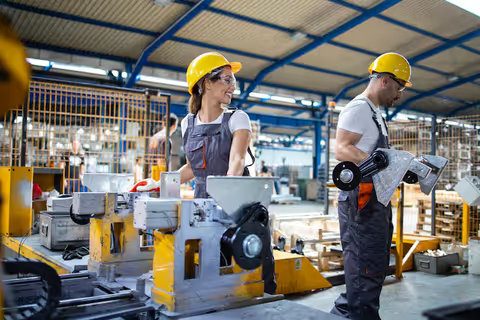
Automated machinery and inspection technologies are increasingly important in modern production facilities.
Why China's Screws and Bolts Industry Matters Today
The screws and bolts industry supports multiple manufacturing sectors. As industrial production becomes more complex, manufacturers require fasteners with accurate dimensions, consistent mechanical properties, and suitable material characteristics.
China's manufacturing ecosystem includes raw material processors, component manufacturers, machinery producers, testing facilities, and logistics networks. This interconnected structure supports the production of different fastener categories.
Industries That Depend on Industrial Fasteners
Construction and Infrastructure
Construction projects use bolts, structural fasteners, anchors, and threaded rods to connect metal frameworks, equipment, and supporting structures. Their mechanical strength and corrosion resistance are important considerations.
Automotive Manufacturing
Automotive production uses specialized fasteners in engines, suspension systems, chassis assemblies, interiors, and other vehicle components. These applications require attention to vibration resistance, dimensional accuracy, and mechanical strength.
Industrial Machinery
Machines contain numerous threaded connections that hold housings, moving components, brackets, and supporting structures together. Correct fastener selection contributes to equipment reliability.
Electronics and Electrical Equipment
Small screws and precision fasteners are used in electronic enclosures, appliances, control panels, and electrical assemblies. Their dimensions and material properties must match the product design.
Renewable Energy
Wind turbines, solar mounting structures, and related energy infrastructure use different fastener types. Outdoor exposure makes corrosion resistance and material durability important considerations.
Important Factors When Evaluating Screws and Bolts
Manufacturers, engineers, and procurement professionals generally consider the following characteristics:
Material grade: Determines important mechanical and physical properties.
Tensile strength: Indicates the maximum tensile stress a material can withstand under specified testing conditions.
Thread specifications: Include diameter, pitch, tolerance, and thread profile.
Corrosion resistance: Depends on material composition and protective treatments.
Dimensional accuracy: Helps ensure compatibility with the intended assembly.
Load requirements: Determine whether a standard or high-strength fastener is appropriate.
Traceability: Helps identify production batches and inspection records.
These characteristics are particularly important in applications involving structural loads, machinery vibration, and demanding environmental conditions.
Recent Developments and Trends in China's Fastener Industry
China's fastener industry continues to adapt to changes in manufacturing technology, product standards, industrial demand, and international trade requirements.
Updated National Fastener Standards in 2025–2026
One important development is the introduction of updated Chinese national standards for several fastener categories.
For example, GB/T 5782-2025, covering hexagon head bolts, was published on October 31, 2025, and came into effect on February 1, 2026. It replaced the earlier GB/T 5782-2016 edition.
Other updated standards include GB/T 5783-2025 for fully threaded hexagon head bolts and GB/T 15389-2025 for threaded rods. These updates reflect ongoing efforts to maintain consistent technical specifications and align selected requirements with international standards.
Manufacturers and engineering teams should review the applicable editions when preparing product drawings, specifications, and inspection procedures.
Automation and Smart Manufacturing
Automation is becoming increasingly relevant to fastener production. Computer-controlled machinery, automated sorting, optical inspection, and production monitoring can help manufacturers maintain consistent output.
Precision Engineering
Demand for accurately manufactured components is associated with developments in automotive production, electronics, industrial equipment, and advanced machinery.
Material and Coating Improvements
Manufacturers continue to work with stainless steel, alloy steel, and different protective surface treatments. Material selection depends on the intended application, operating environment, and engineering requirements.
Environmental Considerations
Energy consumption, industrial emissions, material efficiency, and waste management are important considerations for metal-processing facilities. Environmental management is increasingly connected with industrial production planning.
Laws, Regulations, and Quality Standards in China
The manufacturing and distribution of screws and bolts in China are influenced by national product quality legislation, standardization requirements, environmental regulations, and customs rules.
Understanding these requirements is important for manufacturers, engineers, importers, and international distributors.
China's Standardization Law
The Standardization Law of the People's Republic of China establishes the framework for developing and implementing national, industry, local, association, and enterprise standards.
National standards are divided into two main categories:
GB: Mandatory national standards that must be implemented within their applicable scope.
GB/T: Recommended national standards that are generally voluntary unless another applicable legal or regulatory requirement makes them necessary.
Manufacturers should identify the standards applicable to their particular fastener products rather than assuming that every national standard has the same legal status.
Product Quality Law
China's Product Quality Law establishes responsibilities for manufacturers and distributors regarding product quality.
Relevant requirements include:
Maintaining internal product quality management systems.
Following applicable technical requirements.
Providing accurate product information.
Avoiding false product identification and misleading quality marks.
Accepting responsibility for product quality under applicable legislation.
These requirements are relevant to industrial fasteners used in machinery, construction materials, and other manufactured products.
Export Documentation Requirements
China introduced additional export licensing requirements for certain steel products through Ministry of Commerce and General Administration of Customs Announcement No. 79 of 2025.
The requirements took effect on January 1, 2026. Covered products require an export licence supported by relevant documentation, including an export contract and a manufacturer's product quality inspection certificate.
Importantly, this measure applies to specified customs classifications rather than automatically covering every screw and bolt. Exporters should verify the relevant HS code and product classification before shipment.
Environmental Compliance
Metal-processing facilities must consider applicable environmental protection legislation and local requirements. Depending on the manufacturing process, relevant areas may include:
Industrial wastewater management.
Air pollutant emission controls.
Hazardous waste handling.
Energy efficiency.
Environmental impact assessment requirements.
The specific obligations depend on the facility, production activities, and location.
Helpful Tools and Resources for the Fastener Industry
Several technical resources can help professionals understand fastener specifications, manufacturing requirements, and quality control.
| Tool or Resource | Main Purpose |
|---|---|
| GB National Standards Database | Research Chinese national standards |
| ISO Standards | Understand international fastener specifications |
| Thread pitch charts | Identify thread dimensions |
| Engineering calculators | Calculate selected mechanical parameters |
| CAD software | Develop fastener drawings and assemblies |
| Metallurgical testing equipment | Examine material characteristics |
| Hardness testing machines | Evaluate material hardness |
| Tensile testing machines | Measure tensile properties |
| Optical measurement systems | Inspect dimensional accuracy |
| Quality management software | Maintain inspection and production records |
Important Technical Measurements
Common fastener measurements include:
Nominal thread diameter.
Thread pitch.
Bolt length.
Head diameter and height.
Material hardness.
Tensile strength.
Surface coating thickness.
Engineers should use the applicable product standard and approved engineering drawings when interpreting these measurements.
Frequently Asked Questions
1. Why is China an important country for screw and bolt manufacturing?
China has an established industrial manufacturing ecosystem that includes metal processing, machinery production, material suppliers, and fastener manufacturing facilities. This supports the production of standard and specialized components for different industries.
2. What are the most common types of screws and bolts manufactured in China?
Common categories include hex bolts, stainless steel screws, machine screws, self-tapping screws, hex socket screws, carriage bolts, high-strength bolts, and threaded rods. Each type has different dimensions and applications.
3. What materials are commonly used in Chinese fastener manufacturing?
Common materials include carbon steel, alloy steel, stainless steel, and selected non-ferrous metals. Material selection depends on mechanical requirements, corrosion exposure, temperature, and intended use.
4. Which standards are relevant to screws and bolts in China?
Relevant standards include GB/T 5782 for hexagon head bolts, GB/T 5783 for fully threaded hexagon head bolts, and other product-specific standards. The correct standard depends on the fastener's design and application.
5. What quality checks are important for industrial screws and bolts?
Important checks include dimensional inspection, thread accuracy, hardness testing, tensile testing, material verification, coating evaluation, and visual inspection. The required tests depend on the applicable product specification and intended application.
Conclusion
China's screws and bolts industry plays an important role in construction, automotive production, electronics, industrial machinery, and infrastructure development. Its manufacturing ecosystem covers a broad range of standard and specialized fasteners, supported by metal processing, automated production, and quality inspection technologies.
Developments in precision engineering, manufacturing automation, material technology, and updated national standards continue to influence the industry. At the same time, product quality legislation, environmental requirements, and export documentation rules shape manufacturing and international trade activities.
Understanding fastener materials, technical specifications, manufacturing methods, and applicable regulations helps engineers, manufacturers, and industry professionals make informed decisions. As industrial applications evolve, accurate standards and consistent quality control will remain central to the development of China's fastener industry.